REVIEW · ROME
Rome in 2 Days Tour with Forum Colosseum Trevi Fountain Vatican & Sistine Chapel
Book on Viator →Operated by Rome City Tours · Bookable on Viator
Two days, three Roman mind-sets. This Rome in 2 Days tour is built to move fast but not feel frantic, with an art historian guide translating what you’re seeing into real stories. I especially like how Day 1 strings together the biggest ancient sights—Colosseum, Roman Forum, and Pantheon—so you get the full picture instead of random stops.
On Day 2, you’ll shift gears into Vatican art and theology, with time in Vatican Museums plus the Raphael Rooms and Sistine Chapel. One thing to factor in: the Vatican can close areas last minute during major papal events, so the Sistine Chapel and/or St. Peter’s Basilica might not be accessible, though your guide should pivot to an alternative inside the museums.
In This Review
- Key highlights (what makes this tour work)
- Two days that actually fit Rome
- Entering The Colosseum with less friction
- Roman Forum: the empire’s command center
- Colle Capitolino (Capitoline Hill) and Il Vittoriano
- Trevi Fountain, but do it with your guide’s legend
- Pantheon and Raphael’s tomb
- Piazza Navona and Bernini’s Four Rivers
- Vatican Museums: the route that avoids the usual blur
- Raphael Rooms and the Sistine Chapel with context
- St. Peter’s Basilica and Saint Peter’s Square
- Pace, walking, and the dress code that matters
- Price and value: is $721.26 a fair deal?
- Who this Rome in 2 Days tour suits best
- Should you book it?
- FAQ
- How long is the tour?
- What’s included in the price?
- What isn’t included?
- What dress code do I need for the Vatican sites?
- What if the Vatican sites close last minute?
- Is this tour refundable if my plans change?
Key highlights (what makes this tour work)
- Timed entry at the Colosseum and Roman Forum helps you spend time looking, not waiting
- An art historian-led approach turns famous buildings into understandable cause-and-effect stories
- Vatican Museums at a better pace, including stops beyond the usual first-page highlights
- Raphael Rooms and Sistine Chapel context so the big visual moments land with meaning
- Private format for your group, with flexibility on how you move through each section
Two days that actually fit Rome
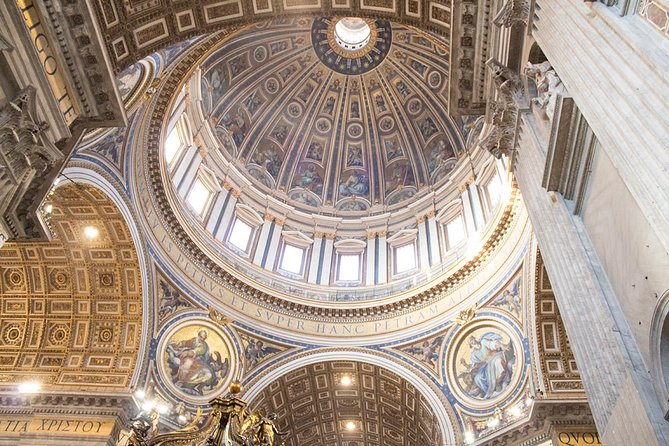
Rome can be overwhelming. You show up, you see a famous photo spot, you take a selfie, and then you realize you didn’t really learn anything. This is the tour’s main strength: it’s structured to cover the heavy hitters across two days while keeping the experience coherent.
You start with ancient Rome (Colosseum and Roman Forum), then layer in Renaissance and Baroque Rome (Raphael, Michelangelo, Bernini), and finally end in Vatican City. That arc matters. Instead of treating each attraction like a separate item on a checklist, you see how Rome’s power, art, and religion echo through the centuries.
The pace is also a practical win. The days are packed with major landmarks, but the timing per stop gives you room to look up, read details, and not feel like you’re being dragged from one door to the next. If you like learning while you walk, this works well.
You can also read our reviews of more tours and experiences in Rome
Entering The Colosseum with less friction
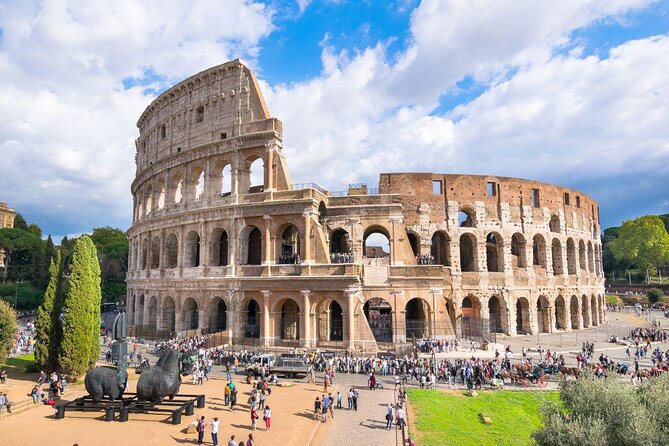
The tour begins at Piazza del Colosseo, 3. You meet your guide at the Colosseum, then you get about an hour here with an admission ticket included. This is a huge moment in Rome, but it’s also a place where it’s easy to see only the exterior.
Inside, your guide focuses on how the arena functioned—what it was for, why it mattered, and what you should notice when you’re standing in the seating areas. That “look in the right direction” guidance is what turns the visit from wow-photos into understanding.
A practical advantage: Colosseum reservation fees are included, so you aren’t stuck fighting with ticket lines on your own. You still need to follow the rules for entry, though—your name on the booking must match your ID, and you’ll want to bring a valid passport or ID document.
Roman Forum: the empire’s command center
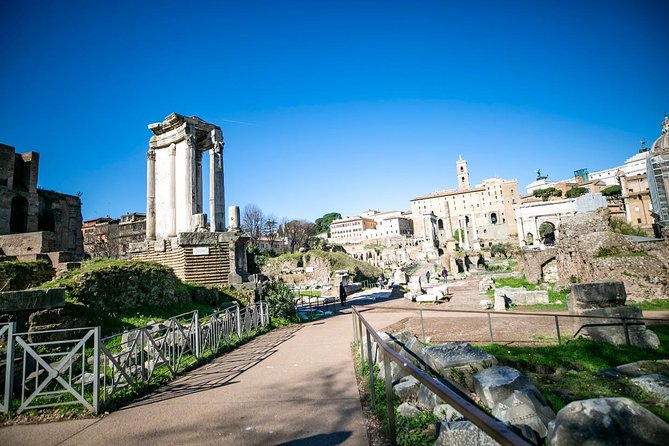
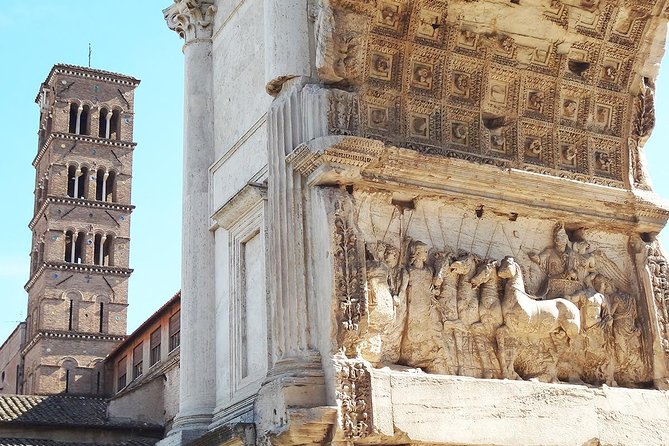
Next comes the Roman Forum, plus nearby highlights like the Arch of Constantine and the Arch of Titus. The Forum is where Rome looks like a ruin, but it still reads like a city once someone points out the roles each building played: political decisions, religious ceremonies, and daily civic life.
You also get a sense of scale by walking through the spaces that once connected important parts of the empire. Specific stops include the House of the Vestal Virgins, the Temple of Saturn, the Senate House, and the Arch of Septimius Severus—details that help you avoid the common problem of staring at rocks without context.
You’ll also notice one more practical point: this is a place that benefits from interpretation. Even if you’ve studied Roman history before, the Forum can feel like a puzzle. A guide helps you place the pieces in order, so you leave with a mental map, not just a pile of facts.
Colle Capitolino (Capitoline Hill) and Il Vittoriano
After the Forum, you walk up toward Capitoline Hill, following the Sacred Way. The time here is shorter—about 30 minutes—so think of it as a viewpoint and a bridge to the next phase of Rome’s story.
One specific stop is Il Vittoriano, a prominent monument on the hill. It’s not the ancient Roman stuff you came for first, but that’s part of the point. Rome keeps rebuilding its identity, and this monument reflects how later Italy wanted to frame the city’s past.
This is also a nice moment to slow down. You’re stepping away from the densest ruins and getting breathing space while still staying on-theme.
Trevi Fountain, but do it with your guide’s legend
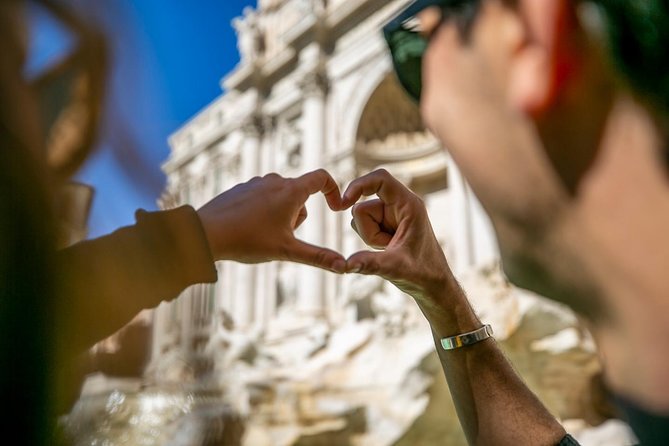
Then you head to the Trevi Fountain. You’ll spend around 30 minutes here, with admission included. The thing about Trevi is that it’s popular for a reason: it’s big, theatrical, and instantly recognizable.
The guide ties in the legend about tossing a coin. It’s a fun ritual, but the bigger value is learning what you’re looking at—why it’s designed the way it is and how it fits the surrounding “tourist but still real” Rome. You’ll likely find it more impressive in person than in photos, mostly because the details reward close looking.
Tip for making this stop work: treat your 30 minutes like a mini mission. Spend the first few minutes locating yourself for the best viewing angle, then do a second pass for the details and the legend, and only then take your photos.





Pantheon and Raphael’s tomb
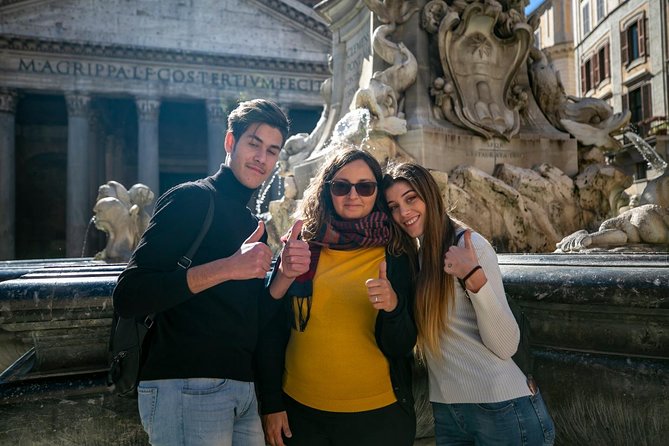
From there, the tour moves toward the Pantheon, again about 30 minutes. This is one of those places where the building does most of the talking—if you know what to look for.
Your stop includes the tomb of Raphael, which gives the Pantheon an extra layer beyond architecture. You’re not just seeing Roman engineering; you’re also seeing how Renaissance Italy honored one of its major artists in a space associated with ancient grandeur.
From a pacing standpoint, this stop is smart. The Pantheon is compact compared to the Forum, and it’s easy to get your bearings quickly. If your feet are starting to feel it, this is a good moment for sitting or slowing down while still feeling like you’re getting something meaningful.
Piazza Navona and Bernini’s Four Rivers
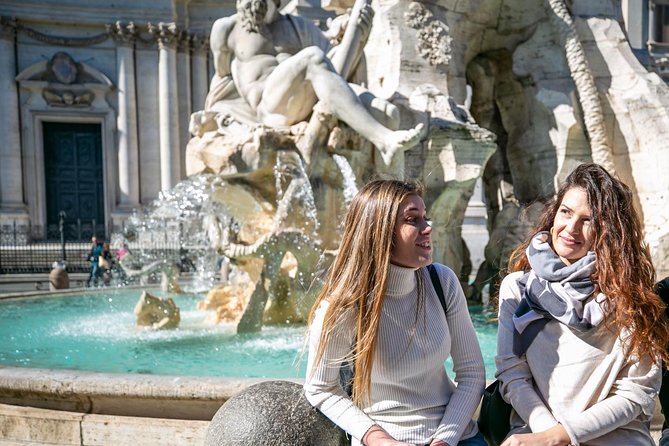
The day ends near Piazza Navona, with time walking past the Ancient Baths of Nero and arriving at Bernini’s Fountain of the Four Rivers. You’ll have about 30 minutes here.
Piazza Navona is classic Rome: it’s lively, it’s photogenic, and it can feel chaotic if you’re trying to move through it like a transit stop. With a guide, you’re more likely to notice the fountain’s symbolism and the way Baroque Rome turned public space into theatre.
This is a good evening bridge. You finish your Day 1 not exhausted beyond repair, but with a strong sense of where you are and what kind of Rome you just walked through. That makes self-exploring later much easier.
Vatican Museums: the route that avoids the usual blur
Day 2 starts with Vatican Museums. Admission is included, and your guided time is about an hour across several major areas, starting with the Belvedere Courtyard and then the Pio-Clementine Museum.
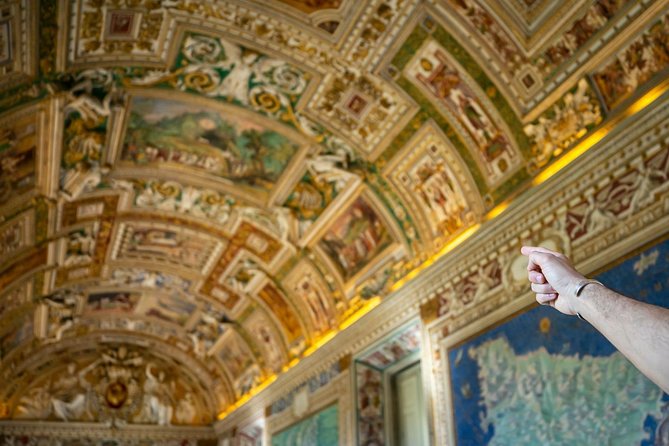
This part is where the tour’s “art historian” value shows up most. You’ll see statues from ancient Rome and Greece, then move through several gallery stops: Gallery of Tapestries, Gallery of Maps (Renaissance cartography), and the Sobiesky Room. You’ll also see the Immaculate Conception Rooms with significant frescoes.
This route matters because it’s not just about the loudest highlights. It’s about building understanding—how the Vatican Museum collection became a stage for European taste, power, and scholarship. If you’re the type who likes to know why a place has the collection it does, this is the best payoff of the second day.
And yes, you’ll meet the guide at the Vatican Museums entrance and go straight in, which helps on a notoriously busy site.
Raphael Rooms and the Sistine Chapel with context
Next comes Stanze di Raffaello (Raphael Rooms), about 30 minutes. These rooms were painted for Pope Julius II by Raphael, and you’ll focus on masterpieces including Parnassus and School of Athens.
This is not just “pretty frescoes.” The point is seeing how Renaissance art organized ideas. A guide helps connect what you’re seeing to the intellectual and political atmosphere that produced it.
Then you move to the Sistine Chapel for about 30 minutes. Your guide’s role here is crucial. The ceiling by Michelangelo is famous, but without guidance, it can become overwhelming or purely wow. With explanation, you start recognizing themes and the way the work communicates across space.
Important reality check: during big papal moments, the Sistine Chapel may be closed last minute. Your tour operator says the guide will provide a valuable alternative focusing on other museum areas if access changes. That’s your safety net, but it’s still something to keep in mind when you schedule your Vatican day.
St. Peter’s Basilica and Saint Peter’s Square
After the Sistine Chapel comes St. Peter’s Basilica, with about 30 minutes of guided time. You’ll explore side chapels and you’ll see Michelangelo’s Pietà, including a note on why it’s the only work he signed.
The guide also explains Bernini’s altarpiece and how Michelangelo’s work connects to the dome. In other words, you’re not wandering a church and guessing what matters—you’re being guided through key artistic and spiritual moments.
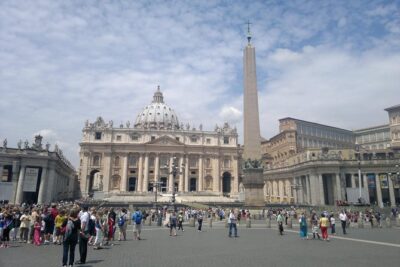
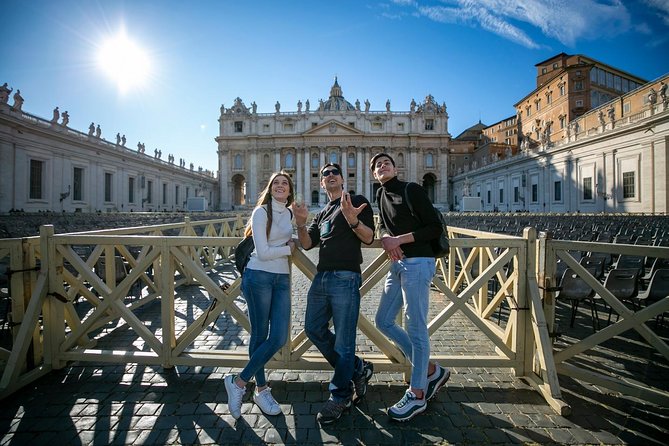
You’ll end at St. Peter’s Square (about 30 minutes), with your tour finishing there. St. Peter’s Square is the kind of place where even short time feels satisfying because the space itself is dramatic.
One more note: the Basilica may also close during major Vatican events. If that happens, the operator’s stated plan is to shift emphasis inside the Vatican Museums instead.
Pace, walking, and the dress code that matters
This is not a sit-and-stroll tour. You’re moving between major sites, and you should assume significant walking across two days. The tour notes moderate physical fitness, which is fair. If you’re the type who can handle city walking but hates long uphill slogs, wear supportive shoes and don’t plan anything heavy right after the tour ends.
The other non-negotiable is the dress code. For places of worship and selected museums, no shorts or sleeveless tops. Knees and shoulders must be covered for everyone. If you forget, you risk being turned away, which is the last kind of drama you want.
This tour works best if you come prepared: comfortable layers, good footwear, and a quick plan for how you’ll re-check your outfit before the Vatican.
Price and value: is $721.26 a fair deal?
At $721.26 per person, the biggest question isn’t just whether it’s expensive. It’s what you’re buying.
You’re paying for:
- Timed entry and reservations at the Colosseum and Roman Forum
- A local guide plus an art historian guide
- A format that’s private for your group
- Admission tickets listed as included for each stop (with the caveat that Vatican access can shift during major events)
If you were to do this on your own, you’d spend real time booking, sorting entry rules, and trying to understand what you’re looking at without a translator for the art and architecture. Rome rewards time, and this tour converts time into meaning.
That said, it’s not “cheap convenience.” It’s a premium way to reduce stress and tighten the learning curve. If you enjoy history and art, and you want to see both ancient Rome and Vatican masterworks in two days, this price starts to make sense.
If your priority is pure sightseeing at your own pace, you might spend less elsewhere. But you’ll likely trade away the structured context that makes the famous sites feel less like static backdrops.
Who this Rome in 2 Days tour suits best
This tour is a strong fit for people who want the big Rome hits without turning the trip into a research project. You’ll do well if you:
- Prefer guided meaning over random wandering
- Want both ancient and Vatican highlights in a tight schedule
- Like art and architecture enough to want explanations while you walk
It’s also a good option for families or mixed groups as long as everyone can handle walking. In previous experiences, guides have adjusted to individual needs—for example, one guide named Claudia was especially attentive to mobility concerns in her group. Still, you should share needs early so the guide can plan around your pace.
And if you care about the guide quality, there’s plenty of evidence the operator hires strong specialists. One guide profile you might encounter is Tommaso, described as an archaeology professor with deep passion for Rome. Another guide mentioned is Sara, and others include Angelica, Romina, and Christina—all valued for clear explanations and professional handling of the day.
Should you book it?
I’d book this tour if you want a structured two-day plan that covers the Colosseum, Forum, major central landmarks, and core Vatican highlights, with an art-focused guide shaping how you see it. The timed entry at the start of Day 1 plus the guided museum flow on Day 2 are the big wins.
I’d think twice if your dates land on a period where Vatican access is critical to your expectations. The operator warns that major papal activity can cause last-minute closures of the Sistine Chapel and/or St. Peter’s Basilica, even when you’ve planned carefully. Their alternative inside the museums is helpful, but it’s not the same as seeing everything exactly as advertised.
If you’re okay adapting and you’re excited to learn while you walk, this is a solid way to make two short days feel like you scratched below the surface.
FAQ
How long is the tour?
The experience runs for about 2 days, with a Day 1 focused on central ancient Rome and classic sights, and a Day 2 focused on Vatican Museums, the Raphael Rooms, the Sistine Chapel, and St. Peter’s Basilica.
What’s included in the price?
The included items are all activities and guides, including a local guide and a professional art historian guide. Colosseum entry is included, along with the Colosseum reservation fee. The tour also includes admission tickets listed for each stop, and St. Peter’s Square is free.
What isn’t included?
Private transportation is not included, and there is no hotel pick-up or drop-off. The Basilica is noted as not included in some access situations due to the Jubilee limitations described by the operator.
What dress code do I need for the Vatican sites?
You must cover knees and shoulders for both men and women. Shorts and sleeveless tops are not allowed. You may risk refused entry if you don’t follow these rules.
What if the Vatican sites close last minute?
Because of papal activity, some areas might close without prior notice, and the Sistine Chapel and/or St. Peter’s Basilica might not be accessible. The guide will provide an alternative that focuses on the Vatican museums.
Is this tour refundable if my plans change?
No. The experience is non-refundable and cannot be changed for any reason. If you cancel or ask for an amendment, the amount you paid will not be refunded.