REVIEW · ROME
Private tour Colosseum Underground & Ancient Rome
Book on Viator →Operated by Italy In Love Tours · Bookable on Viator
Underground Rome changes how you see the Colosseum. This private tour takes you into the Colosseum Underground (Hypogeum), where you’ll follow the two levels and tunnels that once held gladiators and wild animals. It’s a focused route that turns big arena photos into a real sense of how the spectacle worked.
I love two things most here: first, the private guide attention. In the best cases, you get an excellent, teacher-style communicator who can answer your questions in plain language. Second, you get a smart combo of sites in one outing, finishing with Palatine Hill and the Roman Forum so the imperial and political story lands in context.
One consideration: underground access isn’t totally in your hands. The Colosseum can cancel or restrict underground tours due to official rules, and that can be extra painful because underground is the main draw. If that happens, you may still continue with an extended tour depending on what’s open, but you should know the risk before you book.
In This Review
- Key highlights to know before you go
- Private Colosseum Underground and Ancient Rome: What You’re Really Buying
- Entering the Colosseum Underground: The Hypogeum Experience
- The Arena Floor Moment: Why It Changes the Whole Visit
- Palatine Hill After the Colosseum: Imperials, Not Fairytale Rome
- Roman Forum: Turning Ruins Into Politics You Can Follow
- Price and Value: When € Tickets Matter Less Than Access
- Timing, Security, and Walking Reality (The Stuff That Actually Affects Your Day)
- What Private Guiding Does Best at These Sites
- The Main Risk: Underground Access Can Be Changed or Cancelled
- Who Should Book This Tour
- Should You Book the Colosseum Underground & Ancient Rome Private Tour?
- FAQ
- How long is the Private Colosseum Underground and Ancient Rome tour?
- What are the main stops on this tour?
- Does the tour include admission tickets?
- What access do I get at the Colosseum?
- How much does it cost?
- Is this a private tour?
- Where is the meeting point and when does the tour start?
- Do I need ID for this tour?
- Are the underground tickets tied to each person?
- What if parts of the sites close unexpectedly?
Key highlights to know before you go
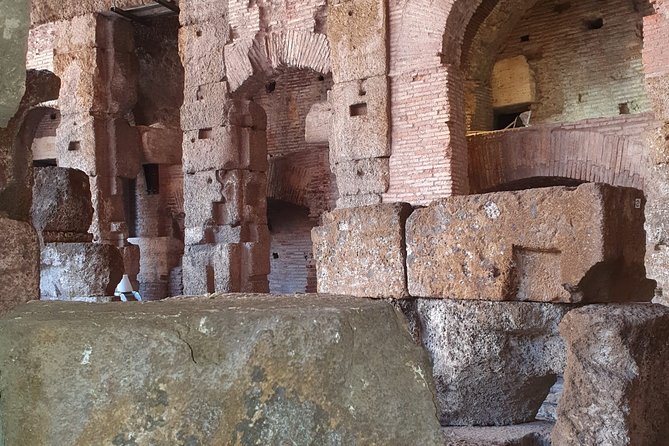
- Restricted Hypogeum access to underground passages and chambers under the arena
- Exclusive access to the arena floor, not just a quick exterior look
- A strong guide experience that turns ruins into understandable stories
- Efficient one-trip routing: Colosseum + Palatine Hill + Roman Forum
- Plan for steep steps and tight security inside and around the Colosseum area
- ID must match your tickets since underground tickets are nominative
Private Colosseum Underground and Ancient Rome: What You’re Really Buying
At $557.50 per person for a 2 to 3 hour outing, this is not a budget add-on. You’re paying for three things: restricted entry, arena-floor access, and a private, expert guide who can connect what you’re seeing across multiple ancient zones.
The tour includes the Colosseum entrance ticket with underground access valued at €24 per person, plus a reservation fee valued at €2 per person. After that, the rest of what you pay covers the guided service and the special access you can’t count on with casual sightseeing.
The timing matters, too. You start at 2:15 pm, and you’re required to meet 30 minutes before the scheduled departure time. That early meet helps with capacity management and security checks, which the Colosseum can use to regulate entry.
If you like your Rome in “show me how it worked” mode, this tour is built for that.
You can also read our reviews of more private tours in Rome



Entering the Colosseum Underground: The Hypogeum Experience
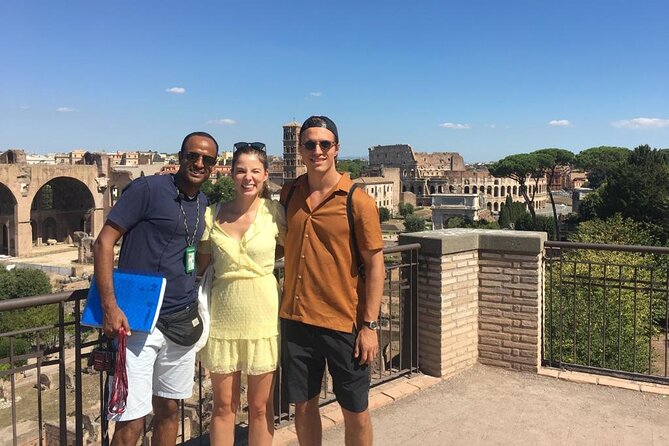
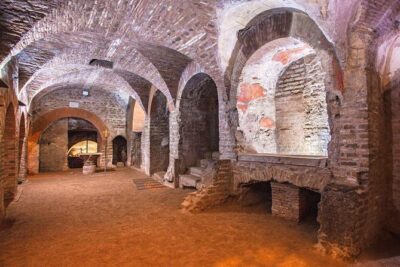
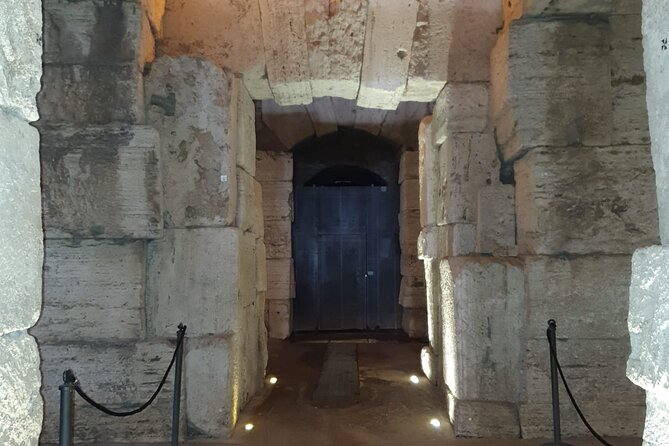
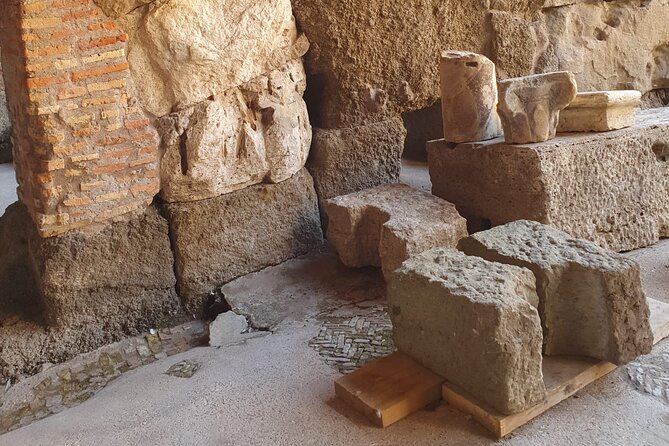
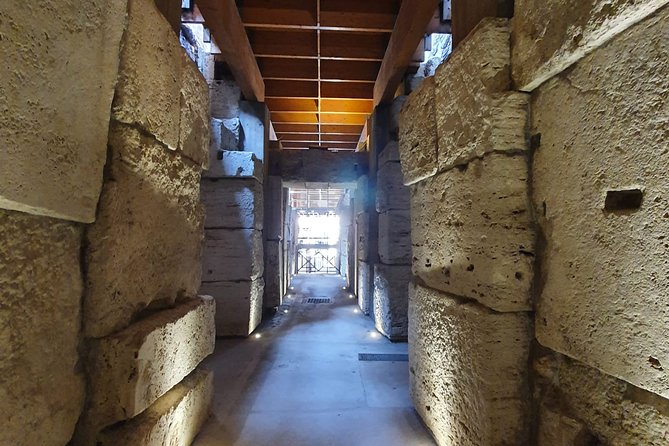
The first stop is the Colosseum Underground, often called the Hypogeum. Here, you’re not looking at stone from the outside. You’re moving through the spaces beneath the arena where captives were held and where wild animals and gladiators were staged before the show.
You’ll spend about 1 hour 30 minutes underground. The tour mentions two levels and intricate tunnels, and that matters because the layout helps you understand the mechanics of the spectacle. With a good guide, the story stops being vague. You start to picture who was where, how movement likely worked, and why the underground complex was so important to keeping the arena show running on schedule.
A practical note: this is not a stroll. Underground routes can mean steep steps, and you should plan to keep track of your belongings. One review specifically pointed out steep steps and the need to watch your things. I’d treat that as a serious hint, not a throwaway comment.
Also, your access depends on correct identity details. Underground tickets are nominative and show personal data. If the name doesn’t match your ID, entry can be refused and there’s no refund. That’s a big deal in Italy, where the sites treat tickets like museum access documents, not just confirmations.
The Arena Floor Moment: Why It Changes the Whole Visit
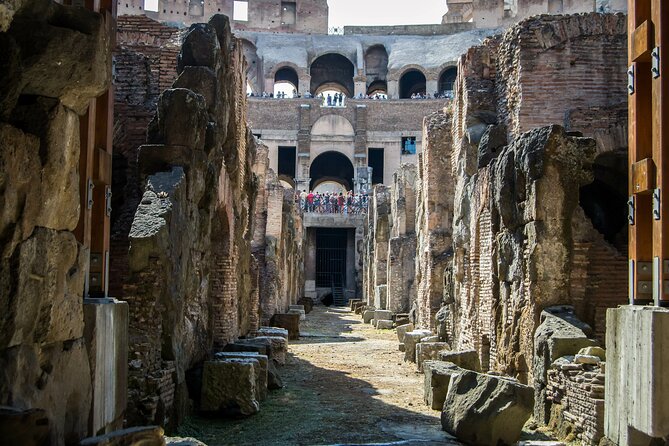
This tour includes exclusive access to the Colosseum arena floor. That’s the connection point between “what you see above” and “what happened below.” Standing in the arena area is one of those experiences where your brain finally lines up scale and purpose.
If you’ve only ever visited the Colosseum as an outdoor landmark, the arena floor access can be the difference between admiring architecture and understanding it as a machine built for crowds and performance. And when your underground walk comes first, the arena floor doesn’t feel like a random photo spot. It feels like the end of a story you just learned.
Because this is private, you can typically move at a pace that fits your questions. If you want more explanation before you walk on, you’re not stuck behind a group that rushes you along.
Palatine Hill After the Colosseum: Imperials, Not Fairytale Rome
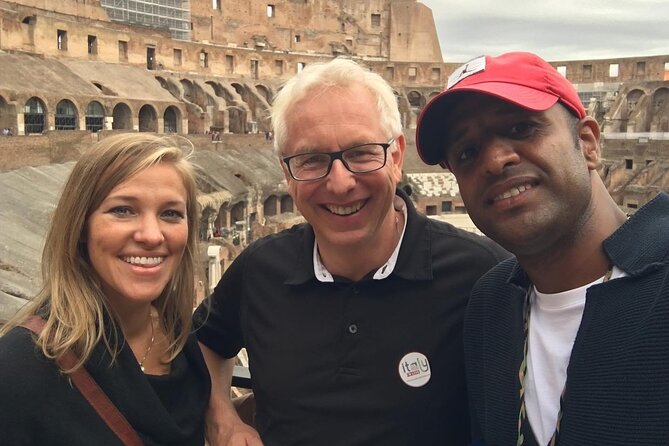
Next comes Palatine Hill for about 30 minutes, with admission included. Palatine Hill is one of Rome’s seven hills and is linked to the legend of Rome’s founding. The tour frames it clearly: legend says it’s where Romulus built the city, but historically the hill served as a residence zone—especially for emperors.
This stop is a great counterweight to the Colosseum. The Colosseum is spectacle and controlled violence. Palatine Hill is power—where leadership lived, displayed status, and turned politics into architecture.
The most important specific detail you’ll hear here: the hill’s connection to Nero’s grand project. The Emperor’s palace, known as the Domus Aurea or Golden House, was built by Emperor Nero after the devastating fire in 64 CE. That’s a powerful anchor because it’s not just “there were emperors here.” It’s a named ruler, a specific event, and a clear reason for imperial building.
Important correction in the way this tour is described: Palatine Hill did house several imperial palaces and residences (including the Palace of Domitian and the Palace of Septimius Severus), but the tour notes that not the entire Domus Aurea was on Palatine in the way people sometimes assume.
Even with only 30 minutes, Palatine Hill can feel like a shortcut through the imperial idea of Rome—if your guide points out what’s what and helps you place the ruins on the right timeline.
Roman Forum: Turning Ruins Into Politics You Can Follow
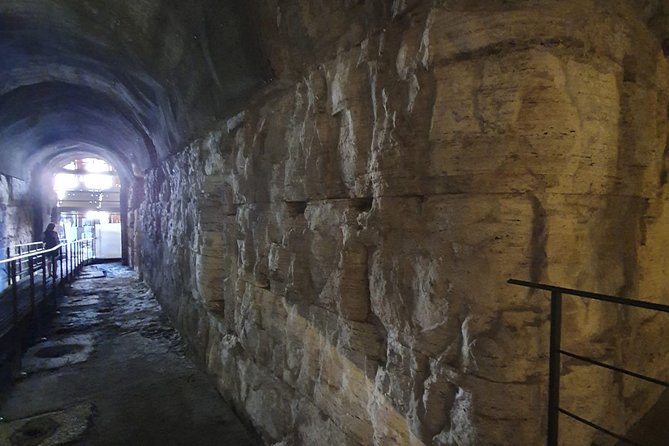
The last stop is the Roman Forum, for about 1 hour, with admission included. This is where your brain really starts to connect pieces: the Colosseum shows mass entertainment; Palatine Hill shows authority; the Forum shows governance.
The guided walk highlights major landmarks, including:
- The Temple of Julius Caesar
- The Arch of Titus
- The Roman Senate House
These names matter because they’re the labels you’ll see on maps and in guidebooks. A guide helps you understand what each place represented in daily and political life, rather than treating them as disconnected rubble piles.
The tour also points you toward the people who shaped the stories attached to the stones: Marc Antony, Cleopatra, and Julius Caesar. That trio gives you a way to link major turning points into one thread, instead of letting Rome’s characters float around without gravity.
If you’ve ever felt overwhelmed at the Forum—too many arches, too many columns, too many “what am I looking at”—this guided format is exactly what you want. You won’t need to memorize dates. You’ll leave with a framework.






Price and Value: When € Tickets Matter Less Than Access
Let’s talk money like adults.
You’re paying $557.50 per person. The ticket portions called out here are €24 for the Colosseum underground access ticket and €2 for the reservation fee. That means a big chunk of what you pay is for the service layer: private guide time, and the special underground and arena-floor access you can’t reliably replicate on your own in the same time window.
You’re also buying time. This tour tries to compress three heavy hitters—Colosseum underground, Palatine Hill, and the Roman Forum—into one outing. You save logistics compared to arranging separate guided tours or trying to stitch together multiple self-guided visits with timed tickets.
Where it may not be great value is if your schedule is flexible and your priority is only the Colosseum exterior. Then you’d be overpaying for the underground experience you might not use. But if underground is your top goal, the price starts to make sense quickly.
One more value factor: private pacing. It’s not just comfort. It’s the ability to ask follow-up questions when the guide brings up an Imperial building detail, a specific Forum landmark, or how the underground staging worked.
Timing, Security, and Walking Reality (The Stuff That Actually Affects Your Day)
Two things can change your day at Rome’s big sites: security checks and crowd capacity rules.
The tour notes that Colosseum capacity regulations and security may delay tour departure. That means you should build a little slack after the tour too. Don’t schedule a tight dinner reservation 20 minutes after your end time.
You also have a strict requirement to meet 30 minutes prior to the scheduled departure time. That’s for organization and to keep you aligned with security and entry windows.
Expect walking. Even though the tour length is 2 to 3 hours, the physical experience can feel longer because underground routes can be stair-heavy, and you’ll also walk between Colosseum, Palatine Hill, and the Forum. One review specifically warned about steep steps and keeping an eye on your belongings.
One more detail that matters a lot: ID is required. All public museums in Italy require valid ID. And since the underground tickets are nominative, your name must match the identity document exactly. Bring the same ID you used when booking.
What Private Guiding Does Best at These Sites
Private tours are often sold as “better because it’s private.” In Rome, the advantage is more concrete than that.
In the Colosseum Underground, your guide can explain what you’re seeing in a way that makes the routes understandable. In the Forum, they can point out what each monument was tied to and who drove the stories behind it.
And because it’s private, you can slow down when you hit a point that clicks. If you want to spend extra seconds looking at where a passage meets a chamber, you can. If you want a faster pace because you’re mainly there for photos, you can.
This is also one of those situations where “dialogue” matters. One reviewer described a guide as a retired history teacher with a wealth of knowledge and a great back-and-forth. That’s the kind of guiding style that makes the difference between hearing facts and actually understanding the place.
The Main Risk: Underground Access Can Be Changed or Cancelled
Here’s the honest part.
Even with a booked tour, the Colosseum can change underground access. The experience description flags the possibility of last-minute, unpredictable closures, and it says the operator will offer an extended tour if venues close to maintain the advertised total length.
But a separate review described a situation where the underground tour was cancelled at the last minute due to Colosseum officials, even though self-guided underground-looking activity might still have been happening. While that’s just one account, it highlights the core risk: your timing depends on site operations.
So my practical advice is this:
- Treat underground access as the priority, but plan mentally for the possibility of reduced access.
- If underground is the only reason you’d accept this tour, you might want a flexible day schedule and a willingness to adapt on the spot.
Who Should Book This Tour
This private Colosseum Underground and Ancient Rome tour is a good fit if you:
- Want restricted underground access and arena-floor time, not just the main level
- Like a guided narrative that links the Colosseum to imperial power and political Rome
- Prefer private pacing and time for questions
- Are comfortable with walking and steep steps, and you keep track of your things in busy security areas
It may be less ideal if you:
- Hate stair-heavy routes
- Need a completely guaranteed underground entry with zero risk of official changes
- Are mainly looking for quick photo stops and don’t care about interpretation
Should You Book the Colosseum Underground & Ancient Rome Private Tour?
If your #1 goal is to see the Hypogeum and understand how the Colosseum spectacle operated, I think this tour is worth serious consideration. The combination of underground access, arena-floor entry, and a guided sweep through Palatine Hill and the Roman Forum makes it efficient and story-driven.
The decision hinges on one thing: how much underground access matters to you emotionally and practically. Because the site can adjust access rules, you should book with a bit of flexibility and bring your ID so your nominative tickets stay valid.
If you’re the type of traveler who enjoys a strong guide and wants the ruins to feel like a lived system, not just stone, this is the kind of Rome outing you’ll remember.
FAQ
How long is the Private Colosseum Underground and Ancient Rome tour?
It’s listed as about 2 to 3 hours total, with roughly 1 hour 30 minutes for the Colosseum Underground, 30 minutes for Palatine Hill, and 1 hour for the Roman Forum.
What are the main stops on this tour?
You’ll visit the Colosseum Underground (Hypogeum), Palatine Hill, and the Roman Forum.
Does the tour include admission tickets?
Yes. The Colosseum entrance ticket with underground access is included, and admission is also included for Palatine Hill and the Roman Forum.
What access do I get at the Colosseum?
You get exclusive access to the restricted underground passages and chambers, and exclusive access to the arena floor.
How much does it cost?
The price is listed as $557.50 per person.
Is this a private tour?
Yes. It’s described as private, and only your group will participate.
Where is the meeting point and when does the tour start?
The meeting point is Italy In Love Tours at Via del Cardello, 31, 00184 Roma RM, Italy. The start time is 2:15 pm, and you must meet 30 minutes prior to the scheduled departure.
Do I need ID for this tour?
Yes. The tour notes that all public museums in Italy require visitors to show a valid ID.
Are the underground tickets tied to each person?
Yes. The underground tickets are nominative and show your personal data, and the name can’t be changed after purchase.
What if parts of the sites close unexpectedly?
The tour says that some venues or parts of the venue may have last-minute, unpredictable closures. If that happens, the operator will offer an extended tour in keeping with the advertised total length of the tour.