REVIEW · ROME
Tour of the Churches of Rome- Up To 6 People
Book on Viator →Operated by Italy In Love Tours · Bookable on Viator
Baroque Rome can feel overwhelming fast. This is a focused, small-group walk that keeps the attention on the art and design that make these churches special. I like how the route brings you face-to-face with the names you came for, including Caravaggio and Bernini. I also appreciate that it’s led by a licensed local guide who slows the pace down enough to actually notice details.
The second thing I really liked was the chance to see standout visual tricks and grand Baroque storytelling, especially Andrea Pozzo’s Fake Dome at the Church of St. Ignatius. You’ll also get context for big artists and architects tied to the look of Rome’s Baroque era—without having to sort it all out on your own.
One consideration: since this is a walking tour inside active churches, access can change. Some stops may be hard to enter on the day, and the guide’s English clarity can matter a lot for getting the full value of the explanations.
In This Review
- Key Points to Know Before You Go
- A Small-Group Baroque Walk Through Rome’s Most Explainable Churches
- Meeting at Piazza Venezia and How the 2-Hour Pace Feels
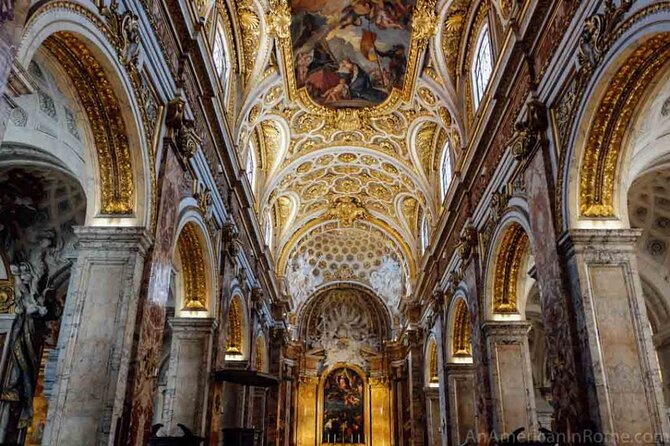
- Stop 1: Church of St. Louis of the French Near Piazza Navona
- Stop 2: Sant’Agnese in Agone and Why Piazza Navona Matters
- Stop 3: Chiesa di Sant’Ignazio di Loyola and the Fake Dome
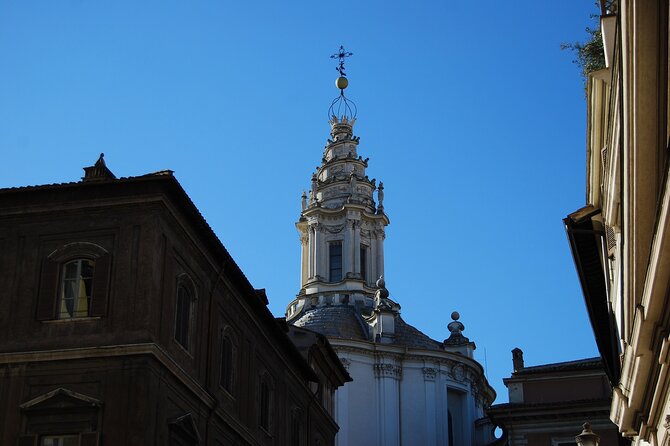
- Stop 4: Basilica di Sant’Andrea della Valle and Carlo Maderno’s Big Dome
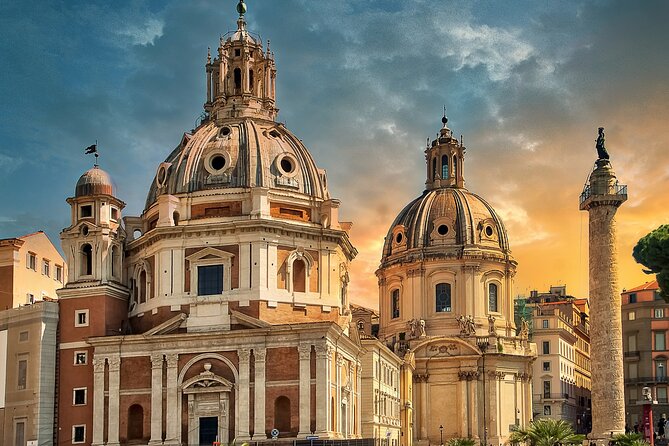
- Stop 5: Santa Maria di Loreto by Trajan’s Column Area
- Coffee and/or Tea at a Former Artist Hangout
- How the Guide’s Explanations Turn Art Names into Meaning
- Price and Value: What You’re Paying For
- Who This Tour Fits Best (and Who Might Be Happier Elsewhere)
- Practical Tips That Help You Enjoy It More
- Should You Book the Tour?
- FAQ
- How long is the tour?
- What group size should I expect?
- Is coffee or tea included?
- Are church admissions included?
- What ticket format do I get?
- Where does the tour start and end?
- Are alcoholic drinks included?
- What happens if a church is closed?
- Can I get a full refund if I cancel?
Key Points to Know Before You Go
- Max 6 people keeps the group feel calm and gives the guide room to answer questions.
- Free entry at each church stop means you mostly pay for the expertise and pacing, not extra ticket costs.
- Two hours covers five churches, so you get an intense Baroque hit without a full-day commitment.
- Caravaggio, Bernini, Rainaldi, and Borromini are referenced as you move, so the Baroque style clicks faster.
- Coffee and/or tea is included, and it’s part of a stop that connects to writers and artists.
A Small-Group Baroque Walk Through Rome’s Most Explainable Churches
Rome has plenty of churches. The trick is knowing which ones reward your time once you’re standing in front of them. This tour is built around a Baroque-heavy route where the guide doesn’t just point at pretty things. They connect art, architecture, and the religious stories behind what you’re seeing.
You’ll also notice the structure is intentionally short on each stop—around 15 to 25 minutes—so you spend less time wandering and more time looking closely. That’s a real advantage when you’re in Rome for a few days and your energy is a limited resource.
And the group size matters. With up to 6 people, the pace stays relaxed, but you’re not watching the tour through the shoulders of a large crowd.
You can also read our reviews of more tours and experiences in Rome.
Meeting at Piazza Venezia and How the 2-Hour Pace Feels
The tour starts at Piazza Venezia and ends near Santa Maria di Loreto (Piazza della Madonna di Loreto, 26). That end point is useful because you’re not marching back to where you started—you can keep sightseeing in the same central area afterward.
Duration is listed at about 2 hours, and the schedule is built from quick, focused church visits. Translation: it moves, but it’s not a sprint. Think of it as a guided “greatest hits” set for Baroque churches, with the coffee/tea break acting like a palate cleanser so you don’t feel church-fatigued.
Also, you get a mobile ticket, which is handy when your day is already full of buses, trains, and walking.
Stop 1: Church of St. Louis of the French Near Piazza Navona
You begin at the Church of St. Louis of the French, near Piazza Navona. This one is dedicated to the Virgin Mary, St. Denis the Areopagite, and St. Louis IX. It also serves as the national church of France in Rome, which gives it a different layer than a church that’s only tied to local devotion.
This is a great first stop because it sets up how Rome’s churches can carry identity—national, spiritual, and artistic—at the same time. Even if you’re new to Baroque, the guide’s job here is to frame what to look for so your brain doesn’t shut down after the first major street corner.
Time on site is about 25 minutes, which is longer than the later churches. That’s smart. You’re still waking up and finding your footing at the start.
Stop 2: Sant’Agnese in Agone and Why Piazza Navona Matters
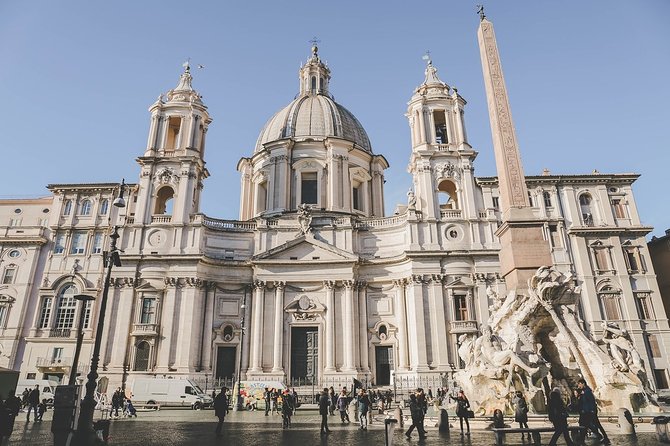
Next is Chiesa di Sant’Agnese in Agone, a 17th-century Baroque church right by Piazza Navona. You’re not just visiting a building—you’re stepping into a place that’s tied to a real historical setting. The church faces the square where Saint Agnes was martyred in the ancient Stadium of Domitian.
What makes this stop extra interesting is the way the church doubles as a music space. The description includes classical concerts held in the Borromini Sacristy—with musical performances running from sacred Baroque works to chamber music and even operas.
Practical payoff: if you’re a person who likes understanding what you’re seeing beyond the surface, this is one of the stops where the guide’s explanations can really land. The church’s location by Piazza Navona also helps you connect the Baroque building to the bigger city scene around it.
Time here is about 20 minutes, enough to take in the Baroque style without feeling rushed.
Stop 3: Chiesa di Sant’Ignazio di Loyola and the Fake Dome
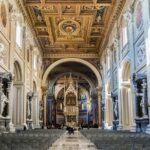
This is the stop that turns Baroque into a kind of visual storytelling. The Church of St. Ignatius (Chiesa di Sant’Ignazio di Loyola) is dedicated to the founder of the Society of Jesus, and it’s packed with Baroque spectacle.
The headline feature is Andrea Pozzo’s Fake Dome—a stunning optical illusion that makes a flat space behave like it has a much larger presence overhead. Even if you’ve seen photos, it’s worth seeing in person because Baroque tricks are about how they manipulate your viewpoint as you stand there.
Right alongside that is an expansive fresco that serves as a centerpiece, highlighting the missionary efforts of the Society of Jesus and illustrating their global apostolic activities. The guide’s job is to explain what you’re looking at so you don’t just admire and move on.
This stop is about 15 minutes. It sounds short, but Pozzo’s work rewards attention, and the time limit keeps the tour moving to keep you fresh for the next interior.
Stop 4: Basilica di Sant’Andrea della Valle and Carlo Maderno’s Big Dome
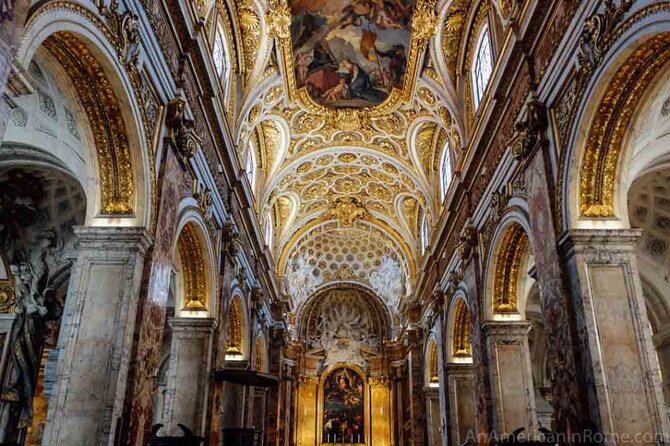
Now you go to Basilica di Sant’Andrea della Valle, built in the 17th century and described as one of the largest churches in Rome. It has an impressive facade and a large dome designed by Carlo Maderno.
Inside, the art and architecture are tied together in a way that feels very Baroque: large scale, dramatic visual emphasis, and details placed so you notice them as your eyes travel upward and across the interior.
The church also includes a fresco by Giovanni Lanfranco and a sculpture by Carlo Rainaldi. If you’re learning Baroque architecture, this is one of the places where those names start to feel meaningful, not random.
Time here is about 15 minutes. In a two-hour experience, this is the kind of stop where you’ll get the most value from listening closely during the first minute or two—then you can look at the big elements without needing to hunt for what matters.
Stop 5: Santa Maria di Loreto by Trajan’s Column Area
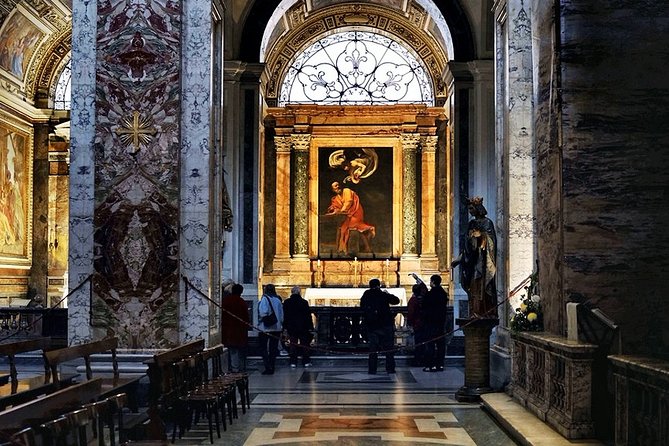
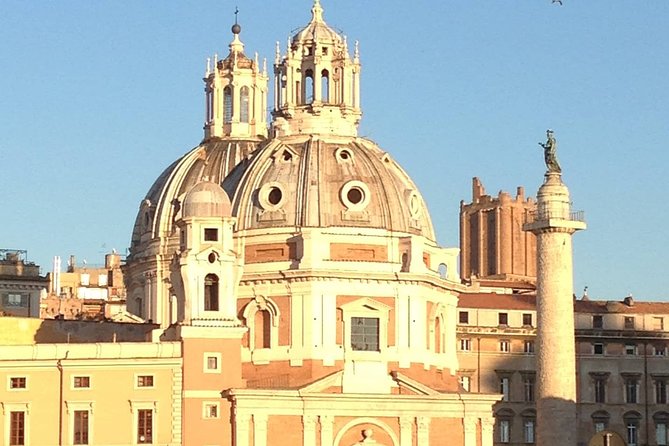
The final church stop is Chiesa di Santa Maria di Loreto, a 16th-century church with architecture credited to Antonio da Sangallo. It’s positioned near Trajan’s Column and also close to the Monument of Vittorio Emanuele II.
The design details provided here are a big clue to what you’ll actually notice on site: a harmonious blend of brick and travertine, with elegant proportions and striking simplicity. That word simplicity matters. In a tour that focuses on Baroque churches, this last stop gives you contrast so the day doesn’t blur into one style.
Time here is about 15 minutes.
Then you end at the area around Piazza della Madonna di Loreto, which is a convenient launching point for more sightseeing.
Coffee and/or Tea at a Former Artist Hangout
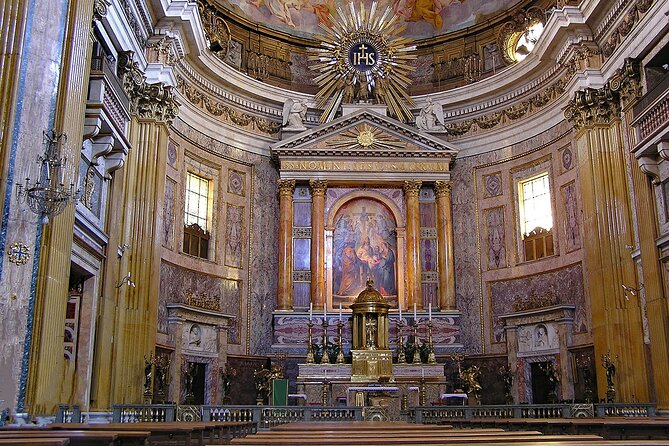
Between church interiors, you’ll take a break for coffee and/or tea, described as a famed hangout of renowned writers and artists.
Even though the exact name of the place isn’t included in the details you provided, the concept is clear: it’s not just a random caffeine stop. It’s a chance to slow down, catch your breath, and get a little mental reset after lots of art and architecture.
It also makes the tour feel more human. Two hours of churches can get intense. This break is what keeps it from feeling like you’re rushing through boxes on a checklist.
How the Guide’s Explanations Turn Art Names into Meaning
This tour is built around more than just visiting churches. It explicitly aims to connect what you see to big names and styles, including works by Caravaggio and Bernini, plus architecture conceived by Rainaldi and Borromini.
Here’s why that’s useful: in Rome, those names can float around as trivia. A good guide helps you notice the stylistic choices those artists and architects made—where the drama sits, how the composition guides your eyes, and why the buildings feel the way they do.
It also helps you interpret the Baroque energy you’re seeing. Baroque isn’t only about being fancy. It’s about moving you—emotionally, visually, and spiritually—through scale, light, and story.
In short, the value isn’t only the churches. The value is the link between the church and the reason it looks the way it does.
Price and Value: What You’re Paying For
The price is $230.97 per person for a tour lasting about 2 hours, with mobile ticketing and a small group capped at 6.
That rate can sound steep until you translate what’s included:
- a professional local expert guide
- coffee and/or tea
- free admission at each church stop (as listed)
- a carefully timed route that covers multiple major interiors without requiring you to plan the sequence
So the value is mostly in the guide and the tight pacing. If you’re the type who enjoys reading a little on your own before a tour, you might feel less need for a guide. But if you want Rome’s Baroque to make sense while you’re standing inside it, the pricing starts to feel more reasonable.
One more note: this tour is typically booked about 16 days in advance on average. If you have a tight schedule, I’d plan earlier rather than waiting for last-minute availability.
Who This Tour Fits Best (and Who Might Be Happier Elsewhere)
This works especially well if you:
- want a Baroque-focused overview without committing to a full day
- prefer a semi-private group feel (up to 6)
- like guided context that connects artists and architects to what you see
- appreciate a tour that includes a coffee/tea stop instead of treating breaks as optional
It may be less satisfying if you:
- strongly depend on clear English explanations to follow the story
- dislike walking between multiple interiors in one sitting
- need guaranteed access to every stop, no matter what (because last-minute church closures can happen, and the tour may adjust)
Practical Tips That Help You Enjoy It More
This one’s built around interiors and sighting time. So do what helps you stay attentive.
- Arrive ready to move: you’re going from Piazza Venezia to a route ending near Santa Maria di Loreto.
- Use the guide’s first minute at each stop: the biggest “aha” moments usually come when the context is fresh.
- If you’re sensitive to language, it’s worth taking note that experiences can vary depending on guide clarity. The difference between a tour where you catch every explanation and one where you don’t can be huge.
Should You Book the Tour?
If you want a short, high-value way to see some of Rome’s best-known Baroque churches with real context, I think you’ll enjoy it. The small group size, the licensed local guide, and the focus on recognizable art and architectural names are the right combo for people who want Rome to feel understandable, not just impressive.
I’d book it if you’re the type who likes to hear why something is there—especially at stops like St. Ignatius with the Fake Dome and Sant’Agnese with its connection to Piazza Navona and the Borromini Sacristy concerts.
Book with the expectation that you’ll do a steady walk and that access can vary with last-minute closures. If that’s all fine with you, this is a strong way to spend two hours getting smarter about Rome’s Baroque face.
FAQ
How long is the tour?
It runs for about 2 hours.
What group size should I expect?
The tour has a maximum of 6 travelers.
Is coffee or tea included?
Yes. Coffee and/or tea are included.
Are church admissions included?
The tour details list each church stop as free admission.
What ticket format do I get?
You receive a mobile ticket.
Where does the tour start and end?
It starts at Piazza Venezia, 00187 Roma RM, Italy and ends at Santa Maria di Loreto, Piazza della Madonna di Loreto, 26, 00187 Roma RM, Italy.
Are alcoholic drinks included?
No. Alcoholic beverages are not included.
What happens if a church is closed?
If a venue or part of a venue is subject to last-minute closure, the provider offers an extended tour to keep the overall tour length matching the advertised duration.
Can I get a full refund if I cancel?
Yes, you can cancel up to 24 hours in advance for a full refund.