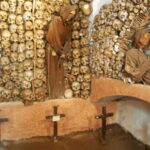
REVIEW · ROME
Small-Group Tour at Underground Temples of St. Clement’s Basilica
Book on Viator →Operated by TOURIKS · Bookable on Viator
A real-time tunnel is waiting under Rome’s churches. This Small-Group Tour at Underground Temples of St. Clement’s Basilica mixes a 12th-century basilica visit with a 14-meter descent into early Christian and pagan worlds, all explained step-by-step. I like that you get both the golden mosaics above and the strange feeling of history below the floor.
What I really love is the guided storytelling (with named guides like Francesca, Ernesto, Tom, and Daniele V showing up in strong reviews) and the practical setup: headsets so you can actually hear in tight spaces, plus an included ticket for San Clemente. The one real drawback to plan for is physical comfort: there are lots of stairs and the underground areas are narrow, so it’s not a good fit if you get anxious in enclosed places.
In This Review
- Key points to know before you go
- Why St. Clement’s Underground Feels Like a Time Tunnel
- Meeting at Piazza di San Clemente: Timing and What You’ll Actually Do
- San Clemente Above Ground: Mosaics and the 12th-Century View
- The 14-Meter Descent: 4th-Century Church, Frescoes, and the Underground River Feel
- Mithraic Temple Under St. Clement’s: Rome Before Christianity
- Optional Upgrade: Santo Stefano Rotondo al Celio in 45 Minutes
- Small-Group Value: Why $70.81 Feels Fair for This Tour
- Practical Tips: Dress Code, Phones, Shoes, and No-Photo Rules
- Weather, Services, and Liturgical Changes You Can’t Ignore
- Who This Tour Fits Best (and Who Should Skip)
- Should You Book This Underground Temples Tour?
- FAQ
- How long is the Underground Temples of St. Clement’s Basilica tour?
- Is this tour offered in English?
- Where does the tour start?
- Where does the tour end?
- What’s included in the price?
- Is the Santo Stefano Rotondo stop included?
- Are photos allowed inside the basilicas?
- What should I wear and bring?
Key points to know before you go
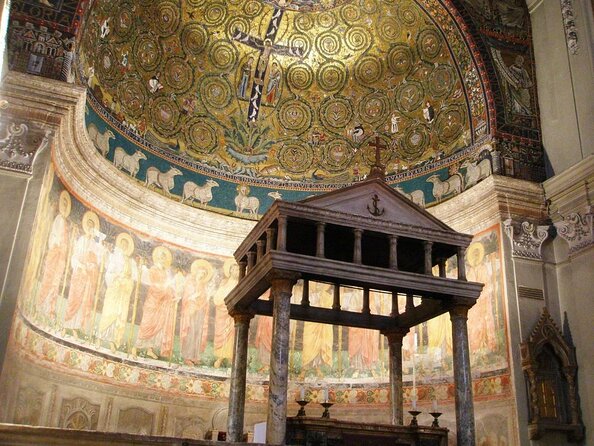
- Layers of faith in one site: 12th-century church, 4th-century underground church, and a Mithraic temple all in the same complex.
- 14-meter descent: you’ll go down deep enough to feel the change in atmosphere and sound.
- Headsets included: small-group format with audio support, helpful when you’re surrounded by stone.
- Mithras is a highlight: the well-preserved Mithraic temple gives you a rare look at Rome before Christianity.
- Optional Santo Stefano Rotondo: a circular basilica with frescoes about martyrs, 45 minutes if you add it.
- No photos inside: plan on enjoying the ruins with your eyes, not your camera.
Why St. Clement’s Underground Feels Like a Time Tunnel
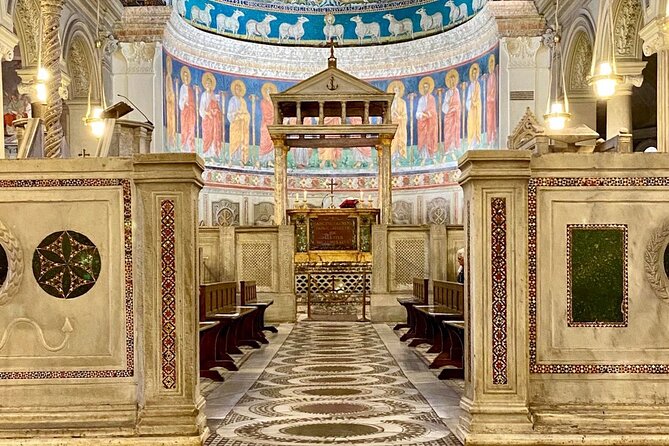
St. Clement’s is famous for a simple reason: Rome didn’t replace old buildings right away. It built over them. So instead of seeing one era, you get layers stacked on top of each other.
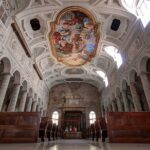
Above ground, you start in the 12th-century basilica and focus on the golden mosaic in the apse. Then you walk the stairs down to the underground level and the tone changes fast. Frescoes, early Christian scenes, and a darker sense of scale take over. If you like history that isn’t trapped behind glass, this is the kind of stop that teaches your brain to look differently at the churches you’ll see later in the city.
You can also read our reviews of more tours and experiences in Rome.



Meeting at Piazza di San Clemente: Timing and What You’ll Actually Do
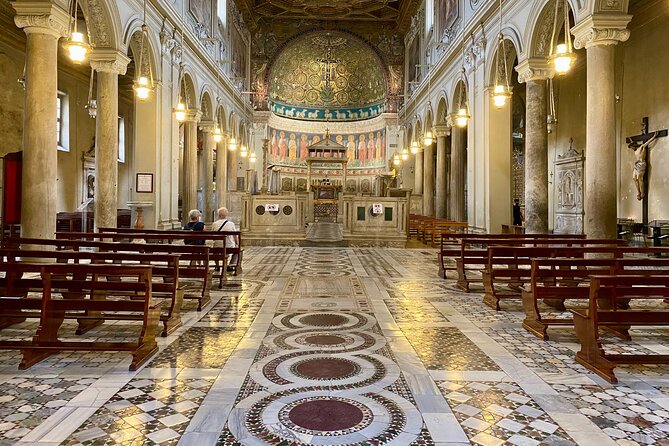
This tour runs about 2 hours, and it starts at Piazza di San Clemente (Piazza di S. Clemente, 00184 Roma RM, Italy). It also ends in a different location, so don’t plan to walk far for your next stop until you know where you’ll be released.
Most people book it ahead—on average, about 34 days in advance—which tells you it’s a popular way to see something different from the usual Rome circuit. You’ll be in a small group (max 16), and you’ll get headsets so your guide’s voice stays clear even when you’re moving between rooms and down steps.
There’s no hotel pickup. You’ll want to get there using public transportation. Also watch your timing: entry rules inside churches are strict, and you’ll want your phone on silence before you enter.
San Clemente Above Ground: Mosaics and the 12th-Century View
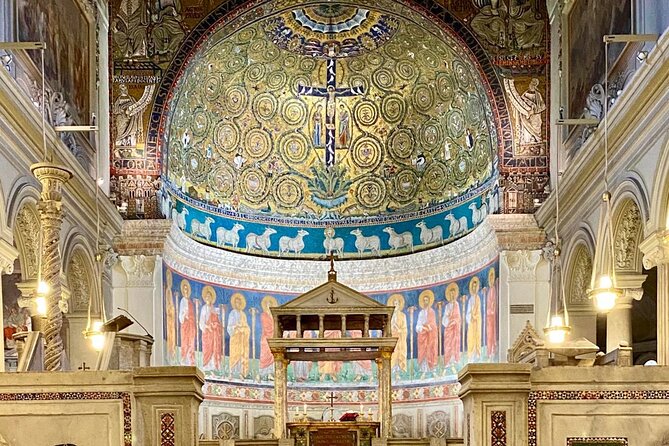
Your first stop is the Basilica of San Clemente, where your guide sets the stage. You’ll look at the stunning golden mosaic in the apse, and you’ll get the spiritual meaning behind it, not just what it looks like. It’s a nice reset before you go underground, because you understand what the building was doing in the 12th century.
This is also when you’ll learn the big idea: the underground church isn’t a separate museum. It sits under the current basilica like a hidden foundation. That context makes the descent much more satisfying. Without it, you might see “old rooms.” With it, you see purpose and continuity.
A practical note: photos and filming are not allowed inside the basilicas. If you rely on pictures to remember details, you’ll have to work a little harder with your eyes and your attention.
The 14-Meter Descent: 4th-Century Church, Frescoes, and the Underground River Feel
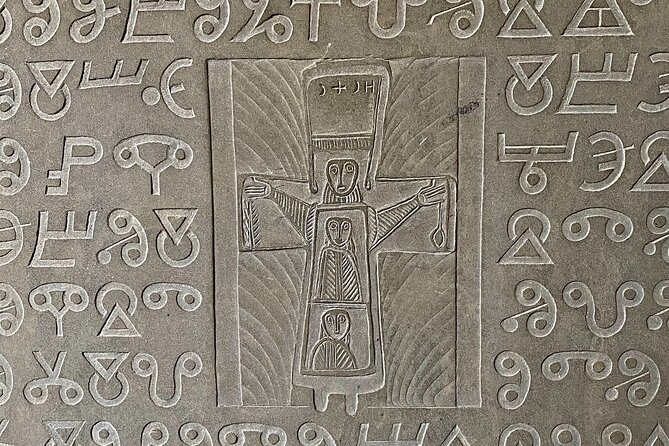
After the above-ground start, you descend about 14 meters beneath the basilica. That’s the part people remember. It’s not just walking down stairs—it’s stepping into a different layer of Rome.
Here you’ll uncover the 4th-century underground church built directly on top of St. Clement’s home. The guide explains who he was (the third pope of Rome) and helps you connect the space to early Christian life.
Then come the early Christian frescoes. Expect scenes tied to martyrs and the pressures the first Christians faced. This isn’t abstract art. It’s story-marking painted onto walls where people lived with fear, hope, and belief close by.
And yes, there’s atmosphere. One of the most eerie touches is an underground river in the area. You might not always notice it immediately, but once your guide points it out, the space feels less like a ruin and more like a functioning underground world from another era.
Potential drawback: this is a tight, stair-heavy experience. Even if you’re comfortable with stairs, the underground areas can feel cramped.
Mithraic Temple Under St. Clement’s: Rome Before Christianity
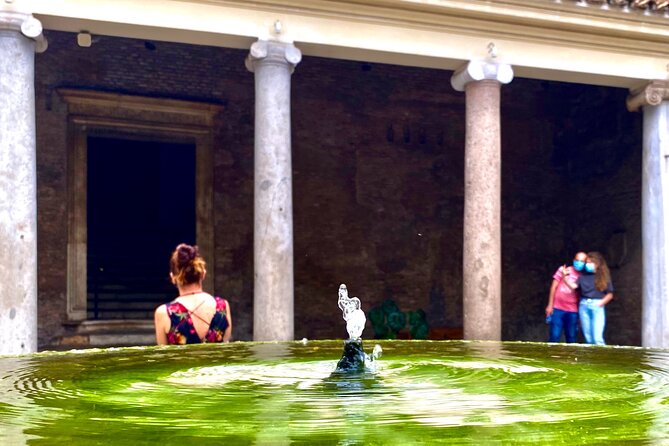
Next you go further down to see one of the best-preserved Mithraic temples in Rome. This is a major reason people book this tour, because it complicates the story of Roman religion in a good way.
Mithraism flourished before Christianity rose to dominance. In the underground temple, you’ll hear about the cult’s beliefs and rituals and why its imagery mattered. Your guide should connect the dots between what you saw above and what you’re seeing underground: changing worship systems, different symbols, and the way old and new coexisted—or collided.
What I like about including the Mithraic stop is that it prevents a one-note church history tour. Instead of only “Christian vs. pagan,” you get the reality that Rome held multiple religious worlds at once. And that underground river and stone darkness help the explanation land, because your body is experiencing the setting, not just your ears.
If you’re especially interested in the Mithras side of Rome, this tour tends to deliver that focus better than doing a random stop on your own.






Optional Upgrade: Santo Stefano Rotondo al Celio in 45 Minutes
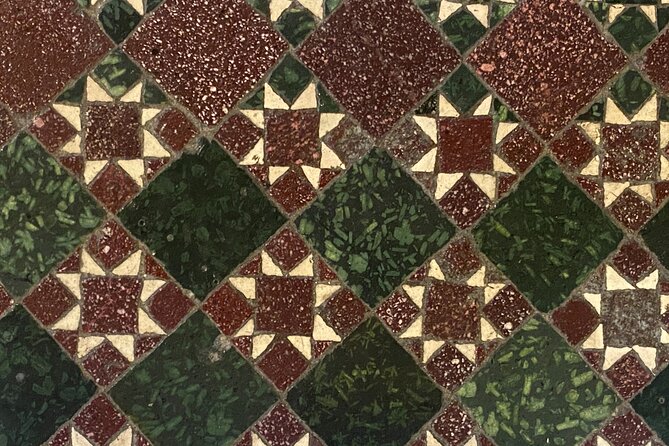
If you choose the optional add-on, you’ll visit Basilica di Santo Stefano Rotondo al Celio for about 45 minutes. The ticket is noted as free for this option.
Inside, you’ll see a unique architectural layout with a circular design, and the walls are covered with frescoes showing early Christian martyrs. The stories are dramatic, and the images can be graphic, so it may not be the best match for kids.
One thing to plan for: the order of the two basilicas can switch depending on schedule. That means your start and finish points may vary if you add Santo Stefano Rotondo. If you’re catching a later train or have a strict appointment after, check the day-of details before you lock in plans.
Small-Group Value: Why $70.81 Feels Fair for This Tour
At $70.81 per person for roughly 2 hours, this isn’t a bargain-basement price. But it makes sense for what you get: a live expert guide, entrance included for the San Clemente basilica, and headsets for better listening in stone corridors where voices can vanish.
Also, it’s set up to keep you moving. You get a luggage deposit in the office for the duration of the tour. That’s a small thing, but it matters in Rome, where you don’t want backpacks clunking at your ankles in stairs and narrow spaces.
Finally, the group size ceiling at 16 travelers helps. You’re not stuck in a giant herd, and your guide can slow down enough for the story to connect from layer to layer.
Is it worth it if you love church architecture but don’t care much about religion before Christianity? You might find the Mithraic section less compelling. But if you enjoy the way Rome stacks eras, this tour is a strong value because it packs multiple time periods into one focused route.
Practical Tips: Dress Code, Phones, Shoes, and No-Photo Rules
This tour has some clear rules. They’re easy to follow, but they matter.
- Dress code: knees and shoulders should be covered to enter the churches. If you show up in shorts and a tank, you may have trouble getting in.
- Comfortable shoes: expect moderate walking, lots of steps and stairs, and uneven-feeling church-level movement.
- Phone on silence: do it before entering the basilicas.
- No photos or filming inside: plan to use your notes app, not your camera.
- Not for claustrophobia: the underground spaces can feel too enclosed for some people.
- Pets aren’t allowed inside the basilicas.
There’s also a helpful sustainability note: they recommend you bring your own headphones to reduce plastic waste. Since headsets are included, you might still choose your own to avoid single-use accessories.
Weather, Services, and Liturgical Changes You Can’t Ignore
Because you’re working in churches and an underground site, the tour can be affected by weather conditions and liturgic-calendar events. If the tour is canceled, you’ll be offered an alternative date or a full refund.
The upgrade option can also be unavailable at times due to special events or liturgical celebrations. So if you’re adding Santo Stefano Rotondo as a key goal, keep some flexibility in your schedule.
Who This Tour Fits Best (and Who Should Skip)
This tour is perfect if you like:
- layered history where new buildings were built over old ones
- Roman religion beyond the usual big names
- underground spaces that feel real, not staged
- learning from a guide who can connect architecture to the human stories inside it
It’s also a good pick for history-minded adults and families where kids can handle the martyr-focused storytelling. But note the graphic nature of the Santo Stefano Rotondo frescoes.
Skip or reconsider if:
- claustrophobia is a concern
- you need constant room to breathe and don’t handle tight stair situations well
- you want lots of time taking photos inside churches (the no-photo rule limits that)
One more match note: the tour is offered in English, and it’s a small-group experience. If you’re traveling solo, that can be a plus, because you get a guide’s attention without paying for a private format.
Should You Book This Underground Temples Tour?
I’d book it if you want a Rome experience that’s not just another church photo stop. St. Clement’s is a rare place where you can watch Rome become itself over centuries—golden mosaic up top, martyrs underground, then Mithras when the story gets stranger.
If you’re okay with stairs, follow the dress code, and can handle being in tight spaces, this tour gives you a lot of meaning per hour. Add Santo Stefano Rotondo if you want the extra dose of martyr frescoes and don’t mind the more graphic scenes.
If you’re prone to claustrophobia or you’re coming mainly for casual sightseeing, you may find the underground portion too intense. In that case, you can still enjoy Rome’s churches—but you might skip this one.
FAQ
How long is the Underground Temples of St. Clement’s Basilica tour?
It lasts about 2 hours.
Is this tour offered in English?
Yes, it is offered in English.
Where does the tour start?
The meeting point is Piazza di San Clemente (Piazza di S. Clemente, 00184 Roma RM, Italy).
Where does the tour end?
It ends in a different location. The exact ending point can vary, especially if you add the optional Santo Stefano Rotondo visit.
What’s included in the price?
The tour includes an expert live guide, entrance fees to Basilica of San Clemente, a luggage deposit in the office during the tour, and headsets.
Is the Santo Stefano Rotondo stop included?
It’s optional. If you select it during purchase, you’ll get a guided visit for about 45 minutes, and the ticket is listed as free.
Are photos allowed inside the basilicas?
No. Photography and filming inside the basilicas is not allowed.
What should I wear and bring?
You need knees and shoulders covered. Wear comfortable shoes because there are many steps and stairs. Your phone should be on silence, and it’s recommended you bring your own headphones to reduce plastic waste.