REVIEW · ROME
Rome: Colosseum Forums, Pantheon and City Highlights Private Tour
Book on Viator →Operated by Private Tours of Rome · Bookable on Viator
Rome doesn’t do slow. This private route strings together the Colosseum, Roman Forum, Pantheon, and two of Rome’s most famous squares—so you get a real sense of the city’s big jumps in time. If you get a guide like Paola or Claudia, you’ll feel how the stories connect across centuries, not just in separate photo stops.
I love that you start with the hardest-to-figure-out site first, then you move outward. You also get admission handled for you, including the Colosseum ticket and reservation fee, which saves real headache on a busy day.
One possible drawback: you’re paying for a private format. If you’re price-sensitive, you may feel the cost is higher than you expected unless the guide’s pacing and explanation really matter to you.
In This Review
- Key points to know before you go
- A Private Route That Hits Rome’s Biggest “Wow” Moments
- Entering the Colosseum: More Than an Outer Wall Photo
- The Roman Forum and Arch of Constantine: Rome’s Daily Power Center
- Trevi Fountain: Coin Toss, Movie Fame, and a Quick Reality Check
- Piazza Venezia and Quirinal Palace Area: The Wedding Cake Landmark Moment
- The Pantheon: Step In for the Wow Factor You Feel Immediately
- Piazza Navona and Bernini’s Four Rivers: Baroque Drama in a Courtyard-Sized Square
- Price and Value: What You’re Really Paying For
- Who This Tour Fits Best (and Who Might Want a Different Plan)
- Practical Notes That Make the Day Easier
- Should You Book This Rome Colosseum, Forum, Pantheon, Trevi, and Piazza Navona Private Tour?
- FAQ
- How long is the private tour?
- Where does the tour start and end?
- Does this tour include admission tickets?
- Is it truly private?
- Will I need a passport or ID?
- Is there a hotel pick-up?
- What ticket format do you use?
- What’s the physical requirement?
- What is the cancellation rule?
- Are the names of all travelers required for entry?
Key points to know before you go
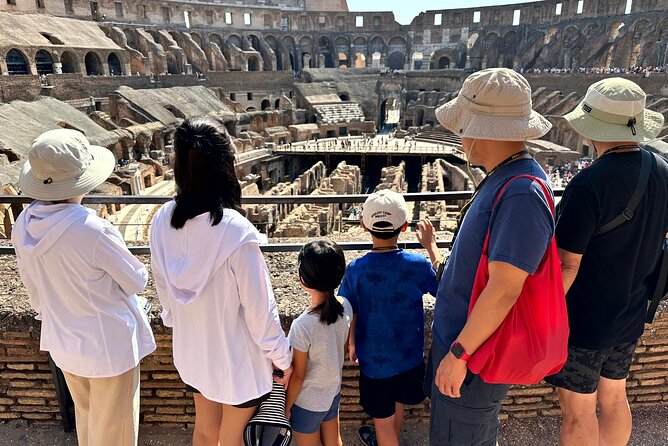
- Timed Colosseum entry with fees included: You get the Colosseum ticket and reservation fee bundled in.
- A guide who ties sites together: Guides like Sarah and Thomas are known for clear, story-driven explanations.
- Private means just your group: No waiting around for strangers who wander off.
- Major sights, but not all day: About 4 hours 30 minutes keeps it doable for first-timers.
- Trevi + Pantheon + Piazza Navona: You hit ancient, Renaissance, and baroque art in one flow.
A Private Route That Hits Rome’s Biggest “Wow” Moments
This is one of those Rome plans that works because it’s built around how the city actually feels. You don’t spend half your day lost between “must sees.” You walk a logical line: ancient power (Colosseum), daily government and religion (Forum), cinematic luck (Trevi), mind-blowing architecture (Pantheon), then art and fountains (Piazza Navona).
The private part matters more than people think. When you’re inside the Colosseum or threading through the ruins, a good guide helps you see the layout and the meaning. When you’re in the Pantheon, it’s not only about looking up. It’s about understanding why that space still feels so exacting.
You’ll also appreciate the practical side: the tour runs without hotel pick-up, has a set start and end point, and keeps the schedule tight enough to use your time wisely.
You can also read our reviews of more city tours in Rome



Entering the Colosseum: More Than an Outer Wall Photo
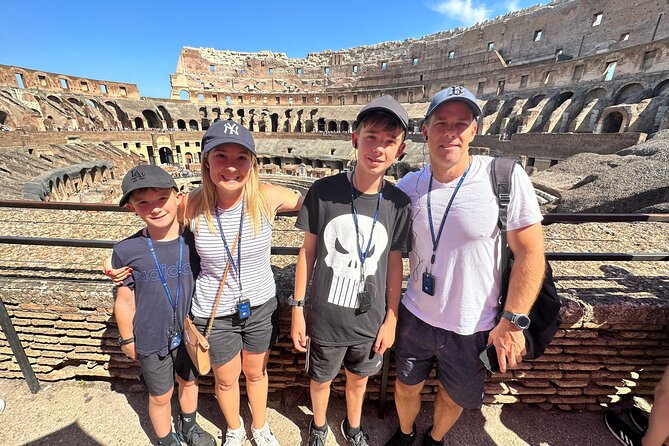
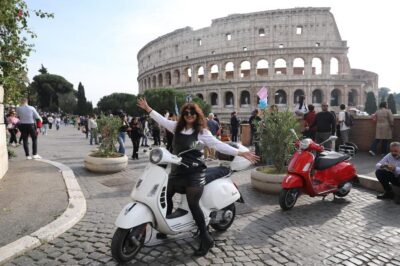
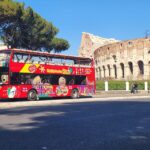
Your tour begins at Piazza del Colosseo, and then you’re into the Colosseum for about an hour. This is the right place to start because it’s the one site most visitors underestimate. You can look at the building all day from the outside, but inside is where the logic clicks: how Romans engineered a massive event space, how spectators moved, and how combatants and the staging worked.
You’re not just walking randomly through corridors. The explanation focuses on development strategies, capacity, and how architects and builders achieved something that still feels ambitious. You’ll also hear how the spectacle worked—battles, creatures, and the whole machinery of Roman entertainment.
What I like here for you is the time discipline. With a private guide, you spend less time “figuring out what to look at” and more time seeing why specific areas matter.
Tip for your comfort: this is a guided walking visit inside a heavy-foot-traffic site. If you have mobility concerns, ask for a slower pace when you book. One guide on this route has been praised for adjusting for older parents and checking in often, which is exactly the kind of service you want.
The Roman Forum and Arch of Constantine: Rome’s Daily Power Center
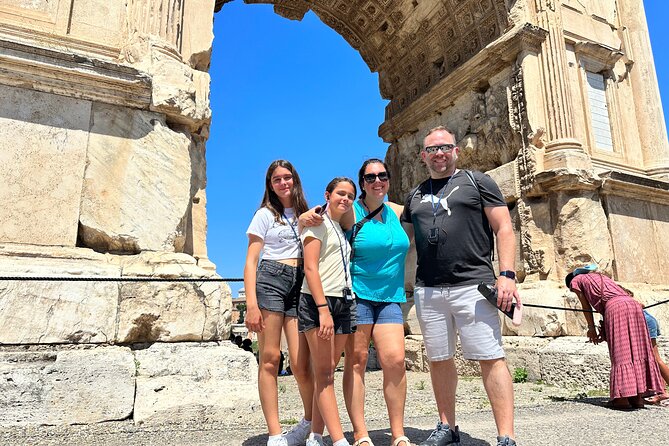
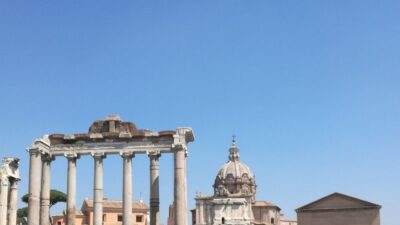
After the Colosseum, you head to the Foro Romano. You’ll get about an hour here, including time outside to see the Arch of Constantine. This is where the city turns from spectacle into governance.
The Forum was Rome’s main square and activity hub—political, religious, and social. That means it’s not one building you point at. It’s a web of spaces that helps you understand how power functioned day to day. With a guide, you can connect dots between monuments, the way people would have moved through the space, and what Romans were doing when they gathered there.
A nice bonus is how this stop sets up what comes next. The Forum helps you understand why the Pantheon later feels less like a random church and more like Rome reinventing itself architecturally.
Consideration: you’re moving between big, open spaces that can be hot and bright. Bring water, wear sunscreen, and plan on a steady walking pace.
Trevi Fountain: Coin Toss, Movie Fame, and a Quick Reality Check
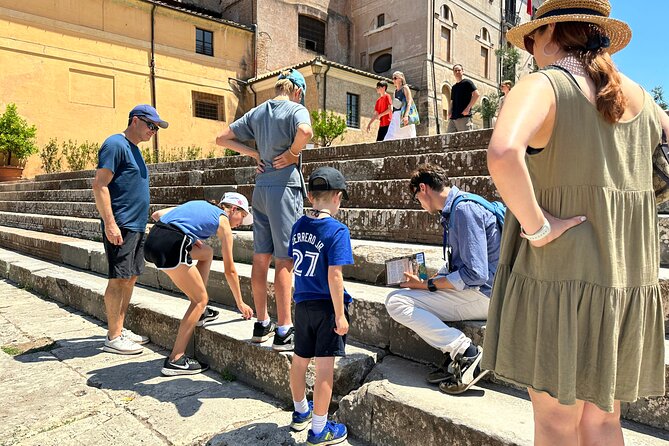
Next up is the Fontana di Trevi, with about 30 minutes on-site. You’ll learn the legend behind tossing a coin into the well, and you’ll see why the fountain has shown up in films—including Fellini’s La Dolce Vita.
This stop is short on purpose. Trevi is crowded, and the best way to enjoy it is to stay focused: take in the main view, listen for the story, and then get your photos without turning it into a two-hour wait-and-sweat.
If your top priority is getting to the Pantheon without losing momentum, this is the right length. You’ll have time for the classic shot, plus enough mental space to understand how the fountain fits into Rome’s long art and power story.
Piazza Venezia and Quirinal Palace Area: The Wedding Cake Landmark Moment
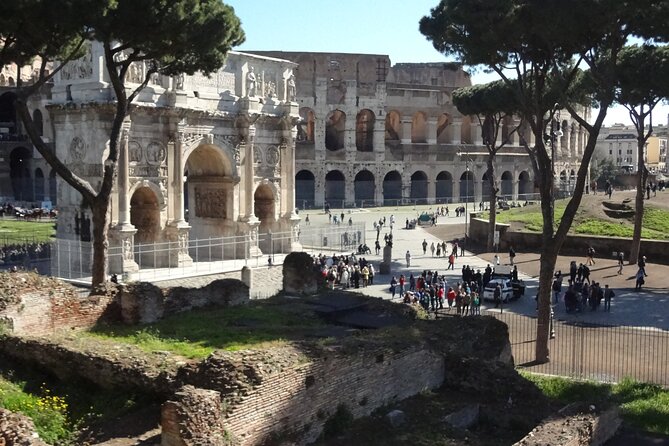
Between Trevi and the Pantheon, you walk through ancient Rome ruins and reach Piazza Venezia. Here you’ll see the “Wedding Cake” marble landmark raised in 1885 to celebrate King Victor Emmanuel II.
This part is a smart change of pace. It doesn’t feel like “another museum stop.” It’s a viewpoint-and-walking section that gives you context for the broader city and how modern monuments sit right on top of older layers. From there, you head toward the Quirinal Palace area, which is the official living arrangement of the Italian President.
You might not get a deep ticketed visit here, but you get something more useful: a sense of Rome as a stacked place, where each era rebuilds over the last.
You can also read our reviews of more private tours in Rome






The Pantheon: Step In for the Wow Factor You Feel Immediately
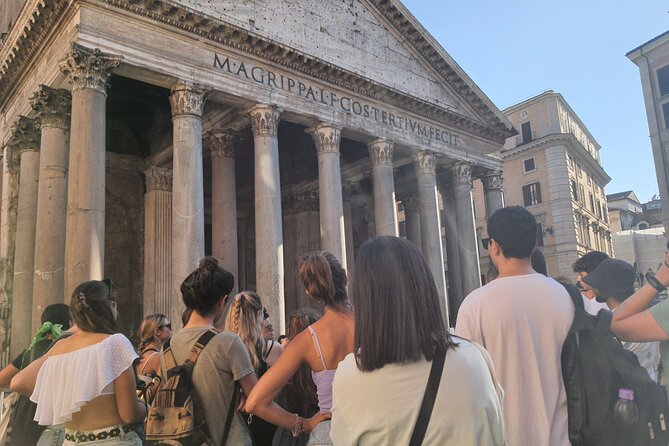
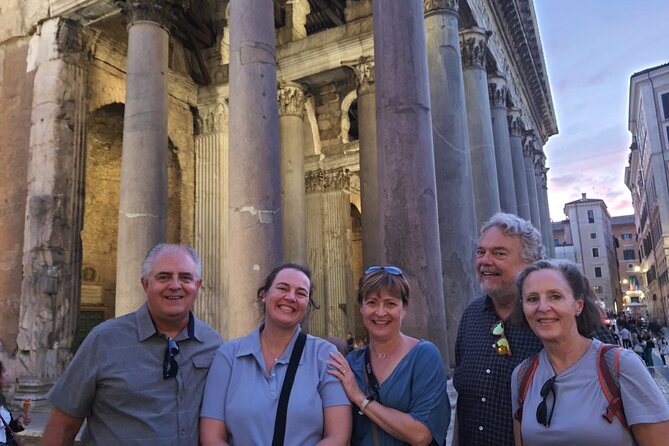
Your next big stop is the Pantheon, with about an hour inside. This is one of those sights where the architecture does most of the talking. Still, a guide helps you read the space instead of only admiring it.
You’ll also learn that Raphael, the Renaissance painter and engineer, lies buried here. That detail adds a human thread—this isn’t only ancient stone. It’s also a Renaissance marker of respect and continuity.
For you, the real win is timing and focus. The Pantheon is a crowd magnet. With a private guide, you’re more likely to know where to stand, what to look up at, and what architectural features connect to Roman engineering.
Small practical note: entry involves lines and movement inside a major historic building. Wear shoes you can walk in comfortably for the full half-day.
Piazza Navona and Bernini’s Four Rivers: Baroque Drama in a Courtyard-Sized Square
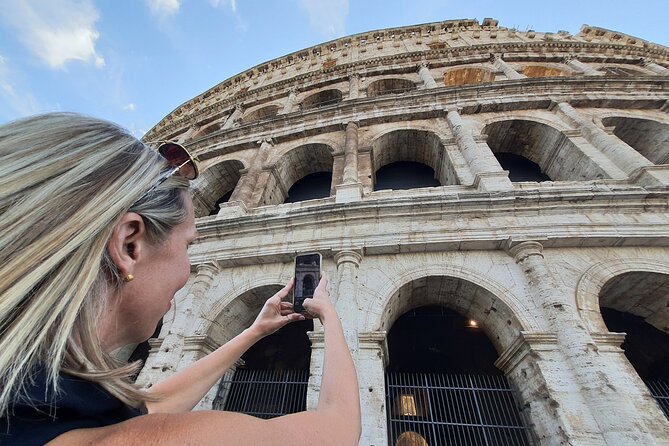
The tour ends by heading to Piazza Navona for about an hour. You’ll appreciate the Fountain of the Four Rivers by Bernini, and you’ll learn about the ancient Baths of Nero that once occupied the area.
This is a fun stop because it’s an art-history moment you can actually enjoy while standing still. The square has the right mix of energy and space, so it doesn’t feel like another sprint between ticket counters.
You’ll also appreciate the tour ending point. Ending at Piazza Navona is convenient because it’s surrounded by cafés and a lot of easy onward walking. You’re not forced to go back across the city right at the finish.
Price and Value: What You’re Really Paying For
At $426.54 per person for a 4 hours 30 minutes private tour, it’s not a “cheap” afternoon. But it also isn’t just you paying for a guide holding a flag.
Here’s the value logic that matters:
- Admissions are included, including the Colosseum ticket valued at €18 and the Colosseum reservation fee valued at €2 per person.
- The guide is an art historian plus local guidance, which is the difference between seeing landmarks and understanding what you’re seeing.
- Private format means you get pacing that fits your group, instead of rushing to match other people’s speed.
That’s the key. If your travel style is learn-as-you-go and you want context, private tours can be worth it. If you mainly want quick photos and the simplest route, the price might feel steep.
There’s also a pricing caution you should keep in mind. One negative comment flags sticker shock when comparing costs for a group of four. I can’t confirm why that happened, but it’s a good reminder: double-check the total per person and confirm what’s included before you lock it in.
Who This Tour Fits Best (and Who Might Want a Different Plan)
This tour fits first-time Rome visitors who want the big hitters without losing time. It also fits people who learn best when someone narrates the connections: ancient to Renaissance, government to architecture, spectacle to art.
It can also work well if you’re traveling with older relatives, because the tour is built around a steady guided pace and at least one guide has been specifically praised for accommodating mobility needs. Still, the experience is set for moderate physical fitness, so plan for walking and standing.
You might want a different plan if:
- You hate group walking schedules and want complete freedom.
- You’re extremely budget-focused and would rather pay for individual entries yourself.
- You can handle the Colosseum and Pantheon on your own and don’t care about guided context.
If that’s you, a self-guided route plus a separate short guide could be more cost-friendly.
Practical Notes That Make the Day Easier
A few details are worth taking seriously because Rome can be picky:
- You meet at Piazza del Colosseo, 23, and you end at Piazza Navona.
- There’s no hotel pick-up, so plan your start location access using public transportation.
- You should have valid passport or ID that matches the name provided at booking.
- For the Colosseum (and Roman Forum), bring voucher details that match all travelers’ full names. If the names don’t match, entry can be denied.
Also, you’ll use a mobile ticket, which cuts down on paper fuss. That’s helpful when you’re bouncing between crowded sites and trying to keep the day smooth.
Should You Book This Rome Colosseum, Forum, Pantheon, Trevi, and Piazza Navona Private Tour?
I’d book it if you want a half-day that feels like a guided story, not a checklist. The combination of Colosseum interior time, Forum context, Pantheon entry, and a guided stop at Piazza Navona is a strong use of 4 hours 30 minutes.
I’d also book it if you’ll value a guide’s ability to make the sites connect. Reviews from different guides point to warmth, pacing, and strong explanations, including names like Paola, Claudia, Sarah, Donato, Thomas, Marco, Angelica, and Ambra. That kind of guide effort is what turns “seeing famous places” into getting it.
I’d think twice if private pricing will stress your budget. In that case, compare how much you’ll use the included admissions and whether you’ll actually benefit from the pacing and art/architecture explanations. If you’re unsure, choose the option that matches your energy level, not just the site list.
FAQ
How long is the private tour?
It runs about 4 hours 30 minutes.
Where does the tour start and end?
It starts at Piazza del Colosseo, 23, 00184 Roma RM, Italy, and ends at Piazza Navona, 00186 Roma RM, Italy.
Does this tour include admission tickets?
Yes. Colosseum entrance and the Colosseum reservation fee are included, along with other activities. Trevi Fountain admission is listed as free.
Is it truly private?
Yes. This is a private tour/activity, and only your group participates.
Will I need a passport or ID?
Yes. Each traveler must present a valid passport or ID document that matches the name provided at booking for entry to the Colosseum and Roman Forum.
Is there a hotel pick-up?
No. Hotel pick-up is not included.
What ticket format do you use?
The tour uses a mobile ticket.
What’s the physical requirement?
It’s geared to travelers with a moderate physical fitness level.
What is the cancellation rule?
This experience is non-refundable and cannot be changed for any reason, so you should be sure before booking.
Are the names of all travelers required for entry?
Yes. You should provide the full names of all travelers when booking, and you must present the voucher with matching full names at the ticket office prior to entry.