REVIEW · ROME
Rome: Walking Tour of World War 2 in Rome
Book on GetYourGuide →Operated by Roman Vacations · Bookable on GetYourGuide
Rome’s WWII marks are easy to miss. On this World War II in Rome walk, I like how the route turns famous stops into clues about Fascism, Nazi occupation, and liberation in June 1944. I also like the way you get context you can use right away, especially the connections between Mussolini and ancient Rome. One downside: the topic is heavy, so if you want a light, purely scenic day, this may feel like a lot.
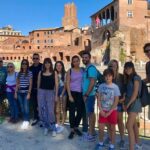
The tour runs 2.5 hours with a small group (limited to 10) and an expert, English-speaking guide from Roman Vacations. You meet at Trajan’s Column (look for the cafe frontage and the orange sign with a lion head), and you’ll cover major central sites on foot—so comfortable shoes are not optional.
In This Review
- Key highlights before you lace up
- Why this WWII walking tour makes Rome click
- Finding the guide at Trajan’s Column (and why it matters)
- From Trajan’s Column to Piazza Venezia: Fascism takes the spotlight
- The Ancient Roman Forum and Capitoline Hill: propaganda with ancient backing
- A pause in the middle: the Julius Caesar assassination site
- The Jewish Ghetto: history you can’t treat as a detour
- Piazza Navona and the Tiber River: where Church power shows up
- June 1944 in Rome: liberation, fear, and mass jubilation
- How long is enough, and how does the pacing feel?
- What to wear and bring for a walk through central Rome
- Price and value: is $88 worth 2.5 hours?
- Who should book this tour (and who should think twice)
- Final call: should you book Rome’s WWII walk?
- FAQ
- Where is the meeting point?
- How long is the tour?
- How many people are in the group?
- Is the tour wheelchair accessible?
- What should I bring or wear?
- Does the tour run in bad weather?
Key highlights before you lace up
- Spot WWII-era signs in plain sight across central Rome, not in a museum setting
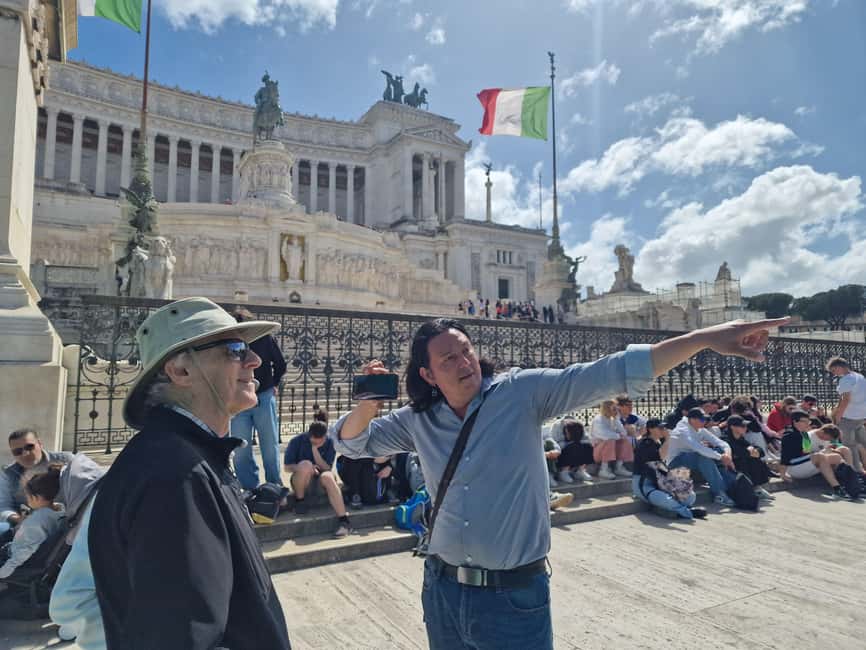
- Piazza Venezia to Trajan’s Column connections: Mussolini’s performance space meets his propaganda obsession with Rome’s past
- Jewish Ghetto context built into the walk, not treated as a side note
- Guides that use period media (photos and video) to make stories click fast
- A small group rhythm that keeps questions flowing without turning the day into a lecture
Why this WWII walking tour makes Rome click
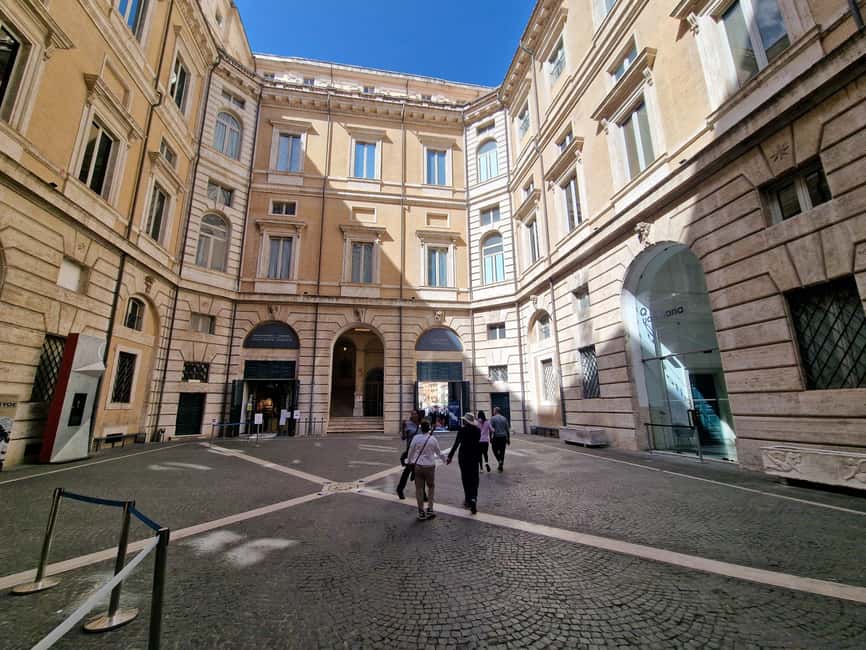
Rome can feel like one big picture postcard. This tour breaks that illusion. You start seeing the city as a place where political power was staged in public, where monuments were repurposed, and where ordinary streets carried extraordinary consequences.
What makes it compelling is that you’re not only “learning dates.” You’re learning cause and effect. You’ll connect how Fascism used Rome’s image of empire, how the Nazi occupation changed life for Romans, and how the liberation in June 1944 landed emotionally on the ground. Even if you’ve seen those sites before, this walk changes how you read them.
You can also read our reviews of more walking tours in Rome
Finding the guide at Trajan’s Column (and why it matters)
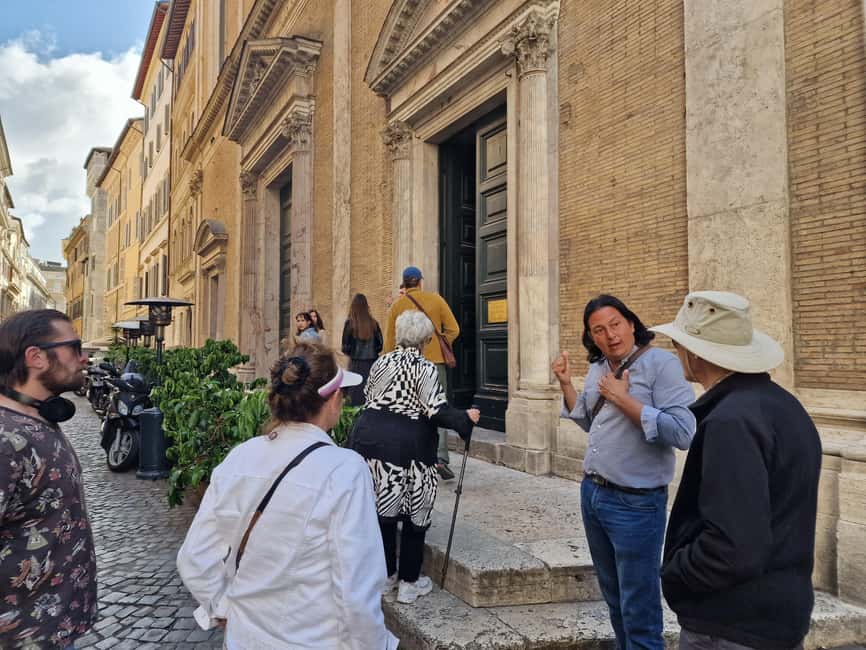
The meeting point is in central Rome, right by Trajan’s Column. Your guide stands in front of the cafe along the fencing and holds an orange sign with a lion head.
This location is more than convenient. It’s a smart starting point because the tour quickly links the idea of imperial Rome (ancient symbolism) to modern political use of those same symbols. When you begin here, you get a framework for the entire route instead of just random stops.
Practical note: arrive about 15 minutes early. Tours depart promptly, and late arrivals can miss the start.
From Trajan’s Column to Piazza Venezia: Fascism takes the spotlight
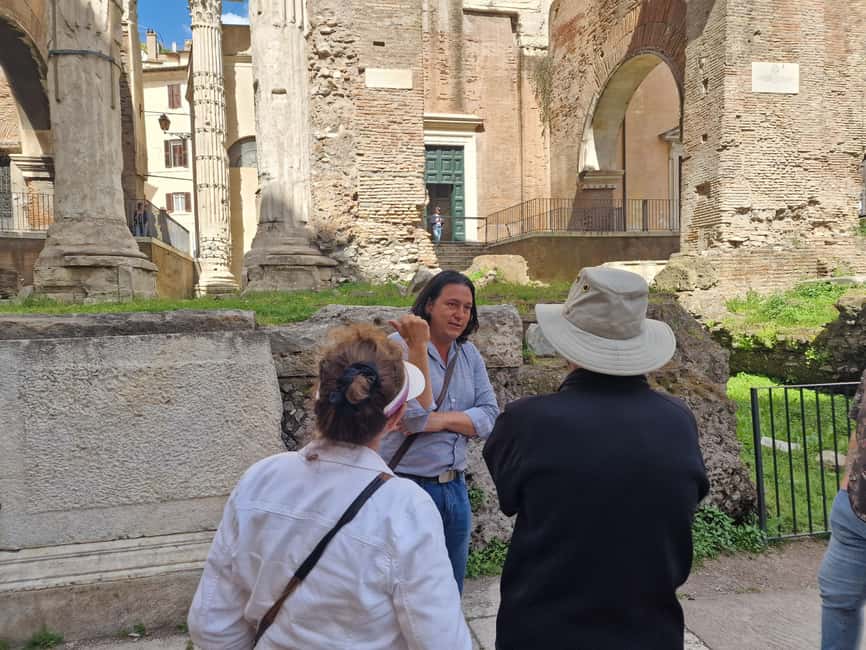
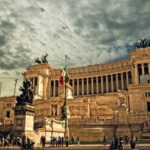
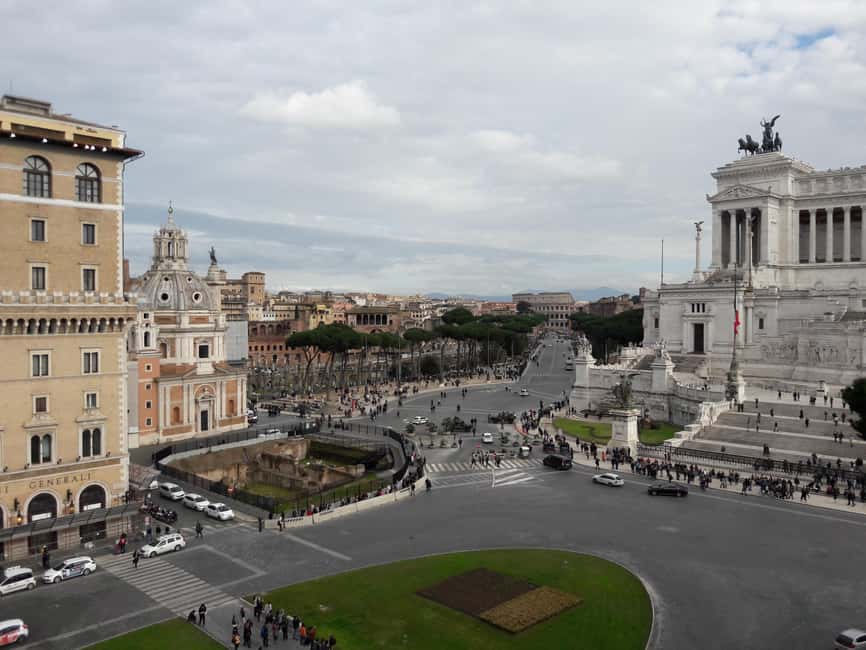
Once you’re rolling, the tour moves quickly into the heart of Fascist Italy. The next major anchor is Piazza Venezia, the center stage where Mussolini would speak to crowds from the famous balcony.
What I like about this part is how it reframes the square. Piazza Venezia isn’t just a great photo spot. In this walk, it becomes a stage where modern power borrowed the authority of Rome’s image. You’ll hear how the city functioned under Fascist rule for twenty years, and you’ll see why those years were not a distant chapter—they shaped the streets and the monuments you’re walking past.
And because you’re physically moving—corner to corner, landmark to landmark—the story stays attached to what you’re looking at. You’re not just imagining it.
The Ancient Roman Forum and Capitoline Hill: propaganda with ancient backing
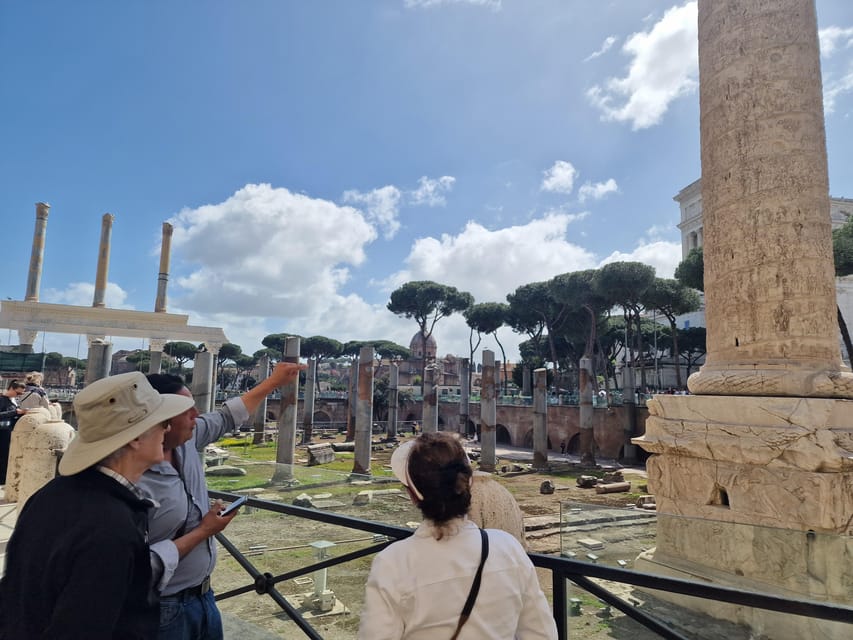
After Piazza Venezia, you head into the Ancient Roman Forum area and keep going toward Capitoline Hill. This is where the tour leans into one of its most important themes: Mussolini’s obsession with ancient Rome.
Here’s the payoff. You’ll get the logic behind his campaign to link modern Italy to imperial Rome. In plain terms: if Fascism wanted legitimacy, it didn’t only use posters and speeches. It also used the physical city—ancient sites and their framing—to tell a story about destiny and greatness.
A useful detail from the experience: once that connection is explained clearly, you start noticing how signs of the Fascist past seem to appear everywhere along the route. Even if you’re not looking for history, you’ll start reading the city differently—like you’re spotting edits in a film you thought you’d already seen.
A pause in the middle: the Julius Caesar assassination site
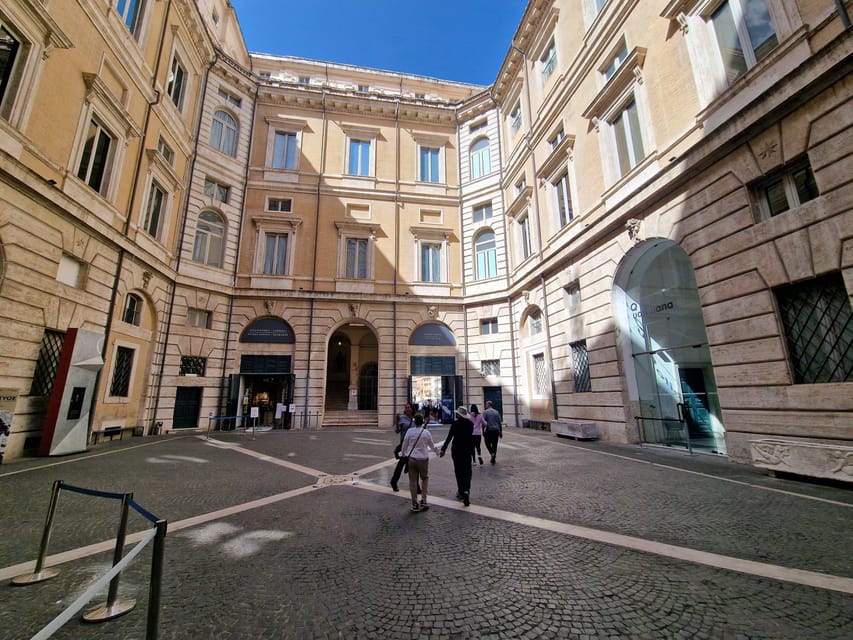
One of the stops that tends to land well is the site connected to Julius Caesar’s assassination. It’s a reminder that Rome has always been political, always been about power, and always been about who controls narratives—publicly and violently.
In a tour like this, Caesar’s story isn’t included for trivia value. It’s part of the broader pattern: Rome’s past gets used, staged, and re-staged by whoever is in charge. That theme shows up again later as you move toward the Jewish Ghetto and the Tiber area.





The Jewish Ghetto: history you can’t treat as a detour
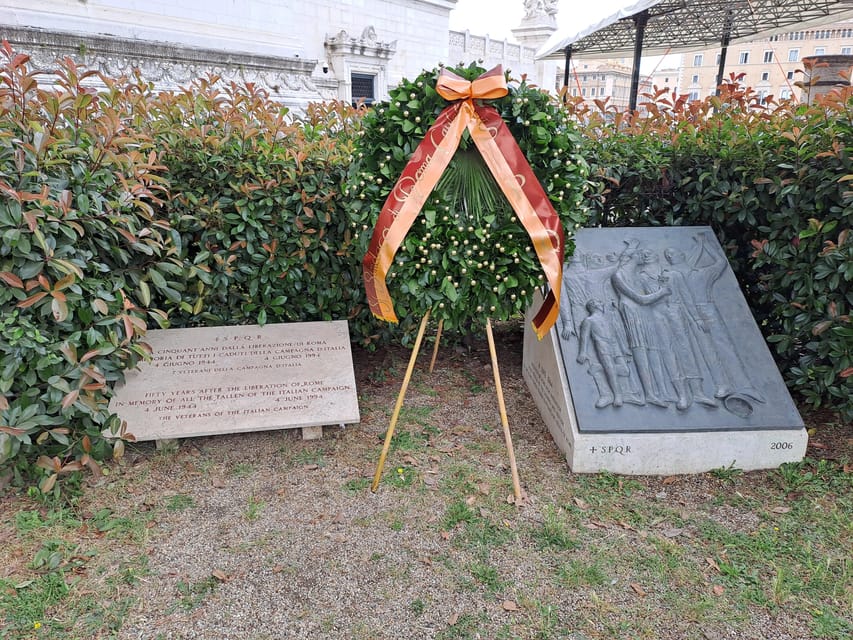
The walk then proceeds to the Jewish Ghetto, where you’ll talk about the history of the Jewish community in Rome. This stop matters because it keeps the story anchored to people, not just governments and speeches.
In practical terms, the guide’s explanations help you understand why this area is central to Rome’s 20th-century story—not because it was mentioned on a billboard, but because communities experienced the war and occupation in deeply personal ways.
The best tours don’t rush this kind of subject. This one keeps moving, but it’s designed to help you connect the ghetto area to the bigger question the tour keeps asking: how political systems shape daily life and public space.
Piazza Navona and the Tiber River: where Church power shows up
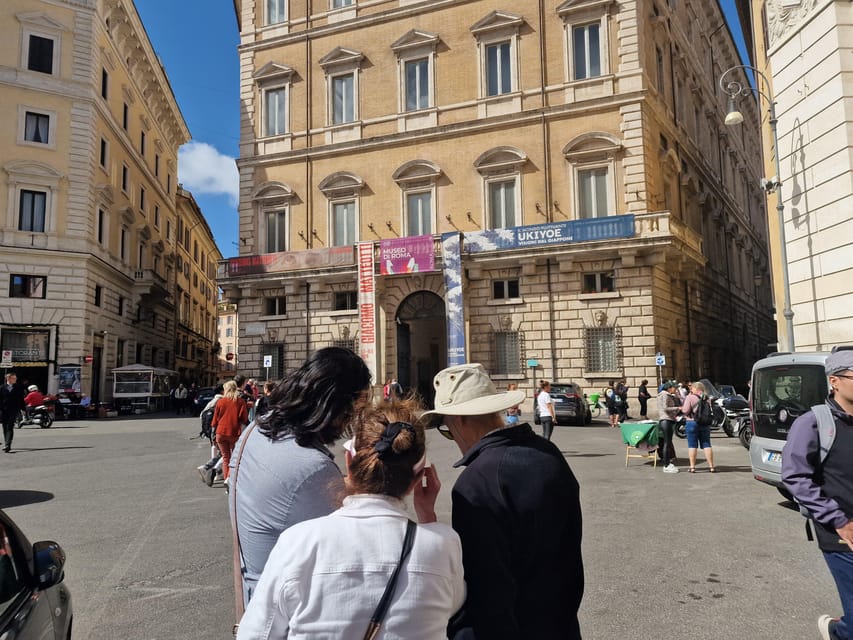
Next comes Piazza Navona, then you move toward the Tiber River. This is where the discussion turns to the Church and its position during the Fascist period and the war.
You might not think of the Church as a major player in WWII-era Rome until you see how power works in a city like this. This section helps you understand how institutions navigate regimes, influence public life, and deal with the reality of occupation and conflict.
Also, these stops are visually enjoyable in their own right. Piazza Navona is a classic Rome scene, and the Tiber area gives you open sightlines for your guide to point things out. Just remember: the tour purpose here isn’t sightseeing. It’s interpretation—what you’re seeing, and what it meant under pressure.
June 1944 in Rome: liberation, fear, and mass jubilation
The emotional center of the tour arrives when the guide recalls June 1944, when the Nazis fled the city and the US Fifth Army entered Rome to scenes of mass jubilation.
This part is powerful because the tour has built toward it. You’ve spent time on Fascist staging, on ancient symbols turned modern political tools, and on how Rome’s social reality changed under occupation. So when liberation arrives, it doesn’t feel like a random textbook event. It feels like the ending to a story you can track street by street.
If you’re the kind of traveler who likes history to have an ending, this works well. If you want history that ends with a flag-waving moment and a quick exit for dessert, you’ll still get that energy—but only after the hard context that makes it meaningful.
How long is enough, and how does the pacing feel?
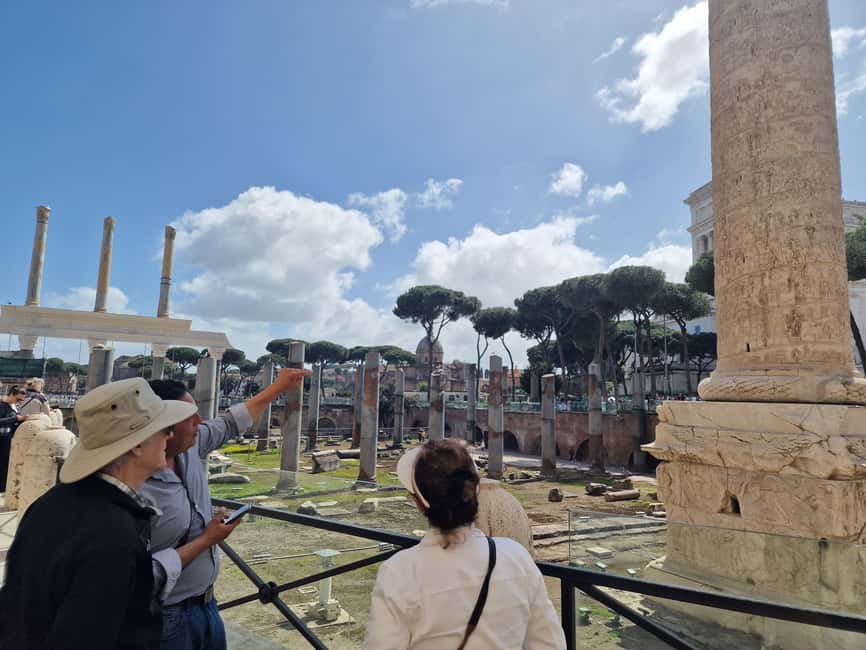
The tour lasts 2.5 hours and stays in central Rome on foot. That’s a sweet spot for a topic like this: long enough for real context, short enough that you won’t feel like your whole day is swallowed.
Group size is limited to 10 participants, which helps in two ways:
- You can actually ask questions without yelling over the crowd.
- The guide can adjust explanations based on what you seem to care about.
You’ll also appreciate that it’s a live, English guided tour. The tour style is built around explanation, not handing you a pamphlet and hoping you’ll connect the dots.
Accessibility matters too. The tour is wheelchair accessible, which is a real plus if you can’t do long city blocks comfortably.
What to wear and bring for a walk through central Rome
This is an outdoor walk, so plan like you’ll be out there. The guidance is straightforward:
- Bring bottled water
- Pack sunscreen, plus a hat
- Consider an umbrella
- Wear comfortable walking shoes
- If the route goes into any churches, bring a shoulder cover
Weather is another factor. The tour proceeds in all weather conditions unless a site is closed by authorities for safety reasons. Translation: dress for the day you’re actually going to get, not the day you wish you had.
Also, because you start by Trajan’s Column and move through busy central areas, you’ll want to be mentally ready for a lot of street-level looking. This isn’t a “fast walk past everything” kind of tour. It’s built so you notice.
Price and value: is $88 worth 2.5 hours?
At $88 per person, the price isn’t cheap, but it doesn’t feel random either. You’re paying for an expert guide who can connect multiple time periods without losing the thread.
Here’s what makes it good value:
- You get structured context for major central sites in a tight timeline.
- You cover iconic locations (Piazza Venezia, the Forum area, Piazza Navona area) without the cost and time of separate museum visits.
- The small-group limit keeps the experience from becoming generic.
If you already know every WWII headline and don’t care about how Fascism shaped the city’s visual language, you might find parts familiar. But if you want to walk Rome and have it start making sense as a 20th-century stage—not just an ancient postcard—this price is easier to justify.
Also, the tour doesn’t include food and drink, so you can keep your day flexible. That’s helpful if you like to pair history with a nearby meal you’ve picked yourself.
Who should book this tour (and who should think twice)
This tour fits best if you:
- Love WWII history, especially how it intersects with Italy and Italy’s political theater
- Prefer guided interpretation over reading plaques alone
- Want a walk that includes a serious look at Fascism, occupation, and liberation
- Like small-group pacing with time for questions
It might not be the best match if you:
- Want a purely light sightseeing day
- Get uncomfortable with stories tied to dictatorship, occupation, and the human cost of war
- Expect a tour that focuses only on ancient Rome without modern political framing
Final call: should you book Rome’s WWII walk?
I’d book this if you’re staying in central Rome and you want the city to feel like more than a greatest-hits album. This tour gives you a way to read the streets with sharper eyes—especially around Fascist-era symbolism, the Jewish Ghetto, and the emotional shift in June 1944.
If you’re unsure, think about what you do when you travel. If you stop at monuments and wonder what power did here, this walk is built for you. If you prefer a history-lite approach, you might feel like the tour is asking too much—emotionally and mentally.
FAQ
Where is the meeting point?
You meet near Trajan’s Column at the cafe frontage along the fencing. The guide will be holding an orange sign with a lion head.
How long is the tour?
The tour runs for 2.5 hours.
How many people are in the group?
It’s a small group limited to 10 participants.
Is the tour wheelchair accessible?
Yes, the tour is listed as wheelchair accessible.
What should I bring or wear?
Wear comfortable walking shoes. Bring bottled water, sunscreen, a hat, and an umbrella. Also bring a shoulder cover for any churches you enter.
Does the tour run in bad weather?
Tours proceed in all weather conditions unless authorities close a site for safety reasons.