REVIEW · ROME
Rome Street Photography Lesson
Book on Viator →Operated by Pollino Insider · Bookable on Viator
Street scenes in Rome teach fast. You’ll get real coaching for street photography while moving through iconic areas of the city. This is a private Rome street-photo lesson in Trastevere, then on to Campo de’ Fiori and the Pantheon, with lots of stop-and-shoot practice along the way.
I like that you’re not just sightseeing. You’re actively learning how to frame, anticipate moments, and improve your results as you walk. The second thing I like is the human side: the tone around the guide is professional and relaxed, with real feedback (the guide Luigi is repeatedly described as an exemplary pro).
One thing to consider: you’ll be walking and working your camera for about 3 hours, so if you want a slow, sit-down museum pace, this format may feel a bit intense.
In This Review
- Key Things That Make This Street Photo Lesson Work
- How This Lesson Turns Rome Into a Photo Classroom
- The 3-Hour Route: Santa Maria in Trastevere, Campo de’ Fiori and the Pantheon
- Stop 1: Basilica di Santa Maria in Trastevere for Details and Light
- Stop 2: Campo de’ Fiori for Timing, People, and Street-Photo Energy
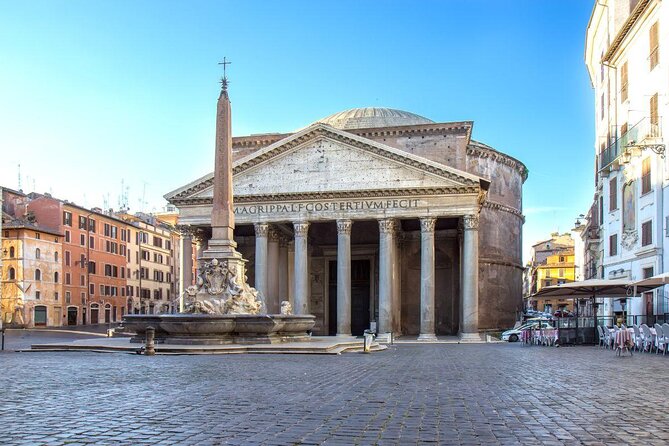
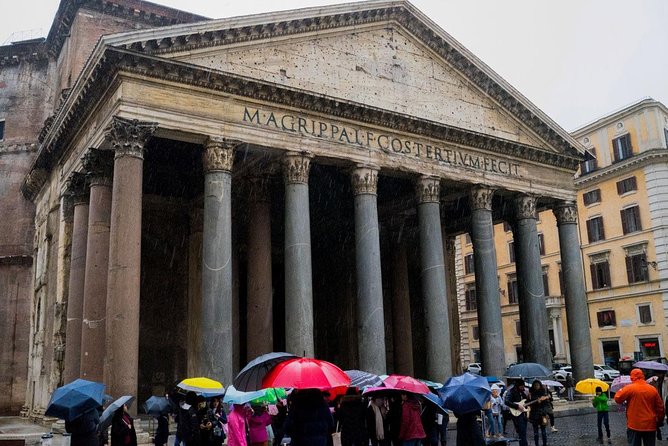
- Stop 3: The Pantheon for Composition, Geometry, and Human Scale
- What You’ll Actually Learn to Do With Your Camera
- Why the Private Guide Matters (and Why It Feels More Fun)
- Price and Value: Is $138.91 Reasonable for 3 Hours?
- Logistics That Affect Your Experience (Without Spoilers)
- Who Should Book This Street Photography Lesson
- Should You Book This Rome Street Photography Lesson?
- FAQ
- How long is the Rome Street Photography Lesson?
- Where does the tour start?
- Is this a private tour?
- What camera do I need?
- Are admission tickets included for the sights?
- Do I get a mobile ticket?
- What time does the tour run?
- Are service animals allowed?
- Can I get a full refund if I cancel?
Key Things That Make This Street Photo Lesson Work
- Private coaching means you get attention tuned to your camera and your style
- Lots of shooting practice while you move between Trastevere, Campo de’ Fiori, and the Pantheon
- Historic backdrops that also work for street framing, including Pietro Cavallini mosaics and the Pantheon dome
- Bring-your-own camera approach, so you can apply tips instantly
- Trastevere to Campo de’ Fiori is a smart “photo corridor” with texture, people, and angles
- Tickets not included for key stops, so budget time (and money) if you want to go inside
How This Lesson Turns Rome Into a Photo Classroom
Rome street photography can feel random. You see cool stuff, you take a shot, and later you wonder why it doesn’t look like the image in your head. This kind of lesson helps you break that cycle by giving you a process: look first, choose a goal, shoot, then adjust.
You’ll start in Trastevere, where the streets naturally offer drama without you hunting for it. Then you’ll layer in different photographic “problems” as you move. Church mosaics ask for detail and color control. A crowded square asks for timing. The Pantheon asks you to think about geometry, light, and composition.
And because it’s private, the guide can tailor suggestions to what you’re using. You’re not stuck with generic advice that assumes everyone shoots the same way. If your camera is a phone, a compact, or something with interchangeable lenses, the point is the same: you’ll learn how to get better fast by working on your photos in the moment.
You can also read our reviews of more photography tours in Rome

The 3-Hour Route: Santa Maria in Trastevere, Campo de’ Fiori and the Pantheon
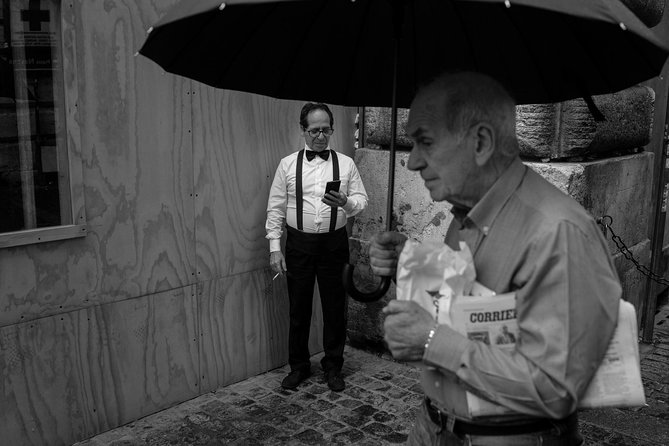
This lesson is built as a smooth progression. Each stop is about an hour, give or take, and each one changes what you practice. The time isn’t wasted on long lectures, and you won’t just wander. You’ll tour local highlights and keep photographing as you go.
The route also makes sense geographically. Trastevere gives you street energy. Campo de’ Fiori gives you an open square vibe and street-level color. The Pantheon gives you a classic architectural anchor that can still work for street photography when you focus on entrances, faces, and lines rather than only the big dome shot.
If you only have a short stay in Rome and you want skills you can reuse tomorrow, this kind of itinerary is efficient. You get a real coaching session plus three different “worlds” of Rome photography.
Stop 1: Basilica di Santa Maria in Trastevere for Details and Light
Your first photo assignment happens at Basilica di Santa Maria in Trastevere. This is a titular minor basilica in Trastevere and one of the older churches in Rome. It’s not just a pretty stop. It gives you structure to learn with.
The basics matter here: the floor plan and wall structure date back to the 340s, and much of the church’s structure comes from 1140–43. Then you get the visual payoff with large areas of important mosaics from the late 13th century by Pietro Cavallini. That mosaic work is the kind of subject that rewards careful framing. If you’re learning street photography, this is a nice twist. You’re practicing how to see small things with intention while still keeping an eye on human scale.
Practical note: this stop is listed as about an hour, and admission isn’t included. So if you plan to go fully inside and take time with mosaics, factor that in. Even if you don’t, the church area still gives you excellent angles for portraits-in-context and textured backgrounds.
What you’ll likely practice here:
- How to control highlights and shadows when stone and interior light fight each other
- How to compose with architectural lines instead of aiming randomly
- How to frame details so the photo tells a story, not just a close-up
Stop 2: Campo de’ Fiori for Timing, People, and Street-Photo Energy
Next up is Campo de’ Fiori, one of the best places in Rome for learning to shoot quickly and make choices on the fly. It’s a square south of Piazza Navona, near the border between rione Parione and rione Regola. The area is diagonally southeast of Palazzo della Cancelleria and one block northeast of Palazzo Farnese, which matters less for you day-to-day and more for understanding how central and walkable it is.
Here’s the historical flavor that helps your photos too: the name Campo de’ Fiori means field of flowers, from Middle Ages when it was a meadow. There used to be a thriving horse market twice a week, on Monday and Saturday, and inns, hotels, and shops grew up around it.
That history is useful because your goal in street photography isn’t just to capture what’s in front of you. It’s to capture the place as a living scene. Campo de’ Fiori gives you rhythm: open space, storefront edges, and crowds that move in waves.
This stop also includes Escape Room Campo dei Fiori & Beershop. That detail tells you the lesson is keeping things at street level rather than trying to force you into a purely museum mindset. You’re learning how to turn everyday settings into photographic material, including signage, group moments, and small interactions.
The main practical consideration: this is an area where foot traffic can change fast. So if you want low-stress shooting, bring patience and work in short bursts. You’ll get better results when you take fewer photos with more intent, then adjust.
Stop 3: The Pantheon for Composition, Geometry, and Human Scale
Finish at the Pantheon, and you’ll see why this place is a photography magnet. It’s a former Roman temple now a church, built on earlier work commissioned by Marcus Agrippa during the reign of Augustus. It’s one of the best-preserved ancient Roman buildings, in part because it’s been in continuous use across history. Since the 7th century, it has been used as a church dedicated to St. Mary and the Martyrs, though it’s informally known as Santa Maria Rotonda.
For street photographers, the Pantheon can be tricky. People often rush to the “classic postcard shot.” But the coaching approach here is better: use the Pantheon as a backdrop and a geometry lesson, not only a monument.
You’ll likely practice:
- How to position yourself so lines guide the viewer, including columns, doorways, and crowd placement
- How to make people look like part of the architecture rather than random extras
- How to handle bright exteriors and darker interior transitions (even if you’re only outside, the contrast is a big deal)
Also, admission is listed as not included. So if you’re planning to go inside and spend time with the interior light, decide in advance. This tour keeps the focus on street photography, so you don’t want to waste your limited time waiting if you didn’t plan for it.
If you love architecture but want it to feel alive and not stiff, this stop helps you learn a balanced approach.
You can also read our reviews of more tours and experiences in Rome






What You’ll Actually Learn to Do With Your Camera

The best street photography results come from a few repeatable skills. This lesson is built around those skills rather than just saying “take photos of Rome.”
Even without getting overly technical, the guide’s job is to help you see what to change between shots. That could mean changing where you stand, how you frame the subject, or which moment you wait for.
Expect practice that pushes you toward:
- Finding a subject fast: people, gestures, storefront edges, or small moments near a landmark
- Working with background: using churches and squares so your subject has context, not clutter
- Using light as a tool: especially around stone surfaces and big open spaces
- Better timing: when to shoot, when to wait, and when to move a step to improve your composition
Bring your camera along, because the whole point is applying guidance immediately. If you rely only on reading about settings, you’ll miss the faster learning loop: shoot, get feedback, shoot again.
Why the Private Guide Matters (and Why It Feels More Fun)
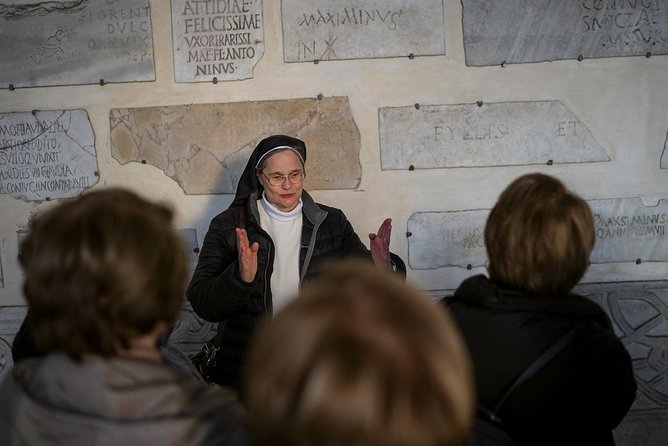
A private street photography lesson can be a fancy way to pay for a walk. This one is different because it centers on your photos and your decisions while you’re still in the scene.
The vibe around the guide is also a big part of the value. In feedback tied to this experience, Luigi is repeatedly described as a true professional and someone with an easy, positive approach. That matters because street photography is partly about comfort. If you feel tense, you’ll hesitate, and you’ll miss the moment.
A good guide helps you loosen up while still giving clear direction. They’ll help you keep moving with purpose, so you’re not just wandering for ideas.
This is also a nice option if you’ve tried street photography before and felt stuck. You might already know the basics. What you may lack is a method for making quick choices in chaotic real places. That’s where private coaching pays off.
Price and Value: Is $138.91 Reasonable for 3 Hours?

Let’s talk value in plain terms. At about $138.91 per person for roughly 3 hours, you’re paying for three things: a professional photography guide, private attention, and a focused route that keeps your practice efficient.
You’re not paying for entry tickets at the main sites. Admission is specifically listed as not included at the stops. So the real question is whether you want the photo coaching enough to justify paying for guidance versus just showing up and sightseeing on your own.
Here’s how I’d judge it:
- If you want photos that look better in a measurable way, and you want feedback while you’re shooting, this price starts to make sense.
- If you mostly want a casual stroll and you’d be happy with random photos, you could spend less by exploring solo.
- If you’re traveling with someone and you want structured practice, the private format can feel like good value because the time is about you.
Also note: this experience is booked about 16 days in advance on average, which is a sign it’s a popular way to turn a short Rome trip into something more hands-on. If you’re going during a busier stretch, planning ahead is smart.
Logistics That Affect Your Experience (Without Spoilers)
This is a private activity, so only your group participates. That keeps things calmer than a large group lesson, and it gives the guide room to adjust pace and photo assignments.
The tour uses a mobile ticket, which is helpful in Rome when paper tickets become extra hassle. It also helps if you’re bouncing between activities and want a clean, quick check-in.
Timing-wise, the listed opening window runs Monday through Friday, with meeting times between 10:30 AM and 12:00 PM for 2025. That midday window can be great for shooting, but it depends on what you like. Mid-morning sun can be sharp, which is good for bold contrast shots and less ideal for soft, creamy light.
Good news: service animals are allowed, and the experience says that most people can participate. It’s also near public transportation, which matters in a city where walking is great until it isn’t.
Who Should Book This Street Photography Lesson
This is a strong fit if you:
- Want to learn street photography techniques without wasting your trip on trial-and-error
- Enjoy photographing people and places together, not just monuments
- Like structured practice in real locations
- Prefer one-on-one or small-group attention rather than following a script for strangers
It might be less ideal if you:
- Want a purely historical lecture or museum day
- Get uncomfortable shooting in public spaces and need a totally quiet, controlled environment
- Have zero interest in camera work and just want generic sightseeing
Should You Book This Rome Street Photography Lesson?
Yes, if your goal is to come home with stronger photos and a repeatable approach. The combination of Trastevere street texture, Campo de’ Fiori’s energetic square scenes, and the Pantheon’s strong geometry gives you a mini curriculum. You’ll practice multiple styles of street framing in one session, instead of doing the same kind of photo for three hours.
Book it especially if you value guidance that’s personal. A professional approach from Luigi, paired with a relaxed enough tone to keep you shooting, is a rare mix. And the private format makes the money feel more focused: you’re paying for your learning time, not just a walking tour.
If you’re on a tight budget, consider your camera goals first. If you want skill-building and coaching, this is a smart use of time. If you only want sightseeing photos, you may find you can DIY with less cost.
FAQ
How long is the Rome Street Photography Lesson?
It runs about 3 hours.
Where does the tour start?
It meets you in Rome’s Trastevere neighborhood.
Is this a private tour?
Yes. It’s private, so only your group participates.
What camera do I need?
Bring your own camera so you can practice the techniques during the lesson.
Are admission tickets included for the sights?
No. Admission tickets are not included for the stops listed.
Do I get a mobile ticket?
Yes. The experience includes a mobile ticket.
What time does the tour run?
For 2025, the listed opening hours are Monday through Friday from 10:30 AM to 12:00 PM.
Are service animals allowed?
Yes, service animals are allowed.
Can I get a full refund if I cancel?
Yes. You can cancel for free up to 24 hours in advance of the experience start time for a full refund.