REVIEW · ROME
Rome: Relics from the Passion of the Christ Walking Tour
Book on GetYourGuide →Operated by Roman Vacations · Bookable on GetYourGuide
Relics in Rome have a way of making the Gospel feel physical. This walking tour strings together key Passion objects—many tied to the journey from Jerusalem to Rome—in a tight 3-hour route with a small group and a real-life guide you can ask questions to.
What I like most is how the route mixes prayer with context: you start at the Basilica di Santa Maria Maggiore and end at the Holy Cross site where you can see fragments tied to the Crucifixion story. A potential drawback to plan around is that it’s still a proper walk through multiple churches, so if your mobility is limited you’ll want to use the golf cart option rather than tough it out.
In This Review
- Key takeaways before you go
- Relics and Rome: why this Passion walk feels different
- Where it starts: Piazza di Santa Maria Maggiore meeting point
- St Mary Major: manger wood under one of Rome’s great basilicas
- Santa Prassede: 9th-century mosaics and the scourged pillar
- Scala Sancta: the Holy Steps, Pilate, and an icon by St Luke
- St John Lateran: Borromini mosaics and the resting place of Peter and Paul
- Basilica of the Holy Cross: the Passion climax with relic fragments
- What makes the guide experience matter (and how guides shape the mood)
- Price and value for a 3-hour relic circuit
- Practical tips: what to wear, what to bring, and how to not get flustered
- Weather, church closures, and why flexibility helps
- Who this tour suits best
- Should you book this Passion relic walking tour?
- FAQ
- How long is the Rome Relics from the Passion of the Christ walking tour?
- Where do I meet the guide, and where does the tour end?
- Which sites are included in the tour?
- Is entry included for all the stops?
- What language is the tour guide?
- Is the tour wheelchair accessible?
- What should I wear to enter the churches?
Key takeaways before you go
- Passion relics, not just sightseeing: you’re visiting the objects connected to the Passion narrative.
- Small group (up to 10): easier pace, more time for questions, less rushing.
- Church-to-church flow: you connect relic stories across Santa Maria Maggiore, Santa Prassede, Scala Sancta, Lateran, and Holy Cross.
- Expert English-speaking guide: expect religious and historical context woven together.
- Dress code matters: shoulders and knees covered for entry; sleeveless tops and shorts won’t work.
- Wheelchair accessible, with an option for limited mobility: the tour is built to be manageable, but it’s still a walking circuit.
Relics and Rome: why this Passion walk feels different
Rome has a special talent for turning history into a place you can stand inside. On this tour, the focus stays on the Passion of Christ through physical objects—items Christians believe were brought to Rome (notably associated with St Helena in the 4th century). That shift matters: you’re not just learning facts, you’re praying and reflecting with the story anchored in things you can look at closely.
The best part is the pacing of the experience. You move church to church, but you’re also given time to reflect and pray as part of the journey, which helps keep it from becoming a checklist. With small groups, the guide can respond to your questions without the whole experience turning into a lecture.
One more thing I appreciate: the tour doesn’t treat the relics as isolated “cool artifacts.” It threads them into the bigger story of early Christianity in Rome—how an empire that once persecuted believers later became a driver of public devotion. That’s what makes the walk feel intentional rather than random.
You can also read our reviews of more walking tours in Rome

Where it starts: Piazza di Santa Maria Maggiore meeting point
You’ll meet at the fountain in Piazza di Santa Maria Maggiore, right in front of the entrance to the Basilica of St Mary Major. The guide holds an orange sign with a lion head, which makes it easier to spot your group quickly.
Plan to arrive early in practical terms. You check in about 15 minutes before your scheduled time, and the tour departs promptly—no waiting around for latecomers. That prompt departure is good news if you like a smooth itinerary, but it does mean you should not treat this as a casual stroll where you can drift in whenever.
Also, bring the right mindset for church visits. You’ll be entering holy spaces repeatedly, so you want comfortable shoes and clothing that fits the rules from the start.
St Mary Major: manger wood under one of Rome’s great basilicas
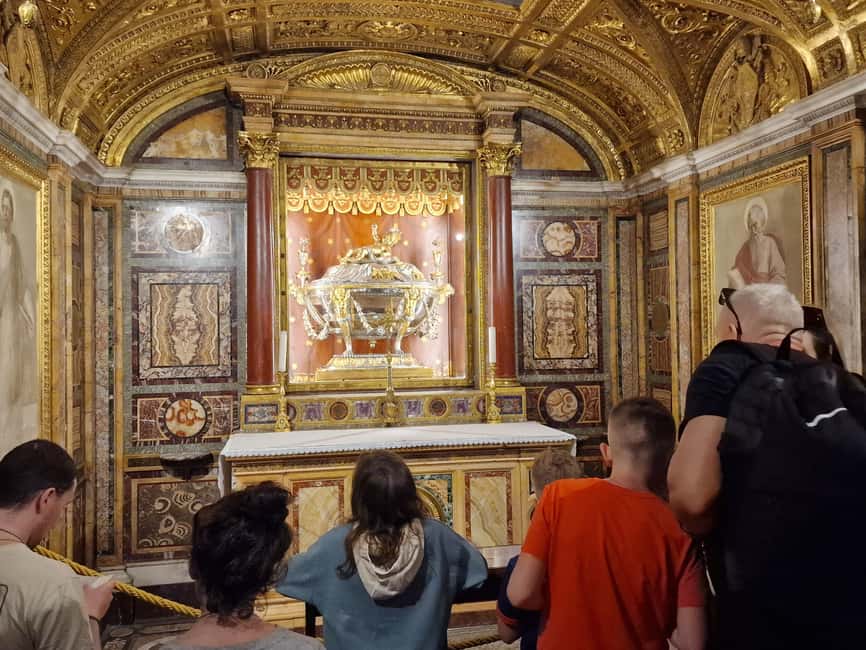
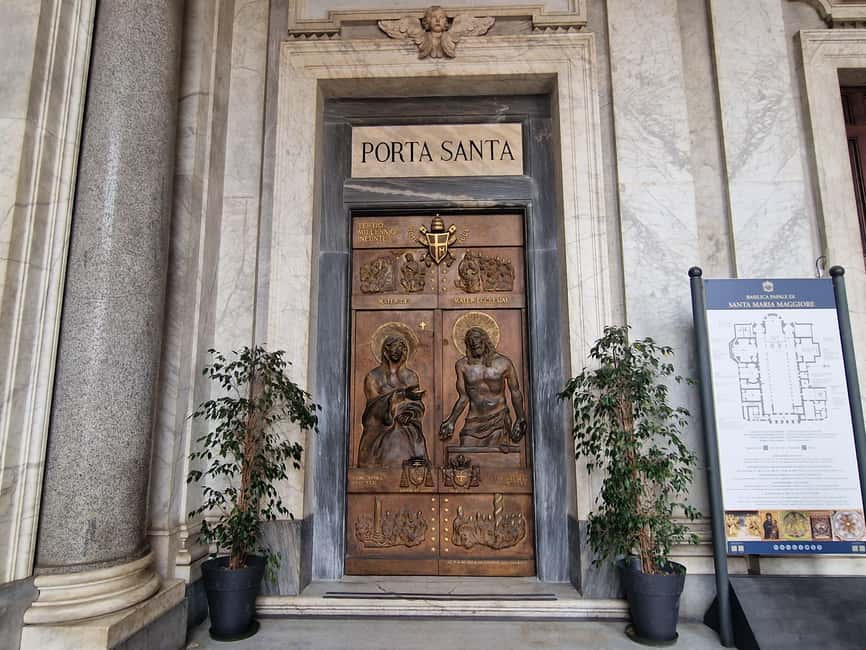
Your first stop is the Basilica Papale di Santa Maria Maggiore, one of Rome’s most important Marian churches. The church tradition connects it to the Theotokos (Mother of God), and that theme sets the tone for the Passion story that follows.
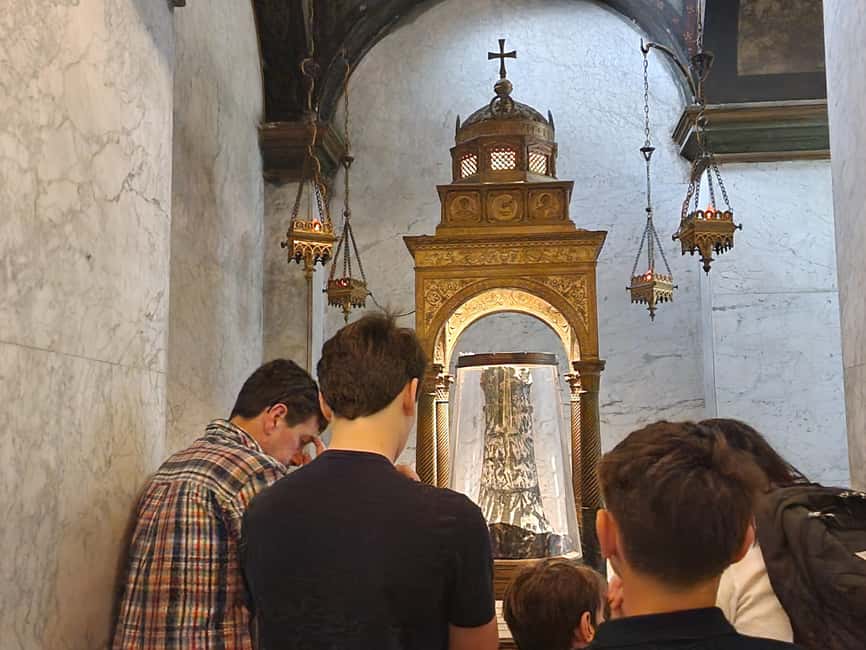
What makes this stop stand out is what’s beneath the main altar. You’ll hear about wood from the manger in which baby Jesus once lay, tying the Christian story from birth to suffering in a way that feels natural rather than forced. The basilica is also layered with art from every era of Italian history, so even if you’re not an art nerd, there’s plenty to notice.
A big name you may hear connected here is Gian Lorenzo Bernini, since his work is part of the basilica’s devotional and artistic world. That detail matters because it shows how Rome kept returning—centuries later—to honor sacred memory.
Practical note: even though this is a guided religious route, it’s still a church you enter, so shoulders and knees need to be covered. If you’re traveling in warm weather, plan a light layer you can put on quickly.
Santa Prassede: 9th-century mosaics and the scourged pillar
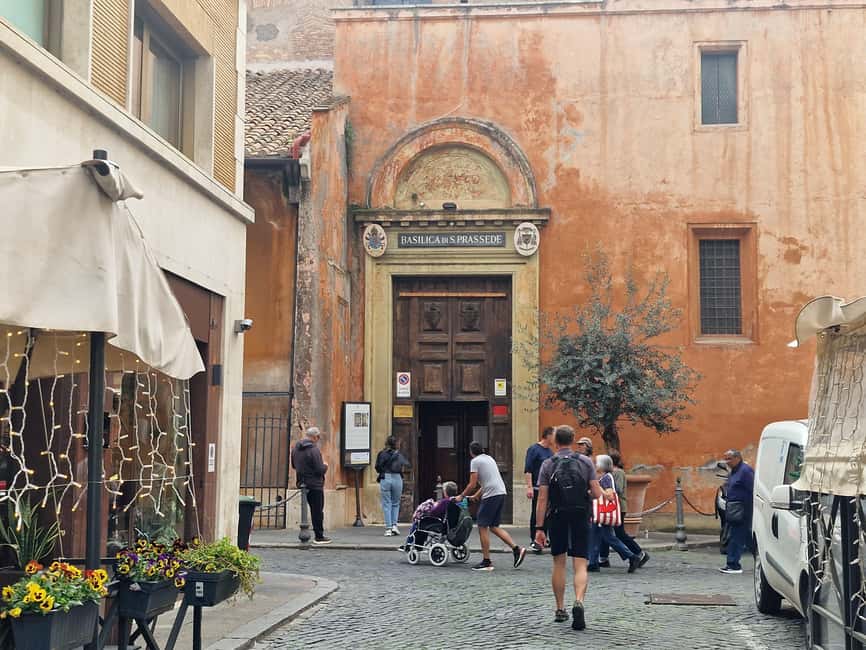
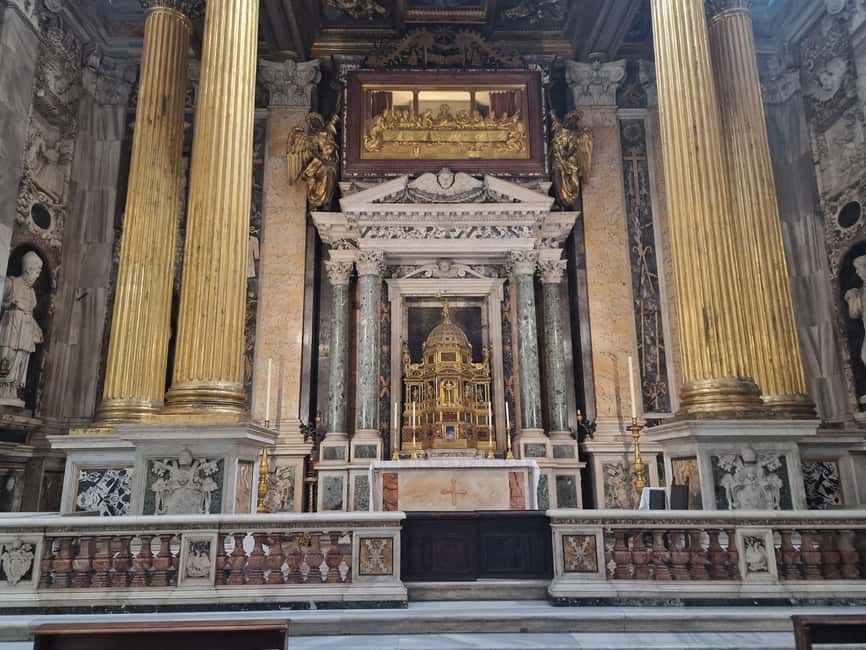
Next you head to Santa Prassede, a basilica famous for its 9th-century mosaics. Mosaics in Rome can feel like visual theology—color and gold arranged to teach. Here, that atmosphere supports the tour’s Passion focus rather than distracting from it.
The centerpiece connection is the stone pillar believed to be the one on which Jesus was scourged. The story links it to Jerusalem and to the journey to Rome, with the arrival described as happening centuries later (associated with the 13th century). Even if you don’t know the technical history of the relics on day one, the guide will give you the thread that ties the object to the Passion narrative.
I like this stop because it gives you a “pause point” in the middle of the walk. You’re not just hearing stories while moving; you’re looking at and praying with something that’s presented as part of the Passion’s physical history. That changes your attention span in a good way.
Scala Sancta: the Holy Steps, Pilate, and an icon by St Luke
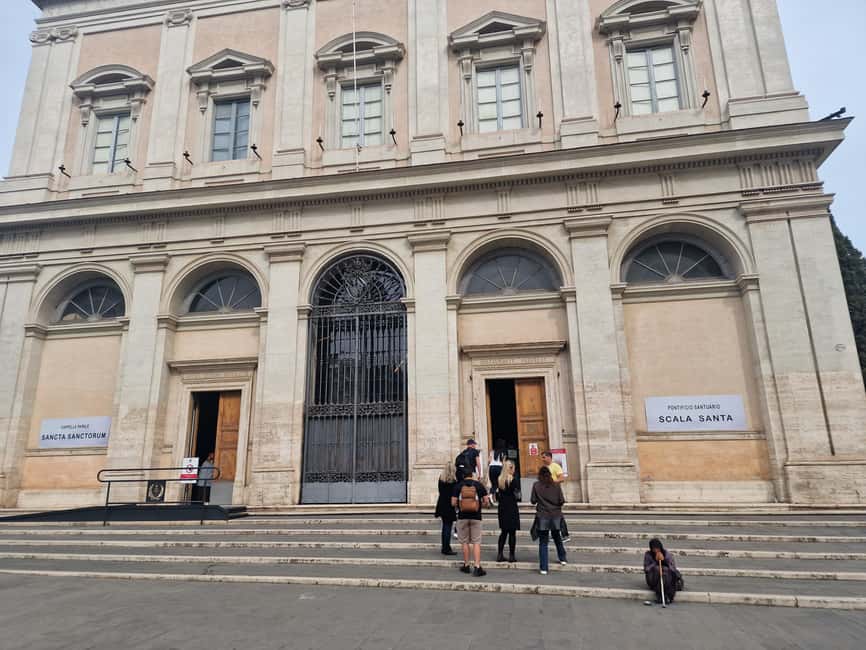
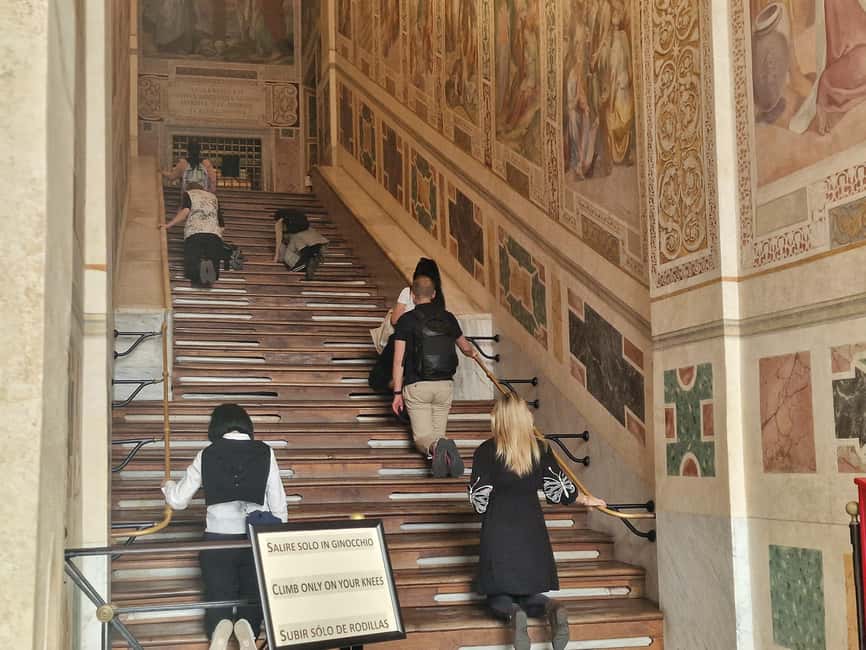
Scala Sancta is where the tour turns most dramatically toward the Passion story. The Holy Steps are presented as the steps on which Jesus was judged by Pontius Pilate, with a tradition that the steps were transported to Rome by St Helena in the 4th century.
One important expectation-setting detail: you won’t have time to ascend the stairs on your knees according to the pilgrim tradition. You’ll still experience the site through guided viewing and reflection, and you’ll be able to peer into the Holy of Holies at the top to see an icon painted by the Gospel writer St Luke.
That’s a smart compromise for a 3-hour tour. If the full traditional ascent is your top goal, you might need a separate experience with more time. Here, the tour keeps you moving and still gives you the spiritual anchor points—Pilate, judgment, and the sacred space at the top.






St John Lateran: Borromini mosaics and the resting place of Peter and Paul
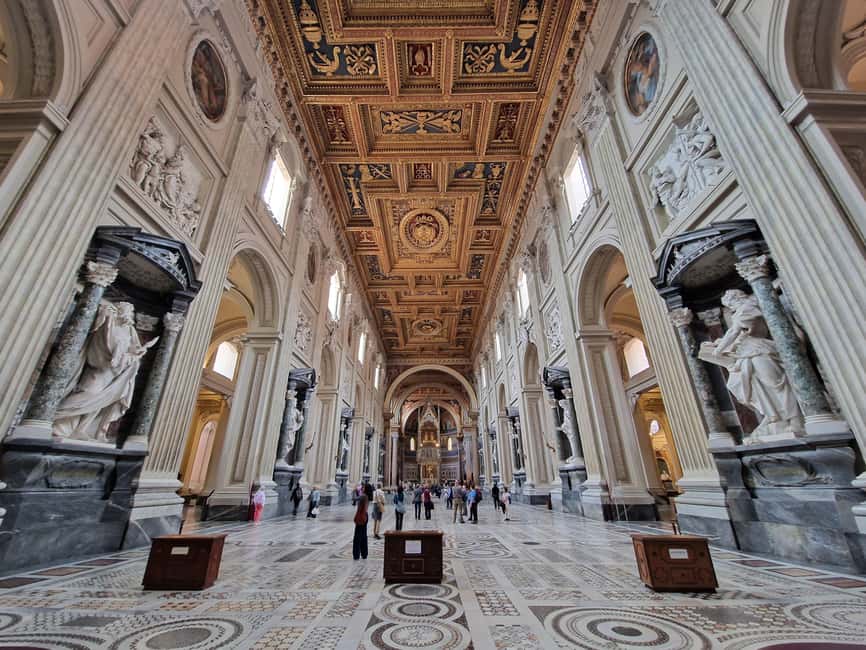
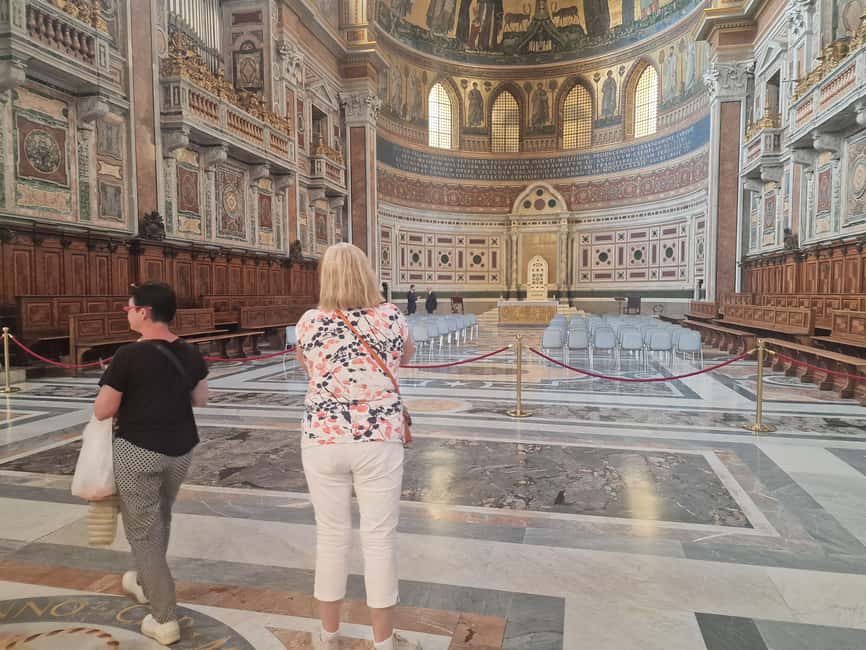
After the Holy Steps, you go to the Basilica of Saint John Lateran (San Giovanni Laterano). This stop gives you the “big church” feeling of Rome, with symbolism built into architecture and mosaics.
You’ll learn about the architectural design connected with Borromini and the way mosaic imagery carries meaning. Then the tour brings you to an especially memorable detail: the place above the high altar where the skulls of Sts Peter and Paul rest.
Even if you’ve visited Lateran before, this kind of guided focus changes what you notice. Instead of admiring for admiring’s sake, you’re learning how the church layout communicates belief and memory—especially through the relic-centered location above the altar.
One consideration: Lateran is a major site, so expect it to feel busy around service times. Your guide will manage the flow, but arriving with patience will make this part much more enjoyable.
Basilica of the Holy Cross: the Passion climax with relic fragments
This is the climax stop, the one you remember later when you’re back in your hotel room. The tour brings you to the Basilica of the Holy Cross in Jerusalem, described as being built on earth brought from Calvary in the 4th century. That detail is the tour’s signature idea: Roman space becomes a physical echo of the Holy Land.
From there, you’ll enter to see fragments tied to the Passion narrative, including:
- fragments of the Holy Sepulcher
- the Cave of Bethlehem
- a Nail of the Crucifixion
- two thorns of the Crown of Thorns
- a small walnut board reading Jesus the Nazarene king of the Jews
- wood of the Cross on which Jesus was crucified
That list is why this tour is on many Catholic pilgrim shortlists. It’s not abstract. You’re confronted with tangible pieces—again, presented as relics connected to the Passion story—that give your prayers a different weight.
A final plus: the tour format includes time to reflect and pray. That matters here, because the mind needs space to absorb what you’re seeing. You can take in the details without feeling like you’re being hurried out.
What makes the guide experience matter (and how guides shape the mood)
A big reason this tour earns a top rating is the quality of the guides. Names you may see in the guide lineup include Paul (including Paul Encinias), Daniel, Tom, and Tim. Across those guides, the thread is the same: they connect religious meaning with Roman and Italian history so the relics aren’t floating in a vacuum.
In particular, I like the way a strong guide helps you ask better questions. When you’re standing in sacred spaces, questions are personal. A good guide doesn’t just recite dates; they explain why the relic story matters and how Rome became the stage for that devotion.
If you’re traveling with kids or teens, this matters even more. One guide’s style (Tim) was described as making the experience feel like walking with your parish priest through the Passion of Christ. Whether your guide matches that exact tone or not, the small-group setup gives your family a chance to stay engaged.
Price and value for a 3-hour relic circuit
The price is listed at $96.29 per person for a 3-hour tour. That can sound steep if you compare it to standard city walks, but this one isn’t just walking. You’re paying for guided access and a structured route that hits major basilicas tied directly to Passion relic traditions, with entry to the sites included.
It’s also a time-saver in Rome. Doing these stops on your own could mean more time figuring out church hours, entrances, and what to focus on. Here, you get a guided story that links the relics to the places—St Mary Major, Santa Prassede, Scala Sancta, Lateran, and Holy Cross—so your visit feels coherent.
One more value point: the tour is limited to 10 participants. In practice, that small cap can make a big difference for Q&A and for keeping the pace comfortable inside churches.
Practical tips: what to wear, what to bring, and how to not get flustered
This tour is sensitive to church rules, so don’t freestyle your outfit. Shoulders and knees must be covered to enter churches. Shorts, short skirts, and sleeveless shirts aren’t allowed. If you’re visiting in warmer months, bring something lightweight to cover your shoulders once you’re inside.
For walking comfort, wear comfortable shoes. The itinerary is a walking tour, and you’ll go between multiple locations in a limited time window. If you have limited mobility, you can book the Golf Cart option—that’s the smart way to keep the experience restful.
What to bring for comfort:
- bottled water, especially in warmer weather
- sunscreen and a hat
- an umbrella (weather can change quickly)
Finally, bring photo ID. Proof of identification may be required.
If you want things to go smoothly, try to arrive early, check in on time, and don’t plan any tight connections right after. The tour ends back at the meeting point, but you’ll want buffer time for your next stop.
Weather, church closures, and why flexibility helps
Rome does what it wants with weather. This tour goes forward in all weather conditions unless a site is closed by authorities for safety reasons. The order of the visit can also be altered if churches have unexpected closures or events.
That flexibility is normal for Rome, and honestly it’s part of the deal with church-based travel. If the schedule shifts, your guide will still help you hit the key relic-centered experiences without losing the point of the tour.
Who this tour suits best
This is a strong fit if you:
- want a Catholic pilgrimage-style experience with prayer time built in
- care about religious history tied to Rome’s early Christian era
- prefer small groups and a guided narrative over wandering alone
It’s also a good choice if you’ve been to Rome before and want something less typical. Instead of repeating museum circuits, you’re focusing on the places where devotion and relic tradition shaped Roman religious life.
If you’re not comfortable with religious sites or church dress rules, you might find it stressful. In that case, you could still appreciate the architecture, but the Passion focus is the whole point.
Should you book this Passion relic walking tour?
If you want a Rome experience that’s more than photos—something that encourages reflection with specific Passion relics—this is an easy yes. The route is short enough to keep it manageable, but the content is deep: you move from St Mary Major through Santa Prassede and Scala Sancta, then land at Lateran and the Holy Cross for the Passion climax.
Book it if you value small-group guidance and you’re willing to follow simple church dress rules. If your mobility is limited, plan for the golf cart option so you can enjoy the spiritual focus instead of counting minutes.
Overall, for $96.29 you’re paying for access, expert guidance, and a coherent relic story across Rome’s most meaningful Passion-linked sites. That combination is exactly what makes this one worth putting on your schedule.
FAQ
How long is the Rome Relics from the Passion of the Christ walking tour?
The tour lasts 3 hours.
Where do I meet the guide, and where does the tour end?
You meet at the fountain in Piazza di Santa Maria Maggiore, in front of the entrance to the Basilica of St Mary Major. The tour ends back at the same meeting point.
Which sites are included in the tour?
You visit Basilica Papale di Santa Maria Maggiore, Santa Prassede, Scala Sancta, Basilica of San Giovanni in Laterano, and Basilica of the Holy Cross in Jerusalem.
Is entry included for all the stops?
Yes. Entry to each site included in the tour is included.
What language is the tour guide?
The tour is in English.
Is the tour wheelchair accessible?
Yes, it is listed as wheelchair accessible, and there is also a Golf Cart option for limited mobility.
What should I wear to enter the churches?
You must wear clothing that covers shoulders and knees. Shorts, short skirts, and sleeveless shirts are not allowed.