REVIEW · ROME
Exclusive Capuchin Crypts Tour: Audio, Small Group or Private
Book on Viator →Operated by Gaudium travel · Bookable on Viator
Bone art in Rome is not what you expect. You’ll get skip-the-line entry to the Capuchin Museum and the bone crypts, usually in about 1 hour, which makes this easy to fit into a busy day. I love how quickly you start once you arrive, and I love the way guides (like Slob and Eva) turn a spooky collection of remains into clear, human history. The main drawback: it’s a short visit, so if you want a long, deep session, you may feel the time is tight.
Even if you have zero interest in macabre stuff, this place has a way of grabbing you. One practical note before you go: there’s a dress code (shoulders and knees covered), and the crypts have a close, enclosed feel, so plan your visit accordingly.
In This Review
- Key things to know before you go
- What Makes the Capuchin Crypts Worth Your Hour
- Getting There and Actually Finding the Meeting Point
- Skip-the-Line Entry: What It Means in Real Life
- Museum Rooms Before the Crypt: Easier to Understand, Easier to Appreciate
- Inside the Crypts: The Bone Chapel Effect (and How to Handle the Close Quarters)
- Guide vs. Audio: Pick the Style That Works for You
- Price and Value: Is $26.43 for an Hour a Good Deal?
- Who This Tour Suits Best (and Who Might Skip It)
- Tips That Make the Visit Smoother
- Should You Book This Capuchin Crypts Tour?
- FAQ
- How long is the Capuchin Crypts tour?
- Is skip-the-line entry included?
- Are admission tickets included?
- Do I get an audio guide or a live guide?
- Where do we meet for the tour?
- Where does the tour end?
- What dress code do I need to follow?
- How big are the groups?
- Is the tour offered in English?
- What’s the cancellation policy?
- Are transportation details included?
Key things to know before you go
- Skip-the-line entry helps you avoid the big delays people often run into at small, popular sites
- Capuchin Museum + Crypt in one hour is perfect for tight schedules
- Small group size (up to 15) keeps the experience more personal than most Rome crowd tours
- Guides can add personality and humor without turning the site into a comedy show
- Photo rules are strict inside the crypt areas, so plan to enjoy it with your eyes
- Dress code matters for entry: cover shoulders and knees to avoid being refused
What Makes the Capuchin Crypts Worth Your Hour
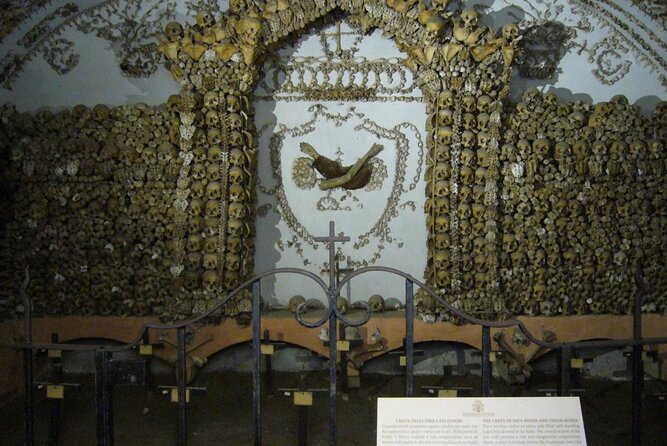
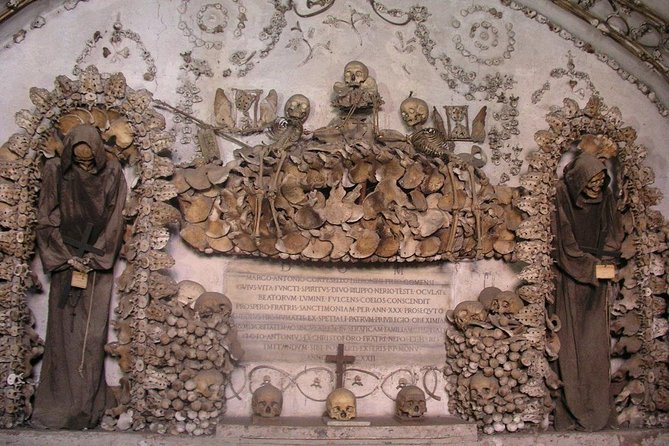
The Capuchin Crypts are famous for bone artistry, but the real hook is how intentional the whole place feels. This isn’t just random spooky décor. You’re looking at a museum-style presentation of how the Capuchins used remains, religion, and symbolism to make a point about mortality. It’s strange. It’s also strangely moving.
I like that this tour gives you two parts of the experience in a tight timeframe: the museum setting first, then the crypt itself. You end up with context before you get the full effect. That ordering matters. It turns the crypt from pure shock value into something you can actually understand.
You’ll also get either an audio setup or a professional guide, depending on the option you book. Having a guide can be a big deal here because the site’s details can feel overwhelming if you’re just walking through on your own. People who did go with a guide repeatedly praised clear explanations and a “serious but not stiff” tone. (And yes, some guides even add humor to keep the mood from going full dread.)
One more reason this hour works: there’s a practical limit to how long most people can comfortably spend in such a close environment. If you’re thinking, I want to see it, but I don’t want to spend half my day in a crypt—this format fits.
You can also read our reviews of more private tours in Rome



Getting There and Actually Finding the Meeting Point
This tour starts at Via Vittorio Veneto, 27, 00187 Roma. The ending point is inside the Capuchin Crypts, so you don’t have to navigate the final stretch while everyone’s still getting oriented.
Here’s my advice if you want things to go smoothly: arrive a bit early and do a quick check on the exact meeting spot. Rome is full of squares, alleys, and “this looks close enough” moments, but for timed tours, you want to be precise.
One note from real-world experiences: groups can run into delays when lots of visitors overlap nearby. In one case, a very large group formed in front of a small group, and the guide had to reroute and manage the start. You can’t control crowd patterns, but you can control your readiness. If you show up early, you give the guide a better chance to start you fast and keep the flow moving.
Also, this tour is near public transportation, and the itinerary doesn’t include getting you from place to place. So if you’re using transit, build in time to get there before your start time and to walk to the meeting point at a normal pace.
Skip-the-Line Entry: What It Means in Real Life
Guaranteed skip-the-line entry sounds great, and it usually is. But it helps to understand what you’re actually buying.
You’re not paying to “avoid lines forever.” You’re paying to avoid the worst of the waiting, which is the real pain at compact attractions where the queue can feel like it never ends. When you only have one hour, saving time matters. It keeps your day from turning into a waiting game.
In practice, skip-the-line access is especially valuable here because the crypt area and entry points are limited and structured. When visitors bunch up, it slows everything down. So anything that reduces your time standing around is a win.
Still, there’s a reality check: the site is popular and other groups can affect the immediate start. Even with skip-the-line access, if a huge group is blocking the moment where guides need to begin, you might see a slower start. The best strategy is the boring one: show up on time, stay flexible, and treat the opening minutes as part of the logistics, not as a failure.
Museum Rooms Before the Crypt: Easier to Understand, Easier to Appreciate
Your visit covers the Capuchin Museum and Crypt of the Capuchins Friars, and the timing is designed so you see the setting and then the bone chapel itself.
In the museum portion, you’re typically learning the story behind the collections. This is where you get the “why” so the “what” hits with more meaning. The museum context helps you connect symbols, religious intent, and the craft involved, rather than only focusing on the shock of the bones.
What I like about this order is that it reduces the chance of walking in cold. If you start with the crypt, you can miss the bigger picture. If you start with the museum details, you’re better prepared to notice the way the arrangement and presentation are meant to communicate something.
Another practical upside: the museum area is usually where you can adjust your expectations and pace. If you need a bathroom break, water moment, or just a minute to regroup, this portion is the natural place to do it without disrupting the most enclosed areas.
Inside the Crypts: The Bone Chapel Effect (and How to Handle the Close Quarters)
This is the part most people came for: the Capuchin Crypts. The setting is what makes it unforgettable—bone arrangements that function like chapel décor, creating a surreal blend of art, religion, and mortality. It can feel creepy, yes. But it can also feel calm in a very specific way, because the place is presented with care.
One theme that keeps showing up in people’s experiences is emotion plus atmosphere. Guides often balance solemn information with light touches—dad jokes, gentle humor, and careful pacing. That matters because the crypt environment can feel claustrophobic for some people. You’ll likely move through narrow spaces with limited personal breathing room.
If you’re sensitive to enclosed spaces, here’s how to make it easier:
- Keep your breathing steady and take your time when moving through tight sections
- Don’t try to “beat the group.” Let your guide manage the pace and positioning
- If you’re with kids, ask the guide to explain in simpler terms. In one experience, a guide handled questions from a 9-year-old patiently, which made the visit feel manageable
Temperature expectations are also useful. You might think the crypts are cold like the real deep catacombs outside the center of Rome. One visitor reality-check: it’s not really underground in the extreme way people imagine, so you don’t need heavy layers. If you’re visiting in summer, this can feel like a relief.
Photo rules are strict. Multiple experiences point to a firm no-photo policy, with surveillance cameras in place. So treat your phone like it’s just for maps, not for selfies. If you want a memory, buy postcards after. It’s a small workaround that actually fits the rules.
You can also read our reviews of more tours and experiences in Rome



Guide vs. Audio: Pick the Style That Works for You
You can book with a professional guide or with an audio option. If you’re trying to choose, think about what you want most out of that hour.
A guided experience tends to deliver:
- Clear storytelling that connects the museum and crypt
- Context you won’t easily guess on your own
- A pacing system, especially helpful in tight spaces
Names of guides that came up positively include Slob and Eva. People described Slob as a top guide with great English, able to balance history with humor. Eva was praised for passion and for making the experience feel personal even with a smaller group size (eight people was mentioned).
Audio can work if you like self-paced museum wandering and you don’t need someone to manage the crowd flow. But based on what this site demands—interpretation, movement through enclosed areas, and the way the symbols are presented—most people are happiest with a real guide.
One more factor: because the visit is about an hour, you want your time to count. A guide can compress a lot of understanding into that timeframe so you leave feeling you actually learned something.
Price and Value: Is $26.43 for an Hour a Good Deal?
At $26.43 per person, this isn’t a “free and casual” stop. It is a paid timed experience. The value comes from three things you’re getting together:
- Admission tickets included
- Guaranteed skip-the-line entry
- A guide or audio option, depending on what you book
So you’re not just paying for the guide’s talking. You’re also paying for the site access piece that saves time.
That said, it’s worth being honest about the main complaint you might run into: the duration can feel short. One person said it was pricey for what felt like a 45-minute visit. Another said it gave a lot of value while still being easy to handle for older adults and older kids.
How do you decide if it’s worth it for you?
- If you’re prioritizing “see it, understand it, don’t lose the whole day,” this price can feel fair.
- If you want the kind of slow, multi-hour explanation you might get at larger attractions, you may feel disappointed.
My take: treat it as a smart add-on, not the centerpiece of your Rome trip. If it’s on your must-see list, booking it with skip-the-line entry is a great way to protect your schedule.
Who This Tour Suits Best (and Who Might Skip It)
This is a strong match for:
- Adults who want a unique Rome experience that’s not another standard church-with-a-view
- Families with older kids, especially if you can handle the enclosed feeling and you’re okay with a short stop
- Travelers who want structure: someone to explain what you’re seeing and how to move through it
It’s also ideal if you like the idea of “morbid but educational.” Several people described the visit as historically grounded, eerie, and fascinating at the same time.
Who might consider skipping or choosing a different format?
- Anyone who hates tight spaces or feels anxious in enclosed rooms might struggle, even with a careful guide
- If you want a long, slow museum day, this hour may feel like a quick hit rather than a full experience
- If you’re the type who likes taking lots of photos, remember the no-photo rule. That can shape how satisfying the visit feels for you
If you fall somewhere in the middle, book this tour when it’s most convenient for you and then plan your day around it. Since transportation isn’t included, build buffer time so the meeting point doesn’t become stressful.
Tips That Make the Visit Smoother
These are practical fixes that show up again and again as the difference between a smooth hour and a frustrating one:
- Wear covered shoulders and knees. No shorts, no sleeveless tops. If you forget, you might be offered a flimsy cover-up, but it’s better to show up ready.
- Bring a wrap if you’re traveling in hot weather. It’s lightweight and solves a lot of dress-code issues fast.
- Don’t plan to spend time outside before entry. If the weather is hot, you’ll appreciate starting quickly.
- Accept that the crypt is close and rules are strict. It’s part of the experience, not a convenience feature you can ignore.
And if you’re booking with a guide: show up on time. One unhappy experience described a missed tour tied to not finding the meeting spot. That doesn’t mean the tour is bad; it means timed tours require the boring discipline of showing up where you’re told, when you’re told.
Should You Book This Capuchin Crypts Tour?
Yes, you should book it if your priorities look like this: you want a unique, memorable Rome experience, you want it to run on schedule, and you’d rather have context than just walk through and wonder what you’re looking at.
I’d skip booking only if you’re expecting a long, slow, in-depth museum day or if enclosed spaces and strict rules (like no photos) will make you uncomfortable. For the right traveler, this is one of the most efficient ways to see the Capuchin Crypts without wasting precious hours in lines.
If you’re short on time and you like the idea of a small-group visit with a story-driven guide, this is a very smart use of your day.
FAQ
How long is the Capuchin Crypts tour?
It runs for about 1 hour.
Is skip-the-line entry included?
Yes. You’re guaranteed to skip the long lines.
Are admission tickets included?
Yes. Admission tickets are included.
Do I get an audio guide or a live guide?
That depends on the option you book. You’ll either have an audio guide or a professional guide.
Where do we meet for the tour?
The start location is Via Vittorio Veneto, 27, 00187 Roma RM, Italy.
Where does the tour end?
It ends inside the Capuchin Crypts.
What dress code do I need to follow?
You must cover your shoulders and knees. No shorts or sleeveless tops are allowed, and you may be refused entry if you don’t comply.
How big are the groups?
The tour has a maximum of 15 travelers.
Is the tour offered in English?
Yes, it’s offered in English.
What’s the cancellation policy?
Free cancellation is available if you cancel at least 24 hours before the experience start time.
Are transportation details included?
No transportation to or from the attractions is included.