REVIEW · ROME
Rome Jewish District Walking Tour
Book on Viator →Operated by Joy of Rome · Bookable on Viator
Rome’s Jewish story starts in the street. This private walking tour keeps the pace relaxed while you trace nearly 2000 years of change, from early settlement and religious tolerance to the enclosed Ghetto era, then onward to WWII-era memory in today’s neighborhood. I especially like the way the guide team—led by art historian Francesca (described as a university professor in Italy)—turns key landmarks into a clear, human timeline without rushing you through the details.
I also like that the route is built for atmosphere: you’re not just looking at monuments, you’re walking through places that still feel like real Roman quarters. A fish-market backstory at Il Portico di Ottavia and neighborhood scale around Teatro di Marcello make the history feel grounded, not museum-y. The main drawback to consider is tone: the walk includes references to Nazi occupation in 1943–44, so it can feel heavy if you want lighter sightseeing.
In This Review
- Key things to look forward to on this Rome Jewish District walk
- Private pace in Rome’s Jewish district: what the tour actually delivers
- Where you meet at Campidoglio and how the walk is paced
- Stop 0 / the Antico Quartiere Ebraico: early presence, then the Ghetto wall
- Il Portico di Ottavia: Augustus, a fish market, and WWII memory in the same block
- Teatro di Marcello: a real Roman rione vibe and the mineral oil legend
- What’s included, what isn’t, and why the guide team matters
- Food on the route: what to expect and how to budget
- Who this tour is best for (and who might want something else)
- Should you book the Rome Jewish District Walking Tour?
- FAQ
- How long is the Rome Jewish District Walking Tour?
- Is this tour private and offered in English?
- What is the meeting point and where does the tour end?
- What’s included in the tour price?
- Is food tasting included?
- What should I wear, and what if the weather is poor?
Key things to look forward to on this Rome Jewish District walk
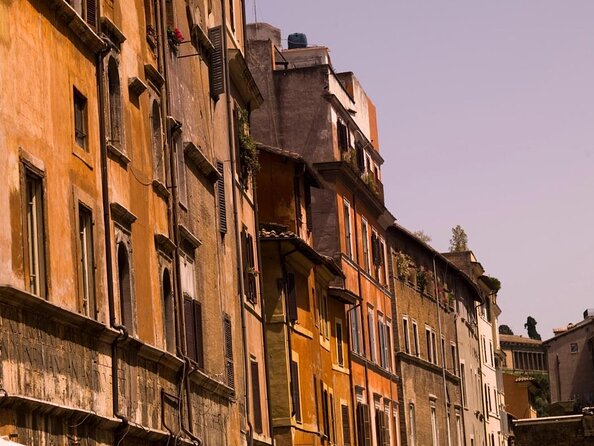
- A private group means you get fuller attention and more time for questions.
- Two guides are involved: a local guide plus a professional art historian guide.
- 2000 years on foot: early presence, the Ghetto period, and later 20th-century events.
- Ottavia’s portico stories connect Augustus, a fish market, and Jewish everyday survival strategies.
- Neighborhood energy around Teatro di Marcello helps you picture what daily Roman life looked like.
Private pace in Rome’s Jewish district: what the tour actually delivers
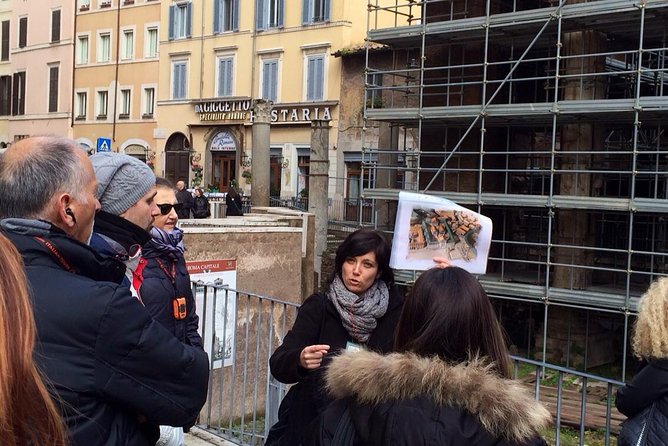
This is a 2-hour walking tour designed to keep you in the flow of a neighborhood rather than sprinting between sights. Because it’s private and only your group goes, you’re not stuck waiting for other people to finish photos or stop listening. The tour is offered in English, and you’ll use a mobile ticket, which makes check-in simpler when you’re moving around central Rome.
The big promise here is time and attention. You get a local guide plus a professional art historian guide, which matters in Rome, where buildings layer onto each other. The same block might include ancient remains, later remodeling, and later memories—sometimes close enough to stand in front of them all in one walk. You’ll feel that layering as you go, especially when the tour shifts from ancient references to medieval and Renaissance use, then to modern historical markers.
You also get a route that isn’t only about one era. You start with the story of early Jewish presence in Rome and the long shift toward confinement. Then you move to Il Portico di Ottavia, where the guide ties together Roman engineering, medieval market life, Renaissance settlement, and wartime inscriptions. Finally, you end at the area around Teatro di Marcello, where the neighborhood mood helps you understand the rione scale of real daily life.
You can also read our reviews of more walking tours in Rome

Where you meet at Campidoglio and how the walk is paced
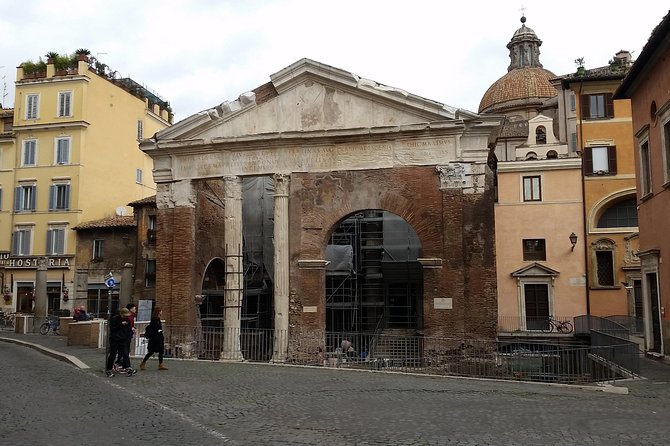
You meet at Piazza del Campidoglio (meeting point: 00186 Roma RM). Plan to arrive about 10 minutes early so the guide can confirm the group and you can start together. The end point is Tiber Island (00186 Rome). Since you’re walking between major central landmarks, the route is ideal if you’re already sightseeing around Rome’s historic core and want a focused thematic walk.
The duration is listed as about 2 hours. That timing is realistic for a route with multiple stops where you’ll also get context and pauses to look around. It’s not a rapid “hit the highlights” tour. It’s more like guided walking with stop-and-interpret moments built in, which is what you want for a place like Rome’s Jewish district, where the meaning of a location often depends on what happened there across centuries.
Dress code is smart casual. Rome tours usually ask for comfortable shoes, but smart casual is your cue to wear footwear you can trust for uneven sidewalks and short stretches of slower walking.
Stop 0 / the Antico Quartiere Ebraico: early presence, then the Ghetto wall
The walk begins with the foundation story: Jewish community presence in Rome goes back almost 2000 years. The tour frames the early period as one where the community lived among others and enjoyed considerable freedom. That idea—tolerance in the early centuries—sets up the contrast that follows, and it helps the later history land with real weight.
Then the tour moves into the later period when things changed dramatically. Instead of blending into the wider city, Roman Jews were forced to live enclosed in the Ghetto between the 1500s and 1800s. You’ll hear about imposed restrictions that included an enforced curfew. The guide connects these limits to the way the district became walled and segregated, and how that physical enclosure shaped everyday life.
One of the most grounded details here is that the “sad, crumbling remains” of the walled district were torn down only in the 19th century. That matters because it explains why you’re looking at a present-day city with traces of what once stood. In a place like this, you don’t see everything as a clean preserved ruin. You see gaps, overlaps, and reinterpretation—exactly what a good art historian guide can help you spot.
Il Portico di Ottavia: Augustus, a fish market, and WWII memory in the same block
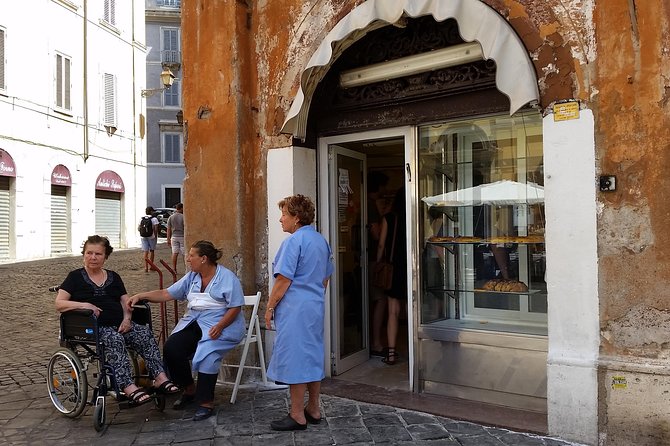
This is one of the stops that tends to stick with you because the story threads together daily life and huge turning points in European history.
You’ll visit the remains of the Portico of Octavia, built by Emperor Augustus for his sister. The tour notes how, in the Middle Ages, it became the site of the city’s most important fish market. That’s already an interesting shift: from imperial architecture to market function. But the tour goes further by explaining how Jewish women used market waste to cook fish broth—an example of adapting to a constrained social environment and turning limited resources into food.
Then the guide walks you through how the area evolved again: Roman period references, medieval use, and Renaissance settlement by important families who built noble palaces. This is where you start seeing Rome’s trick: you can stand in front of something that once served one purpose, then later understand it served another.
The emotional turn comes with inscriptions around the area tied to the Nazi occupation of Rome in 1943–44. The guide uses these markers as reminders that place memory doesn’t fade just because walls come down. It’s not just a history lecture; it’s a walk that helps you connect what you see now to what was written into the neighborhood’s past.
You’ll also have the chance to taste local Jewish specialties, but this part is own expense. The tour description points to possible stops for delicatessen items, typical Jewish pastry, and even the famous fried artichokes. If you’re interested in food, budget a little extra so you can say yes when something looks good.
Teatro di Marcello: a real Roman rione vibe and the mineral oil legend
The last stop centers on the feeling of a Roman neighborhood—what a rione actually looks and sounds like when you’re not in a tourist bubble.
You’ll visit Teatro di Marcello, framed here as a stronghold of popular custom and tradition. The guide emphasizes the idea of stepping away from the hectic pace of the rest of the city and into a space that works like a local hub: big and small squares, corners, and alleyways where people meet, gossip, and enjoy aperitifs.
From an architectural angle, the tour connects the theater area to a mix of visible layers: ancient churches, aristocratic palaces with decorative details, and older workshops. You’ll also hear about medieval towers and Renaissance family palaces. The effect of this stop is that you see how daily life and historic structures share the same space.
There’s also a legend tied to the ground: a story about mineral oil springing from the soil. Legends can sound like trivia, but in Rome they often function like folk explanations for why a place was treated as important. Even if you take the story as folklore, it adds personality to the setting.
The end of the walk is at Tiber Island, which gives you a natural finish point for regrouping before moving on to your next Roman day plan.






What’s included, what isn’t, and why the guide team matters
You’re paying $301.03 per person for a private, guided experience that runs about 2 hours. In Rome, private walks can range widely in quality, and the value here comes from two main ingredients that are actually spelled out: a local guide plus a professional art historian guide.
That second part matters more than it sounds. Art historian training usually changes how you interpret what you see: inscriptions, architectural remnants, and stylistic shifts between eras. For a themed walk like this—covering ancient Rome, medieval market life, Renaissance settlement, and WWII-era references—that extra interpretive skill can be the difference between memorizing dates and understanding why a building or street corner matters.
Included:
- Local guide
- Professional art historian guide
- Mobile ticket
- English-language offering
- Private format (only your group)
Not included:
- Food tasting (you can buy it if you choose)
- Hotel pickup and drop-off
So think of this as a guided “see and understand” experience. If your goal is to eat a full meal during the walk, you’ll need to treat food as a separate budget line. If your goal is serious context plus a calm walk, the inclusions fit the theme well.
Food on the route: what to expect and how to budget
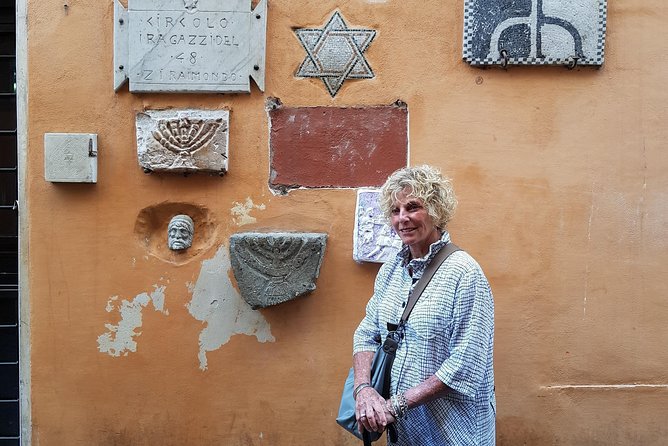
Food is optional here, not included. The tour description signals you may pass through spots where you can sample Jewish delicatessen items, typical Jewish pastries, or fried artichokes. That means you can tailor the experience to your appetite.
My practical take: if you want food, go in with small spending flexibility. Keep in mind that tasting on your own usually means you’ll decide on the spot based on what looks fresh and what the shop has available. The tour gives you cues, but you’re driving the exact purchases.
If you’re traveling with dietary restrictions, plan a quick check with the shop on ingredients. The tour mentions classic Jewish specialties, but the exact items you’ll find can vary by day and availability.
Who this tour is best for (and who might want something else)
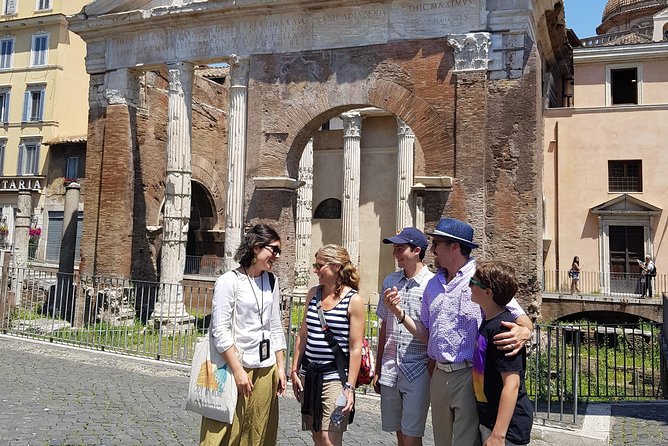
This walk is a strong fit if you want:
- A private, English-guided theme tour with time to ask questions
- A route that connects early Jewish presence, later confinement in the Ghetto era, and modern historical memory
- A guided explanation of architecture and neighborhood layering in central Rome
It’s also a good choice if you like history that is anchored in streets and buildings instead of only in indoor stops. The tour’s structure—Antico Quartiere Ebraico, Il Portico di Ottavia, and the Teatro di Marcello area—keeps you in the city’s living texture.
If you want light, purely scenic sightseeing, the historical subject matter includes periods of oppression and references to Nazi occupation in 1943–44. That can make the experience feel heavy in tone.
Should you book the Rome Jewish District Walking Tour?
Book this tour if you value a calm pace, a strong guide team, and a guided route that turns Rome’s Jewish district into a readable story—across centuries, not just one time period. The private format is a real plus if you want questions answered without a crowd pulling attention away.
Skip it or consider a different theme walk if you’re sensitive to darker historical topics. Also, if you don’t want to spend extra on food, just know that tastings are not part of the ticket price.
In short: for the right traveler, this is a thoughtful walk where the city’s layers matter, and where the guide’s interpretation helps you see what most people miss.
FAQ
How long is the Rome Jewish District Walking Tour?
It lasts about 2 hours.
Is this tour private and offered in English?
Yes. It’s a private tour/activity, and it’s offered in English.
What is the meeting point and where does the tour end?
You meet at Piazza del Campidoglio, 00186 Roma RM, Italy. The tour ends at Tiber Island, 00186 Rome, Metropolitan City of Rome Capital, Italy.
What’s included in the tour price?
The tour includes a local guide and a professional art historian guide. You also receive a mobile ticket.
Is food tasting included?
No. Food tasting is not included in the tour cost.
What should I wear, and what if the weather is poor?
The dress code is smart casual. The experience requires good weather; if it’s canceled due to poor weather, you’ll be offered a different date or a full refund.