Rome in one compact, story-filled walk. You’ll connect the big-ticket hits like the Pantheon and Trevi Fountain with quieter lanes that feel more lived-in than the postcard routes, all with a professional English-speaking guide guiding the order. I like the way this tour keeps you moving through Rome’s historic center without turning every step into a copy-paste photo stop.
I also like the balance of grand monuments and surprise details. Stops like Trajan’s Column and Chiesa di Sant’Ignazio di Loyola are the kind of sights that make you pause, look up, and suddenly understand what you’re actually seeing. And yes, Andrea Pozzo’s illusion ceiling is worth the walk by itself.
One consideration: it’s a walking tour on old streets, and some major sights are viewed from outside because entrance fees aren’t included. If you need easy pacing or mostly indoor stops, this route may feel like more effort than you want.
In This Review
- Key points to know before you go
- A 2–3 Hour Walk Through Rome’s “Top Hits” and Side Lanes
- Piazza Venezia: Big Monuments, Quick Context
- Palazzo di Venezia: From Power to Museum Rooms
- The Early 1900s Detour: Palazzo delle Assicurazioni Generali
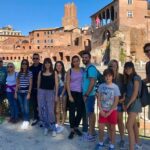
- Trajan’s Column and Trajan’s Market: Ruins That Explain the City
- Trevi Fountain: The Famous Stop, With Actual Meaning
- Chiesa di Sant’Ignazio di Loyola: Look Up and Get Blown Away
- Pantheon Exterior Views, Piazza Navona’s Fountain Finale
- What’s Actually Included (and What’s Not) When You See Big Sights
- Pace, Footwear, and Who This Walk Fits Best
- Value at $30.25: When This Tour Feels Like a Win
- Should You Book This Rome Walking Tour?
- FAQ
- How long is the Rome attractions and hidden gems walking tour?
- How much does the tour cost?
- Is the tour offered in English?
- Do I need to pay extra entrance fees during the tour?
- Which stops have tickets included?
- Where does the tour start and where does it end?
- How big is the group?
- Is the tour suitable for everyone physically?
Key points to know before you go
- A “greatest hits” route with side streets so you don’t only see Rome from the main roads
- Palazzo di Venezia history in context, from papal residence to Mussolini’s office
- Trajan’s Column plus Trajan’s Market with an included ticket, so you get ruins that actually reward attention
- Chiesa di Sant’Ignazio di Loyola entrance included, including Andrea Pozzo’s famous ceiling illusion
- Pantheon and many landmarks are exterior views since entrance tickets aren’t part of this tour
- Small group size (max 20) helps you hear the guide and ask questions while you walk
A 2–3 Hour Walk Through Rome’s “Top Hits” and Side Lanes
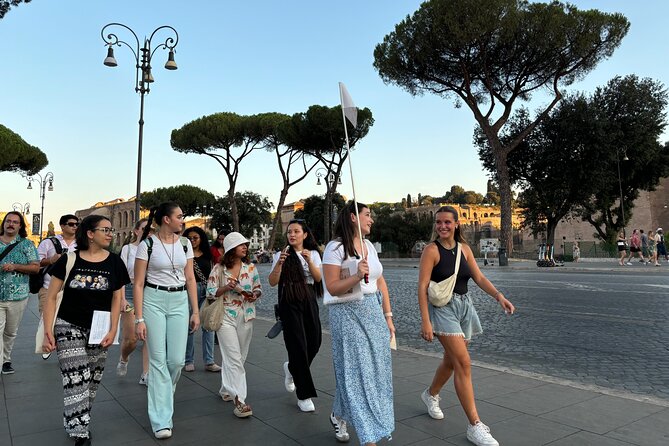
This is the kind of tour that works well when you have limited time but still want more than a checklist. The route is designed to hit famous places like the Pantheon, Trevi Fountain, and the Colosseum area, then keep going into narrower neighborhoods where the city feels less managed.
The duration is about 2 to 3 hours. That’s enough time to learn the stories behind what you’re seeing, without needing to plan an entire day around transportation and waiting. You’ll also get short breaks built into the walking rhythm, including time to grab small bites or local treats along the way (food and drinks aren’t included, but the schedule leaves room for it).
Group size is capped at 20, which matters in Rome. Smaller groups tend to move with less friction in tight streets, and you’re more likely to actually hear your guide over the crowd noise.
You can also read our reviews of more walking tours in Rome



Piazza Venezia: Big Monuments, Quick Context
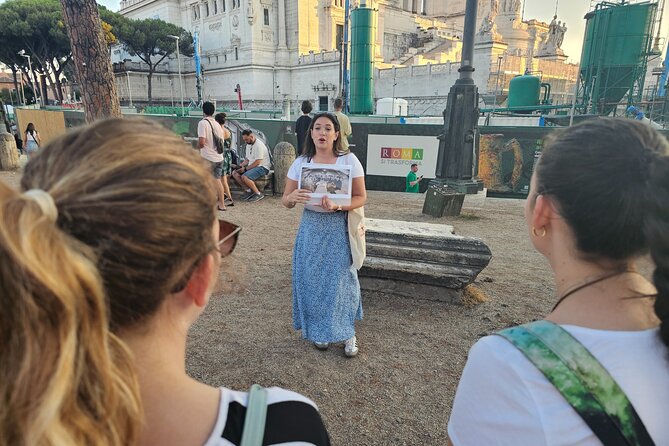
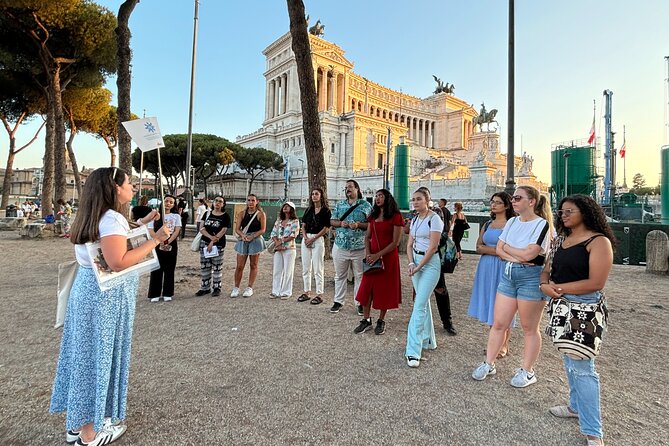
You start at Piazza Venezia, one of the busiest and most useful squares for getting your bearings. The headliner here is the Vittoriano, the monumental structure tied to Italian unification. Even if you’re not a flag-and-battles kind of history person, the guide’s framing helps you understand why this square keeps showing up in public life.
From a practical standpoint, Piazza Venezia is a strong start because it’s central and easy to reach. You’re also right at the point where Rome starts changing texture—from open square to tightening streets and layered architecture.
Palazzo di Venezia: From Power to Museum Rooms
Right in the square you’ll visit the National Museum of Palazzo di Venezia. This building has a past that feels almost too dramatic to be real: it was once a papal residence, and later it served as Mussolini’s office. Now it’s a museum setting for medieval and Renaissance art.
Why this stop is worth it on a short tour: the guide isn’t just naming famous names. You get a sense of how the same walls can represent completely different eras of authority and culture. It’s a good reminder that Rome isn’t only ancient ruins—some of the most influential chapters are written in later centuries too.
Note: the tour includes time here, but museum entrance is not included. You’ll still benefit from seeing the setting and learning the context the guide provides.
The Early 1900s Detour: Palazzo delle Assicurazioni Generali
Next is Palazzo delle Assicurazioni Generali, an early 20th-century architectural standout. This is one of those stops that feels like a reset button. After all the ancient and Baroque drama, you get a quick lesson in how modern Italy shaped its city look.
Even if you only have a minute here, it helps to see the transition between eras. Rome’s charm isn’t just the ancient stuff—it’s the way different periods share the same streets without apologizing for themselves.
Trajan’s Column and Trajan’s Market: Ruins That Explain the City
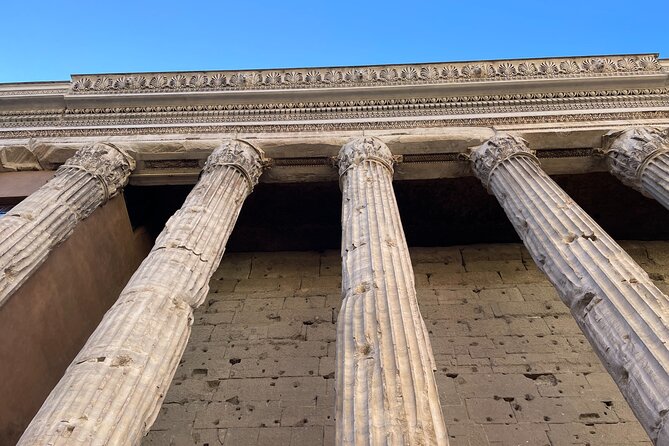
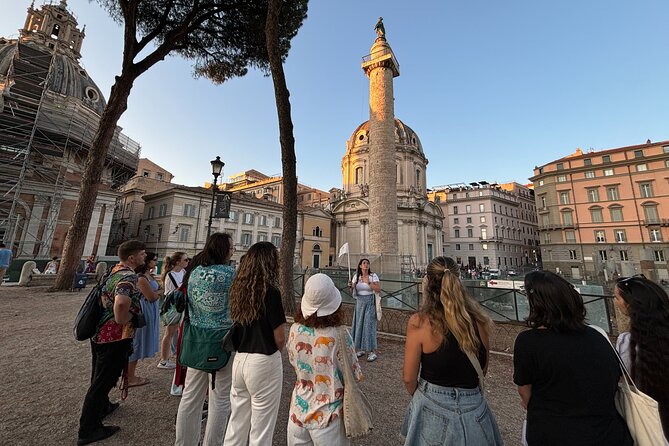
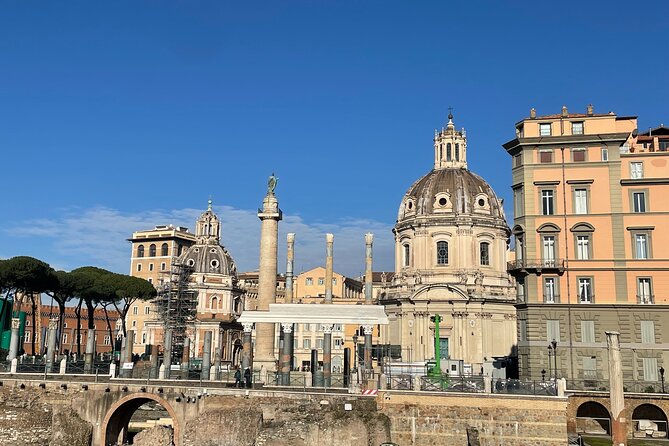
Then you head to Trajan’s Column, a triumph monument tied to Emperor Trajan’s victories. It’s not just impressive from a distance. The guide’s interpretation helps you read it like a story carved in stone, which makes the monument feel less like an object and more like communication.
Nearby is Trajan’s Market, an ancient commercial hub that still shows off Rome’s urban planning and construction smarts. This stop includes an entrance ticket, so this is one of the main “inside” moments on the tour. If you’re the type who likes ruins but gets bored when you only pass them by, this is where you’ll likely feel rewarded.
Practical tip: even though the tour is only 2 to 3 hours, you’ll be thinking on your feet here. Wear shoes you trust.



Trevi Fountain: The Famous Stop, With Actual Meaning
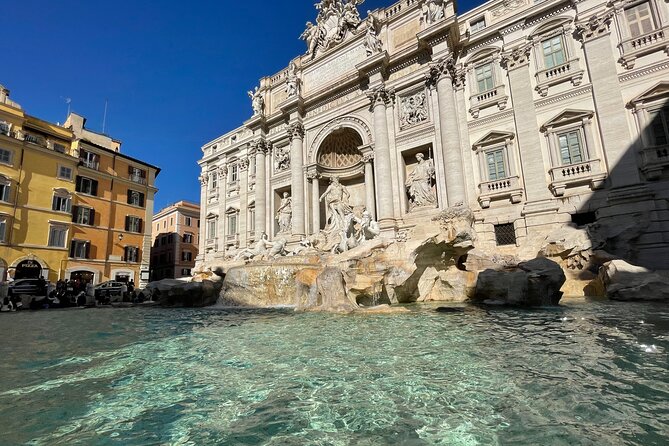
You’ll reach Fontana di Trevi, Rome’s iconic Baroque fountain. Yes, you can do the traditional coin toss. But what makes this stop feel like more than a tourist snapshot is how the guide frames what you’re looking at—especially the sculptural details and how this fountain fits into Rome’s broader public spaces.
Trevi can be crowded, so your timing and how long you linger matters. This itinerary gives you around 20 minutes, which is just enough to see it clearly, take a few photos, and then move on before the crush gets overwhelming.
If you want to savor it, do the coin toss quickly, then spend your time looking upward and around. The fountain rewards that kind of attention, and it turns a one-minute stop into a real moment.
Chiesa di Sant’Ignazio di Loyola: Look Up and Get Blown Away
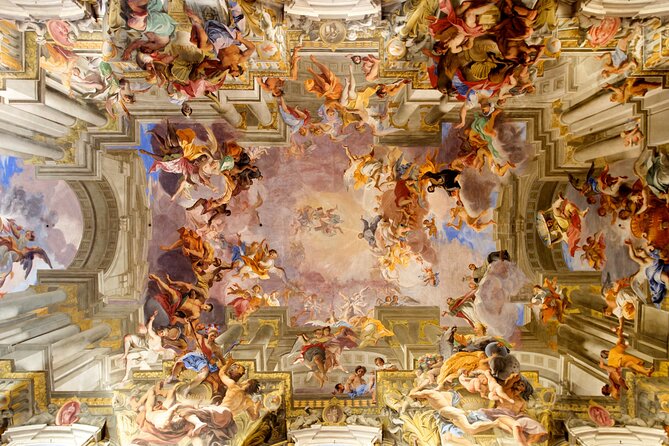
One of the biggest highlights is Chiesa di Sant’Ignazio di Loyola, where the entrance ticket is included. This is a Baroque masterpiece known for the illusionistic ceiling fresco by Andrea Pozzo.
Here’s why I think this is a smart inclusion: it’s one of those experiences where the guide’s explanation changes how you see the space. Even if you’ve seen Baroque churches before, this one tends to make people look longer than planned—because your eyes keep trying to reconcile what’s painted versus what’s real.
The stop runs about 20 minutes, which is the right amount of time for a quick focus on the key visual payoff without feeling rushed out the door.
Pantheon Exterior Views, Piazza Navona’s Fountain Finale
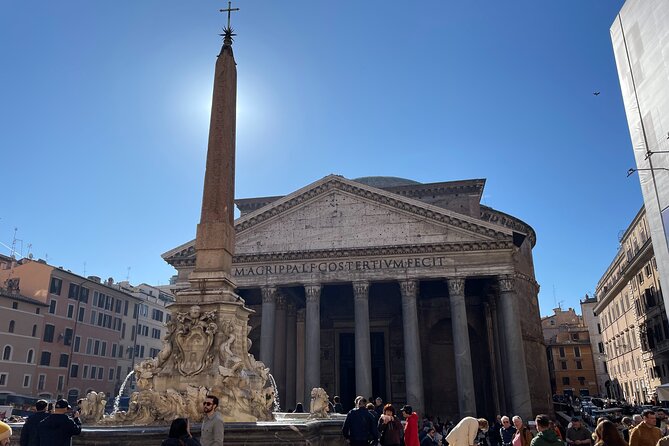
Next comes the Pantheon. Entrance isn’t included, so expect an exterior visit. Still, it’s hard not to be impressed: the domed roof and the central oculus are unmistakable, and the guide connects it to the building’s historic role and its association with notable figures, including the artist Raphael.
After that, you finish at Piazza Navona, one of Rome’s most lively public squares. This is where you shift from monuments to atmosphere. You’ll see three famous fountains:
- Fontana dei Quattro Fiumi
- Fontana del Moro
- Fontana del Nettuno
The itinerary ends with time to relax at a nearby café. This is a nice way to balance the walking with a low-effort decompression moment. It also makes the tour feel less like a sprint, more like a guided route through different “moods” of central Rome.
What’s Actually Included (and What’s Not) When You See Big Sights
The tour price includes the professional guide and the walking route through the historic heart, plus visits to major landmarks as described in the plan. Entrance fees are not included generally—but a couple of key stops do have included tickets.
Here’s the practical breakdown based on the itinerary:
- Trajan’s Market: included ticket
- Chiesa di Sant’Ignazio di Loyola: included ticket
- Palazzo di Venezia: admission not included
- Pantheon: admission not included
A major note: when a stop requires an entrance ticket that isn’t included, you’ll typically view it from outside. That means you should plan your expectations accordingly. You can still enjoy the architecture and the setting, but you won’t get the same level of interior access for every landmark.
If you’re the type who loves museums and wants inside access everywhere, you may end up doing a separate ticketed plan for other major sites later. If you’re more focused on orientation and story, this tour already does a good job picking the right two interiors.
Pace, Footwear, and Who This Walk Fits Best
This tour is built for moderate physical fitness. Rome’s streets can be uneven, and this route covers ground with plenty of time spent walking between stops. If you have a back issue, heart condition, or you’re pregnant, this is specifically flagged as not recommended.
Even if you’re generally fit, I’d still treat it like a serious walking day. You’re on foot for 2 to 3 hours, and you’ll be standing to look, listen, and move on again.
My simple shoe advice:
- Choose comfortable walking shoes you’ve already worn
- Bring something to handle crowds and heat if the day is warm
- Expect old-stone surfaces and curb crossings
Value at $30.25: When This Tour Feels Like a Win
At $30.25 per person, the value depends on how you like to travel.
If you want a guide, a timed route, and a way to connect the dots between places like Piazza Venezia, the forum-area sights around Trajan’s Column, the Pantheon, Trevi, and Piazza Navona, this price is reasonable. You’re also getting two included ticketed stops, which is a real savings compared to buying them separately.
It also helps that the tour is in English and capped at 20 people. That’s the sweet spot for a walking tour: big enough to run smoothly, small enough that the guide can keep control of the pace.
One more factor: it’s booked about 11 days in advance on average. That suggests demand, and it’s a good sign for operating consistency. If your dates are fixed, I’d lock it in sooner rather than later.
Should You Book This Rome Walking Tour?
I’d book it if you want a smart, time-efficient way to see major Rome landmarks plus some less-obvious architectural variety. The two inside-ticket inclusions—Trajan’s Market and Chiesa di Sant’Ignazio di Loyola—are exactly the kind of stops that reward having a guide explain what you’re looking at.
I would skip it or at least rethink if:
- You’re sensitive to long walks and uneven surfaces
- You want interior access at every headline site
- You prefer self-guided wandering with no set stops
One real-world consideration: there can be occasions where a booked tour gets cancelled due to insufficient people. If you’re traveling on a tight schedule, build in a Plan B for the day so you’re not stuck with only major sights you can’t rearrange easily.
If you do book, keep an eye on the meeting time, and have your phone details ready in case the provider updates the start point. Late arrivals can lose your spot, so give yourself a buffer and arrive before you think you need to.
FAQ
How long is the Rome attractions and hidden gems walking tour?
The tour lasts about 2 to 3 hours.
How much does the tour cost?
The price is $30.25 per person.
Is the tour offered in English?
Yes, it’s offered in English.
Do I need to pay extra entrance fees during the tour?
Entrance fees are generally not included. Some stops include admission tickets as described in the itinerary, while others are visited from outside.
Which stops have tickets included?
The itinerary indicates included admission for Trajan’s Market and Chiesa di Sant’Ignazio di Loyola.
Where does the tour start and where does it end?
It starts at Piazza Venezia and ends at Piazza Navona.
How big is the group?
The tour has a maximum of 20 travelers.
Is the tour suitable for everyone physically?
It requires moderate physical fitness and is not recommended for travelers with back problems, pregnant travelers, or travelers with heart problems or other serious medical conditions.
If you want, tell me your travel month and whether you want more museum time or more street wandering afterward—I can suggest a simple add-on plan for the rest of your Rome day.