REVIEW · ROME
Rome: In the Footsteps of Bernini Private Tour with Transfers
Book on Viator →Operated by Eyes of Rome · Bookable on Viator
Once you spot the clues, Bernini’s Rome clicks fast.
I like how this private tour ties together major Bernini works so you see patterns, not just photos. I also love the hotel pickup and drop-off option for stays inside the Aurelian Walls, which saves you time and stress in a city that loves detours.
One thing to plan for: dress code. For churches, you’ll need knees and shoulders covered—no exceptions if you want smooth entry.
In This Review
- Key points worth knowing before you go
- Why Bernini in Rome feels different with a guide
- Ponte Sant’Angelo and the angel statues you’ll never forget
- Piazza Navona: the ancient stadium shape behind the Baroque scenes
- Fontana dei Quattro Fiumi: myths, continents, and theatrical stone
- The Spanish Steps and the Barcaccia Fountain: tragedy turned into charm
- Via della Mercede and the Bernini connection on a quieter street
- Sant’Andrea delle Fratte: Bernini angels with a second life
- Piazza Barberini and the Triton Fountain: drama that sprays water
- Santa Maria della Vittoria and the Ecstasy of Saint Teresa
- Price and logistics: what you’re really paying for at $375.97
- Who this tour suits best (and who should rethink it)
- Should you book this Bernini private tour with transfers?
- FAQ
- FAQ
- How long is the Rome Bernini private tour?
- Is hotel pickup and drop-off included?
- Is this tour private?
- Do I need tickets for the sights?
- What should I wear for churches?
- Will any monuments be closed?
Key points worth knowing before you go
- Angel statues at Ponte Sant’Angelo link directly to two angel sculptures placed in Sant’Andrea delle Fratte
- Piazza Navona is an ancient stadium shape in disguise, with Bernini fountains and Borromini architecture
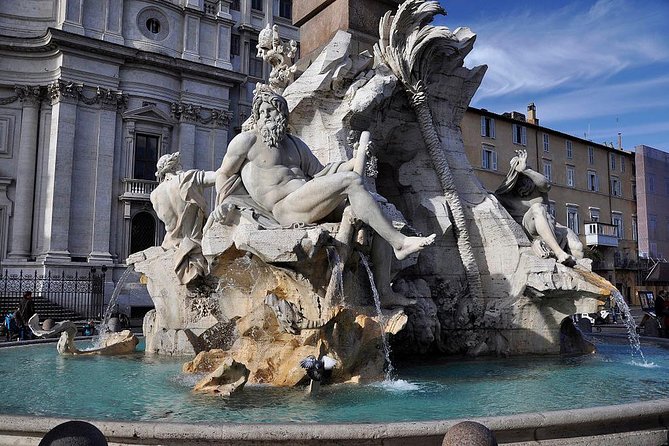
- Fontana dei Quattro Fiumi turns myths and geography into stone allegory
- The Barcaccia Fountain at the Spanish Steps remembers the 1598 Tiber flooding and still functions as drinking-water waterworks
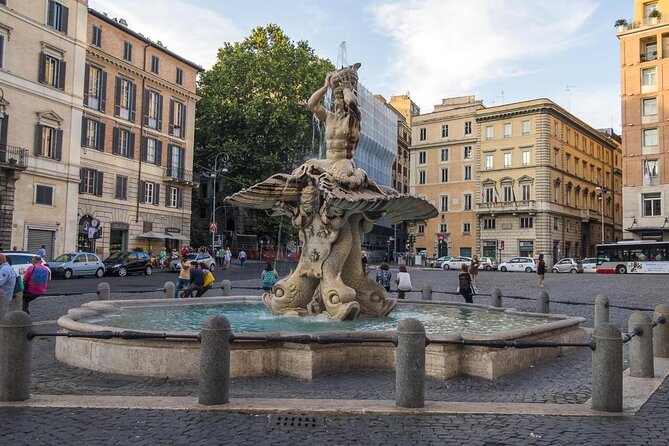
- Piazza Barberini’s Triton Fountain ties Bernini to Pope Urban VIII’s commissions
- Santa Maria della Vittoria’s Cornaro Chapel centers Bernini’s Ecstasy of Saint Teresa
Why Bernini in Rome feels different with a guide
Rome has a way of making you walk past the important stuff. You see the big square. You snap the picture. Then you move on.
This experience helps you slow down just enough. A good Bernini-focused guide teaches you what to look for: the way angels hold emotion, how fountains use theater-level drama, and why Baroque art feels like it’s pushing past the frame. And since it’s private, you’re not trapped in a herd pace. You can ask questions as they come up, instead of waiting until the end.
Another smart part: most stops are close enough that the route feels like a concentrated highlight reel, but not a sprint. You’re not spending half your time figuring out where to stand.
You can also read our reviews of more private tours in Rome


Ponte Sant’Angelo and the angel statues you’ll never forget
Your walk starts at Ponte Sant’Angelo, the stone bridge first built under Emperor Hadrian in 134 AD. The real wow factor is the set of angel statues crowning the bridge—created for the bridge’s 17th-century makeover, overseen by Gian Lorenzo Bernini.
These angels are tied to the Passion of Christ. That matters, because it changes how you read the figures. They aren’t random decoration. They’re part of a sacred sequence that turns a bridge into a kind of religious walk.
Practical tip: give yourself a moment at the bridge approaches. The angels look different depending on your angle and where you’re standing. If you rush straight to the middle, you miss the best views.
Piazza Navona: the ancient stadium shape behind the Baroque scenes
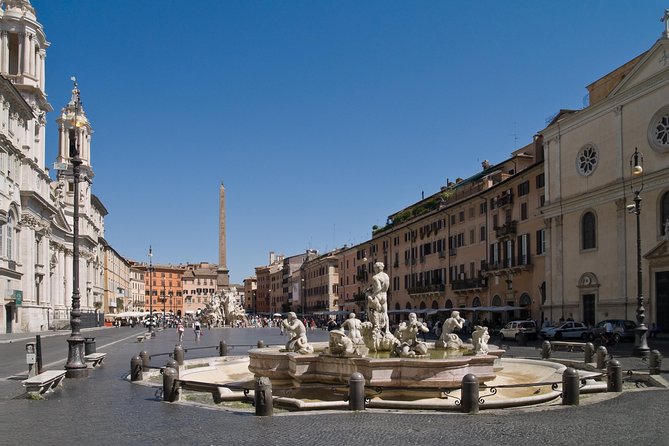
From the bridge, you move into Piazza Navona, one of Rome’s most famous Baroque squares. The key detail I love here is that the piazza follows the footprint of an ancient Roman stadium. In other words, you’re standing on the “old geometry” that Baroque Rome later turned into show time.
You’ll likely spend time taking in the whole square, not just the highlights. That’s because the guide’s job is to help you connect the dots—Bernini’s fountains here, Borromini’s architectural style nearby, and the way the space is designed for gathering.
The downside of Piazza Navona, even with a guide? It can get busy. You’ll want to pace yourself and ask your guide where to step for the cleanest views, especially if you want to take photos without constant shoulder checks.
Fontana dei Quattro Fiumi: myths, continents, and theatrical stone
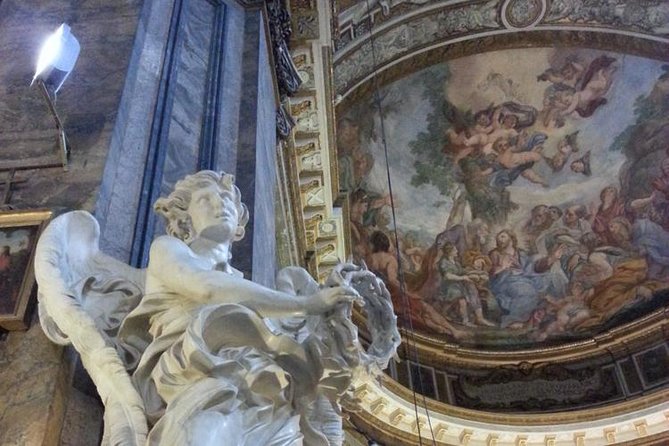
Next comes Fontana dei Quattro Fiumi, the Fountain of the Four Rivers. Bernini’s fountain uses allegorical statues to represent four major rivers from different continents. The result is part mythology, part world map, and part drama production—Baroque art with a sense of timing.
When you’re standing there, it helps to think like the sculptor. The figures aren’t just “pretty.” They’re designed to communicate power, reach, and the idea of Rome as the center of a wider world.
Even if you’re not the type to study art history, this is one of those fountains that makes you look twice because your brain keeps trying to label what it’s seeing. A guide helps you interpret what those symbols mean.
The Spanish Steps and the Barcaccia Fountain: tragedy turned into charm
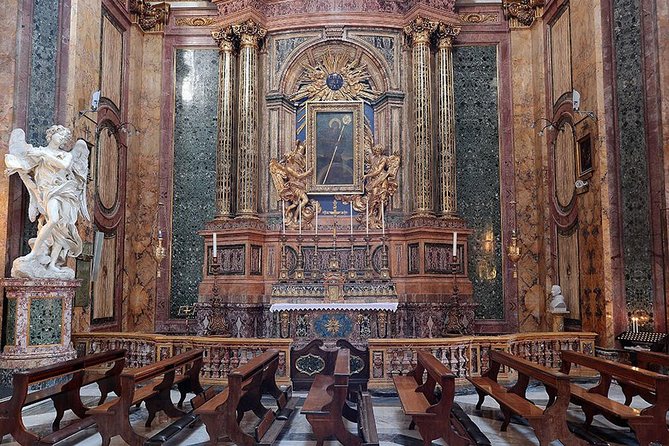
The Spanish Steps are famous for a reason. You’re looking at a sweep of 135 steps connecting Piazza di Spagna at the base with Piazza Trinità dei Monti at the top. It’s a practical landmark—people meet here, pause here, and use it as a natural viewpoint.
But the star near the bottom is the Barcaccia Fountain. This boat-shaped structure is often linked to Pietro Bernini and Gian Lorenzo Bernini, and it’s tied to a very specific story: the tragic flooding of the Tiber River in 1598.
Instead of pretending the flood was glorious, the fountain leans into the aftermath. Shaped like a sinking ship, it became an early Baroque statement and it also supplied passersby with fresh drinking water after its creation in the 17th century. So you get art, history, and function all in one small stop.
One tip: if you want photos without constant background chaos, time your shots and don’t camp in one spot too long. Ask your guide where the best lines of sight are before you raise your camera.






Via della Mercede and the Bernini connection on a quieter street
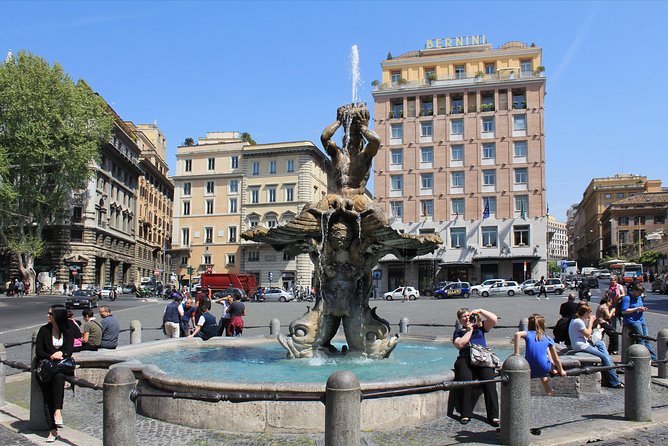
After the big public spaces, you get a breather on Via della Mercede. This street sits near important Baroque works, and it’s a good reminder that Bernini’s influence wasn’t limited to grand plazas. Urban design and nearby architecture are part of the story too.
Here’s where you’ll hear about Bernini’s influence in the built environment, and you’ll also have a chance to look for how the street’s character supports the surrounding art.
If the group keeps moving, this part can feel short. But it’s one of the better chances on the route to shift from “look at the famous thing” mode to “why does this area look like this” mode.
Sant’Andrea delle Fratte: Bernini angels with a second life
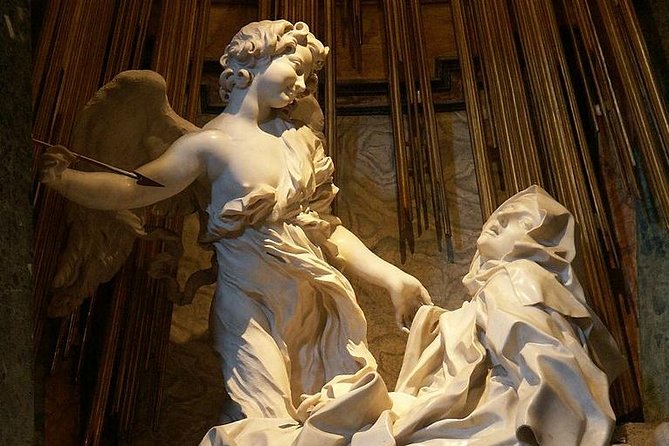
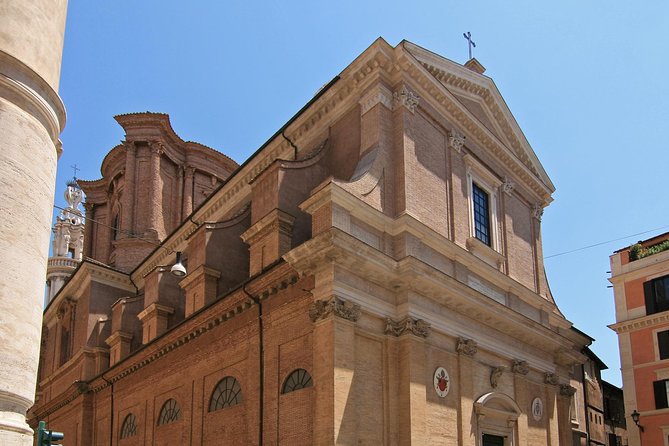
At Sant’Andrea delle Fratte, you’re stepping into a 17th-century basilica known for Baroque details and an overall sense of calm compared with the busier squares.
The standout detail is that the church houses two angel statues originally sculpted by Gian Lorenzo Bernini for Ponte Sant’Angelo—later placed here. That makes this stop surprisingly satisfying even if you already saw the angels on the bridge. You can compare how the same theme lands in a different setting.
In a church, your posture changes. You look upward differently. You take in the light. And with these angel statues, it’s easier to focus on expression and composition without the outdoor noise.
Piazza Barberini and the Triton Fountain: drama that sprays water
Piazza Barberini sits in the heart of Rome and leads you to Bernini’s Triton Fountain. The fountain was commissioned by Pope Urban VIII, which is a helpful context point: Baroque art wasn’t created in a vacuum. It was part of power, prestige, and religious storytelling.
The Triton Fountain features the Greek god Triton, son of Poseidon, blowing water through a conch shell supported by four dolphins. The whole thing reads like motion frozen in stone—and when water is running, it feels even more alive.
Practical tip: stand back a few steps and watch the way the water plays across the figures. Up close, you might just get wet and distracted. From a little farther, the structure makes more sense.
Santa Maria della Vittoria and the Ecstasy of Saint Teresa
This is the emotional centerpiece of the tour. Santa Maria della Vittoria is a Roman Catholic church famous for housing Bernini’s Ecstasy of Saint Teresa in the Cornaro Chapel.
Even if you don’t know much about the story beforehand, the scale and theatrical design of the chapel make the experience easy to grasp. Baroque art here aims for impact—movement, light, and sculptural tension all working together.
This stop is also one of the main reasons the dress code matters. Churches are strict about shoulders and knees, and it’s worth planning your outfit before you arrive so you don’t lose time at the door.
If you’re the kind of traveler who likes art you can feel in your body—not just admire from a distance—this church is where your trip earns its title.
Price and logistics: what you’re really paying for at $375.97
At $375.97 per person for about 3 hours, this tour costs more than a standard group walking tour. The question is: what are you buying besides a guide speaking English?
Here’s the value logic I see:
- Private format: only your group participates. That means more questions, fewer “wait, where are we going?” moments, and better pacing for photos or slower walkers.
- Transfers included for central hotels: pickup and drop-off are included only if your accommodation is within the Aurelian Walls. That can save you real time and money versus hiring cabs repeatedly for short hops.
- A dense route with mostly free admissions: the key stops listed here include free admission tickets. That helps keep your total out-of-pocket cost from ballooning.
One consideration: the transfer offer is only for the pickup/drop-off legs, not for moving between every site. Once you’re out, you’re walking. That’s fine for most people, but if you’re sensitive to hills or long cobblestone routes, factor that into your plan.
Also keep an eye out for the Jubilee note: some monuments may be under restoration or closed during extraordinary celebrations. If the operator sends messages, read them—this kind of closure can affect which stops are available.
Who this tour suits best (and who should rethink it)
This tour is a great fit if you:
- want a Bernini-focused route that connects the bridge angels to angels indoors, fountains to their symbolism, and churches to their sculptural drama
- prefer a private pace where you can linger and ask questions without feeling rushed
- like art that has stories attached to it—religion, myth, patronage, and major events like the 1598 flood
You might consider a different option if:
- you’re trying to minimize walking time
- you don’t want to follow dress-code rules for churches
- you’re in a hurry and only want a quick photo checklist
Should you book this Bernini private tour with transfers?
If your goal is to leave Rome with a clearer map of Bernini’s impact—not just a set of stand-alone landmarks—I think this is a smart booking. The combination of private guiding, central pickup where available, and a route that links related works (especially the angel story across Ponte Sant’Angelo and Sant’Andrea delle Fratte) makes the time feel earned.
One extra nudge from the guides’ reputations: people often praise guides like Elisa and Katie for strong Bernini knowledge and an engaging, question-friendly style. That’s exactly what you want for a route like this, where one good explanation can change how you see several monuments.
FAQ
FAQ
How long is the Rome Bernini private tour?
It’s approximately 3 hours.
Is hotel pickup and drop-off included?
Yes, transfers from/to your hotel are included if your accommodation is within the Aurelian Walls.
Is this tour private?
Yes. It’s a private tour/activity, so only your group participates.
Do I need tickets for the sights?
The listed stops include admission ticket Free. The tour includes an official private guide, and you’ll use a mobile ticket.
What should I wear for churches?
A dress code is required for places of worship and selected museums: no shorts or sleeveless tops. Knees and shoulders must be covered for both men and women.
Will any monuments be closed?
During the Jubilee, some monuments may be under restoration or closed due to extraordinary celebrations. Pay attention to any messages you receive about changes.