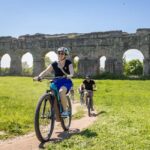
Rome at night feels different. The streets go soft and the monuments glow. This Rome By Night e-bike tour is interesting because you see the big-name sights by bike, without the stress of navigation, and you get guided stop time for photos and stories from an expert who keeps the pace relaxed.
I especially like two parts: the small group size (up to eight people) that makes it easier to hear the guide and ask questions, and the fact that you’re working the highlights at dusk and night—when Rome looks more dramatic and the daytime crowds ease up. One thing to consider: this is an outside-the-sights style tour. You admire landmarks from viewpoints instead of going inside monuments.
In This Review
- Key Things to Know Before You Ride Rome by Night
- Getting Started Near the Pantheon (and Why the Timing Matters)
- The First Big Hit: Colosseum at Night (Photo Time Without the Day Rush)
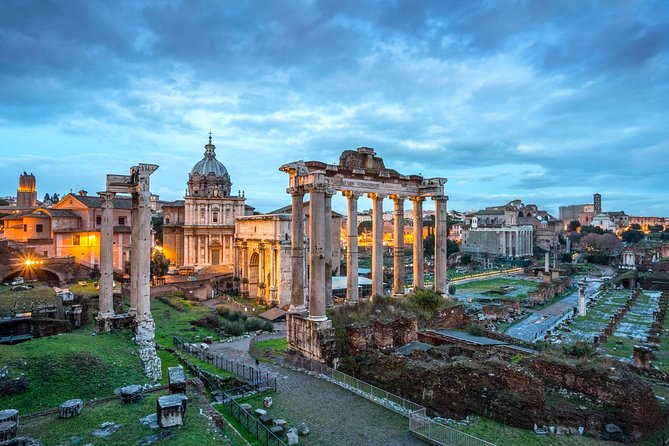
- Roman Forum as the Crowds Thin Out
- Piazza del Campidoglio Views: Michelangelo’s Square Above the Ruins
- Pantheon Exterior + Piazza Navona’s Four Rivers Fountain
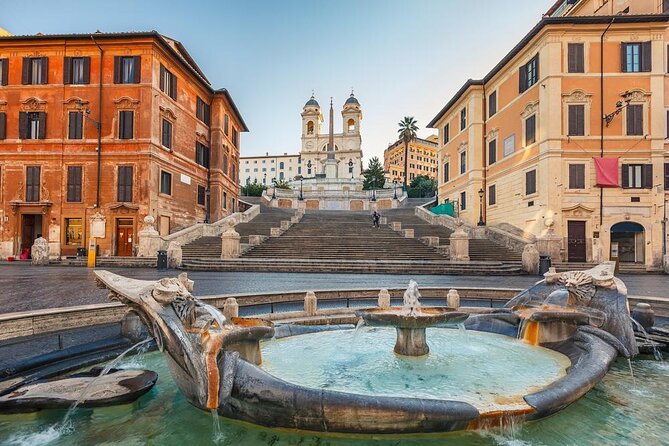
- On the Route: Spanish Steps, Trevi Fountain, and St. Peter’s Square
- Torre Argentina Cat Sanctuary: When Ancient Ruins Meet Modern Life
- Tempio Maggiore di Roma and the Tiber Walk: Jewish Rome by Night
- Campo de’ Fiori: Giordano Bruno’s Story in a Living Square
- Lesser-Known Ancient Temples: Hercules Victor and Portunus
- Theatre of Marcellus: Built for Performance, Rebuilt by Time
- Piazza Farnese and the Portico of Octavia: Renaissance Elegance and Ghetto Quiet
- Pace, Group Size, and What That Means for Your Experience
- Price Value: Is $82.90 Worth It?
- What Weather and Riding Style Should You Expect?
- Should You Book Rome by Night on an E-Bike?
- FAQ
- How long is the Rome By Night e-bike tour?
- Where does the tour start?
- Are e-bikes and helmets included?
- Do we go inside monuments like the Colosseum or Pantheon?
- What about admission tickets?
- What language is the tour offered in?
Key Things to Know Before You Ride Rome by Night
- Up to eight riders means a more personal experience and a calmer ride through busy central streets.
- E-bikes do the heavy lifting so you can keep a comfortable pace on hills and bridges.
- Night lighting + photo stops help you get that Rome wow factor without a full day of sightseeing.
- You don’t enter monuments, so plan for exterior views and guided commentary instead of ticketed time inside.
- Bring your bike skills: you must know how to ride, and the tour assumes you can balance and pedal confidently.
Getting Started Near the Pantheon (and Why the Timing Matters)
The tour meets in central old Rome, steps from the Pantheon area at Via dei Soldati, 27. Start time is 7:00 pm, and that’s not random. Late afternoon heat fades fast, street noise changes, and monuments look more cinematic once floodlights kick in.
After you meet your guide and group, you get an e-bike and a helmet. The ride begins at a relaxed speed, built for people who want to enjoy the city rather than race through it. Guides like Leo, Marco, Luca, Luigi, Arturo, and Niccolo show up in the lineup across bookings, and the vibe is similar: high energy, plus real patience for photo stops and slower moments.
One practical point: you’re on a bike in Rome’s streets. You don’t need to be a cyclist, but you do need comfort riding in traffic-like conditions. If you’re the kind of rider who gets tense on uneven pavement or tight turns, try to build confidence first—this tour moves as one group.
You can also read our reviews of more cycling tours in Rome
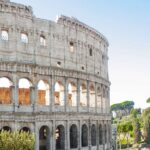
The First Big Hit: Colosseum at Night (Photo Time Without the Day Rush)
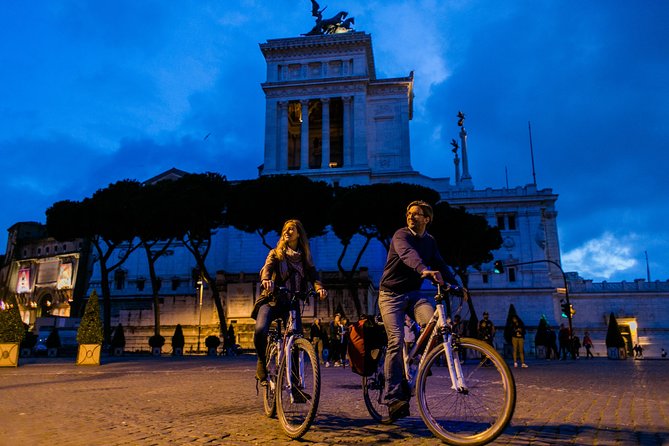
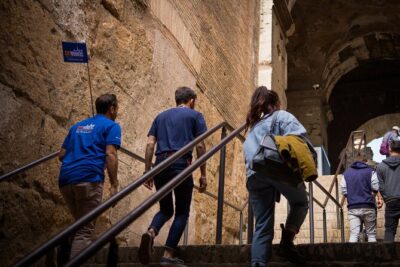
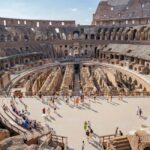
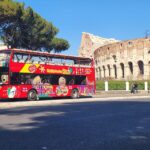
The tour’s first major stop is the Colosseum, where you pause to admire one of the world’s most iconic monuments lit up after dark. You get around 10 minutes here, and the focus is on viewpoints and atmosphere rather than tickets or entry.
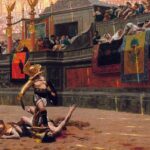
The guide explains the Colosseum in plain, human terms—gladiators, emperors, and the spectacle culture that made it a headline of ancient Rome. What makes this stop work is the pacing: you get time to step back, look up at the scale, then take photos from angles the guide has clearly thought through.
This is also a “use your time well” moment. Daylight gives you clarity, but night gives you drama. Floodlights help show the structure’s mass and arches in a way that’s hard to copy in photos taken in bright sun.
Admission isn’t included for the Colosseum, and you should know the tour isn’t set up for entering monuments anyway. So if you’re hoping for a full inside visit, this won’t replace that kind of ticketed tour.
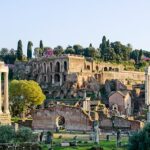
Roman Forum as the Crowds Thin Out
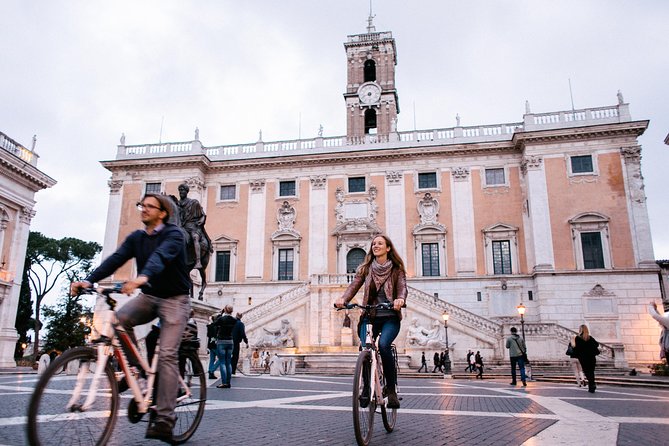
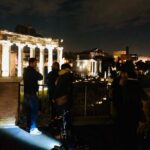
Next comes the Roman Forum, the heart of ancient power and daily politics. You’ll get about 15 minutes for this stop, with the guide tying it to what you’re seeing outside—ruins, layout, and how the space functioned.
This is one of those Rome experiences that benefits from timing. Late in the day, you get fewer impatient bodies pushing past you, and you can actually look around instead of just ticking boxes. The guide’s commentary matters because the Forum is big and visually busy; hearing the story helps the site make sense as a place where people lived, governed, and held ceremonies.
If you like learning, you’ll probably enjoy the Forum most when you ask questions. Guides in these tours tend to keep the explanations direct and connected to the visible remains—so you’re not stuck with history that floats away from the stones.
Piazza del Campidoglio Views: Michelangelo’s Square Above the Ruins
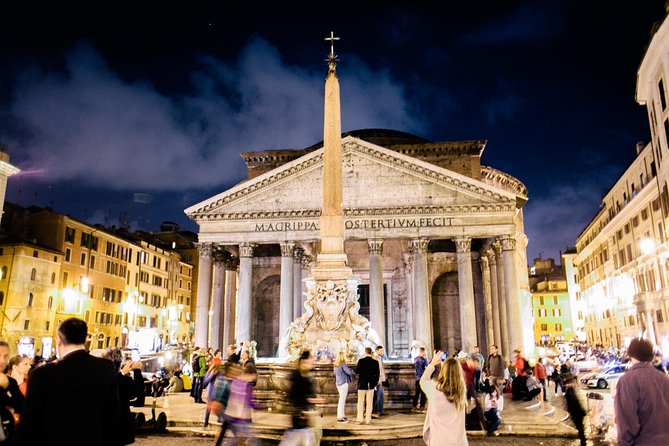
From the ruins zone, the tour climbs into one of Rome’s best viewpoint moments: Piazza del Campidoglio on Capitoline Hill. You stop for around 10 minutes, and it’s not just a quick glance. This square, designed by Michelangelo, gives you a sweeping look over the Roman Forum and the rooftops below.
At night, that view helps you understand Roman city planning in a way that flat ground can’t. You see the scale between “then” and “now”: ancient layout below, living city energy around it, all framed by Renaissance design. It’s also prime for photos because the light catches architecture without the harsh glare you get in afternoon sun.
If you’re someone who hates rushing, this is a good pause. It’s elevated, calmer than some street corners, and the scenery does half the job for you.
Pantheon Exterior + Piazza Navona’s Four Rivers Fountain
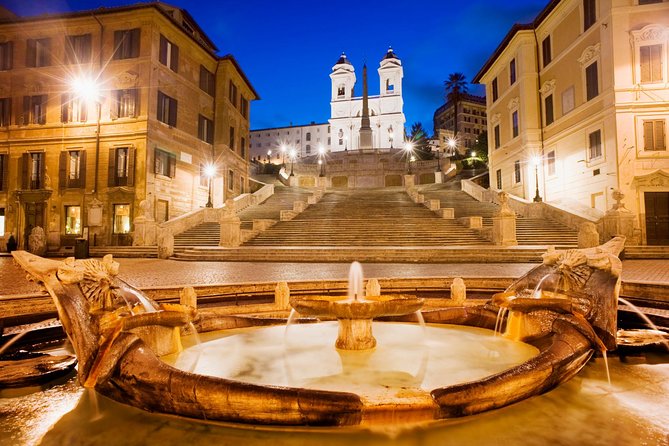
After the big viewpoint, you circle back through classic central Rome. One stop is the Pantheon, described as the city’s best-preserved ancient temple. You’ll spend about 10 minutes here, focusing on what you can see from outside and listening to the guide’s context.
Then comes Piazza Navona for about 15 minutes. This is where Bernini’s Fontana dei Quattro Fiumi takes center stage. Night lighting does wonders for sculpted stone and moving water—so even a short stop feels satisfying.
Navona also works as a breath reset. The square is open, so it’s easier to regroup as a group, take photos without squeezing, and just watch Rome’s rhythm. If you’re building your first-day mental map, this is a great checkpoint.
Since the tour doesn’t enter monuments, your time here is about atmosphere and exterior viewing. That’s a plus if you want motion and variety. It’s a drawback if you specifically want interior time.
You can also read our reviews of more evening experiences in Rome
On the Route: Spanish Steps, Trevi Fountain, and St. Peter’s Square
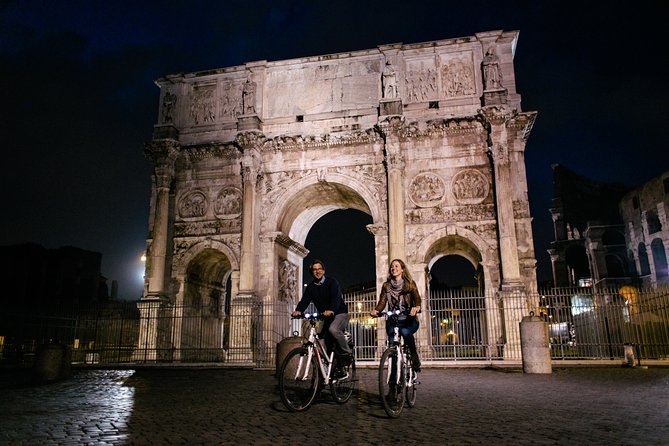
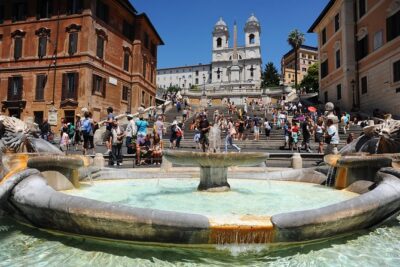
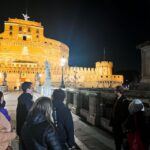
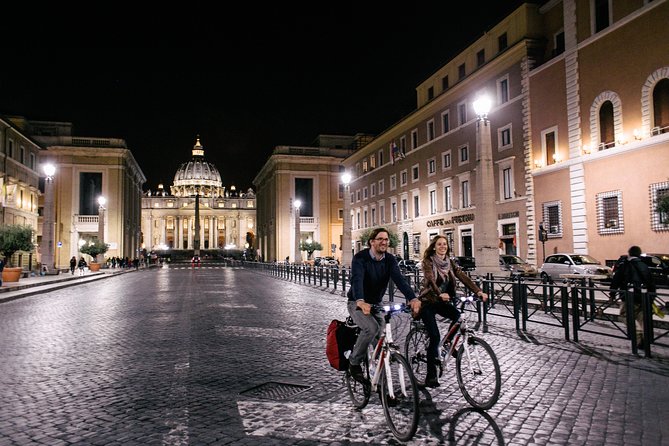
The highlights include the usual top-photo names: Spanish Steps and Trevi Fountain, plus a ride that continues toward St. Peter’s Square. The tour structure is designed so you don’t need a map app or a plan for how to get from one iconic place to the next.
E-bikes help here because distance in Rome adds up fast when you walk. With a guide leading the way, you spend your mental energy looking up at façades instead of checking streets.
And because the tour operates after day crowds have dispersed, these stops feel different than a daytime stampede. You still get plenty of photo opportunities, but with more breathing room.
Torre Argentina Cat Sanctuary: When Ancient Ruins Meet Modern Life
One of the more surprising moments is the Torre Argentina Cat Sanctuary. You pause for around 5 minutes at an archaeological site where ancient remains sit alongside a protected community of cats cared for by local volunteers.
Your guide connects the location to famous political history—this area is associated with the assassination of Julius Caesar—then pivots to the modern story of rescue and volunteer care. That mix of past and present is why this stop lands.
It’s also low-pressure for photos. You’re not stuck waiting for the perfect angle, and the environment encourages a slower look. If you love quirky, human-scale Rome moments, this is the kind of stop that makes the whole ride feel more than just a checklist.
Tempio Maggiore di Roma and the Tiber Walk: Jewish Rome by Night
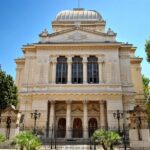
Along the Tiber, the tour includes the Tempio Maggiore di Roma. You’ll spend only about 5 minutes here, but the guide aims for clarity: the deep roots of Rome’s Jewish community, the synagogue’s distinctive architecture, and the symbolism of its square dome.
Night makes details feel more intentional. You can pause, observe shapes and proportions, and let the guide’s explanation connect design to identity and resilience.
This is also a good reminder that Rome isn’t only emperors and stone temples. It’s a layered city where multiple cultures shaped neighborhoods over centuries, and the bike route gives you a quick way to sample that breadth.
Campo de’ Fiori: Giordano Bruno’s Story in a Living Square
Then you stop at Campo de’ Fiori, about 5 minutes. This square is famous for its lively evening scene, but the tour also gives you the historical anchor: the story behind the statue of Giordano Bruno.
What I like about this kind of stop is the contrast. You’re moving through ancient and Renaissance layers earlier in the ride, then suddenly you’re in a place where everyday Rome gathers—cafés, bars, conversation, and street life. At night, that energy makes the city feel current, not frozen in a museum.
It’s also a useful photo break because you can frame people and architecture together. Rome is more interesting when it looks like it’s being used, not just viewed.
Lesser-Known Ancient Temples: Hercules Victor and Portunus
The tour keeps sliding into calmer, more architectural moments with two excellent stops along the Tiber.
First is the Temple of Hercules Victor (about 2 minutes). It’s one of the best-preserved ancient temples, with a circular marble form. The guide explains its Greek-inspired design and connects it to trade and the nearby river.
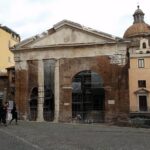
Next is the Temple of Portunus (about 2 minutes). This one is near the river too and is described as beautifully preserved. The guide ties it to the god associated with ports and river trade, and notes how the temple’s elegance influenced later classical architecture.
These short stops are smart. They give you a chance to spot details—shape, material, proportion—without losing the momentum of a nighttime ride. If you tend to enjoy architecture, you’ll probably feel like you got more than you paid for.
Theatre of Marcellus: Built for Performance, Rebuilt by Time
You’ll also see the Theatre of Marcellus with about 5 minutes on this stop. The guide explains that it dates back to the era of Julius Caesar and Augustus, and that it influenced the design of the Colosseum.
This place works because you can literally see layers. After the ancient theatre, the structure was later absorbed into medieval and Renaissance buildings. In a city like Rome, that kind of “history stacked on history” is the rule, not the exception—but Marcellus makes it very visible.
Night lighting doesn’t just make it pretty. It helps separate ancient lines from later stonework, so the story reads faster.
Piazza Farnese and the Portico of Octavia: Renaissance Elegance and Ghetto Quiet
Two finishing stops round out the ride.
At Piazza Farnese (about 5 minutes), the guide highlights the majestic Palazzo Farnese and points out architectural details like the twin fountains made from ancient Roman basins. The mood here is calm and refined—especially at night—so it feels like a reset after busier squares.
Then there’s a pause at the Portico of Octavia (about 5 minutes), in the heart of the old Jewish Ghetto area. The guide explains the portico’s role and how the area evolved over time. This is one of those stops where the quiet matters. The architecture feels close-up, and the route’s earlier big monuments suddenly make more sense in context.
Pace, Group Size, and What That Means for Your Experience
This tour caps at a maximum of eight travelers, and that size shows. With fewer people, the guide can slow down when you need it, and you can ask questions without shouting over a crowd. Multiple guides across bookings (like Marco and Luca) are noted for being patient with photo stops, which matters because Rome photos are never “one and done.”
The tour also isn’t a monument-entry marathon. The format is built for a guided route with exterior viewing and commentary. That means fewer waiting lines, and more time spent moving through the city in the cool evening air.
E-bikes help a lot with this style of pacing. They make hills more manageable and keep you from arriving tired before the photos. One bonus: with e-bikes, you often feel like you’re seeing more Rome in less time than you’d manage on foot.
Price Value: Is $82.90 Worth It?
At $82.90 per person for about three hours, you’re paying for a bundle: guide-led storytelling, a bike that does the climbing, and the chance to hit major central Rome sights without constant map work.
Here’s the value logic that matters: if your biggest goal is seeing a lot of iconic sites in a short window, a night e-bike tour like this can be a smart use of money. A guide saves time and brainpower, and the e-bike saves leg energy. Even with outside-only viewing, the stops are selected to keep you oriented fast.
If your goal is to go inside big-ticket attractions, this won’t fully replace that plan because the tour doesn’t enter monuments due to time restrictions. But if you want exterior views that look great at night, plus meaningful explanations, the cost makes sense.
What Weather and Riding Style Should You Expect?
The tour operates in all weather conditions, but it still depends on good weather overall. If poor weather cancels the experience, you’ll be offered a different date or a full refund.
Practically, dress like you’ll be outside moving for a few hours. Night in Rome can feel cooler than you expect, and you’ll want layers. Rain can be manageable, but it changes traction and visibility, so wear shoes you feel confident in.
Most importantly: the tour requires that you know how to ride a bike. The route assumes you can handle an e-bike confidently, not that you’ll learn on the spot.
Should You Book Rome by Night on an E-Bike?
Book this tour if you want:
- A fast way to get your bearings in central Rome with guided night stops
- Exterior views of major landmarks with time for photos
- A ride where the guide’s energy keeps the pace enjoyable, not stressful
Skip it (or pair it with other plans) if you:
- Want extensive inside monument time and guided entry tickets
- Are uncomfortable riding a bike in a lively city environment
- Need a very long sit-down experience at each major site
For most first-time visitors who can ride a bike, this is an efficient and fun way to see Rome at its most photogenic hour—when the streets cool down and the ruins look like they’re still speaking.
FAQ
How long is the Rome By Night e-bike tour?
It’s scheduled for about 3 hours. The listed start time is 7:00 pm, and the tour ends back at the meeting point.
Where does the tour start?
The meeting point is Via dei Soldati, 27, 00186 Roma RM, Italy, and the tour finishes back at the same location.
Are e-bikes and helmets included?
Yes. The tour includes use of a bicycle and use of a helmet.
Do we go inside monuments like the Colosseum or Pantheon?
No. The tour description notes that you do not enter monuments or sights due to time restrictions, waiting lines, closing days, and entrance tickets. You’ll see the sites and get an overview from the outside.
What about admission tickets?
Admission for some sights is not included (for example, the Colosseum ticket is not included). However, since the tour doesn’t include entry, you should plan on viewing from outside.
What language is the tour offered in?
The tour is offered in English.