REVIEW · ROME
Rome: Colosseum, Roman Forum and Palatine Hill Private Tour
Book on Viator →Operated by Eyes of Rome · Bookable on Viator
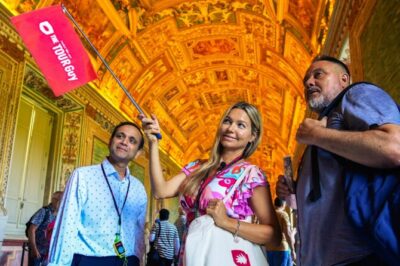
A 3-hour walk through the center of power. This private tour is built around the Colosseum, the Roman Forum, and Palatine Hill, with your own guide to help you make sense of what you’re seeing. I especially like that the entrance fees are included, so you’re not juggling ticket math while time slips away. The other big win is the private format, which means you can ask questions and move at a pace that fits your legs and attention span.
One thing to keep in mind: even with a private guide, the area around the Colosseum and Forum can be crowded, and the visit still comes with practical on-site rules like security checks, lots of uneven stone steps, and some walking.
In This Review
- Key things that make this tour worth your time
- Private guide plus tickets: the real value in the $260 price
- Morning or afternoon pickup: how you’ll start the day
- Entering the Colosseum: what you’ll see, and what your guide should help you notice
- The Roman Forum: how to understand the city’s daily power center
- Constantine’s Arch, the Temple of Vesta, and the walk along Via dei Fori Imperiali
- Forum of Caesar and Palatine Hill: where the scale finally clicks
- What to wear and bring: the Colosseum is not a stroll
- Crowd reality: how the private format helps, and where it can’t
- Which kind of traveler should book this
- Should you book this private Colosseum, Roman Forum and Palatine Hill tour?
- FAQ
- What does the tour price include?
- Is hotel pickup available?
- Can I get Arena Floor access?
- How long is the tour?
- What ID do I need for entry?
- Are there restrictions on bags and shoes?
- What if the weather is bad or I need to cancel?
Key things that make this tour worth your time
- Official private guide for just your group, with stories that connect the sites into one day
- Colosseum + Roman Forum entrance included, so you arrive ready to go
- Optional Arena Floor access if you choose the upgrade, for a different viewpoint than the crowd line
- Forum stops that many people miss, including the story behind the Lapis Niger and the Temple of the Vestal Virgins
- Palatine Hill included, giving you the classic Roman skyline view and the hill that’s tied to Rome’s origin stories
- Hotel pickup offered for centrally located stays within the Aurelian Walls
Private guide plus tickets: the real value in the $260 price
At $260 per person for about 3 hours, the price is not cheap at first glance. But for this kind of visit, value comes from two places: you get an official guide and you also get entry included for the Colosseum and Roman Forum (with options that can add Palatine Hill and even Arena access).
If you’ve ever tried to stitch together a Colosseum ticket, a Forum ticket, and a guide at the last minute, you already know how fast costs and stress pile up. Here, you’re paying for one plan that covers the key sites and includes the basic admissions. That matters because the Colosseum and Forum are not just “pretty ruins.” They’re huge, layered, and easy to misunderstand without context.
The private format also changes the feel. Instead of reading captions while you shuffle along with everyone else, you can stop when something grabs you—architecture, emperors, religious offices, or why certain streets and buildings were where they were. I like that the tour is customizable, so you can lean more toward stories or more toward what’s visible in front of you.
You can also read our reviews of more private tours in Rome

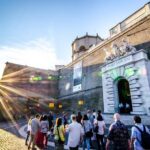

Morning or afternoon pickup: how you’ll start the day
This experience starts with pickup from your central Rome hotel (for stays within the Aurelian Walls) when that option is chosen. If pickup isn’t part of your package, you’ll meet near Caffè Roma on Via del Colosseo (the meeting point is listed as Caffè Roma, Via del Colosseo, 31).
Why this matters: the Colosseum area is not an ideal place to “figure it out” if you’re dealing with jet lag, heat, or a tight schedule. A guide getting you there on time also means you’re more likely to start with momentum instead of standing around while everyone tries to locate the entrance.
The tour is offered in English, and you’ll use a mobile ticket for entry. You should also be ready for a straightforward but firm security process—more on that later.
Entering the Colosseum: what you’ll see, and what your guide should help you notice
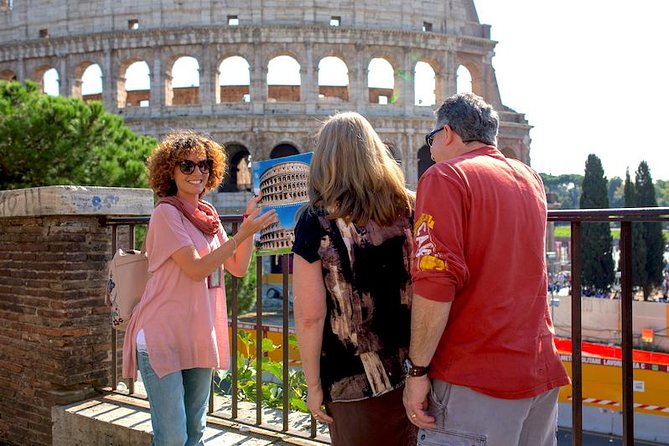
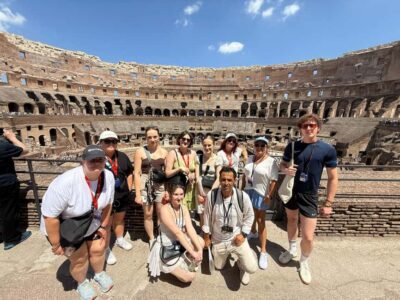
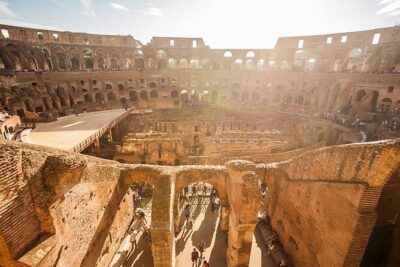
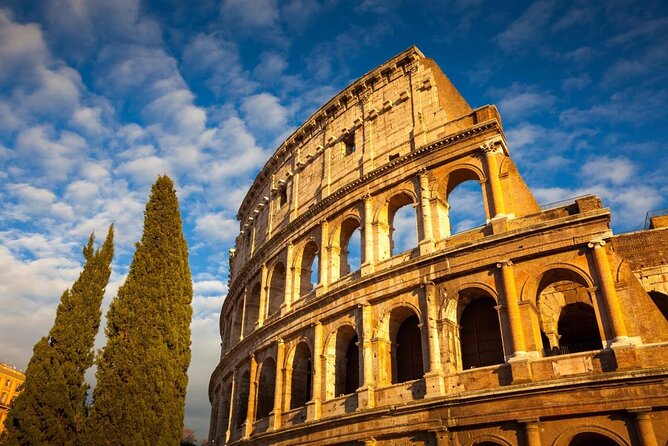
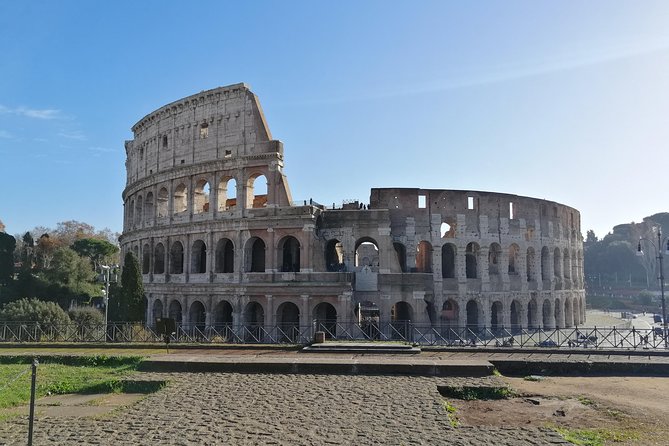
Your first major stop is the Colosseum, with about 1 hour 30 minutes on site and admission included. This is the moment that turns Rome from postcard city into lived experience.
The Colosseum is described here as a massive stone amphitheater that once held an estimated 60,000 spectators, and the tour focuses on the design and construction—like how it was built in about 8 years—as well as what it was used for: gladiator games, wild beast fights, and other spectacles that show how public life worked in ancient Rome.
Here’s where a private guide pays off. The Colosseum is big enough that people often miss the “why” behind what they’re staring at. With your guide, you’re not just looking at arches and seating tiers. You’re connecting the structure to political power, entertainment as a tool of authority, and the fighters and events that made it famous.
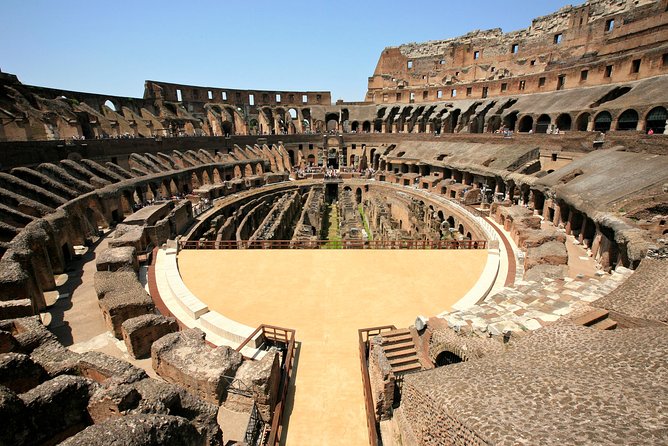
If you choose the upgrade, you may also get Arena Floor access. That changes the vibe completely. From the standard viewing areas, you see the arena like a distant stage. With Arena access, you’re closer to the space where the action would have happened—useful if you like grounding history in real geometry and scale.
One practical note: there’s a metal detector security check to enter, and large bags/backpacks aren’t allowed. So keep your day bag light.
The Roman Forum: how to understand the city’s daily power center
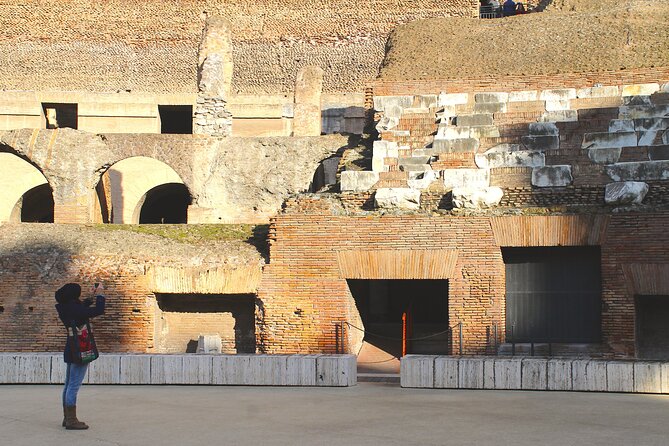
After the Colosseum, the tour shifts to the Roman Forum, with about 50 minutes there, and admission included. The Forum is often described as ruins, but it functions more like a “map of power.” This is where temples, basilicas, and public spaces were all mixed together—religion, government, and civic life all under one umbrella.
Your guide should help you “read” what you’re walking past. One of the standout story threads in this tour is the Lapis Niger—a very ancient Latin text associated with a black stone story—tied to a location in the Forum. You’ll also visit the Temple of the Vestal Virgins, connected to the Vestal priestesses who maintained sacred fire for decades under different emperors. The tour explains the significance of that fire: as long as it burned, Rome was believed to endure.
There are also some clever interpretive links built into the tour’s explanations—like how ancient Roman celebrations (including Saturnalia) are used as a bridge to explain later traditions you may recognize today. Whether you’re into religion, politics, or cultural continuity, the guide’s job is to help you spot the human thread.
A realistic expectation: the Forum is not flat, and it’s not small. You’ll walk among major spaces, and the best moments often happen when you pause and let the guide tie architecture to story.
Constantine’s Arch, the Temple of Vesta, and the walk along Via dei Fori Imperiali
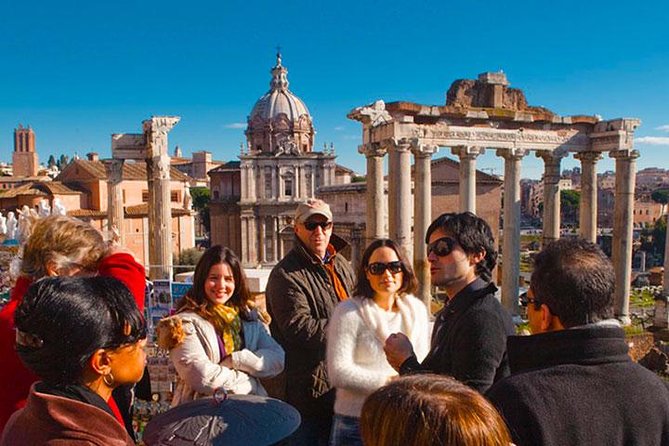
Between the big anchor sites, you also get a set of “see it while you’re here” views that sharpen the overall picture.
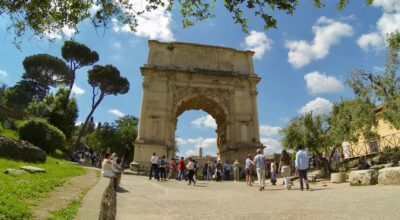
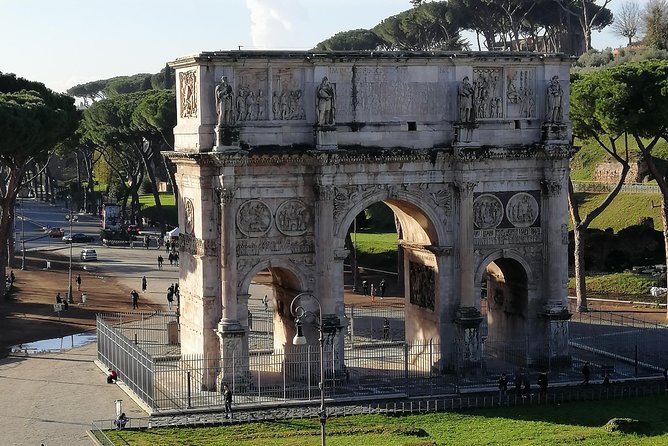
You’ll admire the Triumphal Arch dedicated to Emperor Constantine, positioned as a turning point in Roman history and art—often described as a dividing line between the rise of Christianity and the Roman Empire’s decline. This is the kind of stop that works well with a private guide because the arch is visually striking, but it can still feel abstract unless someone connects it to the broader timeline.
You’ll also see the Temple of Vesta (a circular footprint is called out), near the Regia and by the House of the Vestal Virgins area. The tour notes that the extant temple used Greek architecture elements with Corinthian columns and a central cella, plus a roof vent idea to release smoke. That’s the kind of detail you’ll never get from a quick glance—nor from a generic sign.
Then comes a scenic historical corridor: you’ll admire the view along Via dei Fori Imperiali, a route projected under Mussolini. It’s modern planning placed over ancient context, and it’s a useful reminder that Rome is always layering time top of time.
Even the brief walk to access the next sections is part of the experience, because you’re moving through the exact kind of streetscape that people imagine when they picture ancient Rome.






Forum of Caesar and Palatine Hill: where the scale finally clicks
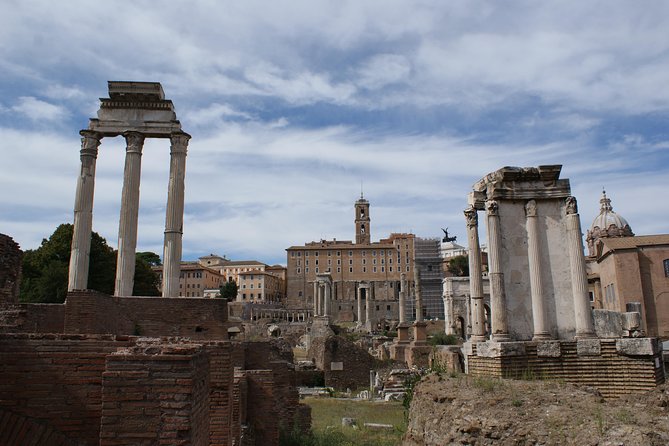
The tour includes Forum of Caesar (also called Forum Iulium) as you move through the Imperial Forum area. This spot is about land, power, and ambition. The tour discusses how construction began around 54 BC and was finished under Augustus around 29 BC, plus later renovations. It also touches on how Julius Caesar acquired and cleared land to build the forum, tying money, politics, and urban change into one story.
This is one of those sections where the guide’s pacing matters. If you sprint, the Forum of Caesar becomes a blur of stone and street corners. If you slow down, it becomes easier to see how emperors and elites used construction projects to rewrite public space.
Next up is Palatine Hill, where you’ll spend about 20 minutes with entrance included. The hill is short on time in this tour format, but that’s not a problem if your guide points out what makes the Palatine matter: it’s tied to Rome’s origin stories—the hill “that gave birth to Rome,” as the tour frames it—and it provides classic viewpoints over the ancient center.
In my view, this is the stop that helps you stop thinking in “three separate sites.” You start thinking in one urban system.
What to wear and bring: the Colosseum is not a stroll
Rome’s heat can be intense, and the Colosseum complex is a mix of open sun and ancient stone terrain. The tour specifically asks you to wear closed-toe, non-slip shoes, because there are uneven steps and an archaeological site that doesn’t behave like a museum floor.
Bring:
- A small umbrella for sun (and for sudden rain, if it pops up)
- Your ID/passport ready, because entry requires ID that matches your booking name
- A light bag. Large bags and backpacks aren’t allowed
Plan for logistics that can’t be skipped. You’ll go through metal detector security, and you need to present the right names/voucher details. If the full names of all travelers aren’t provided correctly at booking (or shown at the ticket office with the voucher), entry can be denied. That sounds obvious, but it’s the kind of detail that can ruin the start of a great day if you ignore it.
Crowd reality: how the private format helps, and where it can’t
The best version of this tour happens when you walk in with patience and use the guide as your “translator.” With the private group, you can ask follow-up questions and slow down when something matters to you. That directly helps with the biggest frustration people feel at iconic sites: feeling like they’re just passing through.
Still, the sites themselves are famous. Even with early timing options (morning starts are mentioned as helpful in how the day feels), you can’t delete the fact that the Colosseum and Forum attract massive crowds.
This is why I think the private guide matters most in crowded moments. When you can stop, look, and understand, the crowd turns from noise into just part of the scene.
Which kind of traveler should book this
This is a strong fit if you:
- Want a single guide to connect Colosseum + Forum + Palatine Hill
- Prefer asking questions instead of reading plaques
- Like history told with human stories: emperors, public religion, and how Rome ran its public show
It’s also a good choice if you’re traveling with family, because the tour format can be paced for kids and teens. I’ve seen guide styles praised for keeping younger travelers interested and even adjusting the tour to physical needs. Examples mentioned include guides like Lena, Michaela, Luigi, and Benjamin, but the main point is this: you should be able to get a guide who can adapt to your group.
If you hate walking and uneven steps, you might want to think twice or ask questions before booking about the physical demands. The tour requires good shoes and includes climbs and archaeological walking.
Should you book this private Colosseum, Roman Forum and Palatine Hill tour?
If your goal is to leave Rome’s ancient center feeling like you truly understand what you saw, I’d book this. The standout value is that you get a private guide plus entrance fees, which turns a confusing giant site into a day with a clear story.
Choose the Arena Floor upgrade if you want a more “this is where it happened” view, not just perimeter photos. And if you want the easiest experience, consider the morning option when available, plus plan with the security and footwear rules in mind.
Bottom line: for $260, this tour feels like a smart purchase when you care about context, not just checkmarks—and when you want Rome’s big monuments explained by a guide who can answer your questions on the spot.
FAQ
What does the tour price include?
The tour includes an official private guide and entrance tickets for the Colosseum and Roman Forum. Depending on your option, it can also include Palatine Hill access and arena access (Arena Floor) as an upgrade, plus pickup and drop-off if selected.
Is hotel pickup available?
Hotel pickup is offered if you’re centrally located within the Aurelian Walls, based on the pickup option you choose. If you’re not picked up, you’ll use the listed meeting point at Caffè Roma on Via del Colosseo.
Can I get Arena Floor access?
Arena Floor access is available only if you choose the upgraded option. The base experience includes entry to the Colosseum and Roman Forum.
How long is the tour?
The duration is about 3 hours. The time breaks down into around 1 hour 30 minutes at the Colosseum, about 50 minutes at the Roman Forum, and about 20 minutes at Palatine Hill, with additional views along the way.
What ID do I need for entry?
Each traveler must present a valid passport or photo ID that matches the name provided at booking. You also need the full names of all travelers when booking, and mismatches can lead to denied entry.
Are there restrictions on bags and shoes?
Yes. Large bags and backpacks are not allowed, and you must wear closed-toe, non-slip shoes. You should expect uneven steps and some climbing during the visit.
What if the weather is bad or I need to cancel?
This experience requires good weather. If it’s canceled due to poor weather, you’ll be offered a different date or a full refund. You can cancel for a full refund up to 24 hours before the start time.