REVIEW · ROME
Rome: History and Flavors of the Jewish Ghetto, Semi-Private Tour
Book on Viator →Operated by Welcome Italy · Bookable on Viator
A morning walk can change how you see Rome. This semi-private route threads together Trastevere and the Jewish Ghetto without the stress of figuring it out alone, and you end with your afternoon open for your own plans. I like the small-group feel and clear pacing (max 12), plus the included synagogue entrance that adds real context. One possible drawback: the tour is mainly focused on the Jewish quarter, so if you expect lots of Trastevere time and storytelling, it may feel uneven.
I also like that it starts in a true neighborhood square, Piazza Trilussa, then builds toward the ghetto through landmarks people usually skip. You’ll walk past major Roman-era leftovers like the Portico d’Ottavia, then hit churches that still feel rooted in the city’s everyday life. Bring realistic expectations: you’re moving, there’s a dress code for worship sites, and Rome traffic can affect punctuality.
In This Review
- Key things to know before you go
- Why This 3-Hour Morning Route Works in Rome
- Piazza Trilussa and Acqua Paola: Trastevere’s Set Piece Start
- Santa Maria in Trastevere: Mosaics You Actually Remember
- Isola Tiberina and Fontana delle Tartarughe: Legends With Real Geography
- Sant’Andrea della Valle and Il Portico d’Ottavia: Rome Before the Walls
- Antico Quartiere Ebraico and the Tempio Maggiore: The Part You Came For
- Price and Logistics: Is It Good Value for 175-ish Dollars?
- Should You Book This Jewish Ghetto and Flavors Tour?
- FAQ
- How long is the Rome Jewish Ghetto, History and Flavors tour?
- What time does the tour start, and where is the meeting point?
- Is the tour offered in English?
- How many people are in the group?
- What’s included in the price?
- Is pickup and drop-off provided?
- Do I need to follow a dress code?
- What are the cancellation terms?
Key things to know before you go
- Small group size (up to 12) keeps the pace human and helps you not get separated.
- Synagogue entrance included, so you get beyond the outside look at the Jewish quarter.
- Start in Trastevere at Piazza Trilussa, then connect the dots toward the ancient ghetto area.
- Stops are short but meaning-heavy, like Isola Tiberina’s bridges and the legends behind Fontana delle Tartarughe.
- Several major churches are on the route, including Santa Maria in Trastevere and Sant’Andrea della Valle.
- A morning schedule means you’re done by midday and can keep exploring on your own.
Why This 3-Hour Morning Route Works in Rome
Rome is big. Your feet are the real transportation. This tour is designed for a practical rhythm: short walking segments, structured stops, and just enough time at each place to absorb the main stories.
I like that you start at 9:00 am and end near Campo de’ Fiori. That finish point is useful because it puts you close to lots of casual lunch options and easy onward sightseeing without forcing you into another long commute. It’s also semi-private, which tends to feel calmer than the big-bus chaos.
One more thing I appreciate: the route is built so you get “two neighborhoods” without getting lost. You’re not just wandering around a single zone. You move from Trastevere to the Tiber crossing and then into the historical ghetto area—so your brain forms a map fast.
You can also read our reviews of more private tours in Rome


Piazza Trilussa and Acqua Paola: Trastevere’s Set Piece Start
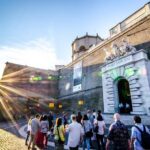
The tour begins at Piazza Trilussa, right in Trastevere, near Ponte Sisto. It’s a meeting place with an easy atmosphere, which matters because it helps you settle in before the heavier history starts.
The centerpiece is the Acqua Paola fountain (commissioned in 1613 under Pope Paul V Borghese). The fountain is designed like a monumental arch with a central niche flanked by Ionic columns, plus the Borghese coat of arms up high with its eagle and dragon. You also get the context of where the water was meant to go, including districts across the river—exactly the kind of detail that makes an object feel connected to daily life.
This is a great first stop because it’s visual and not too “lecture-y.” In about 30 minutes, you’re looking at architecture and hearing how it ties into Roman power, infrastructure, and neighborhood identity—before you transition to the churches.
Practical note: this stop is free-entry and typically quick. If you’re wearing something uncomfortable for standing still, fix it now—Rome is often about small moments where you either stay comfortable or you don’t.
Santa Maria in Trastevere: Mosaics You Actually Remember
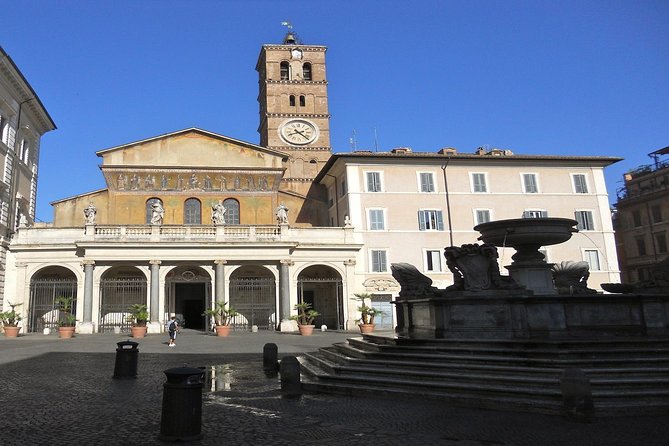
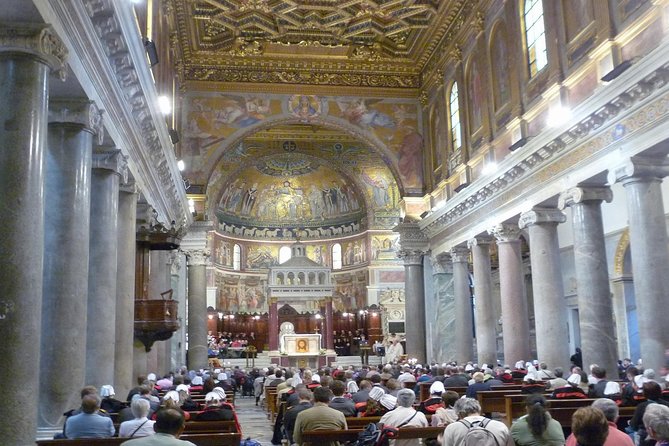
Next is Basilica di Santa Maria in Trastevere. This church is widely known for its age and for the fact that it still reads like a working worship space, not a museum set.
The legend says it began in the 3rd century under Pope Callistus I and was completed by San Julius I in 340. The real story is more complicated: the basilica was rebuilt during Pope Innocent II’s time and later received major decorations and restorations promoted by Pope Clement XI and Pope Pius IX. What you can see now includes elements dating back to the 12th century, which is why it feels layered without being confusing.
Look for the mosaics—especially those connected to Pietro Cavallini—depicting the Life of the Virgin on the facade and in the apse. You’ll also notice the bell tower with a square base from the 12th century. Even the portico is worth your attention: remodeled in 1702 by Carlo Fontana, it holds fragments from the earlier basilica plus Christian epigraphs, topped by statues of four popes.
This stop is about 30 minutes and includes admission. That inclusion is a real value point in a tour like this, because basilicas can be confusing to time your visit around. Having a guide handle the flow saves you energy.
Isola Tiberina and Fontana delle Tartarughe: Legends With Real Geography
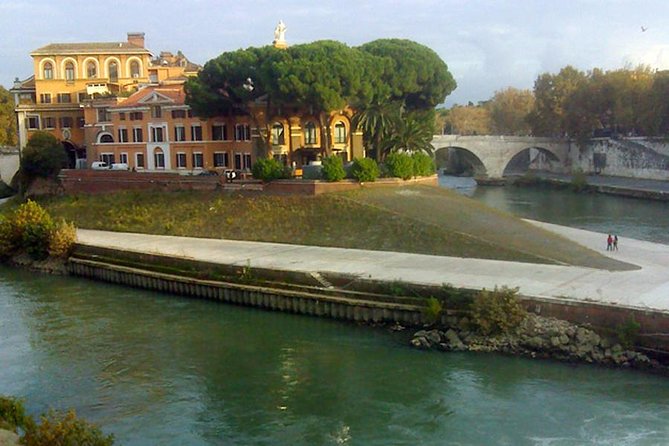
Then you hit the Tiber River in a way that feels like Rome at street level.
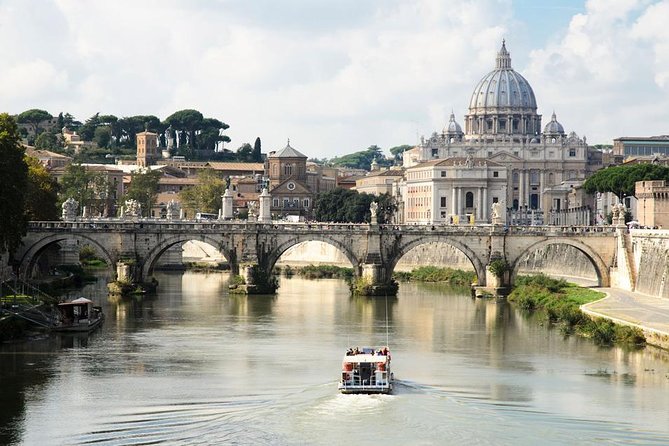
The tour includes Isola Tiberina, the Tiber’s only urban island—about 300 meters long and 90 meters wide. You’ll cross the bridges that connect it to the banks: the Cestio Bridge toward Trastevere (dating to 46 BC) and the Fabricio Bridge toward the ghetto area (built in 62 BC and also called the Quattro Capi bridge because of the Roman herms on the parapets).
Here’s the kind of story I like in this area: the legend says the island formed in 509 BC after people threw the last king’s grain deposit into the river. The practical detail is that the island’s core is tuff from the same type of geology you see on nearby hills, with river sands adding to what you see today. That mix of myth and geology is exactly what makes a short stop feel worth it.
After that, you move to Fontana delle Tartarughe (Turtle Fountain), built between 1581 and 1588 from a design by Giacomo della Porta. The fountain’s most famous story is the legend of Duke Mattei, a gambler who lost the family fortune and then had to prove himself. The punchline: he supposedly funded the fountain as a quick statement, and the window where the couple planned to watch it was walled up afterward. Whether you treat the story as true or as local folklore, it gives the fountain energy in your head.
These stops are short (about 15 minutes each), but they’re strategically placed. You’re getting a change of pace and you’re learning to read Rome’s geography, not just its monuments.
Sant’Andrea della Valle and Il Portico d’Ottavia: Rome Before the Walls
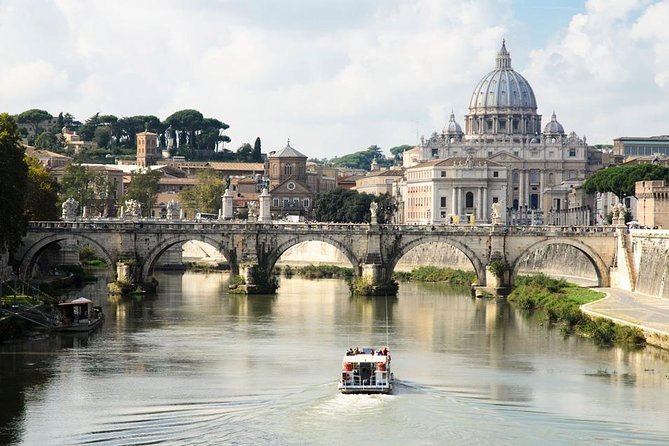
Now the tour leans into big church architecture and deep Roman remnants.
At Basilica di Sant’Andrea della Valle, you’ll hear how this church sits at the end of the 16th century, built on the site of the earlier San Sebastiano church and the Palazzo Piccolomini. It’s the mother house of the Theatine order of clerics, which helps explain why the building feels like a statement, not just a parish.
The architecture credits matter here: Giacomo della Porta, Pier Paolo Olivieri, and Carlo Maderno all played roles. Maderno widened the transept and designed the dome, which is described as the second highest in Rome after St. Peter’s. You’ll be looking up as much as you’re looking in.
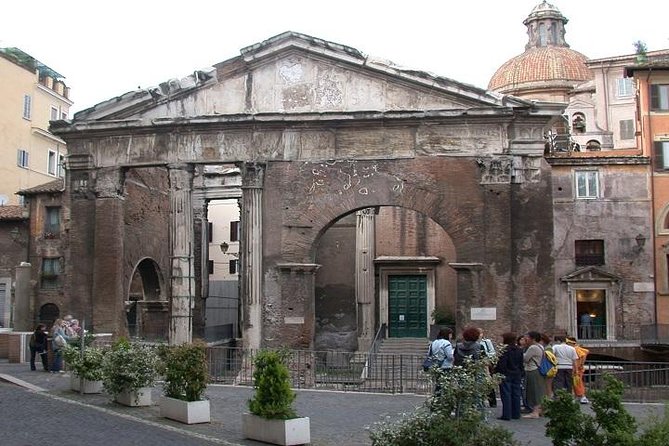
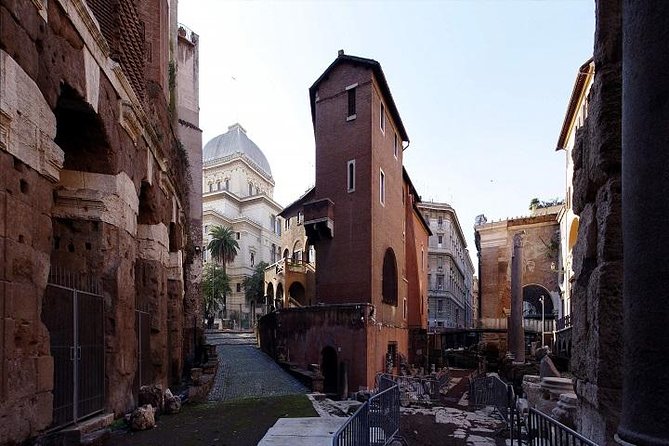
Then comes Il Portico di Ottavia, tied directly to the old ghetto area. This is the only preserved piece of the large porticoes that once lined the northern side of the ancient Circo Flaminio. In other words: the Roman city already had a built-in boundary system here, long before the Jewish quarter was forced into a separate zone.
The portico was rebuilt by Augustus between 27 and 23 BC (replacing the older Portico of Metello) and dedicated to his sister Ottavia. After a fire in 191, it was restored and partially rebuilt in 203 by Septimius Severus—and much of what you can see today dates to that later period. It’s huge at 119 x 132 meters (a quadriportico), and the plan included the Temple of Juno Regina, later joined by the Temple of Jupiter Stator (noted as the first in Rome made entirely of marble). You’ll also hear about Greek and Latin libraries and the Curia Octaviae for public meetings.
This stop is short (about 15 minutes), but it’s doing serious work. It gives you the physical “why” behind the area’s importance. When you reach the Jewish quarter afterward, the setting makes more sense.
You can also read our reviews of more historical tours in Rome




Antico Quartiere Ebraico and the Tempio Maggiore: The Part You Came For
The final leg is Antico Quartiere Ebraico, the historic Jewish quarter within the rione. This is where the tour’s title stops being a label and becomes the point.
You’ll hear how the Roman Ghetto was founded in 1555 by order of Pope Paul IV. People inside were required to live there and to carry a distinctive sign of belonging. They were also prohibited from trading and from owning real estate. Those details matter because they explain why the quarter is not just “old streets” but a forced social system with long consequences.
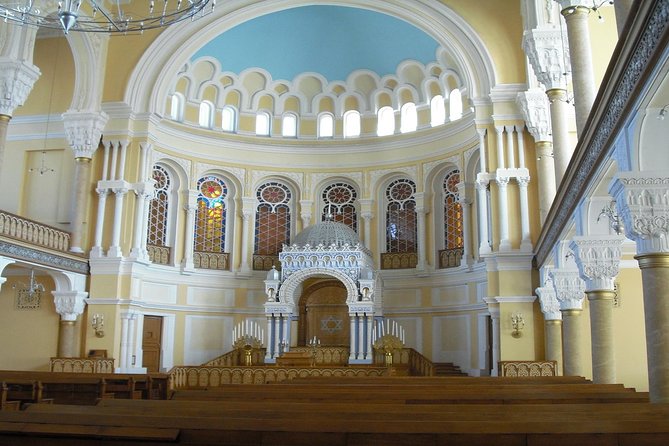
Then comes the cultural center: the Tempio Maggiore (the large synagogue) inaugurated in 1904. It’s described as a reference point for the whole Jewish community, and it remains tied to what you can learn in the area, including the Jewish Museum housed inside.
This tour includes entrance to the synagogue, which is the best way to experience this stop. Outside views give you a silhouette; inside access gives you a sense of scale, meaning, and continuity.
One more angle I like: the tour connects the ghetto area to traditional Roman cuisine through influence on the surrounding neighborhood. After your tour, you can use that nudge in a smart way—pick a meal nearby and look for Jewish-Roman flavors rather than settling for the most touristy menu. You’ll feel like you’re continuing the story, not just killing time.
Price and Logistics: Is It Good Value for 175-ish Dollars?
The price is $175.07 per person for about 3 hours in English. For Rome, that’s not cheap, but it’s not random either.
Here’s why it can still feel like value: you get a professional guide for the full session and synagogue entrance included. The itinerary also avoids the “where do we start?” problem by using clear meeting and ending points in central areas. Add the fact that it’s capped at 12 travelers, and the tour is set up for a more guided experience than a self-guided shuffle through church after church.
Where you should be realistic: this is a walking tour with multiple stops that are designed to be quick. If you want long cathedral time or deep museum time, you may feel the pacing is brisk.
Also keep in mind that Rome timing is Rome timing. One review mentioned the guide arriving late due to the city’s traffic. That doesn’t mean the tour isn’t well run; it means you should build in a bit of flexibility on a morning start.
Dress code is another logistics item. Since it’s required for places of worship and selected museums, plan what you’ll wear so you don’t end up stressed at the doorway.
Should You Book This Jewish Ghetto and Flavors Tour?
I’d book this if you want a structured morning that connects Rome’s layout to Jewish Ghetto history, and you care about actually entering the synagogue rather than just passing by. It’s especially good for first-time visitors who don’t want to spend half a day mapping the area and half the other half wondering what they’re looking at.
I would skip it or pair it with extra time elsewhere if your goal is mostly Trastevere. One note from feedback: guides may spend less time on Trastevere details than you expect, since the Jewish quarter is the core focus. If you want a deeper Trastevere-only experience, add a separate Trastevere wandering block after this tour.
If rain or weather messes with your day, a good guide can still keep the stories moving. One reviewer specifically praised Mohammed for doing wonders during an all-day rainy tour. That’s the kind of thing you want to bet on: a guide who can keep your attention even when the sky won’t cooperate.
FAQ
How long is the Rome Jewish Ghetto, History and Flavors tour?
It runs for approximately 3 hours.
What time does the tour start, and where is the meeting point?
The tour starts at 9:00 am. The meeting point is Antico caffè del teatro di Marcello, Via del Teatro di Marcello 42, 00186 Rome, Italy.
Is the tour offered in English?
Yes, the tour is offered in English.
How many people are in the group?
The tour has a maximum of 12 travelers.
What’s included in the price?
Included: 3 hours with a professional guide and entrance to the synagogue.
Is pickup and drop-off provided?
No pickup and drop-off is included.
Do I need to follow a dress code?
Yes. A dress code is required to enter places of worship and selected museums.
What are the cancellation terms?
Free cancellation is available up to 24 hours in advance of the experience start time for a full refund.