REVIEW · ROME
Self-Guided Audio Tour – The gods of the Palatine
Book on Viator →Operated by SOUNDWALKRS · Bookable on Viator
Romulus and Remus are closer than you think. This self-guided audio walk turns the Palatine into a story you can follow at your pace, with offline chapters and a mobile ticket. You move through key places tied to the Roman founding myth and the imperial era, with a guide-style voice built into the audio route.
I especially like how this tour is set up for short, focused walking (about 40 minutes) instead of a long guided slog. And I like the practical extras—maps plus tips designed to help you orient yourself in Rome while you listen.
One drawback to plan for: entry to specific ruins can have extra rules, and your $10 audio purchase does not include admission tickets. If you’re expecting full entry with no extra steps, you’ll want to read the ticket reality carefully before you go.
In This Review
- Key highlights worth your time
- Palatine myths, told with a walking rhythm
- Price and what you get for $10
- Where you start and where you finish (don’t lose time)
- Stop by stop: what each moment is really about
- Circus Maximus: power before the Palatine “big names”
- Domus Flavia (Palace of Domitian): when emperors built home
- The triumphal arch for Emperor Titus: victory turned into art
- The legendary founding site: Romulus and the city’s origin story
- Augustus’s former home: the emperor’s everyday power
- Public areas and the central courtyard: where power showed itself
- How the audio tour actually works (and why offline matters)
- Logistics reality: admission tickets and possible photo ID surprises
- Timing it right: 40 minutes plus Rome travel time
- Best fit: who this Palatine audio walk suits
- Who runs it and what the format means
- Should you book this Palatine audio tour?
- FAQ
- How long is the self-guided audio tour?
- How much does it cost?
- What does the $10 ticket include?
- Does the tour include admission tickets to the ruins?
- Do I need a smartphone or headsets?
- Can I use the content offline?
- Where do I meet and where does it end?
- Is it private, and can I cancel for free?
Key highlights worth your time

- Offline listening with downloadable chapters, so you’re not stuck hunting for signal on the hill
- A myth-led route that connects Rome’s founding story to real imperial sites
- Domus Flavia and Augustus’s old home are treated as more than photo stops
- A clean, self-guided format with only your group, so you can go your own speed
- Fast pacing (about 40 minutes) that works even on a busy day
- A clear warning sign: admission tickets are not included, and venue rules (like ID) can matter
Palatine myths, told with a walking rhythm
The Palatine is where Rome’s founding legend gets its physical backdrop. You’ll be walking on the hill where Romulus is said to have founded the city, and where later emperors made it their address. What I like here is that the audio keeps the “why” attached to what you’re seeing, not just a list of names.
The story style also matters. In the chapters, Apollo shows up as a narrator figure and helps string the stops together in an easy-to-follow way. That can be a big deal on a site this old—without a thread, Palatine ruins can blur into one large pile of stones.
You should also know the tour is built as a short experience. At around 40 minutes, it’s not meant to replace a long day at the archaeological areas. It’s meant to give you a myth-and-history route you can actually finish.
You can also read our reviews of more guided tours in Rome



Price and what you get for $10

At $10 per person, this is a budget-friendly way to get high-context explanations while you walk. You’re not paying for a paid guide standing next to you—you’re paying for an audio narrative, plus the tech wrapper (mobile ticket and offline chapters).
For me, the value comes down to this: you’re paying for clarity. If you love Roman stories, but you don’t want to spend hours reading plaques, an audio tour like this can be a smart use of time. And because it’s self-guided, you can replay sections later if you want to firm up what you missed the first time.
One practical note: the tour does not include admission. So the real cost of your day may be higher if you decide you want entry tickets for certain areas beyond what the audio can cover from where you stand.
Where you start and where you finish (don’t lose time)
The start point is at Domus Tiberiana / Orti Farnesiani sul Palatino, on Via della Salara Vecchia, 5/6 (00186 Roma RM). The end point is on Palatine Hill / Parco archeologico del Colosseo, Via di S. Gregorio, 30 (00186 Roma RM), with directions to locate yourself in front of Domus Augustana.
This matters because Palatine is large and the roads and viewpoints aren’t always obvious if you arrive late or hungry and just start wandering. The tour is only 40 minutes, so any hesitation at the beginning can eat into the experience.
If you’re arriving by public transport, you should be fine. The location is listed as near public transportation. Still, I’d treat the meeting point like a destination, not a suggestion. Give yourself a few extra minutes to find the exact start spot.
Stop by stop: what each moment is really about
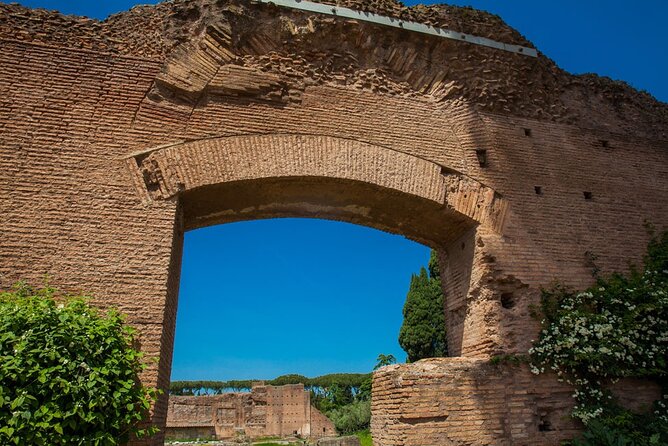
This audio route moves through several heavy hitters on the Palatine. The key is that each stop ties into either Rome’s founding myth, imperial power, or the everyday spaces of rulers.
Circus Maximus: power before the Palatine “big names”
The first stop you’ll encounter is Circus Maximus—linked in the story to Rome’s fifth king, Lucio Tarquinio Prisco. Even if you don’t think of the circus when you think of the Palatine, it’s a smart opening. It hints at the older layers of Rome, where politics, spectacle, and authority were intertwined.
The drawback: if you’re hoping for grand indoor ruins here, you might find this a more “view and listen” moment than a dramatic walk-through. In places like Rome, your interpretation depends on where you can stand and what access is possible on the day.
You can also read our reviews of more tours and experiences in Rome



Domus Flavia (Palace of Domitian): when emperors built home
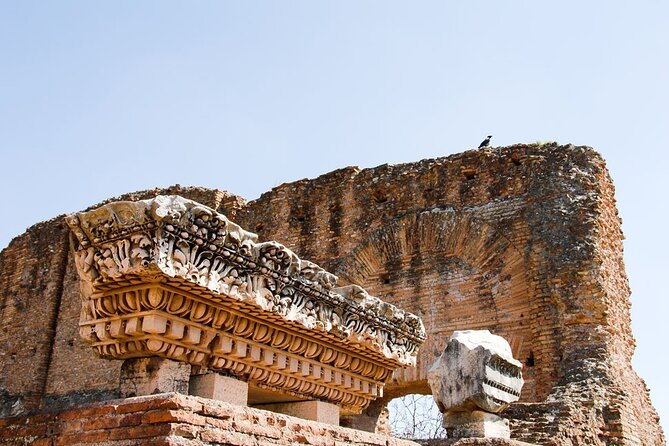
Next comes the Palace of Domitian, also known as Domus Flavia, part of the residential complex on the Palatine. This is one of the places where your understanding improves fast once you hear how these spaces worked as a ruler’s world, not just an architectural leftover.
The big practical consideration: admission is not included for entry into ticketed areas. So you’ll want to separate two things in your head:
1) the audio narrative you can follow
2) the ruins or rooms you may or may not be able to enter without the right entry ticket
The triumphal arch for Emperor Titus: victory turned into art
You’ll then hit a triumphal arch with inscriptions and sculptures honoring the military victories of Emperor Titus. This is where the audio can do something visual-plaque explanations sometimes don’t: connect the monument to why Romans displayed power so publicly.
If you’re a detail person, this kind of stop is useful. If you’re less interested in inscriptions, you can still benefit by listening for the story angle—what the arch was meant to say and to whom.
The legendary founding site: Romulus and the city’s origin story
After that, the audio turns back toward myth with the legendary founding site of the city. This is the emotional core of many Palatine visits—because the Palatine isn’t just where emperors lived. It’s where Rome’s origin legend got a stage.
This is also where I’d slow down slightly, even though the whole tour is short. The audio idea works best when you stop moving for a minute and let the story land.
Augustus’s former home: the emperor’s everyday power
Next is Augustus’s former home, a stop built around how the first emperor shaped Rome both politically and symbolically. If you’re used to thinking of Roman emperors as distant figures, this type of location makes them feel more human, more administrative—someone who managed space as much as armies.
Again, ticket access can affect what you can actually step into. The audio can still guide your eye to the right kinds of structures, but don’t assume every part is open to walk around inside.
Public areas and the central courtyard: where power showed itself
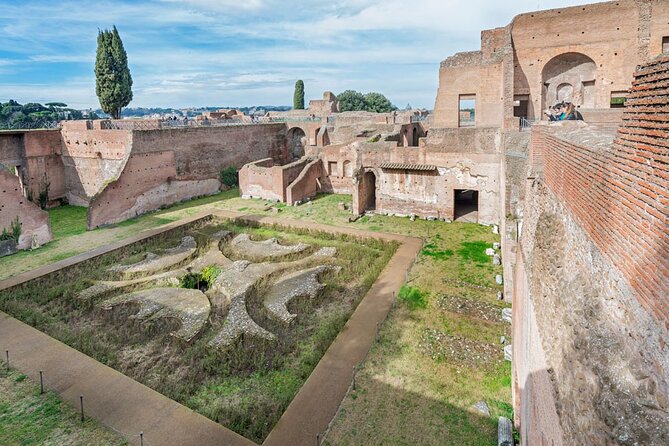
Finally, you’ll be guided through public areas and a central courtyard of an ancient palace. This is the “how it functioned” piece. Court life sounds dramatic, but these spaces were also about scheduling, visibility, and receiving others.
A good way to think of this stop: don’t just look for a single “wow” view. Listen for the audio explanation that frames the courtyard as a working hub.
How the audio tour actually works (and why offline matters)

This experience is a self-guided audio walk with a mobile ticket. The tour includes all chapters with offline use, along with maps and tips to explore Rome. That offline detail is a real benefit on the Palatine, where signal can be inconsistent and you don’t want your phone to become a co-star.
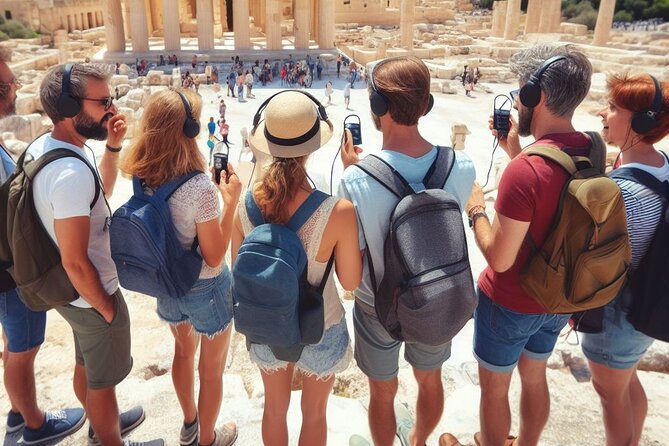
You’ll also need your own smartphone and headsets. Those are not included. This sounds obvious, but it’s worth treating as a checklist item before you leave your hotel. If you show up without earphones, the experience becomes an expensive way to stand next to noise.
One more tech-friendly point: the audio is designed in chapters, and it can be downloaded so you can repeat content. That’s especially useful when you’re matching what you heard to what you’re seeing on the ground.
Logistics reality: admission tickets and possible photo ID surprises
Here’s the practical landmine. The audio tour price does not include admission tickets. That means venue rules apply when it comes to entering ticketed areas. One common issue is photo ID requirements at entry.
If you’re planning to use the audio route plus enter ruins, I strongly recommend you bring a valid photo ID just in case the venue asks. The audio provider can’t control those venue-specific entry rules, but you can control whether you’re prepared.
Also, some people hit a frustrating start-day problem: they struggled to locate the correct access point and couldn’t find clear help nearby. If you’re arriving during a busy period or after lunch, assume it might take longer than you expect to find the start spot.
My practical advice is boring—but it works:
- screenshot the start location directions
- check your maps before you arrive
- give yourself buffer time so you still get the full 40 minutes you paid for
Timing it right: 40 minutes plus Rome travel time
The audio walk itself is about 40 minutes. But Rome days stretch. If you’re combining it with other Palatine or Forum stops, treat this like a quick guided storyline—not a long museum visit.
If you want the best experience, consider doing it when light and crowd levels are manageable for you. Because you’re moving around a hill with archaeological surfaces, comfort matters. Wear shoes that handle uneven ground, and keep water in your day plan even though snacks aren’t included.
Because the tour is private to your group, you can pause when you want. But you still have to stay aware of the route flow so you don’t end up rushing at the end.
Best fit: who this Palatine audio walk suits
This is a great match if you:
- like myth in your history, not just dry facts
- want a self-guided experience with a clear story path
- prefer to listen while you look instead of reading every plaque
- want a time-friendly option that won’t eat your entire day
It may be less ideal if you:
- need a fully staffed experience at every step
- expect admission to be included in the audio price
- dislike logistics and would rather follow a person than find a start point
If you’re traveling with someone who likes to talk mid-walk, the short pacing can be helpful. You can stop, chat, and then get back to the next chapter without losing hours.
Who runs it and what the format means
The experience provider is SOUNDWALKRS. The “private tour/activity” wording means only your group participates, so it’s not a shared group tour with strangers pacing your day. That helps if you want silence or you hate stopping every few minutes for a new herd of people.
The mobile ticket approach also means you’re not waiting around for paper slips. Still, you’ll want to verify you’re ready to scan or access the audio ticket on your phone before you’re standing at the meeting point.
Should you book this Palatine audio tour?
I’d book it if you want a myth-driven, practical way to understand the Palatine in under an hour. At $10, the value is strongest when you’re pairing the audio with smart preparation—headsets ready, phone charged, offline content available, and your expectations aligned with the fact that admission tickets are not included.
I would hesitate if you know you’ll struggle with finding exact access points or you’re hoping the tour price covers full entry to every ruin. In that case, you might spend too much energy troubleshooting entry rules like photo ID requirements and start-point confusion.
If you’re organized and like to listen while you walk, this is a solid way to get your bearings on the Palatine fast—especially if you’re going for the Romulus and Remus story along the imperial backdrop of Augustus and Domitian.
FAQ
How long is the self-guided audio tour?
It runs about 40 minutes (approx.).
How much does it cost?
The price is $10.00 per person.
What does the $10 ticket include?
The tour includes all audio chapters with offline use, plus maps and tips to explore Rome. It uses a mobile ticket.
Does the tour include admission tickets to the ruins?
No. Admission tickets are not included, and some stops may require a separate entry ticket.
Do I need a smartphone or headsets?
Yes. A smartphone and headsets are not included, so you’ll need your own device and audio earbuds/headphones.
Can I use the content offline?
Yes. The chapters are included with offline use.
Where do I meet and where does it end?
Start at Domus Tiberiana / Orti Farnesiani sul Palatino, Via della Salara Vecchia, 5/6. End on Palatine Hill at Parco archeologico del Colosseo, Via di S. Gregorio, and position yourself in front of Domus Augustana.
Is it private, and can I cancel for free?
Yes, it’s private in the sense that only your group participates. You can cancel for free up to 24 hours in advance for a full refund.