REVIEW · ROME
Rome: Fountains and Fallen Angels Small Group Walking Tour
Book on Viator →Operated by Treasures of Rome · Bookable on Viator
In Rome, the angels are everywhere. This 3 to 4 hour small-group walking tour connects fountains and major church art to the bigger story of faith and design, without rushing you past the good stuff. I especially liked the way it focuses on iconic baroque works (Bernini and Borromini territory) while also stopping at quieter crossroads and church corners you’d likely miss on your own.
One thing to consider: you’re walking a lot and you’ll need to follow church dress rules (shoulders, back, and knees covered; and plan to remove hats where required). If you want a mostly outdoor, low-attention tour, this one may feel more serious than you expect.
In This Review
- Key things I’d bet you’ll notice
- Why this Rome walk feels different than a basic highlights route
- Price and value: what you’re really paying for
- Where you meet (and why early matters)
- Dress code and church etiquette: plan for it before you go in
- Stop 1–3: Piazza della Repubblica, Santa Maria degli Angeli, and the Fountain of Moses
- Stop 4–6: Santa Maria della Vittoria, Quattro Fontane, and San Carlo alle Quattro Fontane
- Stop 7–8: Sant’Andrea al Quirinale and the Quirinale palace area (outside)
- Stop 9: Trevi Fountain, with time to actually look
- Stop 10–11: Santi Apostoli and the quiet pause at Palazzo Venezia
- Stop 12: Chiesa del Gesù and why it works as a finale
- How to get the most out of this tour
- Should you book? My honest take
- FAQ
- How long is the Rome Fountains and Fallen Angels tour?
- Where do I start and where does the tour end?
- What’s the group size limit?
- Do I need to follow a dress code for churches?
- Are there admission tickets for the stops?
- Can I cancel for a full refund?
Key things I’d bet you’ll notice
- Max 5 people: you get room for questions, not just a headset lecture.
- Roberto’s storytelling: faith, art, and history get tied together in plain language.
- Fountains plus churches: you’re not doing just photos, you’re doing meaning.
- Baroque highlights in sequence: Bernini’s and Borromini’s ideas show up repeatedly.
- Trevi and then beyond: you end where the city keeps giving, not at the obvious finish line.
- Mobile ticket: easier day-of check-in.
Why this Rome walk feels different than a basic highlights route
Rome tours often split into two modes: quick exterior photo stops, or a church-heavy day that forgets the street level. This one mixes both in a way that actually makes sense. You start with major squares, then move into Michelangelo-era church design, then drift through fountains and baroque churches where the stonework is basically the design language of the Catholic Reformation.
The title leans spiritual (fallen angels), but what you’ll get on the street is practical: why these spaces look the way they do, what the art is trying to teach, and how symbols connect across sites. One review summed it up well: the guide can connect faith, art, and history into one storyline instead of treating each stop as a random postcard.
Also, it’s built for an active pace without turning into a sprint. Expect about 3.5 hours on average, and a route that feels like a coherent walk across central Rome’s church and fountain zone.
You can also read our reviews of more walking tours in Rome
Price and value: what you’re really paying for
At about $60 per person, the cost is less about “buying a museum ticket” and more about paying for a guide who can explain what you’re seeing while you walk. Many of the actual stops are free to enter, so the value is in interpretation, timing, and route planning—especially around baroque churches where details matter.
If you’ve been to Rome and thought, I’ve seen the buildings, but I don’t know what I’m looking at, this is the kind of tour that helps. And because it’s limited to up to 5 travelers, you’re more likely to ask something specific and get an answer that lands.
Where you meet (and why early matters)
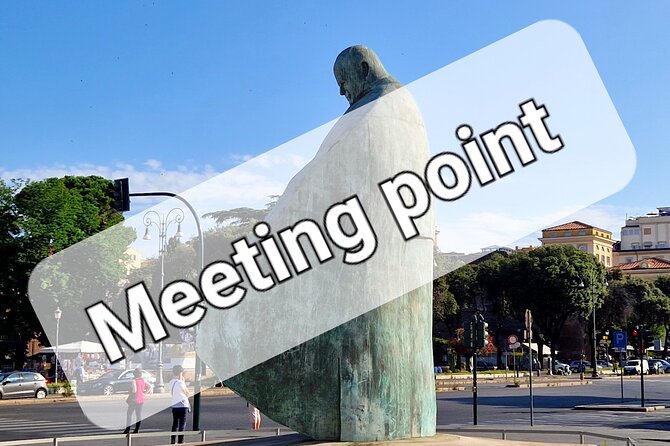
You meet at Statua di San Giovanni Paolo I, in the Esquilino area, and you finish at Piazza Venezia. That meeting spot is a statue-based landmark, which is usually fine—but one visitor mentioned confusion finding the guide right away because the area around a train-station zone can feel big.
My practical advice: arrive early and use Google Maps to confirm the exact statue. If your phone service is spotty, download the map area before you go, so you’re not relying on data while you’re scanning crowds.
The tour is also described as near public transportation, which helps. You can stage yourself, get there without stressing about parking, and start the walk with less urgency.
Dress code and church etiquette: plan for it before you go in
This tour includes several churches, and entry requires shoulders, back, and knees covered. That’s not a suggestion. It’s enforced at church level.
In the same spirit, hats may need to come off as a sign of respect where venues require it. I’d pack a light layer just in case, especially if you’re visiting in warmer months and your outfit still leaves you covered where needed.
If you show up dressed too casually, you can waste time at the door. If you show up correctly, you’ll keep the flow and spend more time inside.
Stop 1–3: Piazza della Repubblica, Santa Maria degli Angeli, and the Fountain of Moses
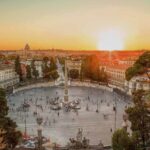
You start in Piazza della Repubblica, also known as Piazza Esedra. This is a smart warm-up stop because it sets the geography. You get your bearings fast, then your guide can explain the bigger urban logic behind where these monumental spaces sit.
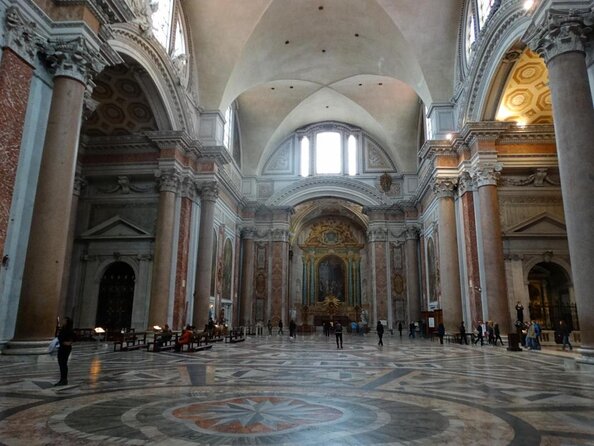
Next is Basilica di Santa Maria degli Angeli e dei Martiri. The standout here is the architectural trick: a church designed by Michelangelo that fits into older ruins of the Baths. Even if you’re not a “history person,” it’s a visual lesson in reuse and Roman layers—how the ancient city doesn’t vanish, it gets worked into the next era.
Then you hit the Fountain of Moses, associated with Domenico Fontana. This is one of those small stops that can feel quick (about five minutes), but that’s exactly why a guide matters. You’re not just “walking past a fountain.” You’re learning how fountain design and religious storytelling overlap.






Stop 4–6: Santa Maria della Vittoria, Quattro Fontane, and San Carlo alle Quattro Fontane
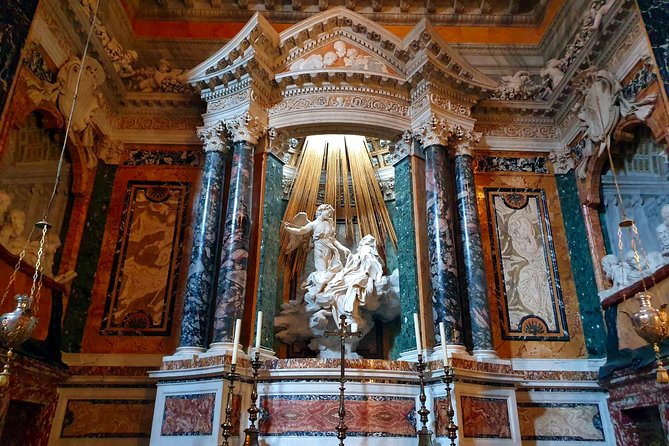
From there, you move into baroque church territory with Santa Maria della Vittoria. This church is famous for Bernini’s Ecstasy of Saint Teresa. Plan to look upward and closer. Baroque isn’t subtle, but it’s also not random. Your guide should help you read the emotion, the composition, and the message.
Then comes Quattro Fontane, the famous crossroads with four fountains. This stop is short, around five minutes, but it’s a great one for “street-level understanding.” You see how Rome uses small urban nodes to create visual drama, not just to move traffic.
After that, you get San Carlo alle Quattro Fontane, designed by Francesco Borromini. Borromini’s work is famous for energetic shapes, and this church is the kind of place where details are the point. You’ll likely get a guided explanation that helps you notice why the geometry feels alive.
The practical payoff here: after a few stops, you start spotting patterns. You’ll be able to look at a church façade or a corner view and guess which sculptural ideas are at play.
Stop 7–8: Sant’Andrea al Quirinale and the Quirinale palace area (outside)
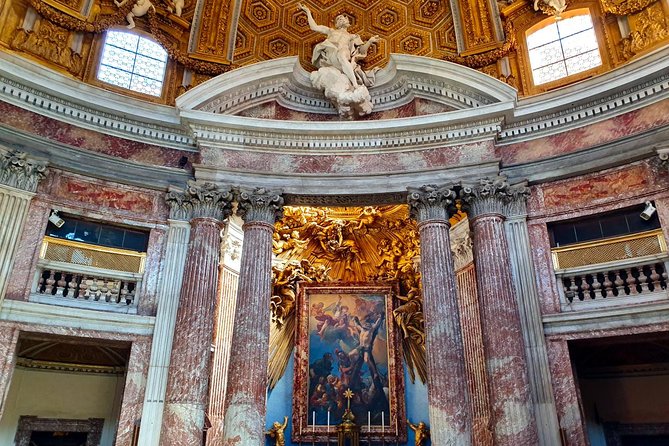
Next is Chiesa di Sant’Andrea al Quirinale, an oval church designed by Gian Lorenzo Bernini. An oval space changes how you experience the room—your guide’s explanation matters because otherwise you might just think: that’s a nice shape. With context, you understand why the design pulls your attention and how baroque architecture guides worship.
Then you reach Palazzo del Quirinale, the residence of the President of the Italian Republic. Important: the building isn’t entered during the tour. So treat this like a viewpoint and context stop, not a “get inside and see rooms” moment.
If you like architecture and city power centers, you’ll probably enjoy this. If you’re hoping for interior access all day, you’ll want to adjust expectations early.
Stop 9: Trevi Fountain, with time to actually look
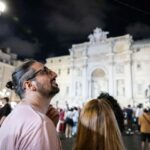
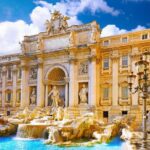
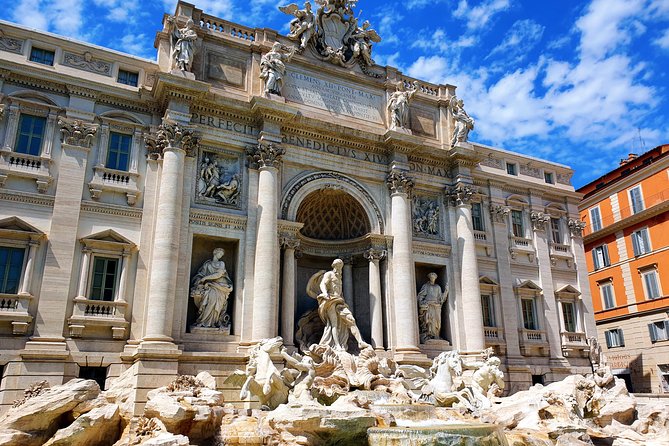
Yes, it’s the Trevi Fountain, the world’s most famous fountain. But here’s the key difference: you get about 20 minutes with it, not a blink-and-you-miss-it photo sprint.
In a guided format, Trevi becomes more than a busy landmark. Your guide can connect its artistic choices to the broader symbolism of Rome’s baroque period, so you’re looking with intent. That’s what turns a famous place into a “I understand why this works” moment.
Pro tip: go slow while you’re there. If you keep moving, you’ll only capture crowds. If you pause and let your eyes adjust, you’ll start seeing the storytelling in the sculptural grouping.
Stop 10–11: Santi Apostoli and the quiet pause at Palazzo Venezia
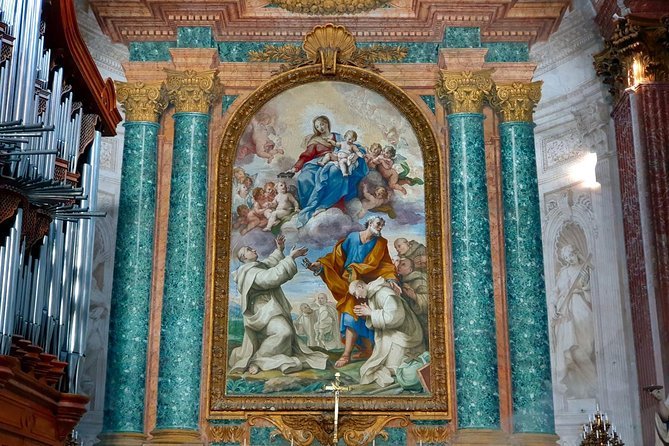
After Trevi, you head to Santi Apostoli, a church with impressive paintings and the tombs of two Apostles. A stop like this can be short on paper (about 20 minutes), but it’s usually worth it when the guide helps you focus on what to look for inside.
Then you reach Museo Nazionale del Palazzo di Venezia. The tour description frames it as a break: an “idyllic oasis” at Palazzo Venezia. If you’ve done long museum days elsewhere, you know what you’re craving by this point—some air, some sitting, and a chance to reset your brain before the final church stop.
Even if you don’t go deep into a museum collection, the location still serves the tour. It gives you a breathing space and a sense of Rome’s slower, more private rhythms.
Stop 12: Chiesa del Gesù and why it works as a finale
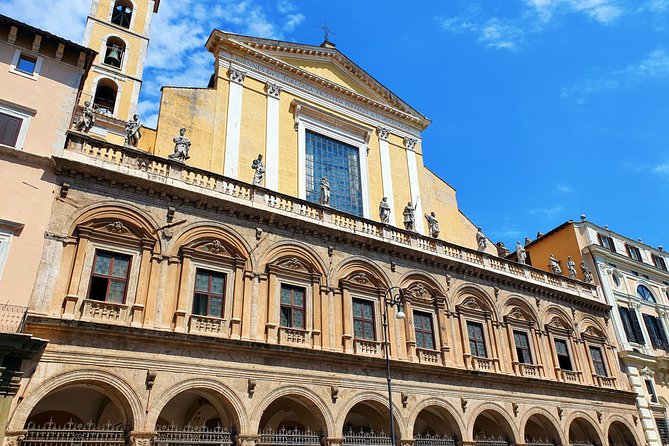
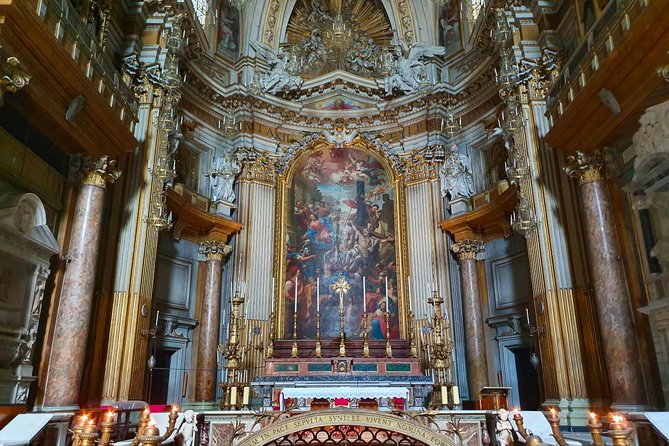
Your last major stop is Chiesa del Gesù, the mother church of the Jesuits and a key model of baroque design. This is where the tour’s title theme makes more sense, because the Jesuit artistic approach is about clarity, persuasion, and emotional impact through art.
One review highlighted the church of the Gesù as the grand finale. That tracks with the logic of the day: after fountains and multiple baroque architects, you close with a church where the message and the style match.
If you’re the type who likes to leave a place with a sense of what you just learned, this ending is a strong choice. It’s also a good “last stop before you peel off” because it makes the rest of your Rome walking feel more connected.
How to get the most out of this tour
I’d treat this as an active learning walk, not just sightseeing. Here’s how to do that without making it heavy:
- Ask questions early. The small group size (up to five) makes it realistic.
- Wear church-ready clothes from the start. It saves stress later.
- Take a beat at each stop. A lot of the value is in noticing what your guide points out.
- If you love baroque, pay attention to the architect differences as the day goes on. You’ll start seeing how Bernini and Borromini think in different shapes and moods.
And if you’re traveling solo or with a friend, this type of small-group format is a nice middle ground: personal enough to feel tailored, structured enough that you don’t have to figure out the route on the fly.
Should you book? My honest take
If you want Rome that’s more than a photo checklist, I’d book this. It’s built for readers of the city: fountains that have meaning, and churches that teach you how art and faith work together. The standout advantage is the guide—Roberto’s reputation in the provided feedback is strong, and the tour design supports a question-friendly pace.
If you dislike church stops, or you hate dress-code friction, you might find it annoying. And if you want a purely outdoor Rome day, this includes several indoor moments that require a bit of etiquette.
Overall: it’s good value for the time, the focused route, and the fact that you’re paying for explanation at the exact places where details matter.
FAQ
How long is the Rome Fountains and Fallen Angels tour?
It runs about 3 to 4 hours (approx.).
Where do I start and where does the tour end?
You start at Statua di San Giovanni Paolo I (Esquilino area) and end in Piazza Venezia, Roma.
What’s the group size limit?
The tour has a maximum of 5 travelers.
Do I need to follow a dress code for churches?
Yes. To enter churches, shoulders, back, and knees must be covered.
Are there admission tickets for the stops?
The listed stops show admission as free.
Can I cancel for a full refund?
Yes. You can cancel up to 24 hours in advance for a full refund. If you cancel less than 24 hours before the start time, the amount paid is not refunded.