REVIEW · ROME
Rome: Castel Sant’Angelo Skip the Line Private Tour
Book on GetYourGuide →Operated by Raphael Tours & Events · Bookable on GetYourGuide
The castle looks like a fortress, but it reads like a story. This Rome skip-the-line private tour takes you through centuries of power, from Emperor Hadrian’s tomb to the papacy, with art and views built right into the walk. I love how the guide keeps the details moving, so you’re not just staring at stone. I also like that you get the big “wow” moments fast, including Hadrian’s tomb and the papal spaces.
A key consideration: you’ll climb a series of stairs to reach the panoramic terrace, so it’s not a great fit for people who tire easily or need wheelchair access. Still, for most walkers, it’s one of the most efficient ways to see Castel Sant’Angelo’s most important rooms in a tight 2-hour window.
In This Review
- Key highlights I think you’ll care about
- Skip-the-line access at Castel Sant’Angelo’s main entrance
- Hadrian’s tomb: from imperial burial to a fortress that changed roles
- Papal apartments and Pope Paul III’s frescos
- Treasury room, statues, and the castle’s in-between rooms
- Terrace views: the panoramic payoff from Castel Sant’Angelo
- How a private English guide improves what you see
- Price and what you’re really paying for
- What to expect day-of (and how to prepare)
- Who this tour is best for
- Should you book the Rome Castel Sant’Angelo skip-the-line private tour?
- FAQ
- How long is the Castel Sant’Angelo skip the line private tour?
- Where do I meet the guide for the tour?
- Does the tour include skip-the-line entry?
- What’s included in the price?
- What should I bring?
- Is this tour suitable for wheelchair users or people with mobility impairments?
- What language is the tour guide?
Key highlights I think you’ll care about
- Skip-the-line entrance means less queue time and more time inside the walls that matter.
- Hadrian’s tomb connects the imperial origin of the site to what the castle became later.
- Pope Paul III’s apartment and frescos give you a real taste of the Renaissance-era papal lifestyle.
- Treasury and prison-era function show how the castle worked beyond being a dramatic monument.
- Top-terrace city views are the payoff, especially for photos and a quick sense of Rome’s layout.
Skip-the-line access at Castel Sant’Angelo’s main entrance
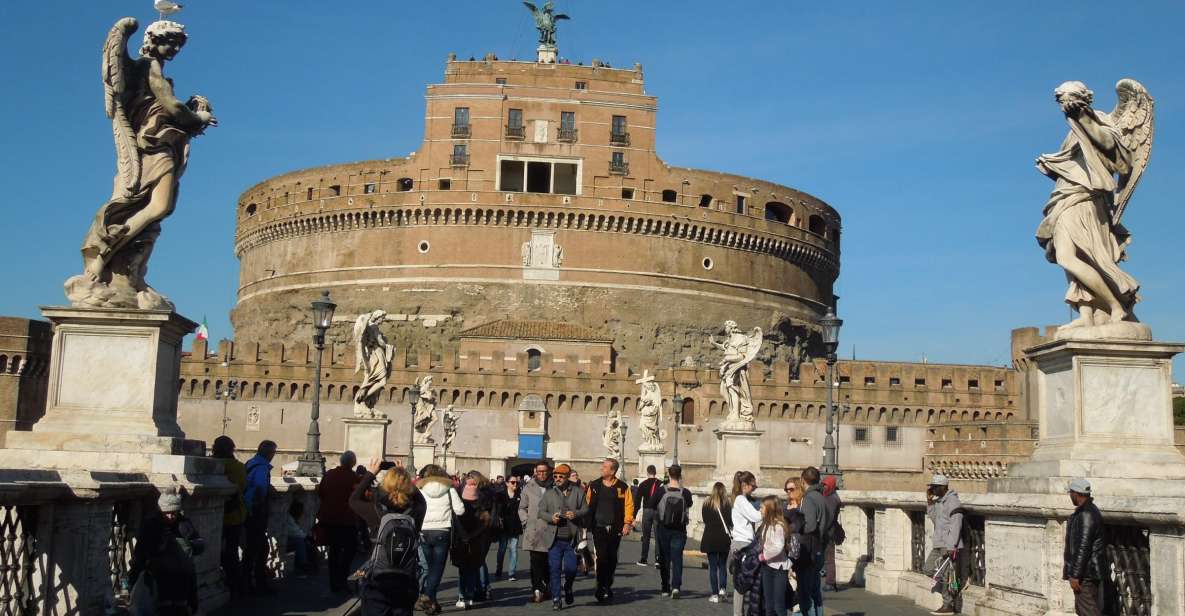
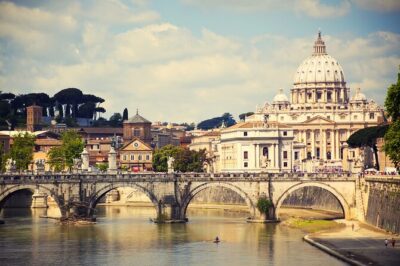
Castel Sant’Angelo sits on the edge of the Tiber, and the approach alone sets a mood: it’s heavy, defensive-looking, and unmistakably Roman. What makes this tour practical is the separate entrance that helps you bypass the main waiting line. In a place that can get busy, that time saving matters.
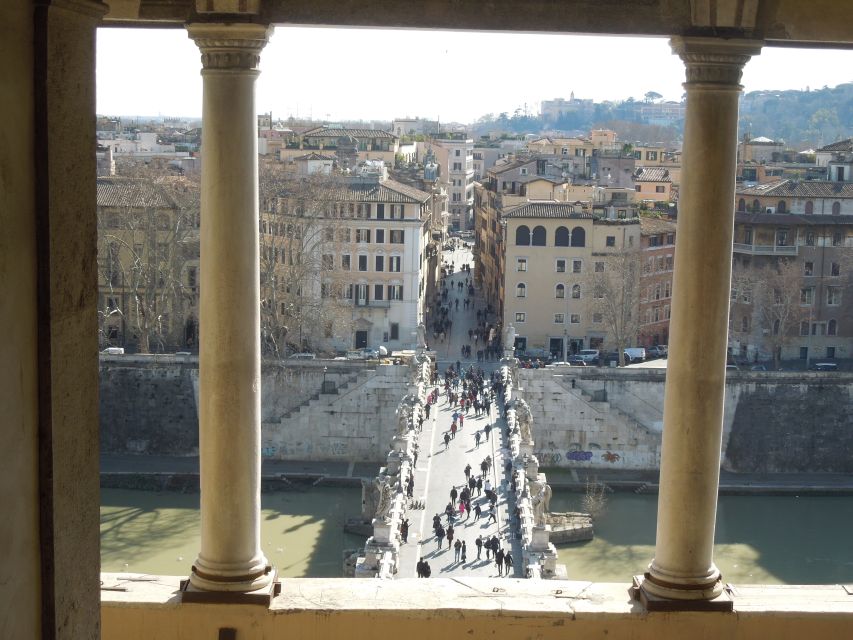
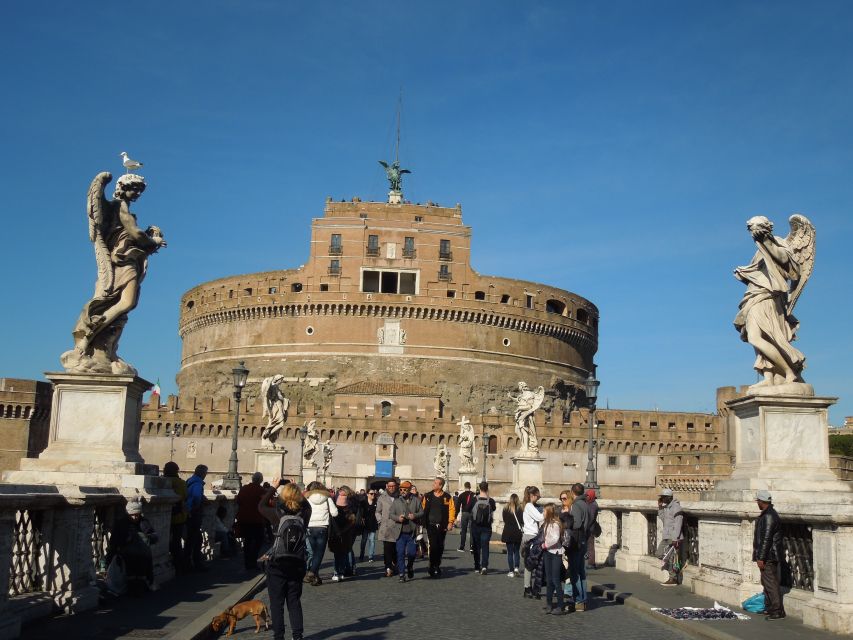
You meet your guide in a specific spot: in the square at the end of the bridge, outside the main entrance. Then you walk through the castle with a live English-speaking guide for about two hours, ending back at the same meeting point. No hotel pickup, no added “transfer theater.” You just show up and go.
Because this is a private group, you’ll get a more flexible pace than you would on a huge group bus-style tour. If you want extra context on what you’re seeing—why popes lived here, or how the castle functioned—you can ask and get a real answer without waiting for everyone else.
You can also read our reviews of more private tours in Rome



Hadrian’s tomb: from imperial burial to a fortress that changed roles

The heart of Castel Sant’Angelo starts with Emperor Hadrian. The castle was erected to be his tomb, and many successors are buried here too. On this tour, that origin story isn’t treated like trivia. It’s the spine of the visit, and it helps you understand everything else.
When you enter the burial area, you’re seeing more than a room. You’re looking at how the Romans handled legacy: a ruler’s body becomes an anchor for the meaning of a place. That changes the feel of your photos too. When you’re standing where emperors were laid to rest, the architecture reads differently—less “castle museum,” more “Roman power made physical.”
Then the tour moves you forward in time, showing how the castle did not stay frozen in one purpose. At various points, it served as:
- a private residence for popes
- a state treasury
- a prison
- a site for public executions
That list is dark, but it’s also useful. It explains why Castel Sant’Angelo looks so militarized and why you can’t treat it like a pretty backdrop. It was built to hold important people and important things, even when the situation turned ugly.
Papal apartments and Pope Paul III’s frescos
Next comes the side of Castel Sant’Angelo that surprises people: it wasn’t only a grim fortress. Popes also used it as a private residence, and this tour focuses on the most striking artistic part of that shift.
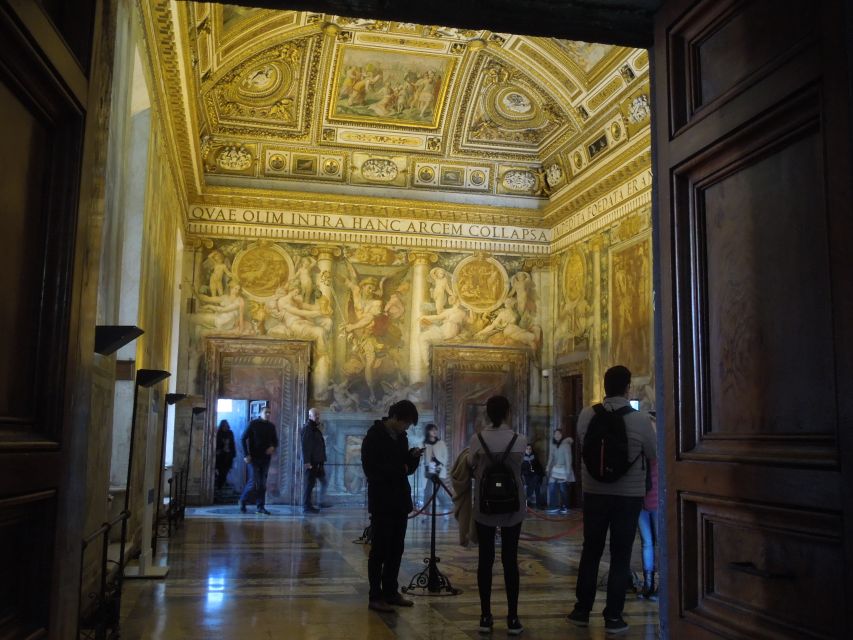
You get to visit Pope Paul III’s apartment and see the amazing frescos there. Frescos are slow art. They reward time, not rushing, and they show off the papacy’s ability to turn even a fortress into a lived-in space with taste, status, and daily comfort.
What I like about this stop is how it connects art to function. A fresco isn’t just a pretty painting on a wall. In a papal apartment, it’s part of a power story—who had access, what was displayed, and how the visual world supported authority.
If you care about how Rome’s religious power worked in real locations, not just in churches, this is one of the best sections of the tour. The apartment spaces give you a different angle on the castle’s identity.
Treasury room, statues, and the castle’s in-between rooms
Between the grand “origin” and the papal highlight, you pass through spaces that show how the castle worked day to day—or at least, how it worked at key points in history.
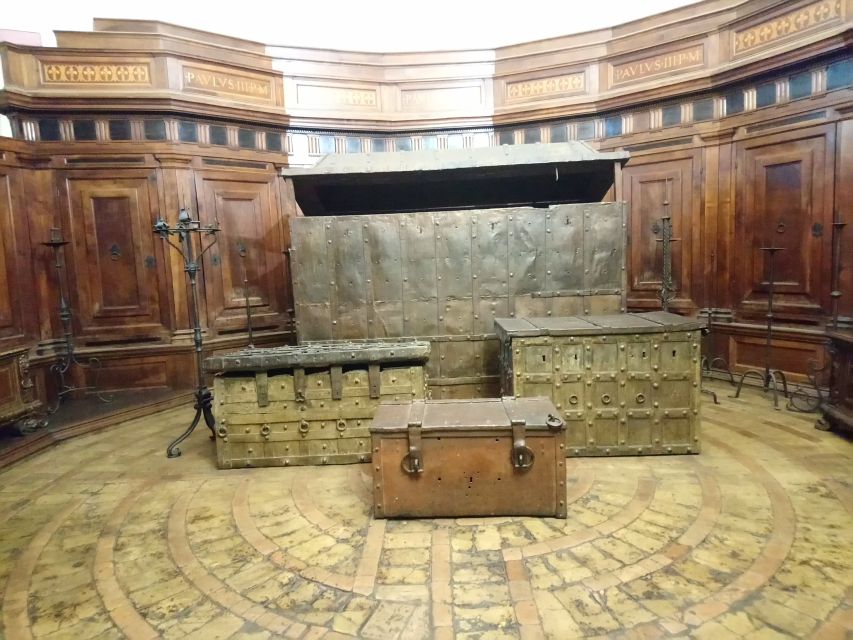
You’ll visit the treasury room and see samples of magnificent art either through architecture, paintings, and statues. Even if you’re not an art expert, these rooms help you understand that Castel Sant’Angelo wasn’t only about grand events. It also functioned as a system: storage, authority, security, and administration.
A good guide is what makes this part land. This tour’s format is designed to keep you oriented. Instead of wandering room-to-room, you get an explanation for what you’re looking at and how it fits into the castle’s changing job description—from imperial tomb to papal residence to state facility.
There’s also something satisfying about the “in-between” stops here. They make the bigger moments feel earned. When you finally reach the view, it doesn’t feel random. It feels like the castle is showing you its control points.
Terrace views: the panoramic payoff from Castel Sant’Angelo
Every Rome visitor knows the city is photogenic. The question is where to get the best angle without wasting your whole day on logistics. Castel Sant’Angelo’s top terrace is one of those spots that helps you read Rome.
This tour gives you time for the big breathtaking city view from the terrace and the chance to take fantastic panoramic photos. The terrace is where your mental map starts to click. You see how the Tiber cuts through the city and how the surrounding neighborhoods sit in relation to each other. Even a short viewing break feels worthwhile because the castle gives you height without needing a full-day climb elsewhere.
One note, though: reaching the terrace involves stairs. The tour is not positioned as an easy-walk experience end-to-end, and the stairs to the panoramic area are the main physical challenge. If you’re comfortable walking and climbing a bit, you’ll likely be fine. If stairs are a struggle, plan carefully.
You can also read our reviews of more tours and experiences in Rome
- Skip-the-Line Group Tour of the Vatican, Sistine Chapel & St. Peter’s Basilica
★ 4.5 · 12,779 reviews




How a private English guide improves what you see
In a museum or historic site, the difference between a good visit and a great one is usually one thing: interpretation. This tour includes a local guide and stays focused on the castle’s most important stories.
You’ll get guided attention on:
- the tomb of Emperor Hadrian
- the papal apartments and Pope Paul III’s frescos
- the treasury and other functional spaces
- viewpoints designed for panoramic city understanding
A highlight from the guide side: Mates is named as an expert and delight by people who did the tour, praised for answering questions and staying focused on specific Castle details. Even if you’re not paired with that exact guide, the guide quality focus is part of the value here. You’re buying clarity, not just entry.
That matters because Castel Sant’Angelo is a site with multiple identities stacked on top of each other. Without context, you’d mostly see rooms and walls. With context, you see transitions: emperor to pope, tomb to treasury, art to architecture, and city view as part of the fortress mindset.
Price and what you’re really paying for
The price is $214.11 per person for a 2-hour private tour. That sounds high if you’re comparing it to buying one ticket and going in alone. But this is one of those cases where price makes sense once you tally the components you actually receive.
You’re getting:
- entrance tickets included
- a local guide
- a private group format
- skip-the-line access through a separate entrance
- a guided walking route that leads to the key rooms and the best view
If you tried to replicate this on your own, you’d still need to solve the line issue, figure out what to prioritize, and work out how to connect the story of Hadrian, the popes, and the castle’s darker uses. The guide saves mental work and time. In Rome, time is money, and the skip-the-line portion is not a small detail.
Also, the tour is short. Two hours is enough to hit the major beats without turning into a half-day commitment. That makes it a good “high-impact” choice if you’re juggling other must-sees nearby.
What to expect day-of (and how to prepare)
This tour is built as a walking tour, and you’ll be inside a historic fortress environment. That means:
- bring comfortable shoes
- expect stairs, especially for the terrace
- plan to travel light since luggage or large bags aren’t allowed
- the tour isn’t for unaccompanied minors
You’ll also want to keep your expectations aligned with the format. It’s not an all-day deep study where every corridor gets a full lecture. Instead, it’s a focused route through the biggest rooms and best stories, with time for a panoramic break at the top.
If you’re the type who likes to understand what you’re looking at before you take photos, you’ll get a lot from this tour. If you just want to wander and freestyle, you might prefer to go independently. But for many people, this guided approach gives you the best “return on attention.”
Who this tour is best for
I’d steer you toward this tour if you:
- want skip-the-line convenience without sacrificing guidance
- care about how Rome changes function over time (tomb, residence, treasury, prison)
- like art, especially frescos tied to real spaces like Pope Paul III’s apartment
- want a short, high-value experience that ends with a strong viewpoint
It’s also a smart choice if you’re doing a tight schedule and want the key highlights without spending the day hunting for the right rooms.
Should you book the Rome Castel Sant’Angelo skip-the-line private tour?
If your goal is to see Castel Sant’Angelo efficiently—with a guide who can connect the emperor, the popes, the castle’s hard-edge history, and the best city view—then yes, I think this one is worth your money. The combination of skip-the-line entry, included tickets, and a focused 2-hour route is the winning setup.
I’d hesitate only if stairs are a deal-breaker for you or if you strongly prefer unguided wandering. For most visitors who can handle a stair climb and want a clear story while moving through the castle, this is the kind of tour that makes Rome feel both dramatic and understandable.
FAQ
How long is the Castel Sant’Angelo skip the line private tour?
It lasts about 2 hours.
Where do I meet the guide for the tour?
The guide meets you in the square at the end of the bridge, outside the main entrance.
Does the tour include skip-the-line entry?
Yes. It uses a separate entrance to skip the line.
What’s included in the price?
Entrance tickets, a local guide, a private tour, a walking tour, and the amazing view over Rome are included.
What should I bring?
Wear comfortable shoes.
Is this tour suitable for wheelchair users or people with mobility impairments?
No. It is not suitable for people with mobility impairments or wheelchair users.
What language is the tour guide?
The live tour guide speaks English.