REVIEW · ROME
Rome: Appian Way & Catacombs Golf Cart Shared Tour
Book on GetYourGuide →Operated by EcoBike Roma - Parco Appia Antica · Bookable on GetYourGuide
The Appian Way feels like time travel. This small-group golf cart tour lets you skip the usual Rome shuffle and glide through the Parco Appia Antica while your guide explains the big names and lesser-known corners of the area.
I love the slow, friendly pace that makes the countryside feel real, not like a checklist.
A possible drawback: the catacombs involve stairs, and this tour is not suitable for everyone.
My favorite part is the Catacombs of Rome stop—guided, story-driven, and full of details you won’t get from a quick visit. You also hit the Domine Quo Vadis area, where faith and Roman-era storytelling meet in a very memorable way.
If you enjoy explanations that turn stones into scenes, this is a strong match.
One consideration before you book: wheelchairs aren’t permitted in the catacombs, and the route includes about 50 irregular steps down and about as many back up, with no lift. You also need to be comfortable with a cool interior temperature around 16°, so dress appropriately.
In This Review
- Key highlights worth planning for
- Why the Appian Way tour beats the usual Rome rush
- Golf cart timing and the small-group advantage (5 people max)
- Appian Way context: Spartacus, Crassus, and why roads mattered
- Domine Quo Vadis: faith, symbols, and a very specific story
- Catacombs of Rome: rules, steps, and how the tour makes it real
- Practical reality check before you go
- What makes the guide crucial
- Circus of Maxentius: from ancient spectacle to modern references
- Tomb of Cecilia Metella: why this “unknown woman” still matters
- Capo di Bove and the vibe of Roman outskirts
- Villa dei Quintili: Commodus politics in a quiet setting
- Price and value: what $95 buys you (and what it doesn’t)
- Who this tour suits best (and who should skip it)
- Quick tips to get more out of your 3-hour outing
- Should you book this Appian Way & Catacombs golf cart tour?
- FAQ
- How long is the Rome Appian Way and Catacombs golf cart tour?
- Where does the tour start?
- What’s included in the price?
- Is the tour wheelchair accessible?
- What should I know about the catacombs?
- Is food included?
Key highlights worth planning for
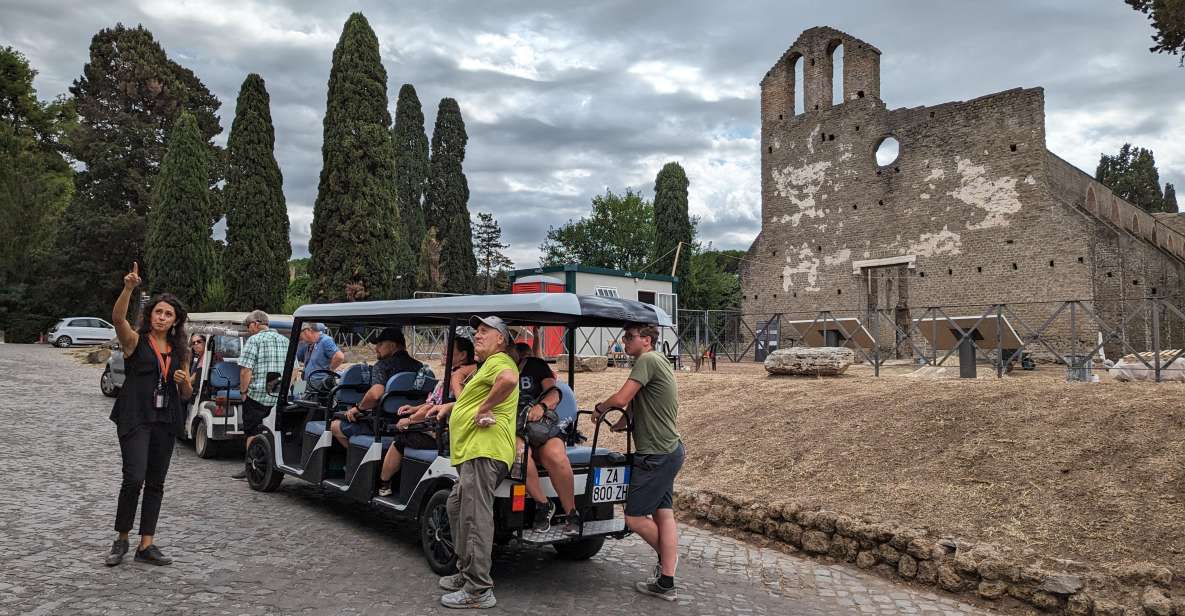
- Parco Appia Antica setup: a protected archaeological park experience without the long lines
- Domine Quo Vadis stop: the encounter between Christ and Saint Peter, explained on-site
- Catacombs guided tour (50 minutes): a structured walk through an underground “parallel world”
- Circus of Maxentius: Roman entertainment with film-famous vibes from Ben-Hur
- Tomb of Cecilia Metella pass-by: connect the monument to one of Rome’s most powerful names
- Quintili’s Villa and Commodus plots: palace intrigue meets local ruins
Why the Appian Way tour beats the usual Rome rush
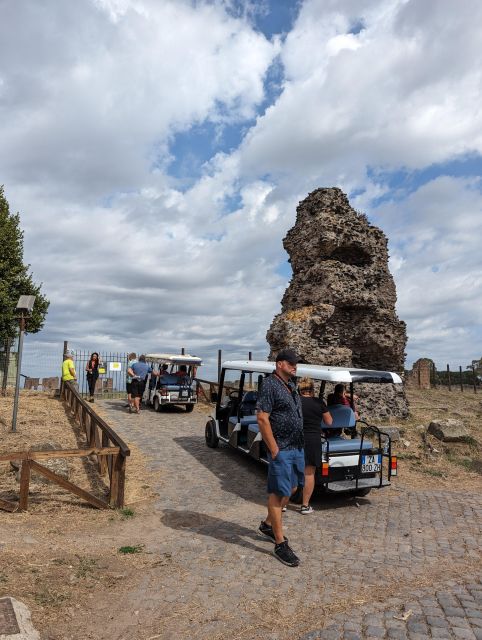
Rome can be loud and crowded. What I like about this tour is that it shifts you off the main traffic grid and into one of the biggest archaeological areas in the country, where the scale of ancient life becomes easier to grasp.
You start near Via Appia Antica 60, and the golf cart portion helps you cover ground without burning your legs before the most physical part. That matters because the real “work” in this tour is not walking miles outside—it’s getting into the catacombs and managing the steps.
Also, the format is short: 3 hours. In a city where everything can take all day, this is the kind of timing that helps you keep your energy for later sightseeing.
You can also read our reviews of more tours and experiences in Rome.



Golf cart timing and the small-group advantage (5 people max)
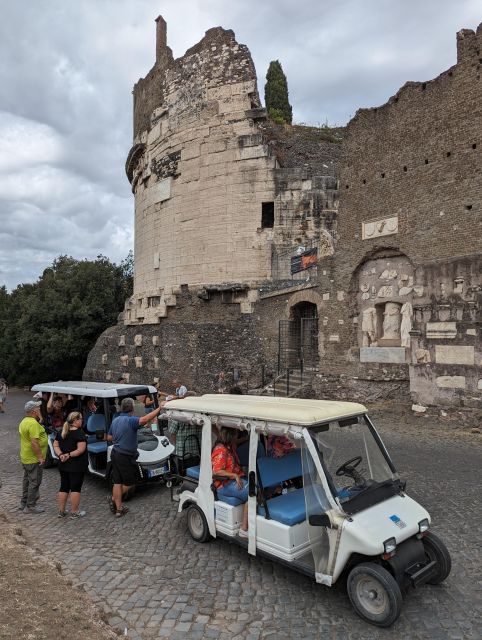
This is a shared tour, but it’s intentionally kept small, with a limit of 5 participants. That size keeps the guide’s attention on your group and makes it easier to ask questions instead of listening from a distance.
You get a guided tour on the Appian Way itself, plus short stops for sightseeing and viewpoints—listed as about 10 minutes for that segment. Think of it as enough time to orient yourself: what you’re looking at, why it mattered, and how it connects to the next stop.
The tour also includes 1/2 liter of water per person. That’s not a luxury add-on; in Rome heat it’s practical, and it keeps you from wasting time hunting for a drink mid-day.
Appian Way context: Spartacus, Crassus, and why roads mattered

The Appian Way isn’t just a scenic drive. It’s one of those Roman achievements that made power move, armies travel, and trade flow—and that’s why it keeps showing up in the stories of emperors and rebellions.
Your guide frames the route with references to major historical figures and key events, including the rebellion connected to Spartacus and the harsh aftermath for those involved. It’s the kind of storytelling that helps you see the road as infrastructure, not just an old street.
Even if you only know the big names, the guide work makes the geography feel logical: you’re passing sites that would have been visible or reachable when the city’s world ran outward into the countryside.
Domine Quo Vadis: faith, symbols, and a very specific story
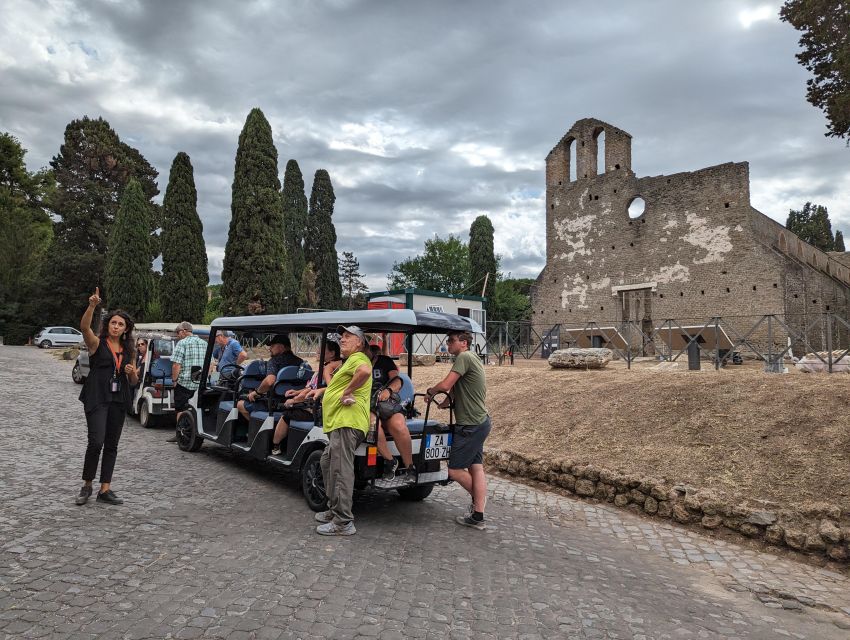
One of the highlights here is the Domine Quo Vadis church and the encounter between Christ and Saint Peter. The value of stopping at this site is that it adds a different layer to the Appian Way than politics and warfare.
This is where the tour broadens. You’re not only learning about Roman power; you’re seeing how later religious tradition reinterprets and marks places along old roads.
In practice, it’s also a breather stop—shorter than the catacombs, but it gives you something to remember when you’re comparing the “ancient empire” part of the day to the “later meaning” side of Rome.
Catacombs of Rome: rules, steps, and how the tour makes it real
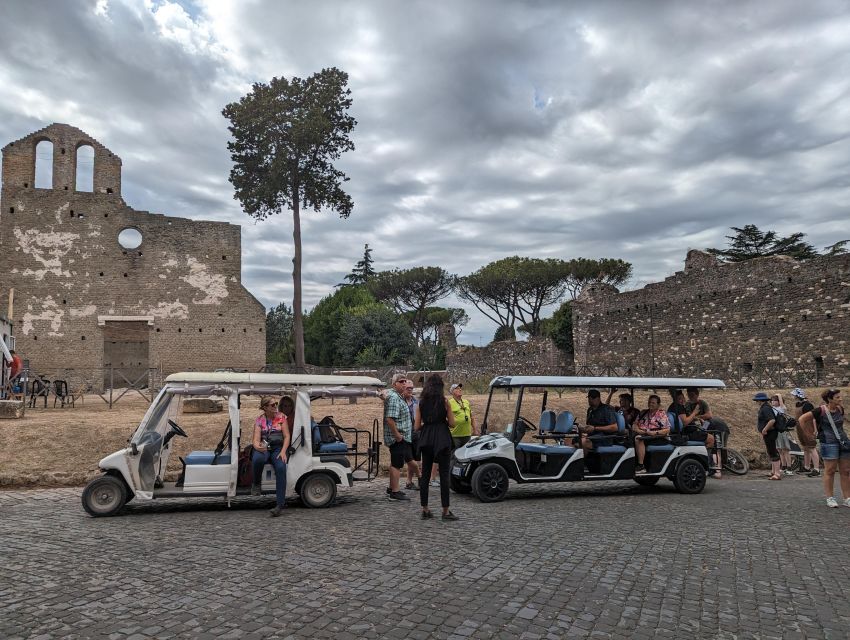
The catacombs segment is 50 minutes of guided time. That matters, because underground spaces can turn into a blur if you’re not given a structure for what you’re seeing.
The tour describes it as a parallel world of law and faith dug underground. That phrasing fits what you’ll actually feel: it’s not just darkness and tunnels. It’s a place where people organized burial, identity, and belief, and your guide connects those ideas to what’s visible.






Practical reality check before you go
This is the part where you need to be honest with yourself. Wheelchairs are not permitted in the catacombs due to architectural barriers, including about 50 irregular steps down and about as many up, with no lift and no chance to sit on the way.
The temperature inside is around 16°, so bring a layer even if it’s warm outside. Shoes matter too—think grip and comfort, because uneven steps are part of the deal.
What makes the guide crucial
You’ll get the most from this section with a guide who can explain with both facts and emotion. In the reviews I saw, guides like Federico (spelled Frederico in one review) were singled out for strong storytelling, including attention to small details like the trilobites in the marble floor. Those little specifics are exactly why a guided catacombs tour is worth paying for, instead of doing a self-guided walk.
If you’re sensitive to long, memorized delivery, keep this in mind: one review called out a less engaging guide style at a catacombs stop. The tour can be great or merely fine depending on guide match, so aim to choose the most suitable time slot and be prepared to adjust your expectations.
Circus of Maxentius: from ancient spectacle to modern references
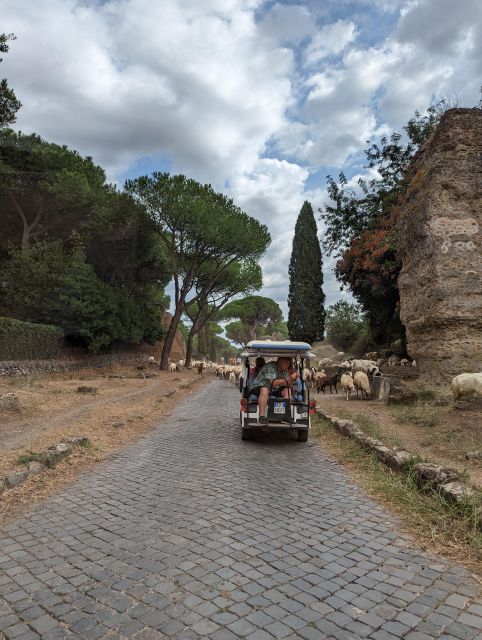
Next up is the Circus of Maxentius. The tour frames it as one of the biggest circuses in the region, and it’s described with a film connection—set impressions from Ben-Hur.
That’s helpful because it gives your brain a visual reference point. You’re not just standing by ruins; you’re trying to picture an event that was loud, competitive, and designed to draw huge crowds.
Even if you’ve never watched Ben-Hur, you’ll still appreciate what the guide does here: explaining how Roman entertainment tied into authority, public life, and urban planning. A circus wasn’t a random building—it was a stage where politics and spectatorship met.
Tomb of Cecilia Metella: why this “unknown woman” still matters
You don’t spend long time here, but the Tomb of Cecilia Metella is a pass-by stop that’s worth noticing. The tour specifically highlights her as an unknown woman connected to the richest man of Rome, which adds a dramatic hook to a structure you might otherwise walk past too fast.
This is the kind of monument where the details (scale, position, and how it sits in the landscape of the Appian Way) help you understand how social standing was carved into stone. Even from the outside, it gives you a sense of status and family power.
Because it’s a shorter moment in the schedule, treat it like your visual payoff: pause, look, and let the guide connect it to the people behind it.
Capo di Bove and the vibe of Roman outskirts
Capo di Bove is included as a guided tour stop. It’s a name that sounds like a landmark, but the value here is how the guide ties it to the broader Appian Way experience—this area was part of Rome’s reach, not just the city core.
If you enjoy walking away from the center with a clearer sense of how Rome stretched outward, this segment helps. It also adds variety: after the “underground” catacombs, you’re back above ground, taking in different angles and terrain.
Villa dei Quintili: Commodus politics in a quiet setting
The final major named ruins stop is Villa dei Quintili, another pass-by element tied to plots against Emperor Commodus.
The key takeaway isn’t just that there was intrigue—it’s how you can feel the contrast between ordinary visitors and the people who were shaping imperial decisions. The tour’s approach is to connect those political stakes to specific places in the landscape.
And because the tour is only 3 hours total, the sequence stays focused: you’re moving from faith symbols to underground burial spaces to entertainment and then to elite residences and political consequences.
Price and value: what $95 buys you (and what it doesn’t)
At $95 per person for a 3-hour small-group golf cart tour, this is not the cheapest way to see Appian Way highlights. But it’s also not trying to be a “ride only” experience.
Here’s the value equation as I’d see it:
- You get an English-speaking expert local guide, which is the difference-maker on stops like the catacombs.
- You get guided entrance to the catacombs. Catacomb access isn’t always easy to line up, and guidance inside is what makes the visit click.
- You get a golf cart format plus multiple Appian Way-related stops, including Circus of Maxentius and Tomb of Cecilia Metella.
What’s not included matters for your expectations: aqueducts area is not included, and food/drinks aren’t included. If you’re specifically craving aqueduct ruins as a main target, you may need a separate plan for that.
Who this tour suits best (and who should skip it)
This tour is ideal if you want Appian Way history in a short time without long delays. You’ll probably love it if you enjoy guide-led storytelling, and you like learning why famous names mattered—Spartacus, Crassus, Commodus—and also why lesser-known details show up in monuments and spaces.
It’s especially good for people who don’t want to turn Rome into a leg workout. The walking is managed, but you do need to handle the catacombs steps.
It’s not suitable for children under 2 years, pregnant women, and wheelchair users. Pets aren’t allowed either. If any of those categories apply, it’s worth choosing a different format that matches your mobility needs.
Quick tips to get more out of your 3-hour outing
Bring layers for the catacombs, since it’s listed around 16°. Wear shoes that handle uneven steps without slipping.
If you tend to get photos-focused, slow down for a minute and listen first at each stop. The most memorable moments tend to be the ones where the guide connects the visual you’re seeing to the story you didn’t know.
Finally, show up on time at Via Appia Antica 60. The tour is short, and checking in efficiently helps you start with the full experience rather than running on stress.
Should you book this Appian Way & Catacombs golf cart tour?
Book it if you want a well-paced, small-group way to experience the Appian Way area and you care about guided context—especially for the catacombs. The 3-hour timing is a big plus in Rome, and the included catacombs entrance makes it more complete than a “see a few ruins” tour.
Skip it (or choose another option) if stairs and tight underground spaces would be a problem for you, or if you’re hoping this includes the aqueducts area. If aqueducts are your #1 target, plan those separately and use this tour for the Appian Way plus underground burial history and the major nearby landmarks.
If you go in with the right expectations, you’ll come away with a Rome that feels larger than the city center—roads, power, belief, and spectacle all connected.
FAQ
How long is the Rome Appian Way and Catacombs golf cart tour?
It lasts about 3 hours.
Where does the tour start?
The meeting point is Via Appia Antica, 60. You should arrive about 10 minutes early to check in.
What’s included in the price?
An English-speaking expert local guide, the golf cart tour of the Appian Way, 1/2 liter of water per person, and the entrance fee for the catacombs with a guided tour.
Is the tour wheelchair accessible?
No. Wheelchairs are not permitted in the catacombs due to architectural barriers, including many irregular steps and no lift.
What should I know about the catacombs?
The catacombs visit includes about 50 irregular steps down and about as many up, and the interior temperature is around 16°, so dress appropriately.
Is food included?
No. Food and drinks are not included.