REVIEW · ROME
Rome: Vatican Museums & Sistine Chapel Private Evening Tour
Book on GetYourGuide →Operated by LivTours - We craft tours, you live them · Bookable on GetYourGuide
The Vatican looks different after dark. With a private evening format, I love the skip-the-line entry and how the galleries feel cooler and calmer once the day crowds thin out. The other big win is a guide who points out the sculptures and rooms most people rush past, then finishes in the Sistine Chapel under soft evening light. One possible drawback: this is still a 3-hour, highlights-focused circuit, so you won’t see every single room the way you would on a self-guided full-day visit.
You meet outside the Vatican at Café Vaticano on Viale Vaticano 100, then you’re guided through the must-see stops step by step. Come ready for the rules: bring a government-issued ID, plan to leave backpacks out of the Museums, and expect strict etiquette in the chapel (silence plus no photography).
In This Review
- Key points that make this tour worth it
- Why the Vatican at night is a smart choice
- Meeting at Café Vaticano and getting in quickly
- Courtyard of the Pigna (Pinecone Courtyard): slow down before the crowds
- Cortile del Belvedere and the Belvedere Palace: sculpture that teaches you how to look
- Gallery of Tapestries: classic design, told in plain language
- Gallery of Maps with Ignazio Danti: a surprising Vatican highlight
- Raphael Rooms and the School of Athens: where seeing gets easier
- Sistine Chapel at evening: rules, silence, and the best way to watch
- What the guides add: the difference between seeing and understanding
- Price and value: what $288.88 buys you for 3 hours
- Practical considerations before you go
- Who this private evening tour is best for
- Should you book this Vatican Museums & Sistine Chapel private evening tour?
- FAQ
- How long is the Vatican Museums & Sistine Chapel private evening tour?
- Where do we meet for this tour?
- Do I need to skip the line?
- What are the photography rules in the Sistine Chapel?
- Is silence required in the Sistine Chapel?
- Are backpacks allowed in the Vatican Museums?
- What languages are the live guides available in?
Key points that make this tour worth it
- Skip-the-line entry via a separate entrance, so you start seeing art faster.
- Evening pacing through key courtyards and galleries, when the light is more forgiving.
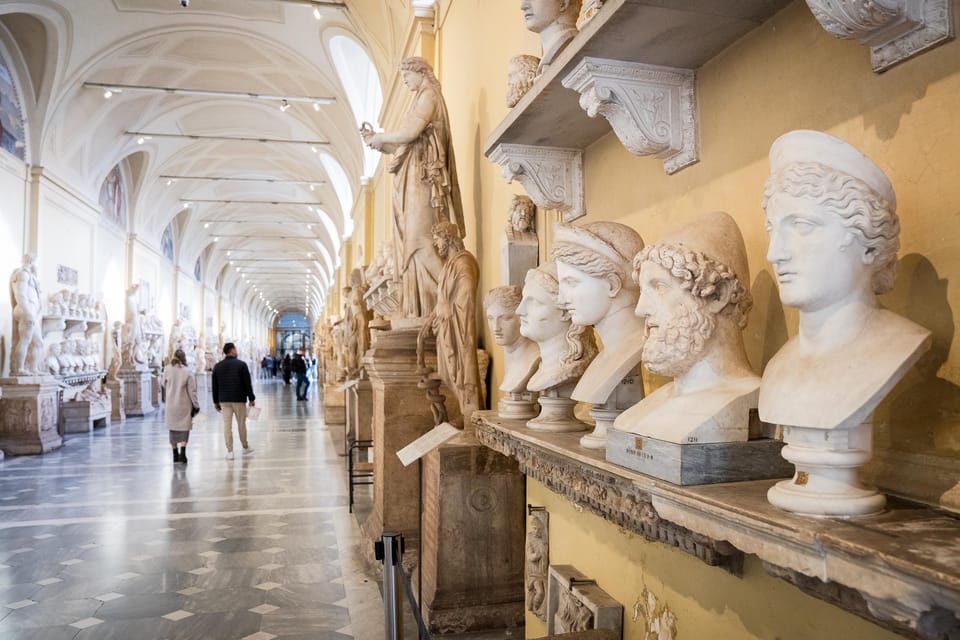
- Hands-on guide guidance, including where to stand for Raphael works so you don’t block anyone.
- Sistine Chapel etiquette handled for you, with explanations before silence and photo rules kick in.
- Private group experience, so you can ask questions and move at a useful tempo.
Why the Vatican at night is a smart choice
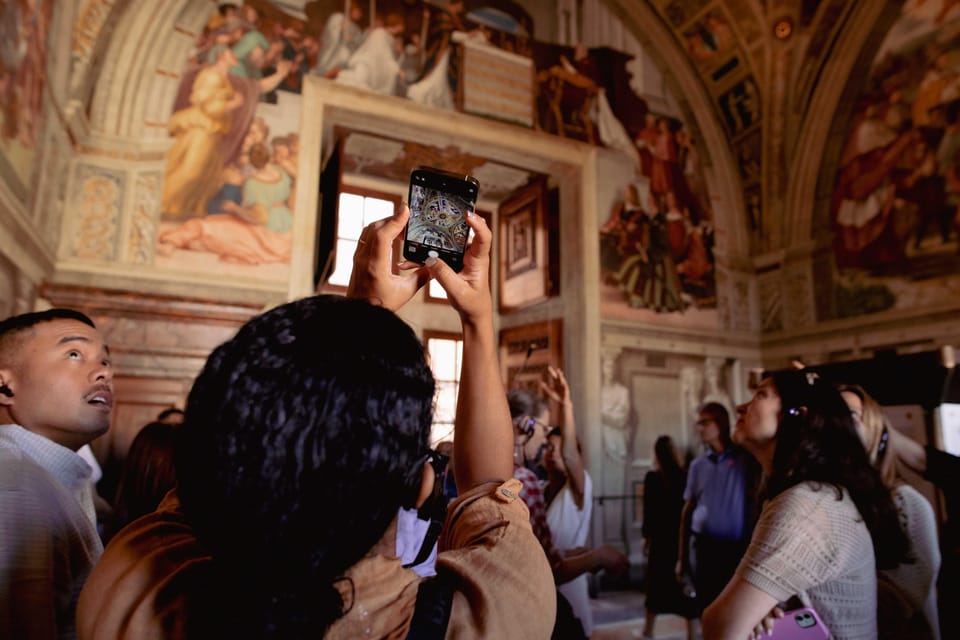
Daytime Vatican Museums can feel like an art museum and an airport line had a baby. The evening schedule changes the mood fast. You still get the famous masterpieces, but you’re less likely to feel trapped in a wall of people.
On this private tour, the timing matters. The Vatican’s scale is huge, and evening hours give you breathing room as you move from sculpture courtyards into galleries and then into the Sistine Chapel. Soft light also changes how surfaces look. Even if you’ve seen photos of the ceiling, seeing it with evening illumination coming through the arched windows can make the whole room feel more alive.
You also get a focused route. Instead of spending your limited time wandering, your guide helps you hit the most important areas in a sequence that makes sense.
You can also read our reviews of more private tours in Rome


Meeting at Café Vaticano and getting in quickly
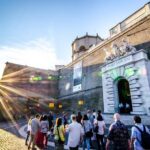
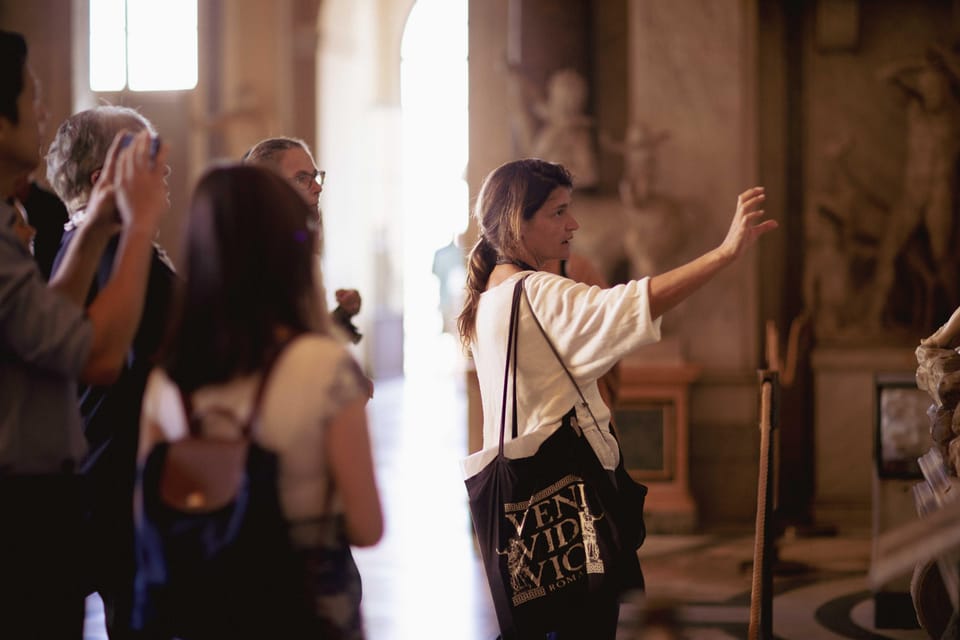
You start at Café Vaticano, Viale Vaticano 100, right across from the Vatican Museums entrance. The tour asks you to arrive about 15 minutes early, which is practical: it gives you time to get organized before you step through.
From the start, the value here is not just a shorter line. It’s the reduced stress. When you’re not fighting the entrance queue, you can settle into your museum rhythm. Your group is private, so you’re not shuffled between strangers who stop every two minutes and then suddenly sprint to the next room.
Another practical note: this tour is offered with live guiding in English, French, Spanish, and other listed languages (you choose). If your group includes mixed language needs, having a guide who can explain things clearly can be the difference between seeing art and actually understanding what you’re looking at.
Courtyard of the Pigna (Pinecone Courtyard): slow down before the crowds
One of the nicest parts of this tour is that it doesn’t rush you from the entrance straight into the biggest names. It starts by getting you into the Courtyard of the Pigna, also known as the Pinecone Courtyard.
This is where the Vatican shows off its “outside-feels-like-a-courtyard” personality. You get a real sense of scale and structure before you enter enclosed galleries. At night, these spaces can feel more architectural and less like an obstacle course.
You’ll be moving as part of a guided flow, but the courtyard stop gives you a chance to reset: look up, notice details, then transition from open space into art-heavy rooms. It’s a great way to start because your brain catches up to what you’re seeing instead of overheating right away.
Cortile del Belvedere and the Belvedere Palace: sculpture that teaches you how to look
Next you head to Cortile del Belvedere (the Belvedere Courtyard) and the Belvedere Palace area. This is the kind of stop that feels almost unfair when you compare it to typical museum touring. Most people arrive for the ceiling and miss the sculpture stories that shaped later art.
This tour specifically includes major ancient works like the Ancient Laocoon and Ancient Apollo, plus the Belvedere Torso. Those aren’t casual “nice to see” objects. They’re training material for artists, and your guide’s job is to help you see why.
A key detail you’ll get: the Belvedere Torso is known for influencing Michelangelo during his work connected to the Sistine Chapel. Even if you don’t go hunting for “Michelangelo references” on your own, your guide points you toward what to notice in the anatomy, pose, and proportions.
The best moment here is when you start understanding sculpture through angles and movement. Statues aren’t static when someone helps you look the way the artist intended.
Gallery of Tapestries: classic design, told in plain language
From the courtyards and sculpture spaces, you move into the Gallery of Tapestries. This room can be easy to underestimate if you think tapestries are just decorative wall art.
Your guide connects them to the bigger picture. You’ll learn about design and historical context, including that the tapestry work here ties to designs by Raphael’s students. That means you’re not just admiring fabric—you’re seeing how major artistic ideas were translated into different mediums.
A practical benefit of having a guide: you don’t have to guess what matters. You’ll get the “why this is important” explanations at a pace that fits the room, not a lecture that makes you lose your place.
You can also read our reviews of more museum experiences in Rome



Gallery of Maps with Ignazio Danti: a surprising Vatican highlight
Then comes the Gallery of Maps, featuring 40 painted topographical panels created by Ignazio Danti. This is the sort of stop that can steal the show for people who think the Vatican is only about religion and ceiling frescoes.
The maps are big, detailed, and oddly satisfying because they make the Vatican feel like a place of learning—not just worship and art. At night, it’s also less chaotic than in peak hours, so you can actually stand and take things in.
If you tend to enjoy “information in visual form,” this room is a strong payoff. And because your guide is moving you in an intentional path, you don’t end up stuck facing the wall in a bad viewing angle.
Raphael Rooms and the School of Athens: where seeing gets easier
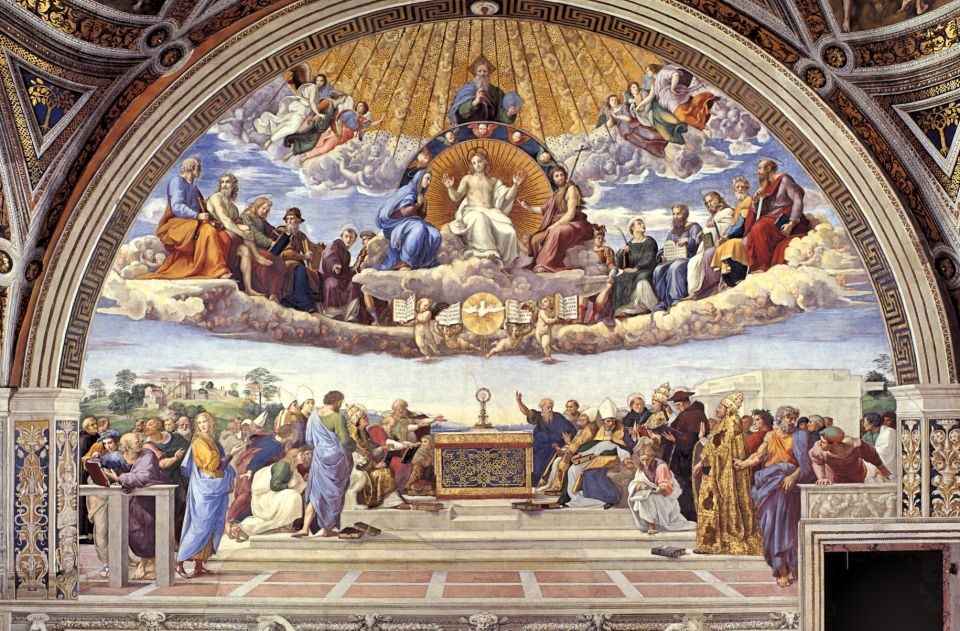
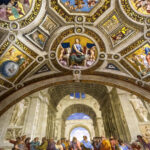
The tour continues into the Raphael Rooms, with special attention on Raphael’s works (including the School of Athens). You’ll also get practical guidance on where to stand to appreciate paintings while not blocking other visitors.
That instruction matters. Raphael’s compositions can be overwhelming at first glance. When someone shows you where to stand and what to notice, you start seeing relationships: figures grouped by theme, architecture that frames the scene, and details that point to ideas beyond the image itself.
This is where the evening tour format helps again. You’re not fighting for position every second. Your guide can slow down at the key spots, so you can switch from looking at a painting like a postcard to looking at it like a structured scene.
Sistine Chapel at evening: rules, silence, and the best way to watch
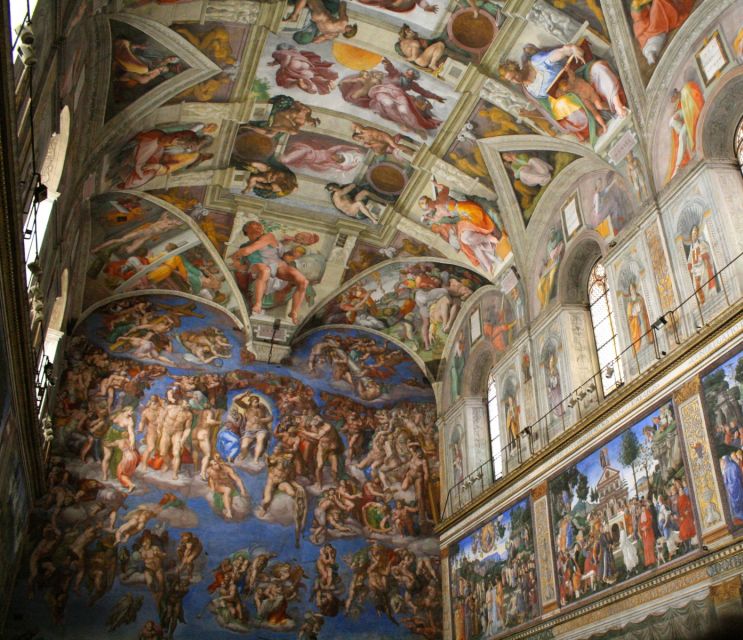
Finally, you reach the Sistine Chapel, and this is the moment your timing pays off. The tour is built to get you into the chapel with the evening light affecting the room. Your guide also helps manage the etiquette so you don’t feel like you’re rushing into rules mid-step.
Here’s what you need to know ahead of time:
- No flash photography, and no photography at all inside the Sistine Chapel.
- Silence is mandatory in the chapel.
- Your guide explains what you need to do and when you need to be quiet before you enter.
Once inside, plan on taking your time. The Sistine ceiling covers about 8,000 square feet of painted area, and it took only about four years to create. That fact sounds almost impossible until you start looking closely and realizing the ceiling isn’t one scene. It’s an entire reading system made of fresco narrative.
Your guide will also help you understand how the space is meant to be viewed. Even simple guidance like how to orient your view toward what’s lit can make a noticeable difference.
If you’re the type who worries about “doing it wrong,” this tour helps. You’re not guessing the etiquette or the viewing flow.
What the guides add: the difference between seeing and understanding
A museum guide can either read a script or help you see. The standout strength of this tour is that the guide’s explanations stay focused on the most unusual and meaningful pieces.
For example, guides like Giovanni are known for teaching through the rare and unexpected objects, not just the obvious headline artworks. The way his guidance works is practical: he stops at key sculptures, explains what you’re looking at, and adds context with dates and importance tied to what’s in front of you.
Another guide, Christina, is praised for showing sculpture areas many people skip and for giving specific positioning advice for Raphael paintings. She also shares context that helps you understand what the scenes mean, instead of just naming artists.
You’ll also notice how the private format changes questions. When your group isn’t competing with strangers for attention, your guide can adjust explanations to your interests—more art history, more storytelling, or just “help me understand what I’m staring at.”
Price and value: what $288.88 buys you for 3 hours
At $288.88 per person for a 3-hour private tour, this isn’t a budget choice. The value comes from three places.
First is time. The Vatican’s lines can eat your day. Skip-the-line access means you’re spending your hours seeing, not waiting.
Second is selection. A 3-hour window doesn’t let you “accidentally” see the right mix of courtyards, sculpture spaces, and chapel viewing. Your guide helps you hit high-impact stops like the Pinecone Courtyard, Belvedere Palace area, Gallery of Maps, Raphael Rooms, and the Sistine Chapel.
Third is interpretation. The tour includes major works you may not know how to read on your own, like the Belvedere Torso, Ancient Laocoon, and Ancient Apollo, plus Raphael-focused rooms. You’re paying for context that turns visuals into understanding.
If you’re the kind of visitor who loves art but also has limited time in Rome, this price can feel fair because it buys a concentrated, low-friction experience.
Practical considerations before you go
This tour has a few clear constraints, and planning for them makes everything smoother.
- Backpacks aren’t permitted in the Museums. Bring a smaller bag or wear what you need day-of.
- ID is required for all guests, regardless of age. Don’t assume you can enter without it.
- Photography limits are strict in the Sistine Chapel. Save your photos for outside the chapel area.
- Silence is mandatory in the chapel, so be ready for the quiet moment.
Also, this is wheelchair accessible. If you have mobility needs, you should contact the provider early so the itinerary can be adjusted.
Language-wise, the guide is listed as available in Spanish, English, French (and additional options), which is a big help for families or groups that want clear explanations.
Who this private evening tour is best for
This tour fits best if you want:
- a smart-time option that avoids the most intense daytime crush
- a guided route that connects sculptures, Raphael rooms, and the chapel into one story
- a private group experience where you can ask questions and move at a comfortable pace
It might be less ideal if you’re the type who wants to roam freely for hours and linger over every room. This tour is designed to take you through the core highlights efficiently.
It’s also a strong choice if you care about etiquette and getting the chapel experience right without confusion. The evening timing plus guide-led guidance makes it easier to enjoy the Sistine Chapel without feeling rushed.
Should you book this Vatican Museums & Sistine Chapel private evening tour?
I’d book it if your Rome schedule is tight and you really want the Sistine Chapel and top museum highlights without losing hours in lines. The private evening format gives you calmer galleries, a guide who helps you interpret key works, and a smooth path through the rooms that most often get people overwhelmed.
If you want a full museum day and you enjoy free-form wandering, you might prefer a self-guided plan. But if you want high value out of limited time, this is one of the more efficient ways to experience the Vatican in a way that feels less chaotic and more meaningful.
FAQ
How long is the Vatican Museums & Sistine Chapel private evening tour?
The tour duration is listed as 3 hours. Starting times vary, so check availability for the exact evening slot.
Where do we meet for this tour?
You meet at Café Vaticano, Viale Vaticano 100, across the street from the Vatican Museum entrance. The tour ends back at the meeting point.
Do I need to skip the line?
Yes. The tour description states you’ll skip the long lines through a separate entrance.
What are the photography rules in the Sistine Chapel?
The tour rules say no flash photography is allowed, and no photography at all inside the Sistine Chapel.
Is silence required in the Sistine Chapel?
Yes. Silence is mandatory in the Sistine Chapel, and the guide provides explanations beforehand.
Are backpacks allowed in the Vatican Museums?
No. Backpacks are not permitted in the Museums.
What languages are the live guides available in?
The tour is offered with live guides in Spanish, English, and French (and additional listed language options).