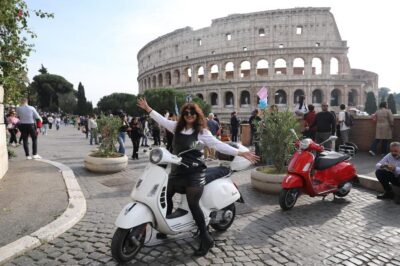
REVIEW · ROME
Jewish Ghetto and Trastevere Tour Rome
Book on Viator →Operated by Airotour Ltd - Freetourrome · Bookable on Viator
Rome feels big at first. This short walking route helps you make sense of it fast, with a stop in the Jewish Ghetto and views toward Trastevere. I like how it layers story over sightseeing, and I like the small-group feel that makes questions easy. The one thing to plan around: the Trastevere segment is brief, so you’ll likely want extra time there after the tour ends.
You’ll start at Palazzo Venezia, then move through Rome’s Jewish quarter, two famous squares, and across to Tiber Island and Trastevere. The guides are consistently praised for clear storytelling and a relaxed pace that works for first-time visitors. If you want a long, deep Trastevere wandering session, this isn’t that kind of tour—but it’s a great way to set you up for the rest of your day.
In This Review
- Key points to know before you go
- Starting at Palazzo Venezia: Your Rome Map in 90 Minutes
- Jewish Ghetto and the Synagogue Stop: More Than a Photo Stop
- Campo de’ Fiori and Piazza Farnese: Where Daily Life Meets Big Stories
- Crossing Toward Tiber Island: The View That Changes Everything
- Trastevere’s Short Finale at Piazza Santa Maria
- Price and Value: Why This Walk Costs Little (and Still Delivers)
- What the Guides Get Right (and Why You’ll Feel It During the Walk)
- Best for Who? A Smart Fit for First-Timers and Story Seekers
- Should You Book the Jewish Ghetto and Trastevere Tour?
- FAQ
- How long is the Jewish Ghetto and Trastevere walking tour?
- Where does the tour start and end?
- What stops are included on the route?
- Is the tour offered in English?
- Is there an admission fee included for the stops?
- How big is the group?
Key points to know before you go
- Palazzo Venezia start makes it easy to orient yourself in central Rome
- Jewish Ghetto focus with a stop at one of Europe’s largest synagogues
- Markets and squares: Campo de’ Fiori and Piazza Farnese sit right on the route
- Old-bridge perspective as you head toward Tiber Island and Trastevere
- Trastevere finale ends at Piazza Santa Maria in Trastevere, right where you want to be
- Max 30 people keeps it personal, and it runs in all weather with the right clothing
Starting at Palazzo Venezia: Your Rome Map in 90 Minutes
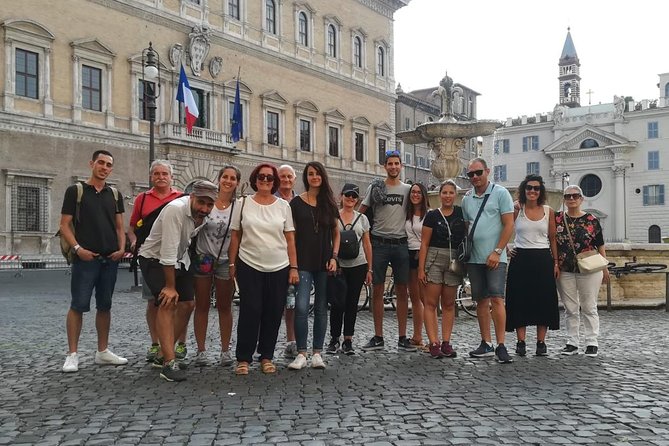
If you’re new to Rome, the hardest part is deciding what order to see things in. This walk starts at Palazzo Venezia in Piazza di S. Marco, which is a smart anchor point for first-time orientation. You get out of the “one landmark, one photo” rhythm and into a route that actually connects neighborhoods.
The timing is built for real life. Expect roughly 1.5 to 2 hours, and you can usually choose morning, afternoon, or early evening start times. That matters because it lets you plan around your jet lag, your museum energy, and the way Rome’s streets change hour to hour.
You can also read our reviews of more tours and experiences in Rome.



Jewish Ghetto and the Synagogue Stop: More Than a Photo Stop
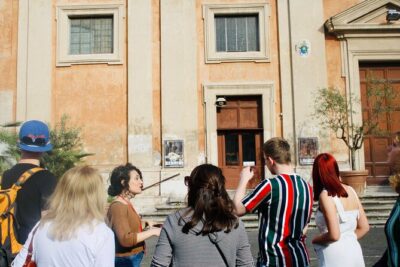
The best reason to book this tour is the time spent in the Jewish Ghetto, traditionally Rome’s Jewish quarter. You’ll spend about 40 minutes here, and the guide brings context to what you’re seeing rather than treating the area like a set.
One highlight in this stretch is a stop at one of Europe’s largest synagogues. Even if you’re not obsessed with architecture, this is the kind of moment that makes the streets feel real. You’re not just looking at buildings—you’re following the human story tied to them.
This part of the walk also tends to satisfy the people who want more meaning than sightseeing. Guides in this program are repeatedly praised for using strong storytelling skills and answering questions in a friendly way. You’ll hear the kind of details that help you connect Rome’s broader timeline to the Jewish community’s lived experience.
A practical note: this segment moves at walking-tour speed. If you’re sensitive to crowds or prefer lots of pause time, pick a tour time when you feel fresh, and plan to take breaks when the group stops.
Campo de’ Fiori and Piazza Farnese: Where Daily Life Meets Big Stories

After the ghetto, the route shifts into some classic Rome square energy—without turning into a checklist tour. Campo de’ Fiori gets about 10 minutes, which is enough to show you why it’s still a magnet for locals and visitors. This is where you can see how food markets shape a neighborhood’s rhythm.
Then you’ll cross onward toward Piazza Farnese for another short stop. Even if you’ve seen famous places already, Piazza Farnese works because it sits at a crossroads of perspectives. You’re moving between community spaces—markets, public squares, and places of worship—so the city feels like a connected system.
There’s a balance here. The stops are short, so you won’t get stuck waiting for long lectures. But you also shouldn’t expect every site to be explained like a museum audio guide. The goal is to give you enough context to keep noticing on your own afterward.
Crossing Toward Tiber Island: The View That Changes Everything
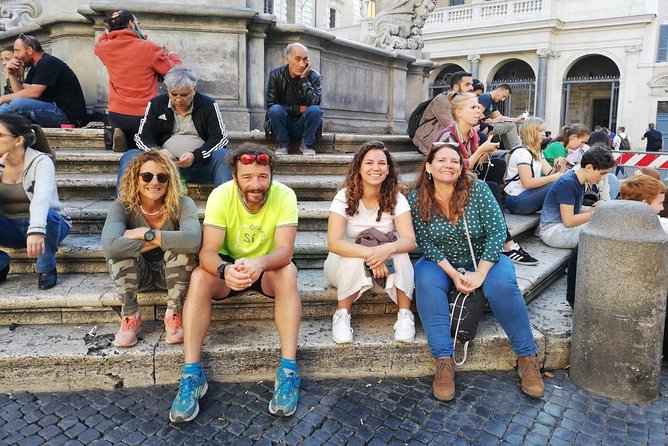
A big reason I like this tour is that it includes a transition across one of Rome’s oldest bridges. You’ll walk over toward Tiber Island and then continue on to Trastevere. That bridge moment is more than scenery—it’s how you start understanding Rome’s shape.
When you cross the river, you feel the city divide into sides with different textures. The guide’s pointing out of landmarks during the walk helps you build a mental map quickly. It’s the difference between seeing a bridge and understanding where it puts you in relation to everything else.
Also, there’s a pacing benefit here. The tour gives you a couple of short “pause points” in squares, then uses the walking itself as a moving explanation. If you like learning while you walk, this section keeps the momentum.
Trastevere’s Short Finale at Piazza Santa Maria
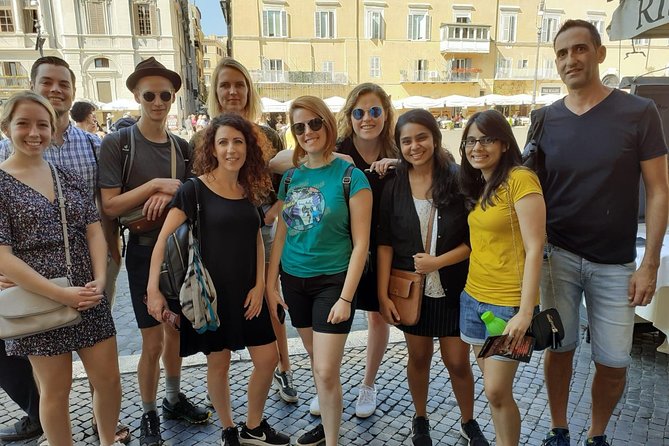
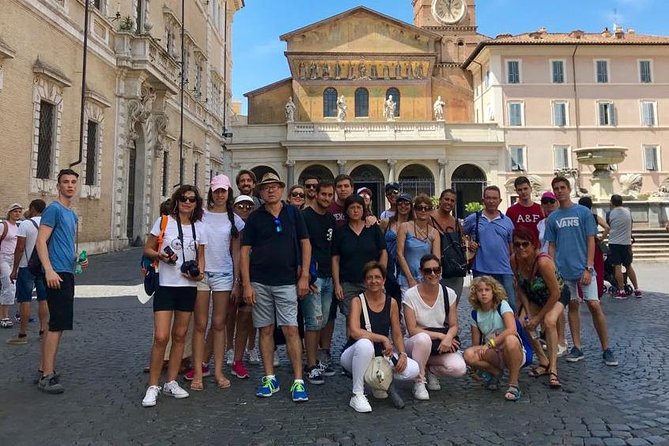
The end of the tour is Piazza di Santa Maria in Trastevere, followed by about 20 minutes in Trastevere itself. The finish location is clearly chosen for maximum usefulness: you’re dropped right near the heart of the neighborhood, so you can keep going without hunting for your next bus stop or taxi.
Trastevere is the part where you’ll likely want more time. The tour gives a taste, not a full day. That’s not a flaw if your goal is orientation and key stories. But if your plan is to focus heavily on Trastevere’s lanes, plan an extra hour or two after the tour.
If you’re hungry, this neighborhood is one of the easiest places in Rome to find something that fits your budget and mood. Many people come away from this walk with restaurant suggestions from the guide, and that’s genuinely helpful because Trastevere choices can vary wildly from block to block.






Price and Value: Why This Walk Costs Little (and Still Delivers)
The price shown is $4.62 per person, and that low number is why this tour gets booked by budget-conscious travelers. But the real value isn’t just the price. It’s what you get inside a short walking window: ghetto context, a synagogue stop, two major squares, and a river crossing that links neighborhoods.
This experience is offered in English, runs as a guide-led walking tour, and includes a local guide/professional guide. You also get a mobile ticket, which is one less thing to stress about while you’re juggling Rome’s ticket lines and crowded streets.
Also, small-group size matters here. With a max of 30 travelers, you’re not trapped behind a wall of heads the whole time. If you like asking questions, being able to hear the guide without a sea of interruptions changes the experience.
One thing to consider: this is a walking tour, so you’ll cover distance. It’s not listed as difficult, and most people can participate, but you should still think about comfortable shoes and energy. Bring water if it’s warm, and accept that you’re seeing Rome by feet, not by tram.
What the Guides Get Right (and Why You’ll Feel It During the Walk)
The most praised aspect across guide experiences is the storytelling style. Names like Yousef, Fabiana, Caitlin, Axel, Lulu, and Etienne come up again and again for a reason: they don’t just recite dates. They connect what you’re looking at to why it mattered.
You’ll also notice how guides tend to handle the group. People often mention guides being friendly, smiling, and willing to answer questions on the spot. That matters in a tour like this, where the subject can feel heavy but also intensely human.
One practical detail from real-world experiences: there are no headset systems on this walk. If you’re at all worried about hearing, pick a spot where you can see the guide’s face and mouth, especially during the ghetto segment.
Best for Who? A Smart Fit for First-Timers and Story Seekers
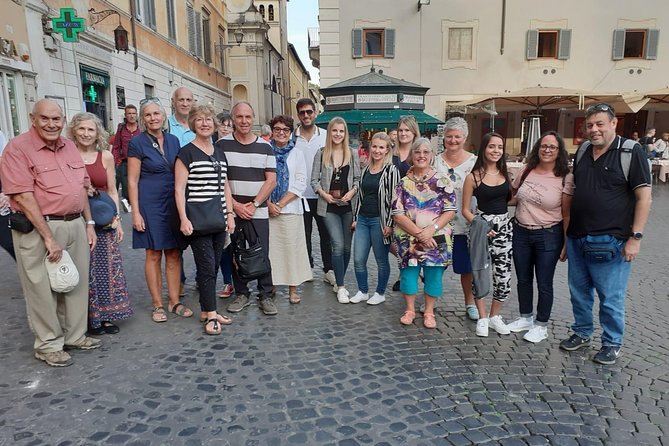
This tour is a strong match if you’re:
- visiting Rome for the first time and want fast orientation
- the type of person who likes learning why places exist, not just what they look like
- on a budget but still want more than a basic loop of monuments
- curious about the Jewish quarter’s presence in Rome beyond the headline sites
It also works well if you’re trying to pace your day. Because it’s short and ends in Trastevere, you can pair it with a gelato break, a church stop, or a longer wandering session on your own.
If, however, you want a deep Trastevere-focused tour with lots of time in each lane, you may find this route leaves you wishing for more. The best approach is to see this walk as your kickoff, then let your curiosity choose the next streets.
Should You Book the Jewish Ghetto and Trastevere Tour?
Yes, you should book it if your goal is to understand Rome as a set of connected neighborhoods. The combination of Jewish Ghetto context, a synagogue stop, Campo de’ Fiori, and the move toward Tiber Island makes this feel like more than a simple sightseeing loop.
Skip or at least pair differently if you’re mainly chasing Trastevere for hours. This tour gives you a start, a route, and a well-timed finish—then you’re meant to continue on your own from Piazza Santa Maria in Trastevere.
If you’re trying to see Rome without burning your schedule or your wallet, this is one of the smarter ways to do it.
FAQ
How long is the Jewish Ghetto and Trastevere walking tour?
It runs about 1 hour 30 minutes to 2 hours.
Where does the tour start and end?
It starts at Palazzo Venezia in Piazza di S. Marco, 48, Rome, and ends at Piazza di Santa Maria in Trastevere.
What stops are included on the route?
You’ll visit the Jewish Ghetto area, Campo de’ Fiori, Piazza Farnese, Piazza di Santa Maria in Trastevere, and then spend time in the Trastevere neighborhood.
Is the tour offered in English?
Yes, it’s offered in English.
Is there an admission fee included for the stops?
The tour details list free admission for the ghetto area and the square stops.
How big is the group?
The tour has a maximum of 30 travelers.