REVIEW · ROME
Roman Catacombs Walking Tour
Book on Viator →Operated by Enjoy Rome · Bookable on Viator
Beneath Rome, history gets personal fast. This morning outing takes you to the Catacombs of San Callisto with guaranteed entry and pairs it with a walk along the Appian Way, so you get both an underground story and the ancient street above. I especially like how the catacombs focus on major burial areas like the crypt of St. Cecilia and the crypt of the Popes, and I like the added sightseeing stops that connect the dots between different Roman eras. One thing to consider: this tour is mostly underground in very narrow spaces, so if you’re claustrophobic, you’ll want to think carefully.
The pacing is built for first-timers: you meet in central Rome (via Cavour), ride out with a small group (max 15), see the countryside, and return back to the same spot. It’s a solid choice if you want a guided, organized day that still feels like real Rome—quiet roads, park views, and then that cool, close-up underground atmosphere.
In This Review
- Key things to know before you go
- Guaranteed San Callisto Entry and what makes it different
- Meeting at Via Cavour and the bus ride out of the city
- Inside the Catacombs: St. Cecilia and the crypt of the Popes
- Circus of Maxentius and the park stop that breaks up the underground
- Mausoleo di Cecilia Metella: what you get without going inside
- Appian Way walk: Rome’s Queen of Roads
- What you’ll spot along the way: Aqua Claudia and ancient layers
- Pace, group size, and comfort in narrow spaces
- Price and value: is $110.54 worth it?
- Who this Catacombs of San Callisto tour suits best
- A real heads-up about stop expectations
- Should you book this Roman Catacombs Walking Tour?
- FAQ
- How long does the Roman Catacombs walking tour last?
- How much does the tour cost?
- Is entry to the Catacombs of San Callisto included and guaranteed?
- Do I get round-trip transportation from central Rome?
- What is the meeting point?
- What time does the tour start?
- Is the Mausoleo di Cecilia Metella visit inside included?
- Is this tour suitable for claustrophobia?
- What is the cancellation deadline for a full refund?
Key things to know before you go
- Guaranteed entry to Catacombs of San Callisto: no hunting around for tickets.
- Round-trip bus from central Rome: you don’t need to figure out transport to the Appian Way.
- Crypt highlights with a guide: St. Cecilia and the crypt of the Popes are key stops.
- Appian Way walk included: you’ll trade the bus for a short on-foot section on one of Rome’s most famous roads.
- Small group size (max 15): easier movement, especially when things get tight underground.
- Cecilia Metella stop is outside only: the Mausoleo di Cecilia Metella is viewed externally; internal entry isn’t included.
Guaranteed San Callisto Entry and what makes it different
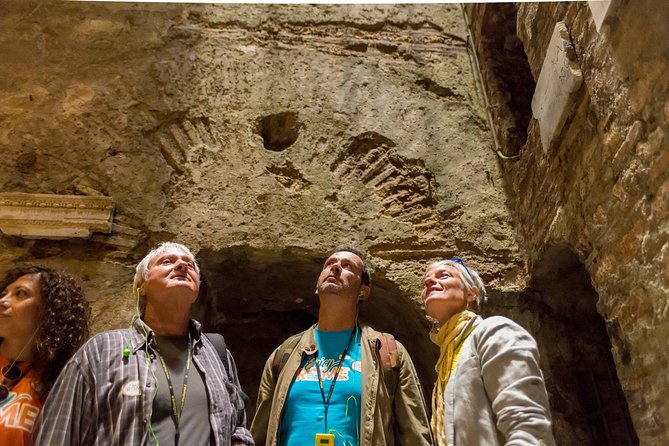
If you’ve ever tried to plan catacombs in Rome, you know the drill: tickets, timing, and uncertainty can eat up your best hours. That’s why I like tours with guaranteed entry to the Catacombs of San Callisto. Here, the catacombs visit isn’t a maybe. It’s the main event, and the ticket is handled for you.
The focus also matters. The Catacombs of San Callisto (sometimes spelled San Callixtus) are huge and historically important, and your guide’s route is designed around the most meaningful burial areas. You’ll spend about one hour underground, and the tour highlights major sections including the crypt of St. Cecilia and the crypt of the Popes. That structure helps you make sense of a site that can otherwise feel like a maze of corridors and niches.
I also appreciate that this tour doesn’t treat the catacombs like a quick stop-and-snap photo moment. Instead, it’s guided and story-driven, with enough time to actually process what you’re seeing.
You can also read our reviews of more walking tours in Rome



Meeting at Via Cavour and the bus ride out of the city
The meeting point is Via Cavour, 224, 00184 Roma RM, and the tour ends back there. Start time is 9:45 am, and the full experience runs about three hours.
Because this is a round-trip bus tour from central Rome, you avoid the common headache: getting to the Appian Way area efficiently. That matters here because you’re not just going to one stop. You’re going to the catacombs, then continuing through the Roman countryside to more ancient landmarks. In practice, the bus time gives you a smoother transition from city streets to the park-and-country feel of the Appian Way region.
One more practical detail: the tour description notes you’re near public transportation. That’s useful if you’re planning your day around other stops, because you’re not locking yourself into a long transfer just to get back in position.
Inside the Catacombs: St. Cecilia and the crypt of the Popes
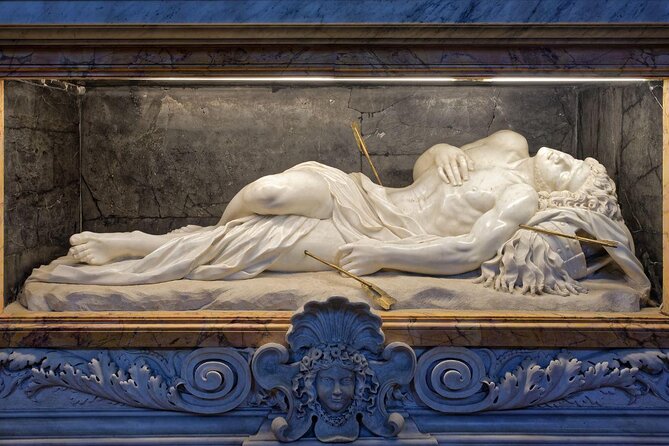
This is the part most people remember. The Catacombs of San Callisto are described as the resting place of 500,000 Christians, with dozens of martyrs and popes connected to the site. That’s a big claim, but the site’s scale is exactly why a guided route helps. Without a plan, it’s easy to get lost in the physical complexity.
Your visit is about one hour, and the itinerary is built around two major areas:
- the crypt of St. Cecilia
- the crypt of the Popes
What I like about this approach is that it gives you a narrative spine. You’re not just walking through underground rooms; you’re following a route that points you toward the most historically charged sections.
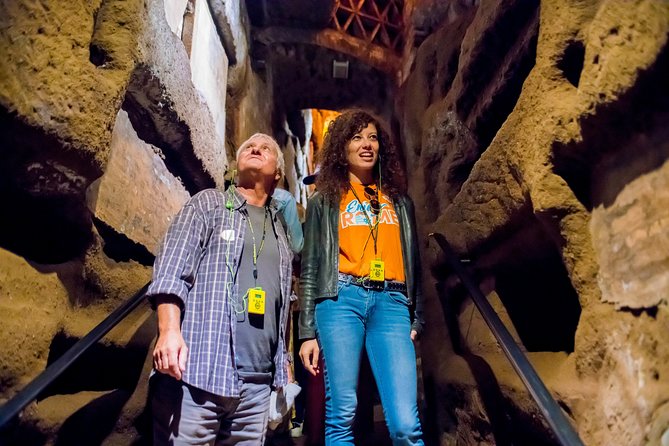
Now, a key comfort note. The tour is described as mostly underground in very narrow spaces. Even if you’re not fully claustrophobic, narrow corridors can be a mental challenge when you’re pressed close and walking through dim, enclosed areas. If that thought makes you uneasy, I’d take it seriously and decide whether a catacombs visit is worth it for your comfort level.
Circus of Maxentius and the park stop that breaks up the underground
After the catacombs, the tour continues by bus through the Roman countryside to the Circus of Maxentius. It’s not as famous as Circus Maximus, but it’s still a striking ancient structure, and you’ll find it in Caffarella Park.
This is a smart “mental reset” between stops. Catacombs are tight and dim; the circus stop gives you open air and a clearer sense of Roman engineering and public spectacle. Even if you only see part of the structure at viewing time, it’s one of those places where the setting helps you understand how Romans moved through outdoor spaces for events.
The itinerary doesn’t promise a long wander here, so keep expectations practical: you’re stopping to view and learn, not running a museum day.
Mausoleo di Cecilia Metella: what you get without going inside
Next comes Mausoleo di Cecilia Metella e Castrum Caetani, in the Parco Archeologico dell’Appia Antica area. This stop is listed as an external visit for about 30 minutes.
Built to honor a Roman noblewoman in the 1st century B.C., the mausoleum’s position on a hill along the Via Appia is part of what makes it visually memorable. You get the monument and the sense of place—without committing to an indoor entry that isn’t included.
That’s both a plus and a limitation:
- The plus: you spend less time waiting for internal access and more time seeing the Appian Way landscape.
- The limitation: you’re not going inside, so if you’re specifically chasing an interior look, you’ll need to plan that separately.






Appian Way walk: Rome’s Queen of Roads
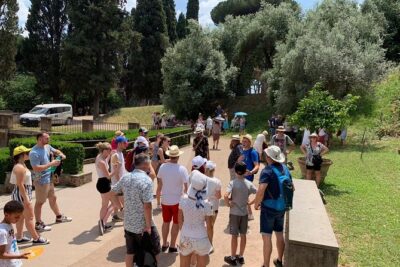
Then you step onto the Appian Way (Via Appia Antica) for a 30-minute walk. Rome’s own nickname for it is Queen of Roads, and the guide framing is historically grounded: this road connected Rome to Brindisi in southern Italy and served as a major trade route linking with Greece and the East.
I also like the emphasis on engineering. The Appian Way—especially the version dated to 300 B.C.—is treated as one of the great feats of ancient road building. When you walk a short stretch, you start to feel why this kind of infrastructure mattered. It wasn’t just a road; it was a system that shaped movement, trade, and power.
This is a short walk, so don’t expect a long-distance trek. But it’s long enough to break up the day and give you those “I’m standing on that road” moments that are hard to replicate from photos alone.
What you’ll spot along the way: Aqua Claudia and ancient layers
One of the listed highlights is seeing the Aqua Claudia and other ancient sites as you go. Even when you’re on the bus, that sightseeing element matters because it turns transit time into education.
The value here is mental continuity. You’re not just hopping from one dramatic location to another with no connection. You get repeated reminders that this region is loaded with Roman infrastructure and structures. The Appian Way area isn’t a single monument—it’s an entire corridor of history.
If you love piecing together Rome in layers, this approach helps. You come away with a better sense of what the Romans built beyond the headline attractions.
Pace, group size, and comfort in narrow spaces
This tour runs about three hours, and it’s designed to be manageable: catacombs (about an hour), then two outdoor-ish stops (with the Mausoleo at about 30 minutes, and the Appian Way walk at about 30 minutes). The bus segments connect everything efficiently.
Group size is capped at 15 travelers, and I find small groups make a difference on tours that include tight spaces. Even so, narrow underground corridors mean you’ll move slowly and close together at times. If you tend to feel stressed in crowds, you’ll likely prefer a calm morning start and a tour with fewer people.
Comfort tips that actually help here:
- Wear closed-toe shoes you can walk in without thinking.
- If you’re heat-sensitive, mornings can be kinder before the day warms up.
- Bring a calm mindset for the underground part; it’s physical, not just visual.
And again, if claustrophobia is an issue, this is the point where you should be honest with yourself. The tour specifically warns about narrow spaces.
Price and value: is $110.54 worth it?
At $110.54 per person, this isn’t a budget add-on. The value comes from three things that are expensive to recreate on your own:
- Guaranteed entry to the Catacombs of San Callisto
- Round-trip bus transfer from central Rome
- An expert guide who keeps the story connected across stops
You’re paying not just for access, but for organization and interpretation. Catacombs planning can be a time sink. Here, your time is packaged: you start at 9:45 am, get to the sites, and finish back at the meeting point.
Is it worth it for you? It is if you want guided context and a smooth flow from city to countryside to underground. If you prefer to wander independently and you already feel comfortable mapping transit on your own, you might find cheaper ways to visit. But for many people, the guaranteed entry plus bus transfer makes the price feel fair.
One more practical signal: this tour is often booked well ahead—on average around 78 days in advance. That suggests demand is real, especially for morning slots.
Who this Catacombs of San Callisto tour suits best
This tour fits best if you want:
- A guided visit to Catacombs of San Callisto rather than self-guided uncertainty
- A short outdoor walk on the Appian Way without planning the route yourself
- A morning itinerary that combines underground history with visible Roman sites outside
It’s less ideal if:
- You’re strongly claustrophobic (the tour is mostly underground in narrow spaces)
- You’re expecting a long museum-style visit inside every stop (the Mausoleo visit is external, and the Circus stop is a viewing point)
A real heads-up about stop expectations
A common travel frustration is when a tour’s advertised focus doesn’t match what you end up seeing on the ground. The information you shared emphasizes Catacombs of San Callisto and also mentions stops like Circus of Maxentius and sights along the Appian Way region.
That said, I’d still do one practical thing before booking: when you confirm your reservation, double-check the exact catacomb site listed for your date. Some Roman tour schedules can shift, and for catacomb lovers, the specific cemetery you enter is the main deal.
Should you book this Roman Catacombs Walking Tour?
Book it if you want an efficient, guided morning that includes guaranteed Catacombs of San Callisto entry, plus a walk on the Appian Way and a couple of strong historical stops outside the city. The small group size and the included bus transfer make it a low-stress way to see the countryside portion of ancient Rome without logistics headaches.
Skip it or think hard first if claustrophobia is a serious concern for you, because this one is genuinely tight and mostly underground. And if catacomb specificity is crucial, confirm the exact site included when you book so you’re not left guessing.
If you’re the type who likes connecting Roman engineering to Roman belief—road to monument to underground burial—this tour is a strong match.
FAQ
How long does the Roman Catacombs walking tour last?
It runs about 3 hours.
How much does the tour cost?
The price is $110.54 per person.
Is entry to the Catacombs of San Callisto included and guaranteed?
Yes. The tour includes guaranteed entry to the Catacombs of San Callisto.
Do I get round-trip transportation from central Rome?
Yes. Round-trip bus transfer from central Rome is included.
What is the meeting point?
The meeting point is Via Cavour, 224, 00184 Roma RM, Italy.
What time does the tour start?
The start time is 9:45 am.
Is the Mausoleo di Cecilia Metella visit inside included?
No. The tour includes an external visit to the Mausoleo di Cecilia Metella, and internal admission is not included.
Is this tour suitable for claustrophobia?
The tour is mostly underground in very narrow spaces, which may be an issue if anyone in your party suffers from claustrophobia.
What is the cancellation deadline for a full refund?
You can cancel up to 24 hours in advance of the experience start time for a full refund.