REVIEW · ROME
Private tour of Ostia, the ancient city harbor, by van with a PhD archaeologist
Book on Viator →Operated by Rome in tours · Bookable on Viator
Ostia Antica hits fast and hard. I love the PhD archaeologist level of storytelling, and I love that this is a true private outing with transport handled for you. One thing to consider: the main time inside the park is on the shorter side, so you’ll want to come with smart questions and comfy shoes.
For a lot of people, Ostia feels like Rome with the volume turned down. In the on-the-ground experience, guides like Fernando (with driver Constantino) are the kind of pairing that makes the ruins feel readable, not just scenic. If you’re the type who also wants extra museum time, you may wish this ran a bit longer at the site.
In This Review
- Key Points You’ll Care About
- Ostia Antica vs. the Big-Name Rome Excursions
- The Van Pickup and Timing That Make This Feel Easy
- The Walk Through Ostia: From City Gate to Main Street
- Warehouses, Baths, and Everyday Stops You Can Actually Visualize
- The Theater, Guild Square, and the City’s Social Pulse
- Forum, Capitolium, and Imperial-Style Power
- Military Camp and “Why That’s Here” Questions
- What the PhD Archaeologist Brings to the Day
- Skip-the-Line and Ticket Fees: Small Stuff That Adds Up
- Price and Value: What You’re Actually Buying at $528.09
- Who This Tour Fits Best (and Who Might Want More Time)
- Should You Book This Ostia Antica Private Tour?
- FAQ
- How long is the Ostia Antica private tour?
- How much time do we spend inside Ostia Antica?
- Is the admission ticket included?
- Do you skip the line?
- Do you provide pickup from my accommodation?
- Is this tour truly private?
- What language is the tour in, and do we get headsets?
- Is it a walking tour?
- Is food included?
- What should I know about cancellation and ID requirements for minors?
Key Points You’ll Care About
- PhD archaeologist guidance that explains what you’re looking at as you walk, not after you leave
- Skip-the-line entry so you spend time on ruins instead of ticket lines
- Private van + pickup from your accommodation area, then you’re brought back after the visit
- 3 hours at Ostia Antica (with a walking route that covers major highlights)
- Headsets included for groups of 6+ so you can actually hear the guide
- Admission ticket fees included, so you’re not piecing together extra charges day-of
Ostia Antica vs. the Big-Name Rome Excursions
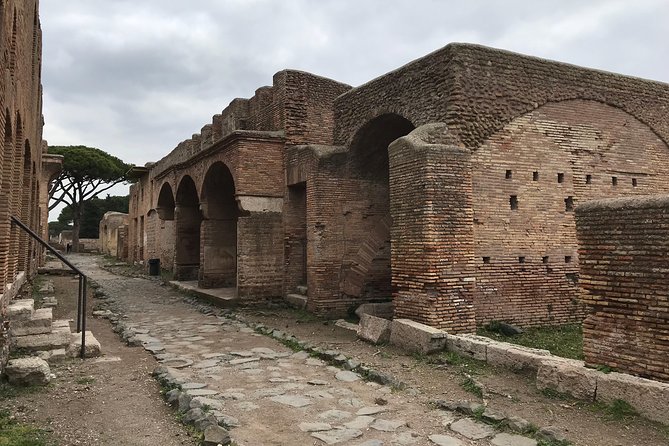
Ostia Antica is one of those trips that makes you rethink what “ancient Rome” means. Instead of grand monuments you can spot from a distance, you walk through the bones of a working city connected to the Roman world’s growth.
I like this tour for how it respects your time. You’re not stuck in a long bus ride plus a vague stop-and-snap schedule. You get a tight, guided route through the park’s headline areas, and you come away with a clearer sense of how the city functioned and why it mattered in the broader rise of the Roman Empire.
And there’s a practical bonus: the site can feel calmer than other famous Roman destinations. That matters for two reasons. First, you can take your time looking at details like street layout and building remains. Second, your photos don’t require you to negotiate with a crowd.
The only real catch is that Ostia rewards curiosity. If you want to linger in every corner, three hours inside the park may feel like a sprint. On the other hand, that fast pace is exactly why this tour works for many schedules.
You can also read our reviews of more city tours in Rome



The Van Pickup and Timing That Make This Feel Easy
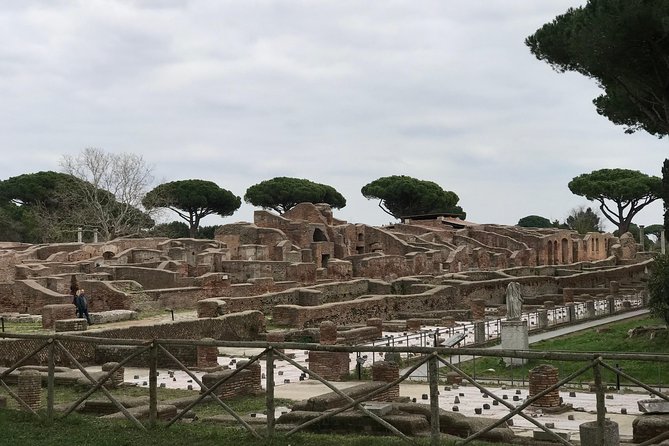
This is built as a day-trip that doesn’t eat your whole afternoon. The total duration is listed at about 4 hours. Travel time is roughly 1.5 hours round trip, which means you’re spending the better part of the block actually walking the site.
That pacing is not an accident. With heat and humidity (especially in late summer and early fall), a tight plan helps you avoid the end-of-tour drag when you start staring at stones instead of learning from them. If you’re visiting in September, plan for warm conditions and lean into the guided structure.
Logistics are also handled in a way that reduces stress:
- Pickup is offered, and you’re taken from your accommodation area.
- If your lodging is outside the defined pickup zone, you’re asked to contact support to find a solution.
- The driver takes you to the attraction and back to your accommodation after the visit, keeping things simple.
You also get a mobile ticket and a confirmation at booking. That’s small, but it helps the day go smoothly.
The Walk Through Ostia: From City Gate to Main Street
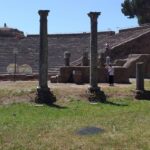
Your visit starts at Parco Archeologico di Ostia Antica, and the route hits the parts that help you understand how the city was organized.
You begin with the necropolis and the transition into the city—an opening that’s more than a spooky warm-up. It helps you see Ostia as a lived-in place over time, not just a single “highlight” area.
Then you move into the built boundaries: the entrance gate and city walls. This is where the guide’s explanations really matter. The walls and gates give you a sense of scale and the feeling of moving from the outside world into an urban zone.
From there, you’ll walk along the decumanus, the main street. Streets like this are like Rome’s skeleton. When you can follow the layout with someone who can point out the logic behind it, the ruins stop feeling random.
A couple of practical notes:
- This is a walking tour, so bring shoes that work on uneven surfaces.
- It’s designed for most travelers to participate, but you’ll be walking for the duration of the route.
- A service animal is allowed, if that applies to your group.
Warehouses, Baths, and Everyday Stops You Can Actually Visualize
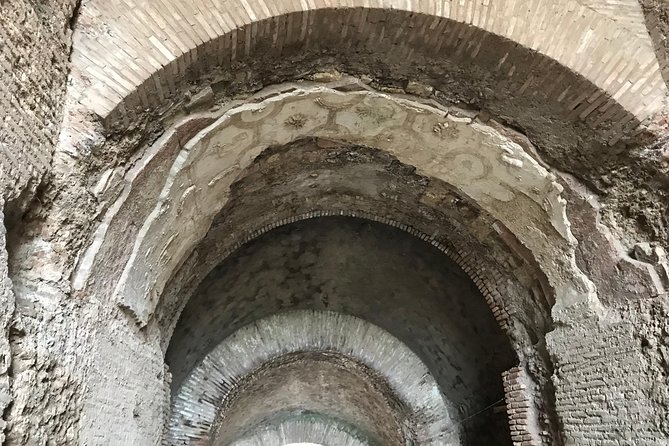
After the main street, the route shifts into the places that explain city life through function: storage, leisure, eating, and housing.
You’ll see warehouses, which help you connect Ostia’s identity to its harbor-city role. You’re not just looking at “old stuff.” You’re gathering clues about how a city supports movement of goods and people, and how that connects to the wider story of Rome’s rise.
Next come two named bathing complexes: the Bath of the charioteers and the Bath of Neptune. Even if you’re not a “bath person,” these are useful because they show how public or semi-public spaces were built into daily rhythms. The real value here is the guide’s ability to make the physical remains feel like a system—who used what spaces, and how they fit the rest of the city.
Then you hit food and social space:
- A caupona, which is essentially a tavern stop.
- A thermopolium, which is a restaurant-type setting.
These are some of the most fun stops because the names make it easier to imagine normal conversations, meals, and quick visits rather than only official ceremonies.
And you’ll also pass the insulae, described as a middle-class housing system. This is one of the tour’s best “aha” moments. When you’re standing where people lived, you get a more grounded picture of how a big empire relied on ordinary urban life, not just temples and theaters.
The Theater, Guild Square, and the City’s Social Pulse
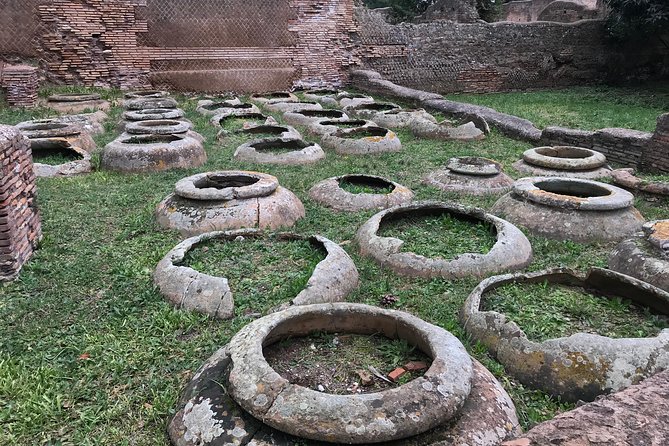
The route continues with spaces built for public gatherings and cultural identity.
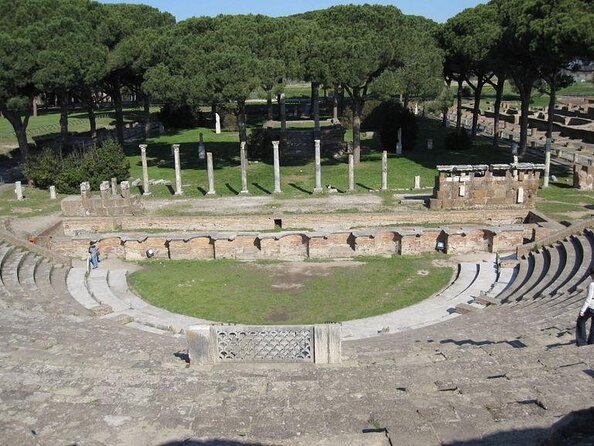
You’ll visit the theater, which helps you understand how leisure and public events were woven into the city plan. Even when only fragments remain, the shape of a theater keeps the imagination working.
Then comes the square of the guilds. This is the kind of location that’s easy to walk past if you don’t know why it matters. With a guide who can explain what to look for, you start seeing how people organized themselves socially and professionally.
One nice detail from this tour style: you’re not rushed through these stops with zero context. The private format lets you ask questions as you go, which matters a lot when you’re trying to understand how all these parts connect.
If you’re the kind of person who enjoys “how did this work?” more than “what date is this?”, this section is a big payoff.
You can also read our reviews of more private tours in Rome






Forum, Capitolium, and Imperial-Style Power
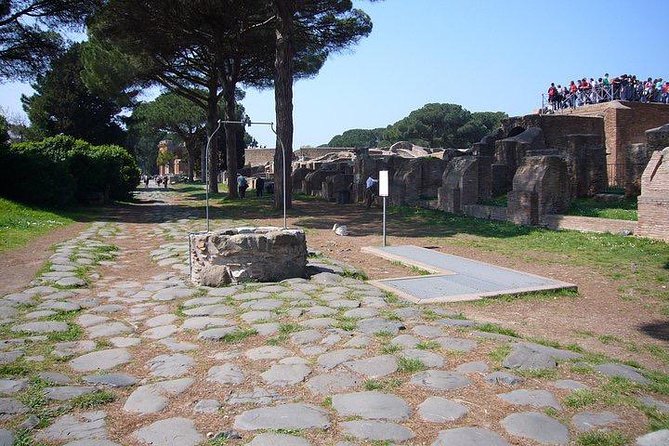
Now you shift from daily city spaces into the formal center, where religion and politics overlap.
You’ll see the forum, the main civic heart. This is where the city’s hierarchy becomes visible in stone: public space, official buildings, and the sense that Ostia wasn’t just a background town. It was part of the machinery of Rome.
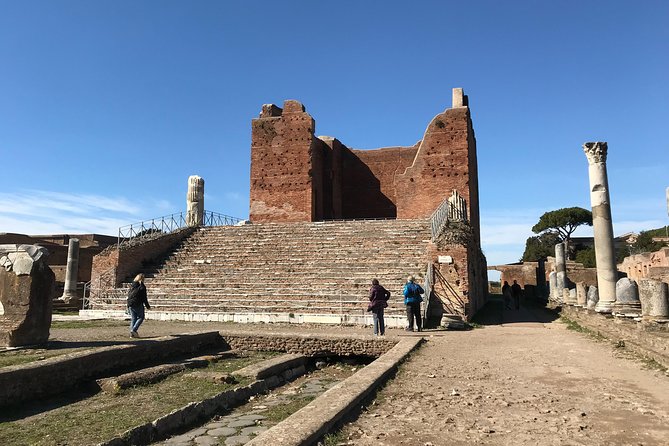
From there you walk to the Capitolium, described as the temple of Jupiter, Juno and Minerva. Religious centers like this are the big “reader” sections of the route. They’re not just impressive. They help you understand what symbols and beliefs were meant to anchor authority.
You’ll also visit two more spiritual-political anchors:
- the so-called shrine of the Lares Augusti
- the Temple of Augustus and Rome
These stops are especially important if your goal is to learn Ostia’s role in the rise of the Roman Empire. The guide’s job here is to translate what you’re seeing into meaning—why these locations mattered to the identity of the empire and how that identity was displayed locally.
Military Camp and “Why That’s Here” Questions
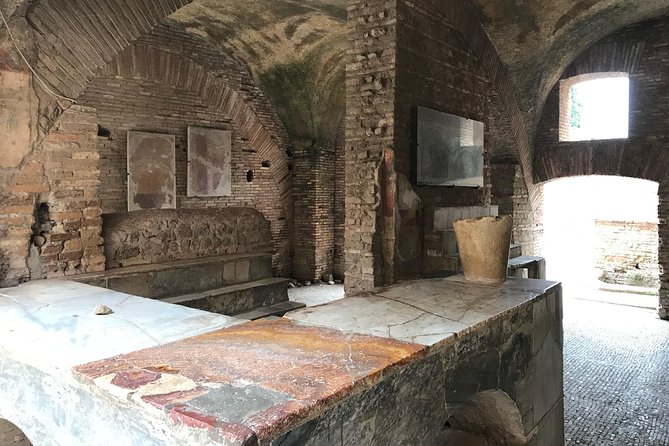
The tour includes the castrum, the military camp. This can surprise people because it changes the city story. It hints that Ostia wasn’t only commerce and civic life. It had a security and control dimension too.
If you enjoy filling in the logic gaps—why a city layout looks the way it does—this is a strong stop. A good guide will help you notice the relationship between the camp and the rest of the city’s main areas.
This is also where the private, question-friendly setup pays off. You’re able to slow down and ask the kind of questions that a group tour often trims out.
What the PhD Archaeologist Brings to the Day
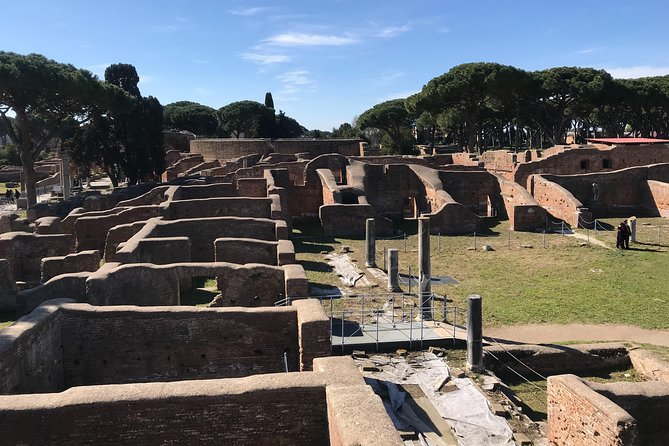
The headliner here is the PhD archaeologist guide. That matters because Ostia is a site where details can feel confusing unless someone gives you a route for thinking.
A strong guide doesn’t just tell you what each building is called. They help you connect pieces:
- street layout to civic zones
- public space to the idea of authority
- everyday spaces like taverns and housing to how a city actually functioned
In particular, guides like Fernando stand out for how comfortable they seem with questions. And the driving support—like the pairing of Fernando with driver Constantino—makes it easier to stay focused on the walking part instead of managing logistics.
There’s also a practical audio layer: headsets are included for a party of 6 pax or more. Even if you think you’ll be fine without them, I’ve learned that ruins sites can be noisy with wind and distance. Headsets make the guidance more reliable.
Skip-the-Line and Ticket Fees: Small Stuff That Adds Up
This tour includes ticket fees and lets you skip the line. That’s one of those advantages you appreciate more than you expect.
When you’re doing a short visit to a big site, delays feel like theft. Skipping the ticket process keeps your energy for the ruins, not the queue.
And because it’s private, you’re less likely to feel the stress of matching a group’s pace. The tour’s whole structure is built to move with purpose and still leave room for questions.
Price and Value: What You’re Actually Buying at $528.09
The price is listed at $528.09 per person, and it’s easy to judge that number without context. Here’s what you’re paying for, based on what’s included:
Included highlights:
- Private tour
- Local guide plus PhD archaeologist guide
- Transportation to and from Ostia by luxury car/van
- Admission ticket fees included
- Headsets for parties of 6+
- Skip-the-line entry
- All listed “all included, no extra fees” items for the tour experience
Not included:
- Food
- Souvenirs
That combination can be excellent value if you want a guided explanation you can actually control—especially if your group is small and you don’t want the rhythm of a bigger tour.
It can be less value if you’re traveling on a tight budget and you’re happy to guide yourself slowly through the park. Ostia is walkable on your own. But you’ll get far more from it when the meaning of each stop is handed to you in plain language.
One timing tip that’s hard to ignore: on average, this type of tour gets booked about 54 days in advance. If you’re traveling at peak times, earlier booking helps.
Who This Tour Fits Best (and Who Might Want More Time)
This tour is a strong match if:
- you want a private experience with time to ask questions
- you value explanation tied to what you’re seeing, not a history lecture at the start
- you want a fast getaway from Rome without giving up the most important Ostia stops
- you’re okay with a focused route rather than an all-day wander
It might not be the best match if:
- you want extra time at a museum area beyond the core park walk
- you’re the type who always wants “just one more stop,” because the main on-site window can feel short
That “short but well worth it” trade-off shows up in real expectations. Think of it as a guided sampler that still hits the core neighborhoods and monuments.
Should You Book This Ostia Antica Private Tour?
I’d book it if your ideal day looks like: pick-up, a structured walk through the most meaningful parts of Ostia, and expert explanations that help you understand why the city mattered.
If you’re only going to do one Rome-area ancient site this trip, Ostia is often an easier call than you’d expect—especially when you want the guidance of a PhD archaeologist and you don’t want to spend the day wrestling with logistics.
But if your dream is a long, leisurely deep soak (including additional museum time), you may want to look for an extended option. With a shorter route, the winner is the guide. Come prepared with questions, and you’ll get a lot more out of every stop.
FAQ
How long is the Ostia Antica private tour?
The tour is listed as about 4 hours total.
How much time do we spend inside Ostia Antica?
The plan includes about 3 hours at Ostia Antica as part of the overall tour block.
Is the admission ticket included?
Yes. Ticket fees are included, and the tour includes admission to the park.
Do you skip the line?
Yes. This tour lets you skip the line.
Do you provide pickup from my accommodation?
Pickup is offered. If your accommodation is beyond the defined area, you’re asked to contact customer support to find a solution.
Is this tour truly private?
Yes. It’s a private tour/activity, and only your group participates.
What language is the tour in, and do we get headsets?
The tour is offered in English, and headsets are included for a party of 6 people or more.
Is it a walking tour?
Yes. It’s a walking tour, and the driver takes you to the attraction and back to your accommodation after the visit.
Is food included?
No. Food is not included, but you’ll cover the ruins portion of the day with your guide.
What should I know about cancellation and ID requirements for minors?
Free cancellation is allowed up to 24 hours in advance for a full refund. If a participant is under 18 on the day of the tour, a valid ID is required.