REVIEW · ROME
Colosseum, Roman Forum and Emperors’ Palace Private Guided Tour
Book on Viator →Operated by Raphael Tours & Events · Bookable on Viator
The Colosseum still feels like a stage. On a private guided tour with an art historian, you walk the arena and the Forum with clear stories about Roman power and entertainment. You get that rare combo of big-sight sightseeing and smart explanations, and guides such as Maria and Georgia make the ruins feel human, not just ancient stone.
I also love the pace. This tour is set up to keep things moving, including going inside the Colosseum and continuing straight into Palatine Hill and the Roman Forum without the usual standing-around. The trade-off is the price: at $354.86 per person, it is a splurge, so it makes sense only if you’ll really use the private attention and full time in the sites.
In This Review
- Key highlights at a glance
- Entering the Colosseum without burning your morning
- What the guide actually does inside the Colosseum
- Palatine Hill: where emperors felt close to the clouds
- Roman Forum highlights: Arch of Constantine to the oldest temples
- Connecting Emperors’ Palace to everyday power
- Price and what you’re really paying for ($354.86 per person)
- Meeting point, mobile tickets, and the one admin rule that matters
- How the private format changes your experience
- Who should pick this tour (and who might skip it)
- Should you book this Colosseum and Roman Forum private guided tour?
- FAQ
- How long is the Colosseum, Roman Forum and Emperors’ Palace private guided tour?
- Is this tour private or shared?
- What sites are included?
- Does the tour include admission to the Colosseum?
- Where does the tour start?
- Do I need to bring a passport or ID?
- Do children need ID?
- Is a mobile ticket used?
- Is the meeting point near public transportation?
- Can I get a refund if I cancel?
Key highlights at a glance
- Art historian guide focused on how Rome worked, not just what you see
- Inside access to the Colosseum with seating levels and arena viewpoints
- Palatine Hill as the imperial backdrop, with palaces and gardens in context
- Roman Forum landmarks including the Arch of Constantine, Senate House, and Golden Mile
- Skip the entry lines approach, so you spend time looking instead of waiting
Entering the Colosseum without burning your morning
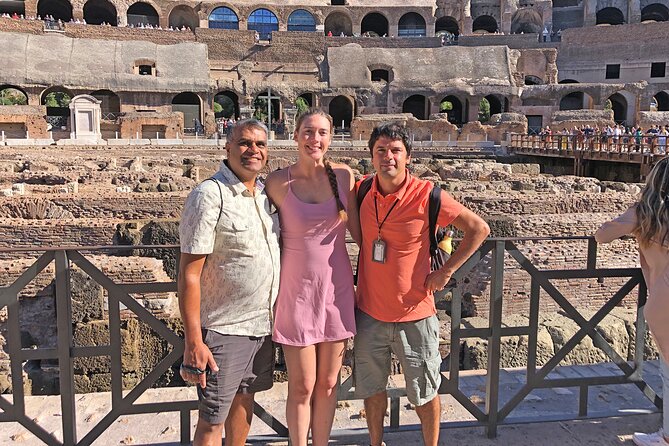
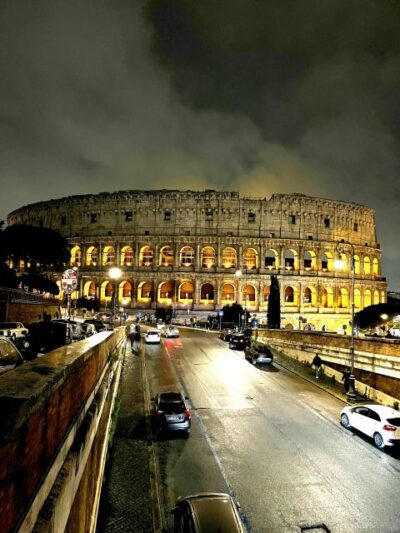
Rome’s major sights can eat your day if you’re stuck in lines. This tour is designed for speed where it counts: you start at Piazza del Colosseo, 3, then you head directly into the Colosseum for a guided visit. The goal is simple—get you off the maps and onto the story.
The tour also uses the practical “real travel” tools. You get a mobile ticket, it’s near public transportation, and it’s built as a private tour for only your group. That matters at the Colosseum, where every minute you save helps you see more while your energy is still decent.
And yes, it’s made for families too. The Colosseum is a natural kid magnet, and the way the guide explains the spectacle and the crowd behavior makes it easier for younger travelers to stay with you.
You can also read our reviews of more guided tours in Rome



What the guide actually does inside the Colosseum
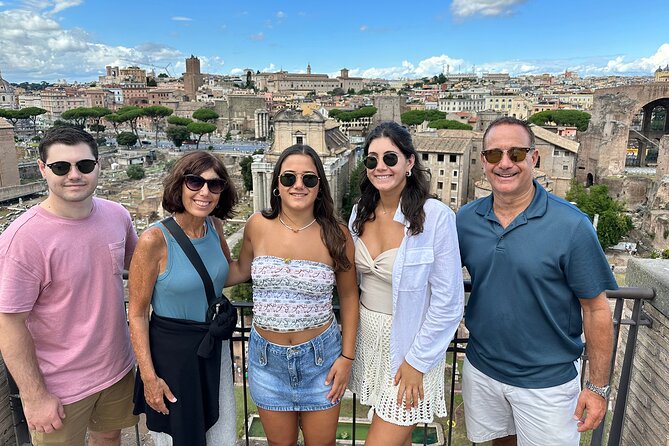
Inside the Colosseum, you don’t just point and say, That’s where gladiators fought. You move through levels and vantage points, with a guide explaining what you’re seeing and what it meant.
Here’s what you can expect to cover during the roughly 1 hour Colosseum stop:
- Arena space and layout: You’ll see the ground where the action happened, then connect it to the seating above.
- Seating levels: The guide walks you through how the structure shaped the audience experience.
- Spectacle management: It’s not only violence. You’ll hear how the show was organized and run for maximum effect.
- Gladiator combat and entertainment: The guide tells the human side—why these events mattered to Roman identity.
This is where the art-historian angle shows. An art historian tends to notice detail others skip: the purpose of spaces, how design served politics, and how public entertainment reflected power. One reason guides get high marks here is that they answer questions clearly and keep the storytelling playful. In past visits, guides like Alessandra and Egle were singled out for using humor and for having an answer ready for almost everything.
If you love ruins, great. If you’re the type who gets lost without context, even better. This format gives you the “what am I looking at and why does it matter” thread from start to finish.
Palatine Hill: where emperors felt close to the clouds
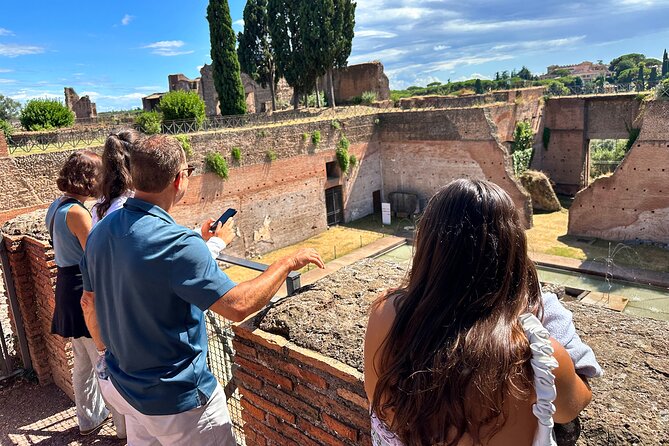
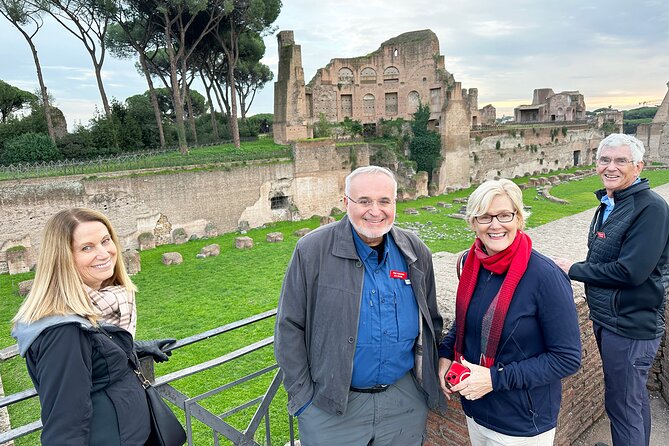
After the Colosseum, the tour shifts to Palatine Hill, for another roughly 1 hour. Palatine is the name you hear when people talk about imperial Rome. It’s also where the story becomes less about the crowd and more about the rulers.
The tone here changes. The walk through palaces and gardens is paired with accounts of leaders—fearless figures, epic heroines, and infamous tyrants. That mix matters. Rome wasn’t just one hero or one bad guy. It was power swings, alliances, and propaganda, and Palatine is a strong place to feel that.
Practical note: Palatine is still outdoors. Comfortable shoes help. If your group tends to get tired after the Colosseum, Palatine is a good moment to slow down and let the guide connect architecture to politics.
Roman Forum highlights: Arch of Constantine to the oldest temples
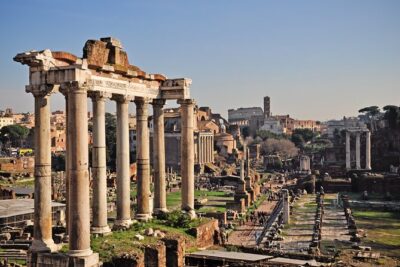
The final stop focuses on the Roman Forum, around 1 hour, and this is where you get the “government in stone” feeling.
The Forum is described as the main square and assembly location for the Roman population, surrounded by political and religious buildings. That’s exactly what you’ll see in the landmark sequence the guide works through:
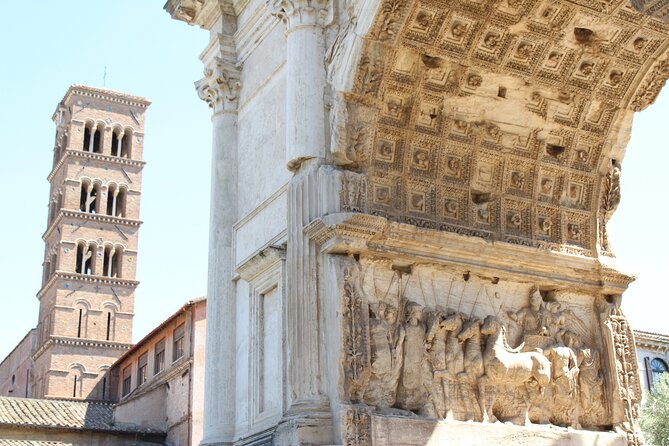
- Arch of Constantine: The largest surviving triumphal arch, a key monument for understanding how emperors broadcast legitimacy.
- Senate House: The seat where senators ruled the empire, linking daily life to decision-making power.
- Temple of Julius Caesar: A reminder that Rome’s leadership wasn’t only military—it was tied to worship and legacy.
- House of the Vestal Virgins: A major religious institution that held social and political weight.
- Basilicas: Public buildings tied to civic life, not just ceremonies.
- Golden Mile: A phrase that helps you understand the Forum’s “main line” idea—Rome’s sense of order and dominance in how space was arranged.
- Temple of Concord and Temple of Saturn: Plus the note that Temple of Saturn is the oldest surviving temple in the Forum.
At the foot of Capitoline Hill, these temples and civic buildings make it easier to picture Roman rhythms—meetings, rituals, announcements, and ceremonies. The best guides connect these places into a timeline you can follow, so you stop thinking of the Forum as a pile of separate ruins.
Connecting Emperors’ Palace to everyday power
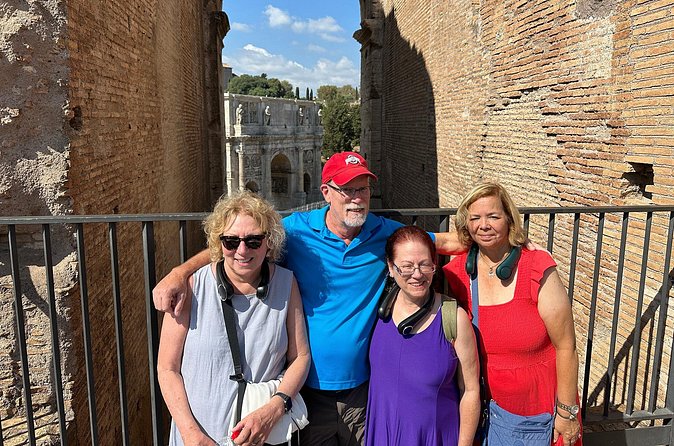
The tour’s title nods to emperors’ Rome, and Palatine Hill is the bridge. The bigger win is how the guide ties the imperial story to the spaces where public life played out.
You’ll hear about dramatic battles, emperors, leaders, and rebellions that shaped Roman life. That’s not just trivia. It’s the backbone for understanding why monuments exist where they do.
For example, the triumphal arch concept isn’t random decoration—it’s a message. The Forum’s temples aren’t merely sacred buildings—they help explain how religion supported authority. When the guide puts those pieces together, you start seeing Rome as a system, not a greatest-hits museum.
This is also where those tablet photos and simple visual props can help. In prior tours, guides used visuals to help people picture what spaces looked like in use, which makes your time feel less like passively reading and more like understanding.
You can also read our reviews of more private tours in Rome




Price and what you’re really paying for ($354.86 per person)
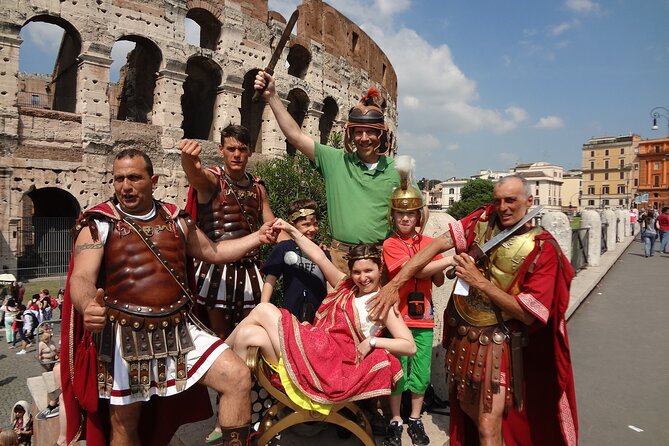
Let’s talk value, because this price is not accidental.
At $354.86 per person, you’re paying for:
- A professional art historian guide
- Colosseum entrance ticket (valued at €18 per person)
- A Colosseum reservation fee (valued at €2 per person)
The tour states that the rest of the cost covers other services. In plain terms, the premium is for the human guidance and the time efficiency. The Colosseum and Forum are big and layered. Without a good guide, you can end up with a photo album and not much understanding.
The private format is also a value lever. If you’re traveling as a small group that wants to ask questions and move at your own speed, you’re paying to avoid the “herding cats” effect of large group tours. The high rating here—4.9 with 100% recommended from 14 reviews—suggests the guides tend to land the storytelling and pacing.
Still, it’s a splurge. If your group just wants to snap pictures and rush, a cheaper option may work. If you want depth and less waiting, this is one of the more sensible ways to spend time in Rome’s most complex site.
Meeting point, mobile tickets, and the one admin rule that matters
This tour starts at Piazza del Colosseo, 3, 00184 Rome and ends back at the meeting point. That simplicity helps. No “meet here, then take a bus, then meet again” runaround.
Two details are crucial for smooth entry:
- You must provide full names for all travelers when booking.
- Your passport or ID must match those names exactly. If the names don’t match what’s on the voucher, entry can be denied.
This is the kind of rule that seems small until it ruins your day. Double-check spelling, middle names (if used on your ID), and letter accents if applicable. Also make sure you have the right age details for kids. Kids under 18 must show a passport or ID card.
The good news: the tour uses a mobile ticket, and you receive confirmation at booking time. Near public transportation also helps you arrive without a stress spiral.
How the private format changes your experience
Private tours are not automatically better. But they often help at the Colosseum and Forum because the sites reward attention.
Here’s how the private setup helps you in practice:
- Your guide can adjust pacing if your group has questions.
- You can get explanations tailored to how you ask—whether you want the politics, the entertainment side, or the architecture.
- It’s easier to keep kids engaged when you can slow down at key stops.
- You aren’t stuck matching the slowest person in a big group.
The past guide feedback highlights this. Guides have been described as patient and kind, funny with quick answers, and effective at making the ruins feel real. One guide was praised for keeping a child engaged throughout the full tour, which is often the hardest test in Rome.
Who should pick this tour (and who might skip it)
This tour is a great match if you:
- Want inside access to the Colosseum with seating levels and arena context
- Prefer a guided story over wandering
- Travel as a group that will use the private attention
- Have kids who benefit from clear, lively explanations
You might look at alternatives if:
- You’re traveling solo on a tight budget and don’t care much about guided interpretation
- Your group hates walking in ancient outdoor spaces, since Palatine and the Forum are outdoors
Should you book this Colosseum and Roman Forum private guided tour?
I’d book it if your goal is to leave knowing Rome, not just seeing Rome. The mix of Colosseum + Palatine Hill + Roman Forum in about 3 hours is efficient. The guide style—art historian framing plus clear, question-friendly explanations—fits people who want meaning, not just landmarks.
Book it sooner if your dates are fixed. This is an experience that’s often reserved about 44 days in advance, which tells you it’s popular for a reason.
If you do book, do the boring part well: send correct full names, bring the right ID documents, and wear shoes you can stand in for a couple of hours. That way, your tour time stays focused on the good stuff—arena views, imperial context, and the Forum’s power centers.
FAQ
How long is the Colosseum, Roman Forum and Emperors’ Palace private guided tour?
It runs about 3 hours.
Is this tour private or shared?
It’s private. Only your group participates.
What sites are included?
You visit the Colosseum, Palatine Hill, and the Roman Forum.
Does the tour include admission to the Colosseum?
Yes. The Colosseum entrance ticket is included, along with the Colosseum reservation fee.
Where does the tour start?
The start is at Piazza del Colosseo, 3, 00184 Roma RM, Italy.
Do I need to bring a passport or ID?
Yes. Each traveler must present a valid passport or ID document that matches the name provided at booking.
Do children need ID?
Yes. Children under 18 must show a passport or ID card, and they must be accompanied by an adult.
Is a mobile ticket used?
Yes. The tour features a mobile ticket.
Is the meeting point near public transportation?
Yes, it is near public transportation.
Can I get a refund if I cancel?
No. The experience is non-refundable and cannot be changed for any reason.
If you tell me your travel dates and group size, I can help you figure out whether the private format is worth it for you.