REVIEW · ROME
Pre-Cruise Tour of Rome from Fiumicino Airport to Civitavecchia Port
Book on Viator →Operated by NCC AIRPORT S.C. · Bookable on Viator
Rome before a cruise can be chaos.
This private Fiumicino-to-Civitavecchia ride turns that scramble into a smart circuit through major landmarks, with the comfort of a driver and convenient terminal pickup. I especially like the mix of top sights in a tight time window and the fact you’re not stuck figuring out transit with luggage. One thing to consider: the stops are short photo-and-orientation visits, and the depth of commentary can vary by driver.
What makes it feel worth it is the logistics focus. You get a pre-cruise plan that’s built for real-world timing—airport delays, traffic, and the clock to catch your ship—so you can see the icons without adding stress. Just note that entrances aren’t included (and St. Peter’s Basilica is not part of the included items), so you’ll want to decide in advance what you’ll pay for on-site.
In This Review
- Key things to know before you go
- Private transfer + Rome highlights: why this works for cruise day
- Price and value: what $719.64 buys you
- Pickup at FCO and the port drop-off: the logistics that matter
- The smart expectation: short stops, fast orientation
- Piazza Navona: Neptune’s Fountain and Baroque drama
- Trevi Fountain: 30 minutes to see the postcard and understand it
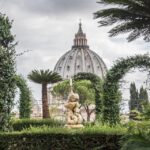
- St. Peter’s Square: the Vatican scale in a tight window
- Pantheon: the one stop where 2,000 years feels close
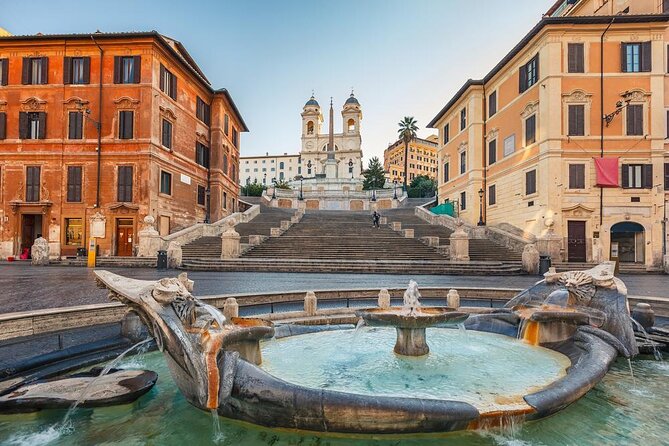
- Spanish Steps: fast photos and the Fountain of Barcaccia
- How to get the most from 5 hours (without rushing your soul)
- Who this tour suits best (and who should choose differently)
- Named drivers you might get (and why it matters)
- Should you book this pre-cruise Rome tour?
- FAQ
- How long is the Rome pre-cruise sightseeing tour?
- How many people can be in the group?
- Where do you get picked up, and where do you get dropped off?
- Is the tour in English?
- Are entrance tickets included?
- What luggage can I bring?
- Is free cancellation available?
Key things to know before you go
- Private car, max 8 people: you control the pace more than with a big bus.
- Designed for cruise timing: pickup from FCO and drop-off at Civitavecchia is the whole point.
- Short, timed landmark stops: expect about 30 minutes at each highlight.
- A mix of free and paid sights: some stops are listed as free; others have tickets not included.
- English support can vary: several drivers are strong in English, but at least one booking flags major language issues—so plan accordingly.
Private transfer + Rome highlights: why this works for cruise day
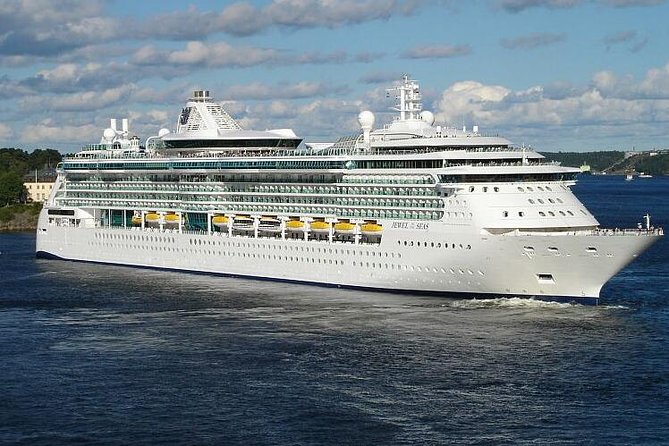
If you’re sailing soon, Rome can be a weird stop. You’ll land, grab bags, move through airport and city traffic, then somehow get yourself back to Civitavecchia. Most “sightseeing” options don’t respect that rhythm. This one does.
You’re not just buying a route through town. You’re buying transportation discipline: a driver waiting for you at the airport terminal, taking you through central Rome, then moving you onward to the port. And because it’s a private vehicle for up to eight, it’s easier to keep everyone together—especially if you have multiple suitcases, different walking speeds, or mixed ages.
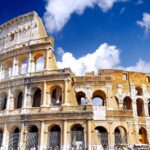
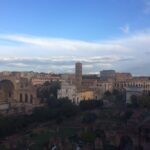
This also helps psychologically. Rome is big, and your first time there often feels like sensory overload. In one afternoon you get the big visual anchors—Colosseum-area energy from outside viewpoints, the clean lines of Pantheon, the famous fountain-and-steps photo corners—so the rest of your cruise stay (or any later return to Rome) makes more sense.
You can also read our reviews of more boat tours in Rome


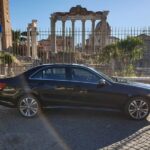
Price and value: what $719.64 buys you

The total price is $719.64 per vehicle for up to eight people, with about a five-hour timeframe. That’s not “cheap,” but it can be good value if you compare it to the cost of doing this with multiple taxis, a rental car (with city driving), and the extra time you’ll burn.
Here’s the practical math: the only way this gets truly cost-effective is if you fill the van (or at least spread the cost across a small group). For families or groups of friends, it often lands in the sweet spot—especially when you factor in the cost of not having to organize transfers while jet-lagged.
Also: you’re paying for time management. One reason cruise travelers feel the stress isn’t the price of sights—it’s the cost of being late. This tour is structured to move you efficiently between Fiumicino and the port while still giving you landmark time.
Pickup at FCO and the port drop-off: the logistics that matter
The meeting setup is simple: you’re picked up at Fiumicino Airport, at the terminal. The tour uses a mobile ticket, so you’re not scrambling for paper confirmations.
Two practical details matter a lot for your comfort:
- Timing is approximate. Drive time changes with traffic and time of day. Rome traffic isn’t a suggestion.
- Luggage rules exist. Each person can bring up to one suitcase and one carry-on. Oversized items (surfboards, golf clubs, bikes) may have restrictions, so ask ahead if you have anything bulky.
I’d also come into this expecting that the driver will be your problem-solver on the ground. Several named drivers have been described as excellent at getting through tight streets and optimizing the route when plans get messy—like flight delays or long immigration lines.
The smart expectation: short stops, fast orientation
This is not a slow, deep-guidance “Rome for a full day” experience. The structure is about 30 minutes at each stop. That’s plenty for:
- a first look at the landmark,
- photos without rushing like a carnival,
- and a bit of context so you know what you’re seeing.
But it’s not enough for a long museum day or for sitting through every detail. Also, while it’s marketed as driver/guide, some bookings point out that the guiding can be light—more “show-and-explain” than a lecture.
So decide what you need most:
- If you want quick orientation plus transport safety, this fits.
- If you want a detailed, stop-by-stop narration with lots of time inside, you’ll likely want something longer.
Piazza Navona: Neptune’s Fountain and Baroque drama
Your first stop is Piazza Navona, a square that links Roman ruins to theatrical Baroque architecture. You’ll have about 30 minutes, which is perfect for getting your bearings and grabbing classic photos.
What makes this stop special:
- Fountain of Neptune, designed by Giacomo della Porta (1586). It’s the kind of fountain that looks almost alive, even in a busy square.
- Chiesa di Sant’Agnese in Agone, by Francesco Borromini. Even from the outside, it’s easy to see why Borromini is famous for twisting architecture into motion.
The main drawback is crowding. Piazza Navona stays active, so keep your group tight. If someone needs a bathroom stop, handle that right after you park—otherwise you lose time you’ll want later for Trevi and the Vatican area.
You can also read our reviews of more tours and experiences in Rome






Trevi Fountain: 30 minutes to see the postcard and understand it
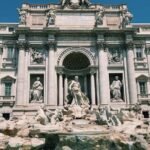
Then it’s on to Fontana di Trevi, one of the most recognizable fountains in the world. You’ll get about 30 minutes, and the site is listed as free.
A few useful details to know so it doesn’t become just a tourist photo wall:
- The fountain is in a Baroque style, credited to Nicola Salvi.
- It was built in the 18th century after a competition set by Pope Clement XII.
That background helps you look past the crowd. Instead of only thinking of the famous coin-throwing ritual, you can focus on the composition—how the fountain is staged like a dramatic scene.
Practical tip: if your group wants a mix of photos and quick viewing, split roles for a minute—one person “holds” location and others loop for better angles. Just don’t split so far you can’t find each other quickly.
St. Peter’s Square: the Vatican scale in a tight window
Next is St. Peter’s Square, with about 30 minutes. The listing notes that an admission ticket for this stop is not included, so you should assume you may need to pay if you go inside areas that require entry.
This is where the “big Rome” feeling kicks in. Even if you only take in the square, you’ll see what makes the Vatican different from the rest of the city:
- St. Peter’s Square, redesigned by Gian Lorenzo Bernini (1656–1667).
- St. Peter’s Basilica, a reconstruction that involved major names: Bramante, then Raffaello Sanzio, Giocondo da Verona, Giuliano da Sangallo, and finally Michelangelo.
Two cautions:
- If you want to go into the Basilica, factor in time for security and any ticket process.
- Vatican-area walking can be slow when lines form, so keep your group pace realistic.
Pantheon: the one stop where 2,000 years feels close
After the bustle of Trevi, you’ll hit the Pantheon, a site that makes time feel shorter. You get about 30 minutes, and entry is listed as free.
Built in Rome between 118 and 128 AD under Emperor Hadrian, the Pantheon is often where first-time visitors go quiet, even if they came in expecting only a photo.
Why this stop works well in a short tour:
- You don’t need a long museum-style visit to understand its impact.
- The structure is the show. Once you’re inside or just at the main viewing areas, the scale does the storytelling.
The practical drawback: the inside can be busy and standing time counts as “time spent.” If your group needs wheelchair access or extended seating breaks, you may not get what you want in just 30 minutes.
Spanish Steps: fast photos and the Fountain of Barcaccia
Last in the main run is the Spanish Steps area, also about 30 minutes, and listed as free.
You’ll see:
- The famous Spanish Steps
- The Fountain of Barcaccia, by Pietro Bernini (the father of Gian Lorenzo Bernini)
This stop is great for ending your loop because it gives you variety. Pantheon is about ancient geometry. Piazza Navona is theatrical Baroque. Spanish Steps brings you back into the human-scale street-scene feeling—steps, fountains, people, and that Rome “you’re right in it” vibe.
The only real challenge is temptation to wander off. With only 30 minutes, decide what matters most for your photos. If you want the cleanest angles, choose one or two spots and stay efficient.
How to get the most from 5 hours (without rushing your soul)
Rome rewards smart choices. With a plan this time-tight, your success depends on how you prep:
- Decide your must-see inside/outside list before pickup. St. Peter’s is the big “could require extra” area since tickets aren’t included.
- Wear shoes that handle quick hops and uneven stone. You’ll do a lot of short movement between photo points.
- Keep your group plan simple. Pick a meeting spot style like left side of a landmark or near a specific corner. It beats arguing in a crowd.
- Bring a little patience for traffic. This tour is built for it; your driver’s skill is a big part of why you make the schedule.
One more reality check: if you want more than “see it, understand it, photograph it,” consider booking a longer Rome day later. This works best as a high-impact arrival plan before you sail.
Who this tour suits best (and who should choose differently)
This is a strong fit if:
- You’re on a pre-cruise schedule and want Rome without transit stress.
- Your group values private transport and staying together.
- You’d rather arrive with bearings than try to navigate the city with luggage.
- You want classic Rome icons in a single afternoon, even if it’s brief.
It may be a weaker fit if:
- You want a true deep-dive guided tour with lots of time inside sites.
- English commentary is essential for you, and you don’t have any backup plan (like using a translation app).
- Your group has mobility needs that require longer breaks at fewer locations.
Named drivers you might get (and why it matters)
A lot hinges on the person behind the wheel. Several driver names come up in bookings—Mario, Fabio, Massimo, Luca, Morisio, Salvatore, and GianLuca—and many are described as strong at timing and handling tight streets. One booking specifically praises drivers for waiting when plans get disrupted, like delayed flights or long immigration lines.
Since language can be uneven, if you’re planning on strong English guidance, treat this as your chance to ask questions up front and bring a translation tool just in case.
Should you book this pre-cruise Rome tour?
I’d book it if you want a stress-reducing way to see Rome’s headline sights between Fiumicino and Civitavecchia. The value is best when your group can split the vehicle cost, and the payoff is huge when you don’t want to gamble your ship day on buses and taxis.
Skip it if you want a slow, story-heavy walking tour or if you know you’ll be frustrated by limited time at each stop. In that case, plan a separate Rome day with longer entry times and a tour that matches your pace.
If you do book, go in with the right mindset: this is a smart highlights sampler. It won’t replace a full Rome itinerary, but it will give you instant orientation and a calm path to your cruise.
FAQ
How long is the Rome pre-cruise sightseeing tour?
It runs about 5 hours (approx.). Actual timing can change based on the day’s traffic and conditions.
How many people can be in the group?
It’s private and priced per vehicle, with a maximum of 8 passengers.
Where do you get picked up, and where do you get dropped off?
You’re picked up at Fiumicino Airport at the terminal and dropped off at the Civitavecchia Port.
Is the tour in English?
The experience is offered in English, and you’ll receive a mobile ticket.
Are entrance tickets included?
Not all visits include admission. Some stops are listed as free, but entrance tickets are not included overall, and St. Peter’s Square is noted as not included.
What luggage can I bring?
Each traveler is allowed a maximum of 1 suitcase and 1 carry-on. Oversized items may face restrictions, so ask the operator if you have anything bulky.
Is free cancellation available?
Yes. You can cancel up to 24 hours in advance for a full refund.