REVIEW · ROME
Rome: Hop-On Hop-Off Bus and Optional Cruise Port Transfer
Book on GetYourGuide →Operated by Big Bus Tours Rome · Bookable on GetYourGuide
Rome without the planning headache. This is a cruise-friendly way to see Rome’s big sights via a port transfer plus a Big Bus hop-on hop-off day plan. I like that the logistics are handled for you, and I especially like the onboard multilingual audio plus free Wi-Fi/headphones while you ride. One thing to consider: Rome’s traffic can mess with timing, so you’ll want to build in extra buffer for the return bus to your ship.
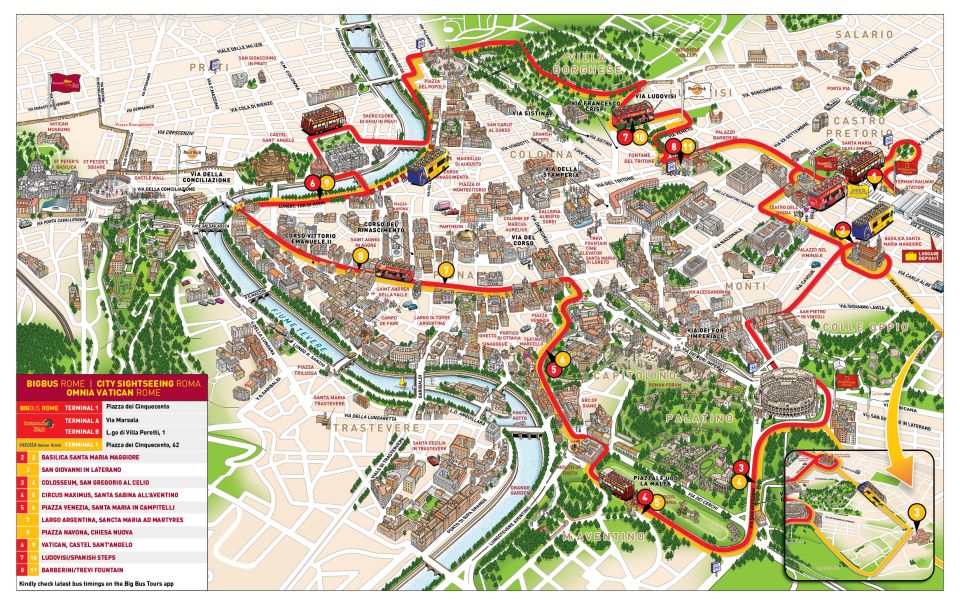
From Civitavecchia, you get moved into central Rome, close to Piazza Navona and Stop 6 on the Big Bus route (the Vatican side). That location matters because you’re not wasting shore time crossing the city just to get to a “real” stop.
This tour is listed as 7.5 hours total. Practically, you get about 4 hours exploring Rome at your own pace, then you head back toward your meeting point and return to the port area.
In This Review
- Key things to know before you go
- From Civitavecchia Port to Via Lungotevere Marzio: your transfer day plan
- Validating your voucher and finding the right bus stop
- Using your Big Bus time wisely in Rome (about 4 hours)
- Colosseum to Vatican area: how to plan the stops you actually want
- The ancient core: Colosseum, Roman Forum, Circus Maximus
- Pantheon, Trevi, and Spanish Steps: the postcard trio
- A calmer option: Borghese Gardens from the bus route
- Getting back to your cruise: traffic and last-bus reality
- Price and value: is $33 a smart deal or a gamble?
- Who this Rome cruise shore day fits best (and who should skip it)
- Should you book this Rome hop-on hop-off with a cruise transfer?
- FAQ
- How long is the Rome hop-on hop-off tour?
- Does this include transportation from Civitavecchia port to Rome?
- Where in Rome does the shuttle drop you off?
- What languages are available on the audio guide?
- Is Wi-Fi available on the bus?
- Are food and drinks included?
- Is there free cancellation?
- Can I reserve and pay later?
- Is the tour wheelchair accessible?
Key things to know before you go
- Round-trip port-to-Rome transfer if you choose the shuttle option: designed for cruise days, not independent travel days.
- Central drop-off by Piazza Navona (Stop 6 Vatican area): easier start than showing up randomly to the bus network.
- 4 hours on your own with hop-on hop-off buses: you can match your plan to your energy level.
- Multilingual audio + free Wi-Fi and headphones onboard: helpful when lines are long and walking is tiring.
- Return timing depends on crowds and traffic: plan your last hop-offs with the comeback in mind.
From Civitavecchia Port to Via Lungotevere Marzio: your transfer day plan
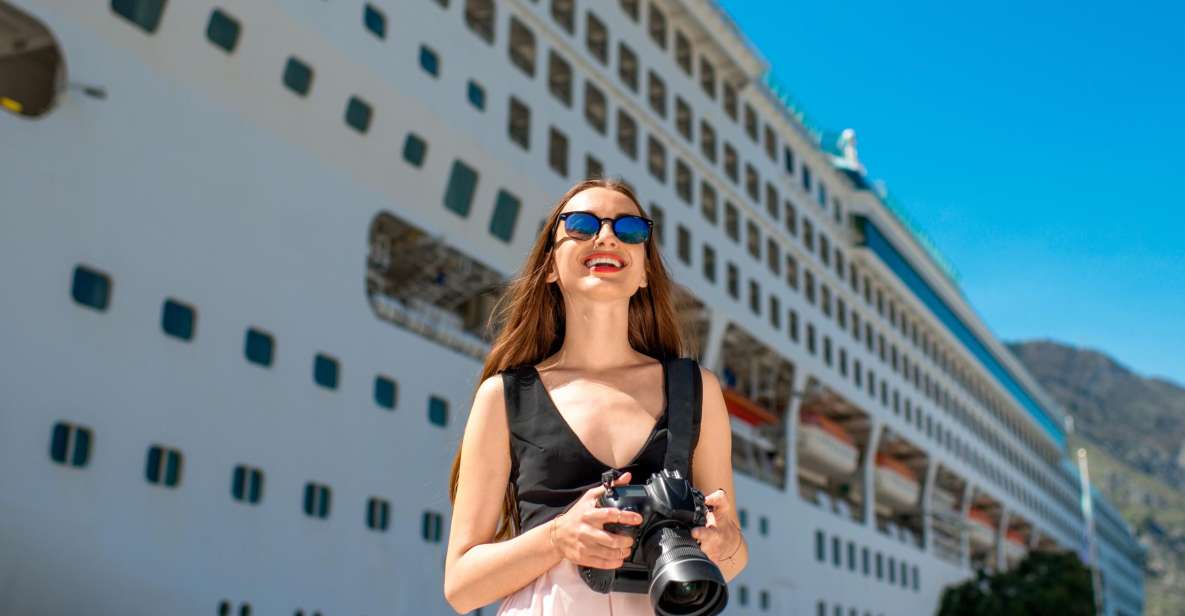
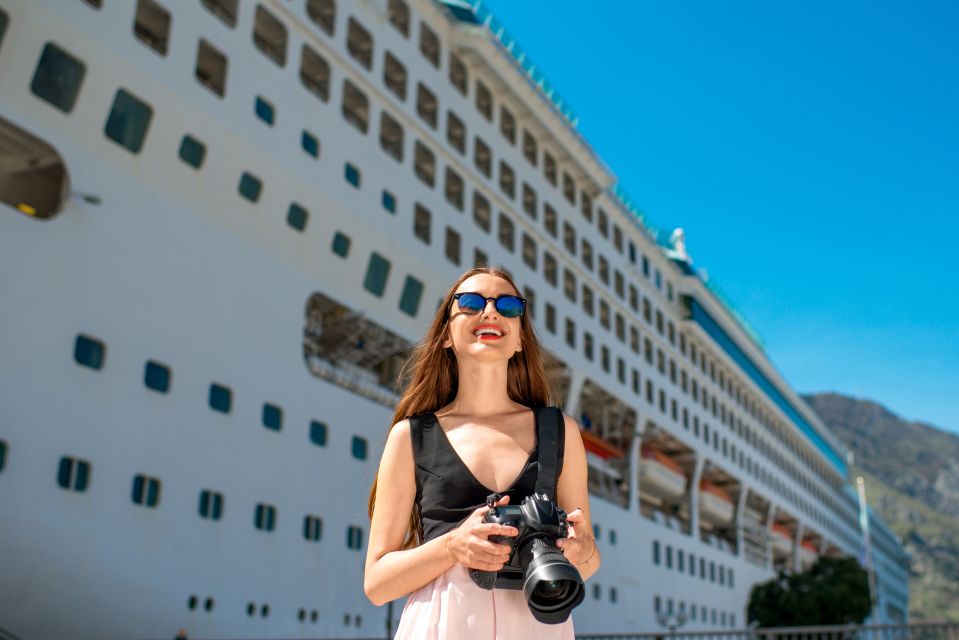
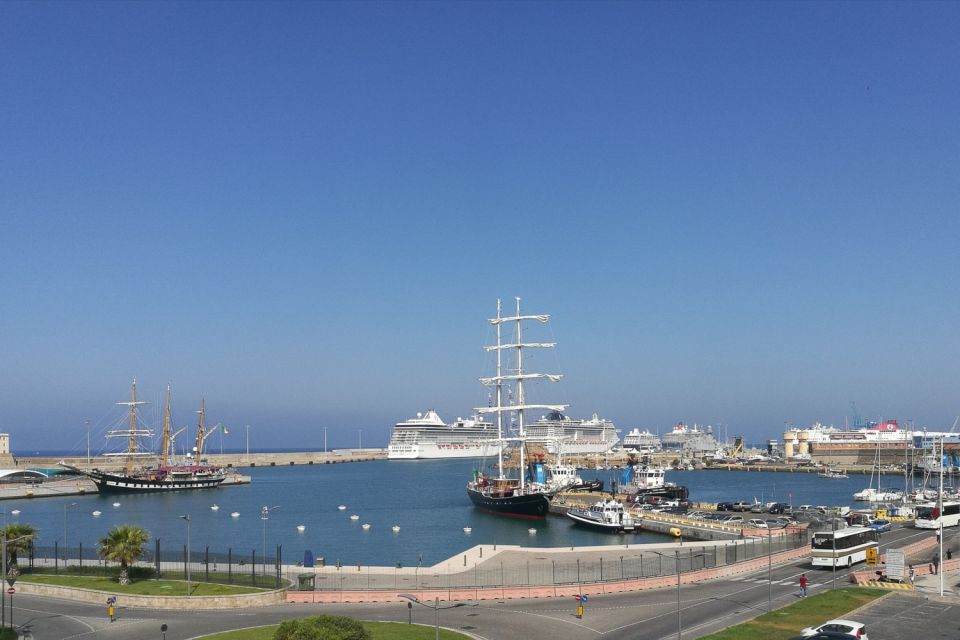
This works best if your main goal is “see a lot without stress.” The day starts at Civitavecchia Cruise Port, with a morning pick-up described for 9:15 AM. If you opt for the included Rome shuttle, the morning check-in opens at 9:15 AM at Largo Della Pace.
There’s also a built-in support system at the port. You can use the free port shuttle that runs between the cruise ships and the Largo della Pace Cruise Welcome Center. That’s a small detail, but it helps a lot when you’re dealing with a busy gangway schedule and a tight harbor rhythm.
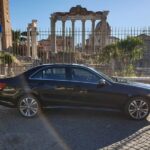
Once you’re on your way, you’ll be dropped in central Rome at Via Lungotevere Marzio Zanardelli. The key benefit here is proximity: it’s a short walk from Piazza Navona and connected to Stop 6 on the Big Bus route (Vatican side). In other words, you’re placed where you can build a sensible route without crossing the entire city first.
For the return, the plan is to head back after your Rome sightseeing window. The shuttle info you’re given suggests you should anticipate returning to the Cruise Welcome Center around 5:30 PM. Real talk: traffic and how quickly people find their way back can change the experience. So treat this as a day with a built-in schedule, not a totally free-floating one.
You can also read our reviews of more boat tours in Rome


Validating your voucher and finding the right bus stop
The ticket process is refreshingly straightforward: your ticket comes to life once you validate your online voucher. Do this early, and keep it accessible. On a cruise day, you don’t want to be hunting for a screenshot while the group moves.
Meeting points can vary depending on the option you book. The tour also states that it ends back at the meeting point, which matters because Rome timing can get chaotic. It’s not a “walk away and figure it out” style experience.
On the bus side, the sightseeing setup uses wheelchair-accessible buses. That’s a strong plus if mobility is an issue. One practical caveat: for the motor coach transfer from the port, a small number of steps are involved for boarding. So if you’re using a wheelchair, stroller, or mobility aid, you’ll want to be ready for that moment of transferring between vehicle types.
Also worth noting: open-top buses are weather-and-comfort dependent. If it’s sunny, you’ll want sun protection. If it’s windy, headphones and audio can be your best friend because you may not hear everything from the sidewalk.
One more reality check: Rome isn’t laid out for easy “back-to-the-bus” navigation. If you’re a strong walker and you like moving fast, you’ll love the independence. If you prefer wandering without looking at your watch, you’ll need discipline on the return.
Using your Big Bus time wisely in Rome (about 4 hours)
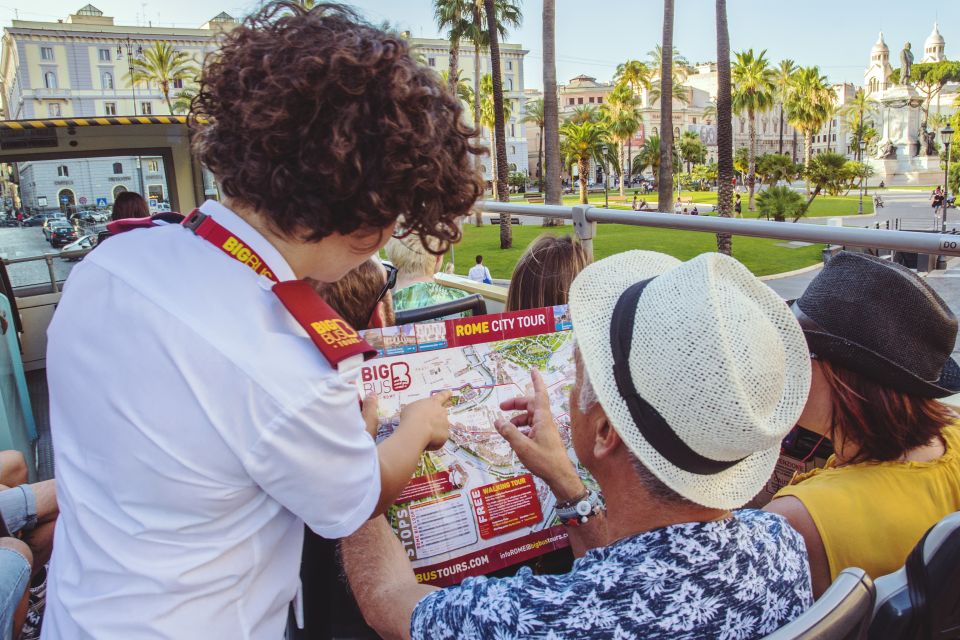
You get roughly 4 hours to explore Rome on your own after you arrive in the city. That’s a sweet spot for hop-on hop-off. It’s long enough to do several major sights, but short enough that you shouldn’t plan on museum-level depth unless you’re fine cutting things.
This is where I think the onboard setup pays off. The bus provides multilingual audio commentary (English, French, Spanish, German, Italian, Mandarin, and Brazilian Portuguese) and you can also use the free Wi-Fi and headphones onboard. That’s useful for two reasons:
- You get context while you’re riding, so you’re not just staring out the window.
- When you’re tired from walking, you still get value from the transit itself.
How I’d structure it with limited time:
- Pick a theme for the day: “ancient Rome first” or “classics and viewpoints first.”
- Choose 2 to 4 big stops max: hop-on hop-off is flexible, but every hop takes time.
- Start with the farthest sight you want, then work back toward your pick-up point.
Open-top buses are ideal for photos because you’re higher up and you get a constant stream of views. But photo stops can cost time if you get caught behind slow getting-on lines. Keep an eye on the bus schedule and don’t wait for the perfect shot if your comeback bus matters.
Colosseum to Vatican area: how to plan the stops you actually want
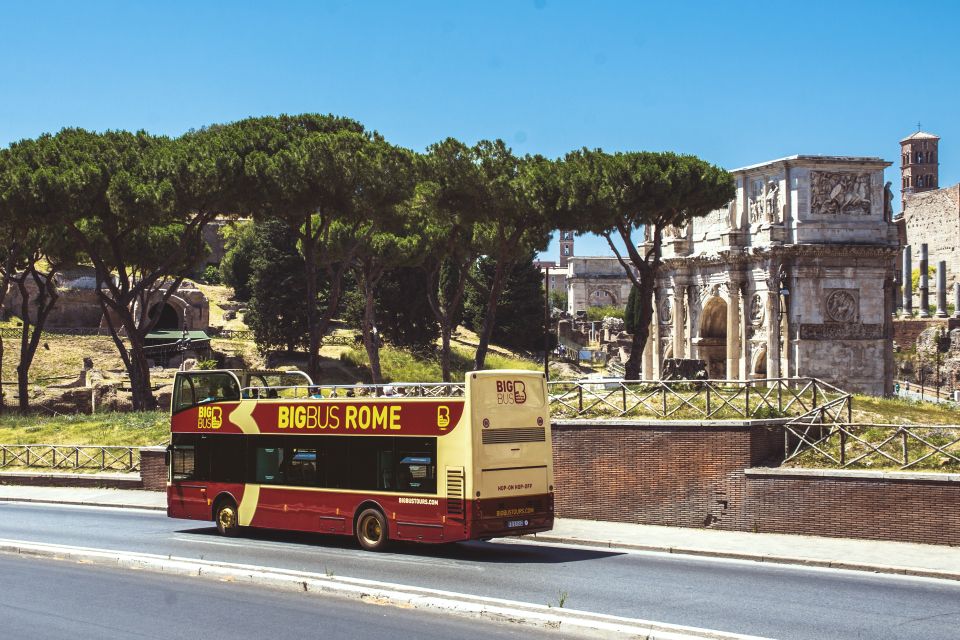
Rome is famous for overwhelming you with options. This bus helps because it puts the city’s most talked-about sights within reach—without forcing you into long, expensive taxi zigzags.
Here’s what you can realistically aim for in a 4-hour window, and what each stop is good for.
The ancient core: Colosseum, Roman Forum, Circus Maximus
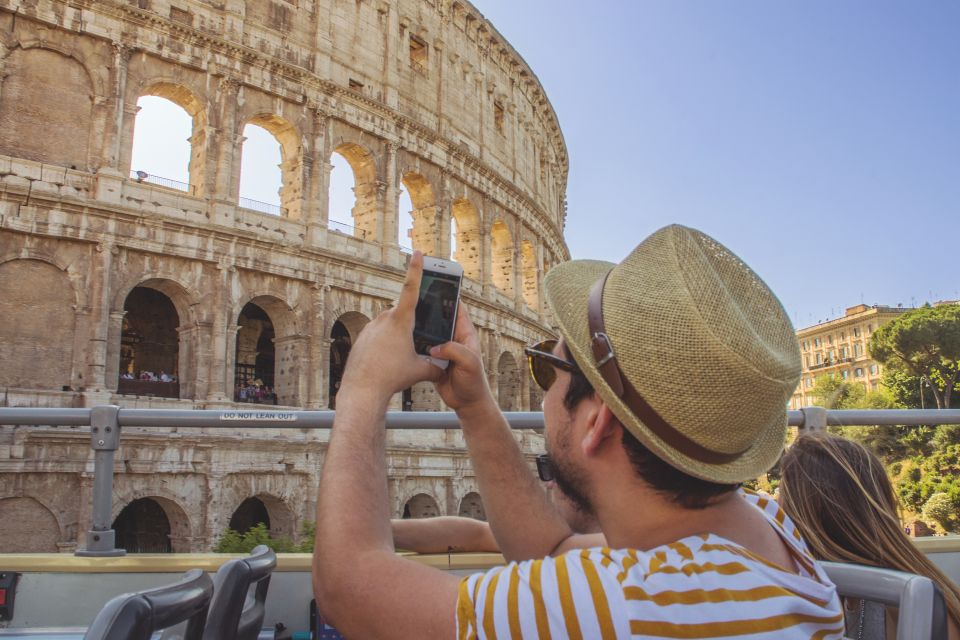
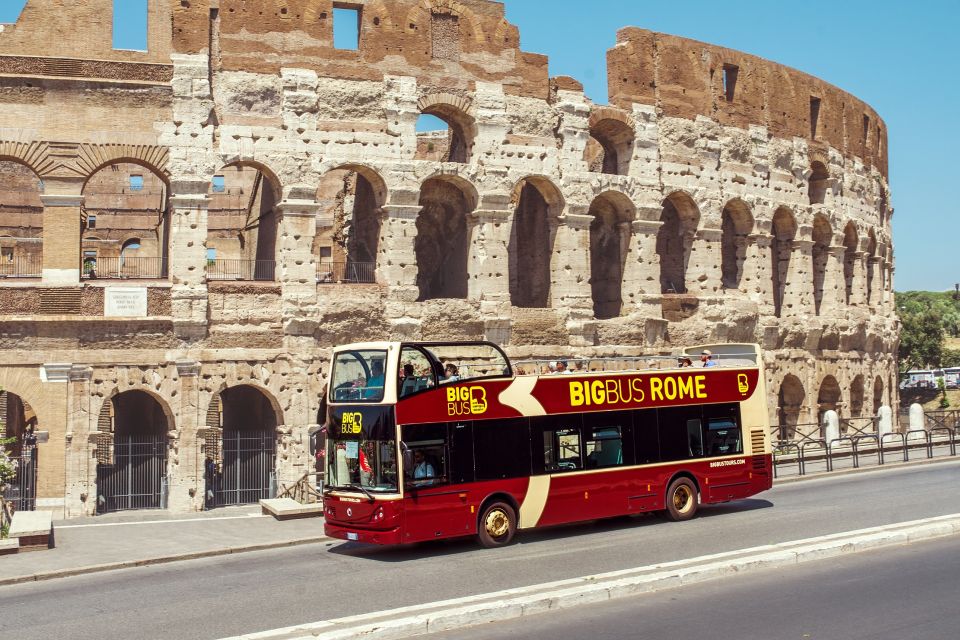
If you want the classic “wow” factor, jump off for the Colosseum. From there, the Roman Forum area is a logical next step. These are the stops where the audio commentary feels most rewarding, because you’re looking at ruins with a story attached—not just random stone.
Circus Maximus is another standout in the ancient sweep. Even if you don’t plan a long walk, the sightline and scale are often enough to make it memorable.
A practical tip: if you’re short on time, don’t try to sprint the entire complex. Use your hop window for the most iconic viewpoints first, then decide if you have energy for more.
You can also read our reviews of more tours and experiences in Rome



Pantheon, Trevi, and Spanish Steps: the postcard trio
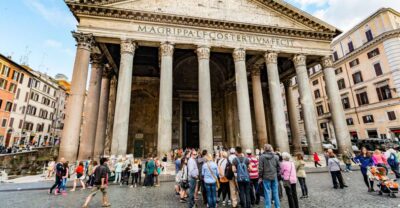
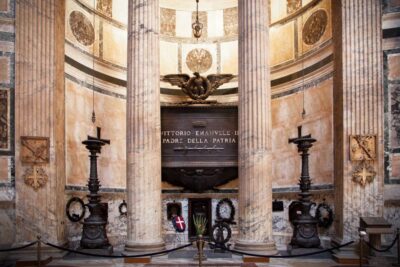
The Pantheon stop is a great choice if you want something impressive even from the outside or with a brief stop. It’s one of the easiest “yes” stops because the area is central and the atmosphere is very Roman.
Trevi Fountain is another high-impact stop—just be ready for crowds. The Spanish Steps are a good place to pause because you get a quick scenic break and people-watching time without committing to a long detour.
Time math matters here: moving between these stops can be quick by bus, but it’s slow on foot. If you hop off at one and then immediately hop off again, you’ll lose less time than if you try to wander widely between them.
A calmer option: Borghese Gardens from the bus route
Not every stop needs to be a “get off and walk for an hour” moment. Borghese Gardens is mentioned as a scenic ride option. I like this kind of stop when you want a visual reset—something green and open—without turning the day into a marathon.
If you’re traveling with kids or with anyone who gets worn out, the “ride-by scenery” part of the route can be a lifesaver.
Getting back to your cruise: traffic and last-bus reality
This is the part where I’m most practical. Rome can be slow. Traffic can stretch your day. The tour is built for cruise schedules, but that doesn’t mean you’re immune to congestion around central Rome.
Give yourself extra time for the return pickup. The bus you’re counting on might be late, or you might end up walking longer than you expected to get back to the stop. If you miss the bus you planned for, you may need to take a later one and that can bring you closer to the edge of your cruise return window.
To protect yourself:
- Plan your last hop-off stop earlier than you think you need.
- When you’re on the bus, watch for the next stop timing and don’t drift off-task.
- If you’re at all unsure, choose the next bus that comes rather than gambling that another one is right around the corner.
Also remember the tour ends back at the meeting point. That means your day has a finish line. Rome is fun enough to trick you into “just one more street.” This is the time to say no and go back.
Price and value: is $33 a smart deal or a gamble?
At $33 per person, you’re paying for a few things at once: the open-top Big Bus hop-on hop-off experience plus onboard audio/Wi-Fi, and (if selected) round-trip transfer service between Civitavecchia and central Rome.
What makes it feel like good value for the right traveler is that cruise shore time is expensive in its own way. Even if you only use the bus for a handful of stops, you’ve saved yourself from the math of:
- figuring out which stops are best,
- spending money on taxis for short legs,
- losing time hunting for the correct bus in a city where addresses can be confusing.
What isn’t included is also important: food and drinks aren’t part of the deal. Plan for a snack and water on your own, especially because the day can move quickly and walking plus heat can make hunger hit sooner than expected.
So is it a gamble? Not really—if you treat it like a timed cruise shore plan. It’s not the best fit if you want a slow, independent Rome day with long breaks and lots of off-the-map exploring. But if you want to see the big sights efficiently, it’s a solid way to spend your limited time.
Who this Rome cruise shore day fits best (and who should skip it)
I’d recommend this most for:
- First-timers who want iconic highlights without building a complex route.
- Cruise passengers who need a dependable structure.
- People who like learning while moving (because the audio guide is a built-in layer of meaning).
- Groups where not everyone has the same energy level, since hop-on hop-off helps you match pace.
It may be a poor fit if:
- You want long museum visits or deep guided tours. This is set up for short, decisive sightseeing.
- Your priority is offbeat neighborhoods and long walks. The bus stops are geared toward popular sights.
- You hate any schedule at all. This is a cruise-oriented plan with a defined rhythm.
If you go in with the right mindset—hit 2 to 4 major areas, see what you can, and return on time—you’ll get your money’s worth.
Should you book this Rome hop-on hop-off with a cruise transfer?
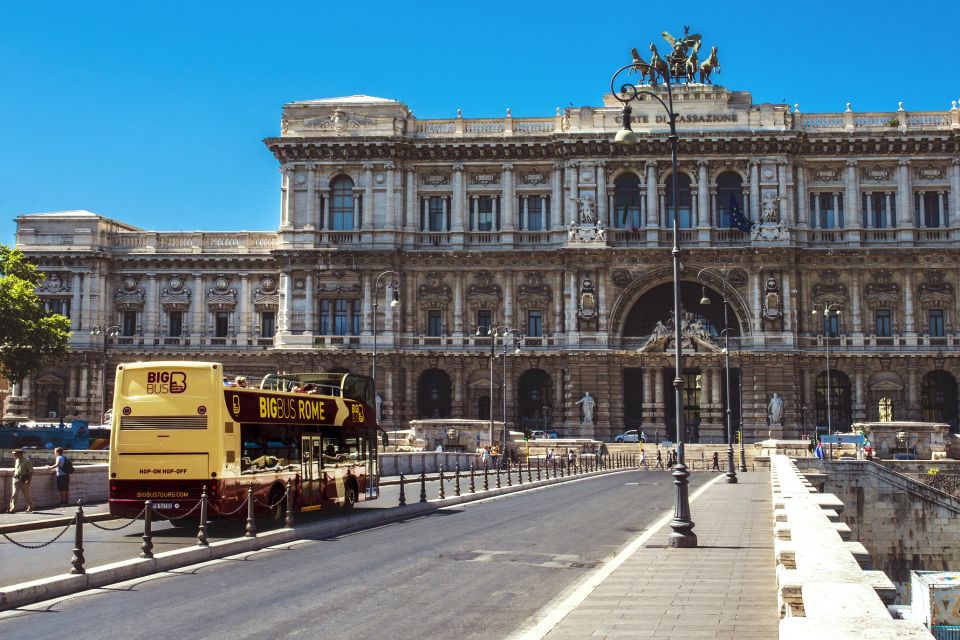
Book it if your cruise stop in Civitavecchia gives you limited hours and you want the easiest path to Rome’s most recognizable sights. The biggest wins are the port transfer and the way the Big Bus route gives you choice without decision fatigue. Add in multilingual audio plus free Wi-Fi/headphones, and the ride itself becomes useful.
Skip it or rethink it if you know you’ll need more time than the schedule allows, or if you’re the kind of traveler who plans to “maybe catch another sight if there’s time.” Rome can take that personally, especially on return routes.
If you do book, use a simple strategy: pick your main targets early, do fewer stops, and treat the return like the appointment it is. That’s how this day turns from hurried into satisfying.
FAQ
How long is the Rome hop-on hop-off tour?
The total experience is listed as 7.5 hours. You’ll spend about 4 hours exploring Rome at your own pace.
Does this include transportation from Civitavecchia port to Rome?
It includes a round-trip Civitavecchia port transfer only if you select the option that includes the Rome shuttle.
Where in Rome does the shuttle drop you off?
If you choose the included Rome shuttle, you’re dropped at Via Lungotevere Marzio Zanardelli, near Piazza Navona and Stop 6 on the Big Bus route.
What languages are available on the audio guide?
The audio guide is available in Spanish, Chinese, English, French, German, Italian, and Portuguese (Portuguese audio is also described as Brazilian Portuguese).
Is Wi-Fi available on the bus?
Yes. Onboard Wi-Fi is included with the sightseeing bus.
Are food and drinks included?
No. Food and drinks are not included.
Is there free cancellation?
Yes. Free cancellation is available up to 24 hours in advance for a full refund.
Can I reserve and pay later?
Yes. You can reserve now and pay later.
Is the tour wheelchair accessible?
The hop-on hop-off buses are wheelchair-accessible. For the motor coach transfer from the port, boarding involves a small number of steps.