Stepping away from the Colosseum and Vatican, the stories here get personal. This walking tour in central Rome trades postcard Rome for alleyway tales and shady surprises you won’t pick up on your own.
I especially like the way it connects modern streets to Ancient Rome as you go, so the city feels like one long timeline. I also love that the guide blends eerie topics—like executions tied to witches and heretics—with comedy and perspective, so it stays fun instead of grim.
One thing to consider: it’s a lot of walking and includes stops that aren’t a good fit if you have back issues or mobility limitations.
In This Review
- Key Highlights You’ll Actually Feel on the Walk
- Starting in Campo de’ Fiori: the walk begins with trouble
- Piazza del Biscione and Teatro of Pompey: small stops, big context
- Piazza Benedetto Cairoli and Piazza Mattei: the city turns cute, then complicated
- Jewish Ghetto and Portico d’Ottavia: history with boundaries and depth
- Theatre of Marcellus, then Tiber Island: where the ancient story gets physical
- Church of Santa Cecilia in Trastevere: the finish feels like a reward
- Price and time: $34 for 2.5 hours of guided storytelling
- What to expect from the stories: macabre, scandalous, funny
- Who should book this walking tour, and who should skip it
- Should you book Hidden Rome Walking Tour?
- FAQ
- FAQ
- Where does the tour start?
- Where does the tour end?
- How long is the tour?
- What languages is the tour offered in?
- What is included in the price?
- What should I bring?
- Is this tour suitable for wheelchair users?
- Is it suitable for people with back problems or mobility impairments?
- Can I cancel and get a full refund?
- Is there a reserve now, pay later option?
Key Highlights You’ll Actually Feel on the Walk
- Campo de’ Fiori to Trastevere: you move through Rome’s center and end in one of the best places for evening food
- A professional Irish storyteller + licensed guide: legends come with timing, not just facts
- Scandals with popes: hidden love affairs and controversial figures are part of the route’s storyline
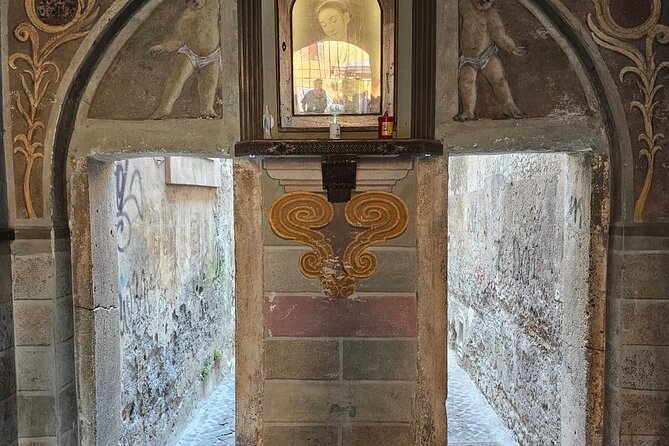
- Tight lanes and 2000-year-old alleys: the tour pushes you past the big roads into smaller spaces
- Ancient layers you can’t see from the street: you get pointed toward underground dwellings and an assassination attempt site
- Built-in “how not to get lost” tips: practical guidance helps with Rome’s street flow and crossing patterns
Starting in Campo de’ Fiori: the walk begins with trouble
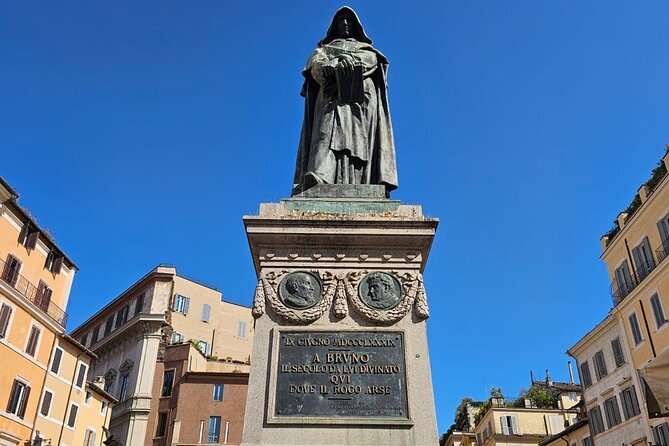
The tour starts at Campo de’ Fiori, in the middle of the piazza, right under the statue. From the very first minutes, you’re not treated like you’re shopping for highlights. You’re treated like you’re about to learn how Rome tells its secrets: through what happened here, what’s rumored here, and what people tried to hide here.
This is where the darker thread kicks in. You’ll hear about Rome’s execution site connected to witches and heretics—stories that explain why certain places in this city carry a chill even after the tourists move on. It’s the kind of storytelling that makes you look up at windows and shopfronts differently, because now you’re imagining the people who lived, argued, and feared there.
And the guide’s delivery matters. The overall tone is entertaining, with energy and humor that keeps the pace from dragging. If you like history that has a pulse, you’ll feel it right away.
You can also read our reviews of more walking tours in Rome

Piazza del Biscione and Teatro of Pompey: small stops, big context
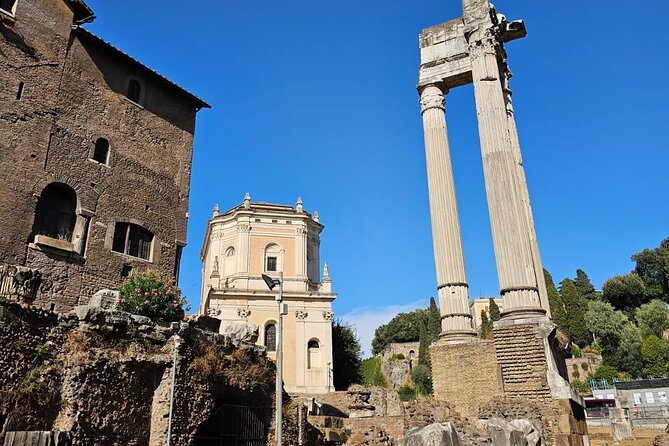
After Campo de’ Fiori, the route hops on foot through short segments that feel quick, but each one has a reason. You’ll stop at Piazza del Biscione and then move toward the Theatre of Pompey. These are brief stops, but they’re chosen to show you how Rome’s “major sites” are really part of a larger system.
At this point, the tour starts doing something smart: it guides you from the busy rhythms of modern Rome back into older logic. You’ll get explanations that connect architecture and street shapes to how people moved, gathered, performed, and plotted. Even if you’ve seen the big monuments already, this kind of orientation helps you understand what you’re looking at on future walks.
This is also one of the moments where the tour’s practicality shows up. In the reviews, people highlighted that the guide gave real tips for navigating Rome’s street traffic patterns—useful stuff like where you can realistically cross, how drivers behave, and how to avoid getting swept along without thinking. You don’t need panic; you need attention. The guide seems to know that, and it keeps you relaxed enough to enjoy the stories instead of just surviving the sidewalks.
Piazza Benedetto Cairoli and Piazza Mattei: the city turns cute, then complicated
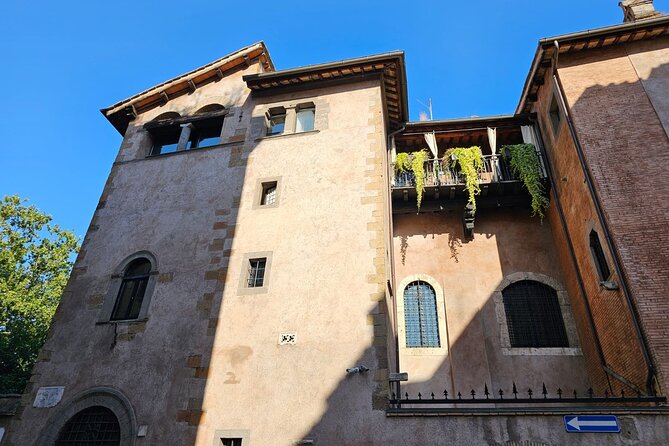
Next comes Piazza Benedetto Cairoli and Piazza Mattei. This is where Rome can look like it’s all charm—then the tour twists the focus back to people and power. The city is famous for beauty, but the guide keeps reminding you that Rome’s character comes from conflict as much as from art.
This is also where the pope scandal thread tends to come up—hidden love affairs and the controversial sides of famous religious leaders. The way it’s presented makes it easier to hold in your head, because you’re not memorizing names in a vacuum. You’re hearing the story while standing in a place that helped shape who had influence, who got protected, and who got punished.
If you’re the type who likes “why this matters” as much as “what happened,” you’ll enjoy how these short stops keep reinforcing the theme: Rome’s secrets aren’t only in museums. They’re in street corners, too.
Jewish Ghetto and Portico d’Ottavia: history with boundaries and depth
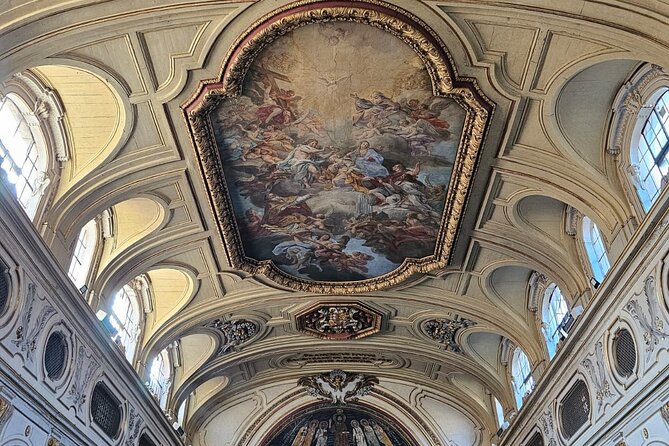
One of the best segments of the walk is through the Jewish Ghetto, Rome area and toward the Portico d’Ottavia. These stops matter because they show Rome as a city with real community boundaries—places where identity and survival shaped daily life.
You don’t just pass through. You get guided time to look, listen, and understand why this part of the city is remembered for more than one thing. The guide’s storytelling approach helps you connect the present streets to the idea of generations dealing with restrictions, risk, and resilience.
It’s also a good spot for slowing down. The tour is always on a path, but here it feels like it’s asking you to notice the subtle differences: the rhythm of the neighborhood, the way streets funnel movement, and how people would have experienced the area differently depending on who held power at the time.
Theatre of Marcellus, then Tiber Island: where the ancient story gets physical
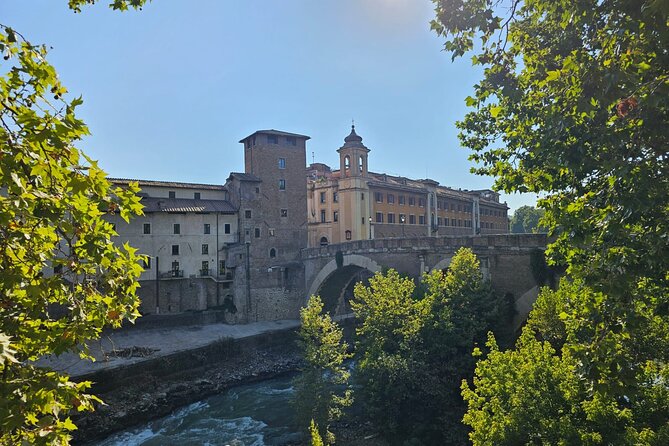
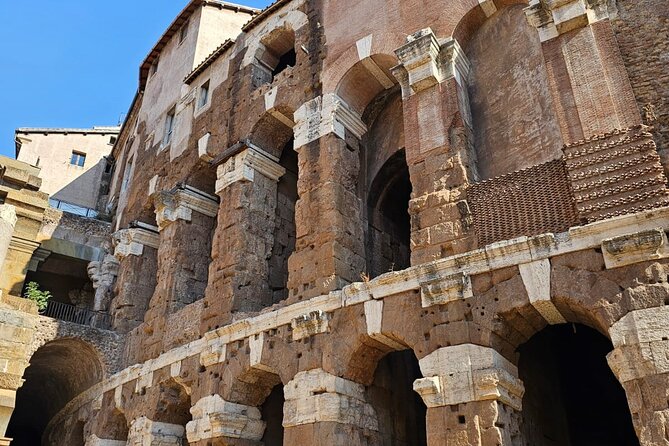
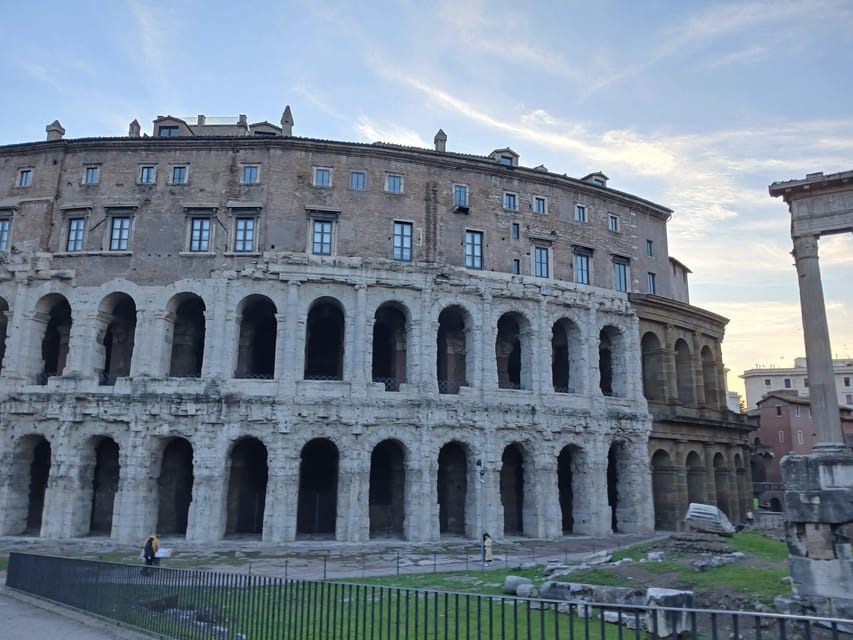
As you walk onward, you’ll reach the Theatre of Marcellus and then continue to Tiber Island. Now the “Ancient Rome to modern Rome and back again” promise becomes very tangible. You’re seeing how the city’s geography—river edges, bridges, gathering spots—still drives what people do today.
The Theatre of Marcellus stop is short, but theatres are never neutral places. Even without getting technical, you’ll get a sense of why these structures mattered: performances, crowds, political attention, and the kind of public visibility that could make someone a target. That’s a theme the tour returns to.
Then Tiber Island gives you a breather with a payoff. The river area helps you reset your bearings. When your feet are tired, a river view—or even just the change in scenery—makes it easier to keep enjoying the walking pace instead of counting minutes.






Church of Santa Cecilia in Trastevere: the finish feels like a reward
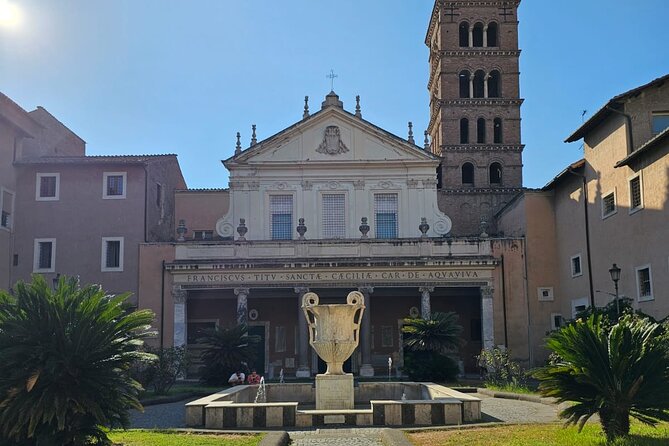
The tour ends at Basilica di Santa Cecilia in Trastevere, with a visit and guided time inside (about 20 minutes). This is a strong ending choice because it shifts the mood from scandal and shadow to atmosphere and presence.
You’ll learn as you go in, and because the tour includes entrance fees for visited attractions, you’re not stuck at the threshold. You get guided time rather than rushing through on your own. For me, this kind of finish is what separates a “walk and point” tour from a story tour: the route keeps building until you land somewhere you can actually sit with for a bit.
And Trastevere is a smart finish zone in practical terms. After the tour, you’re positioned near the kind of streets where you can head for a sunset panorama or just jump into the restaurant-and-evening-life energy.
Price and time: $34 for 2.5 hours of guided storytelling
At $34 per person for about 2.5 hours, this tour sits in a reasonable mid-range spot for central Rome. Where you get value is the mix: a professional guide plus a storyteller style approach, multiple stops with guided time, and entrance fees included.
You’re also getting a route that isn’t just “walk past famous things.” The itinerary uses short, frequent stops—fielding specific themes like papal scandals, executions, Jewish Ghetto history, and even talk connected to underground dwellings and an assassination attempt site. That’s the difference between paying for locations and paying for interpretation.
Still, you should know what the pace means for your body:
- It’s not a slow stroll through big squares only.
- The tour isn’t listed as suitable for people with back problems, mobility impairments, or wheelchair users.
- Comfortable shoes and water are not optional here.
If you’re a planner who likes efficient itineraries, this one fits well into a first or second day in Rome, when you want context fast.
What to expect from the stories: macabre, scandalous, funny
The tour description leans into macabre and scandalous topics, with heart-warming moments mixed in. That combination can work brilliantly, because it stops the stories from feeling like pure gloom.
You’ll hear about:
- an execution site tied to witches and heretics
- hidden love affairs of popes
- controversial figures and legends that shaped how Rome remembers itself
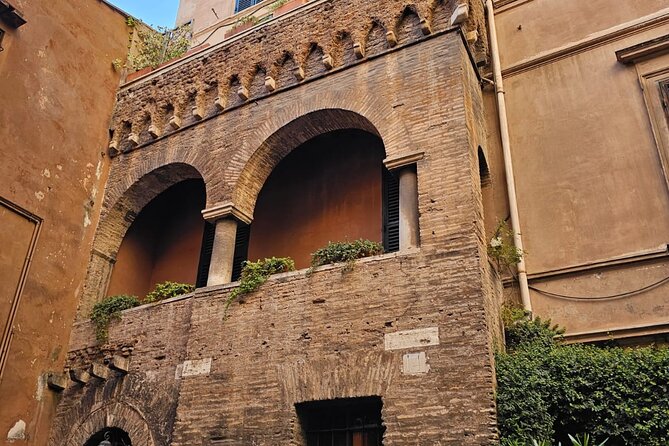
- 2000-year-old alleyways and side streets
- ancient underground dwellings and a site tied to an assassination attempt
The key is how it’s delivered: the guide’s storytelling style makes the material easier to follow. You’re not handed a lecture. You’re given a route with recurring themes so the facts stick without feeling like studying.
If you only want bright and clean tourist narratives, this might feel heavy in places. But if you want Rome to show its real contradictions, this is the right kind of tone.
Who should book this walking tour, and who should skip it
You’ll probably love it if:
- you enjoy walking tours with a strong narrative thread
- you like Rome as a living puzzle, not just a set of famous stops
- you want help with practical street navigation, especially around how cars and crossings behave
- you’re okay with the tour covering executions, assassinations, and scandals in a story format
You should skip or switch plans if:
- you have back problems or significant mobility issues
- you use a wheelchair
- you’re looking for a low-effort, minimal-walking experience
It’s also a good choice for couples and groups who want to get along. Stories help people focus together, and the tour seems built to keep attention from drifting.
Should you book Hidden Rome Walking Tour?
If your goal is to see Rome in a way that feels less like checklists and more like a guided conversation with the city, this tour makes sense. For $34, you get a professional guide, an English storytelling approach, multiple themed stops across the historical center, and a finish in Trastevere with a real site visit.
My main “don’t book unless” is physical comfort. The tour isn’t positioned for people with mobility or back issues. If you’re in good walking shape and you’re curious about the darker, scandalous side of Rome’s legends, it’s a solid value—and a good way to start understanding how this city thinks.
FAQ
FAQ
Where does the tour start?
The tour starts at Campo de’ Fiori, where you meet your guide in the middle of the piazza, right under the statue.
Where does the tour end?
The tour finishes at Basilica di Santa Cecilia in Trastevere.
How long is the tour?
The duration is about 2.5 hours.
What languages is the tour offered in?
The tour is offered in English.
What is included in the price?
Included are the walking tour, a professional guide, and entrance fees to the attractions visited.
What should I bring?
Bring comfortable shoes and water.
Is this tour suitable for wheelchair users?
No. It is listed as not suitable for wheelchair users.
Is it suitable for people with back problems or mobility impairments?
No. It is listed as not suitable for people with back problems, mobility impairments, or wheelchair users.
Can I cancel and get a full refund?
Yes. It offers free cancellation up to 24 hours in advance for a full refund.
Is there a reserve now, pay later option?
Yes. You can reserve now & pay later, keeping your plans flexible.