Old Rome has a darker sense of humor. This walking tour strings together ancient sites and story-first stops, from Campo de’ Fiori to Trastevere, with tales about controversial figures and macabre moments that are often funny. I also like the Trastevere finish, which sets you up for sunset views over the river or an easy shift into dinner plans. One practical catch: bottled water isn’t included, so plan for your own hydration on the 2 hours 30 minutes walk.
Logistics are simple. You get a mobile ticket, and the group stays small (maximum 30), led by a licensed guide. It also starts and ends in very walkable Rome zones, with the route close to public transportation if you want to bail early or rejoin later.
In This Review
- Key things I’d circle before you go
- Value and pricing: what $34.91 buys you
- Where the tour starts and where it puts you at the end
- The Campo de’ Fiori opening: Bruno’s statue and a market-square mood
- Passetto del Biscione and the Theatre of Pompey: Rome’s hidden connections
- Palazzo Santacroce Aldobrandini: ghost stories in a real neighborhood setting
- Small squares that carry big names: Cairoli and the Fountain of the Turtles
- Il Portico di Ottavia and Teatro di Marcello: ancient Rome before the Colosseum
- Pont Fabricius and Tiber Island: an ancient bridge and a healing legend
- Casa dei Mattei and Santa Cecilia: where the story tightens and the tour ends
- Tips that make the route feel smooth (and not exhausting)
- Who this tour is best for
- Should you book this Rome walking tour?
- FAQ
- How long is the Hidden Gems of Rome Walking Tour experience?
- What does it cost per person?
- What’s included in the tour price?
- Is bottled water included?
- Where do I meet the guide?
- Where does the tour end?
- How big is the group?
- What is the cancellation policy?
Key things I’d circle before you go
- A story-focused route that connects controversy, scandal, and eerie legends without feeling like a lecture
- Small group size (max 30) so you’re not swallowed by a crowd
- Free entry for most stops, with the paid/included entrance focused on Santa Cecilia in Trastevere
- An ending in Trastevere near food and evening life, plus a good spot to keep watching the river
- Ancient Rome in “between” spaces like passageways, bridges, and small squares, not only the big-ticket ruins
Value and pricing: what $34.91 buys you
At $34.91 per person for about 2 hours 30 minutes, the value isn’t in a stack of paid museum tickets. The value is in a licensed guide turning a chain of outdoor ruins and old street corners into a coherent story you can actually remember.
Most of the stops on this route are listed with free admission tickets, which means you’re paying primarily for direction and interpretation. That’s a good deal in Rome, where you can easily wander around and miss the connections that make the city feel alive.
You’ll also notice a sensible pacing choice: short stays at each stop (often around 10–15 minutes). That’s important because it lets you see a lot without losing your attention span, especially if you’re doing other big sights later in the day.
If you want an easy rule of thumb: book it if you like learning Rome through stories, names, and locations you might not find on your own.
You can also read our reviews of more walking tours in Rome

Where the tour starts and where it puts you at the end
The tour begins at Campo de’ Fiori (00186 Roma RM). That’s a convenient launch point because it’s a recognizable city square and a natural place to get your bearings before the walk turns into smaller streets and hidden-feeling corners.
You end at Basilica di Santa Cecilia in Trastevere, at Piazza di Santa Cecilia, 22, 00153 Roma RM. This ending matters more than it sounds. You’re done right where you can keep going without needing a transit plan. Trastevere is known for evening life and restaurants, and the tour is designed so the best part of the day can shift smoothly from history to dinner, or from a late walk to an early aperitivo.
The Campo de’ Fiori opening: Bruno’s statue and a market-square mood
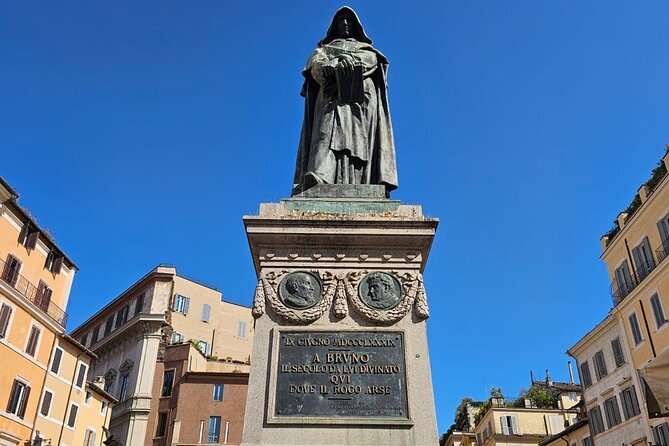
You start in Campo de’ Fiori, a famous square where the city’s daily life used to meet the drama of old Rome. The first stop includes the statue connected with Giordano Bruno, who is described as infamous. That’s a smart way to kick things off because it sets the tour’s tone: Rome isn’t just marble and legends. It’s also conflict, judgment, and people with consequences.
You’ll also get a quick “orientation win” here. Campo de’ Fiori helps you learn the flow of the area fast, so the rest of the route feels less like random wandering and more like following a line.
Possible consideration: since this is a well-known square, it can be busy. Try to keep your group flow steady, and don’t spend extra time stuck at photo angles right at the start.
Passetto del Biscione and the Theatre of Pompey: Rome’s hidden connections
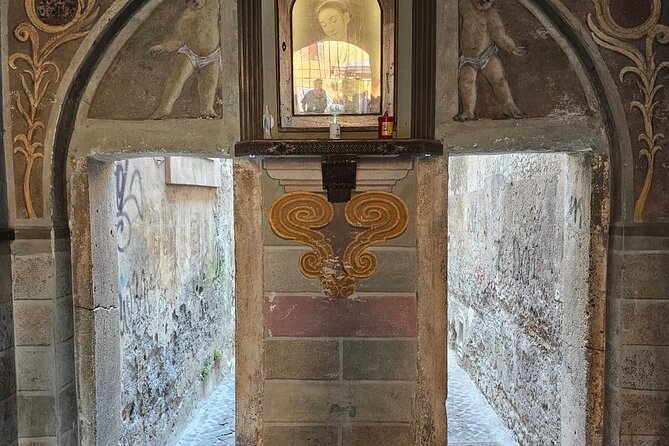
Next comes Passetto del Biscione, an ancient Roman passageway. Passageways are perfect for this kind of tour because they feel secret even when you’re standing in plain sight. It’s the type of place that makes you think about movement in old Rome, not just buildings.
Then you move to the Theatre of Pompey, built by Pompeo and marked here as the site of the assassination of Julius Caesar. That is the anchor moment where the tour’s “controversial figures” theme becomes undeniable. You’re not learning only about architecture; you’re learning about how power and violence played out in public spaces.
Short stop length here is also practical. The theatre story has weight, but you won’t be trapped for an hour. You’ll get the key context and then move on while the day still feels fun instead of heavy.
Palazzo Santacroce Aldobrandini: ghost stories in a real neighborhood setting
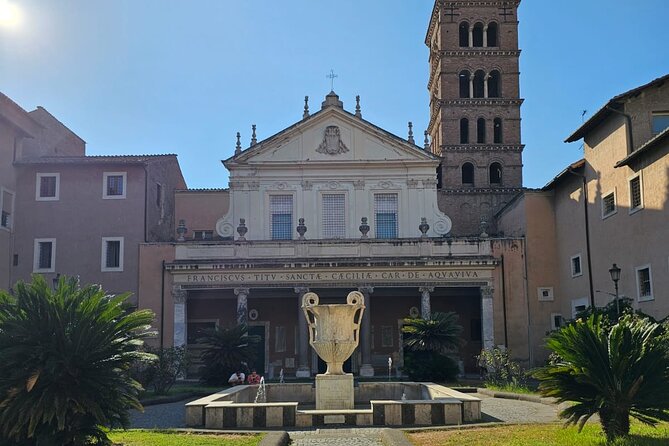
At Palazzo Santacroce Aldobrandini, the focus is on ghost stories. Even if you don’t consider yourself a “haunted history” person, this stop works because it shows how Rome uses old buildings for modern storytelling.
What I like about placing this kind of stop mid-tour is the emotional pacing. After the Caesar link and earlier dramatic themes, a “ghost story” angle keeps the mood varied. It also gives you something to talk about while you’re walking—so the route feels like a guided conversation rather than a list.
You’ll likely notice the tour doesn’t treat these sites like distant museum artifacts. It treats them like parts of the city that still sit in the middle of everyday routes.






Small squares that carry big names: Cairoli and the Fountain of the Turtles
Two quick stop changes stand out for me because they show how Rome keeps layering meaning on top of normal city life.
First is Piazza Benedetto Cairoli, described as a park dedicated to Benedetto Cairoli. Then you’ll be at Piazza Mattei, famous here for the Fountain of the Turtles. The turtles matter because they remind you Rome isn’t only solemn. It has public art that’s a little strange, playful, and strangely memorable.
If you’re doing other major ruins later, these squares can act like mental reset buttons. You get a quick break from heavy architectural detail, while still learning something tied to a named place.
Il Portico di Ottavia and Teatro di Marcello: ancient Rome before the Colosseum
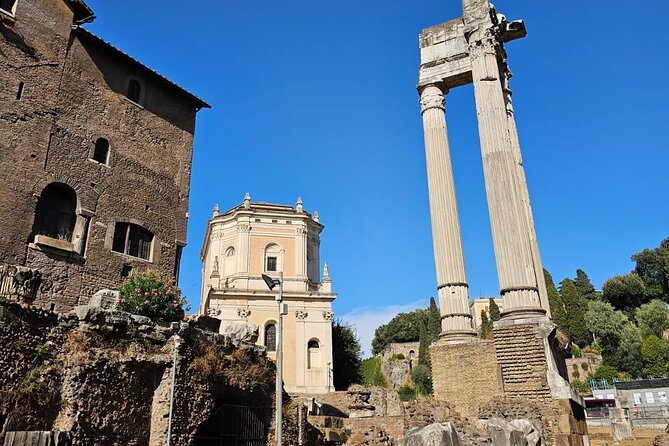
Next you’ll reach Il Portico Di Ottavia, listed as ancient Roman ruins. Porticoes and ruins like this help you understand Rome as an urban system, not just a set of famous landmarks. You see structures that once guided daily movement and social life, then you’re back outside again in a few minutes.
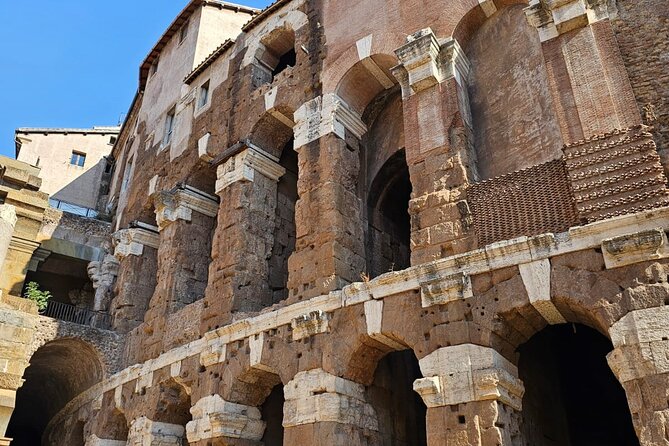
Then comes Teatro di Marcello, an ancient Roman semi-circular theatre that’s noted as predating the Colosseum. That detail is useful. It gives you a timeline anchor so your brain starts organizing the city by “who came before what,” instead of treating every ruin like it’s the same era.
This also tends to be a favorite stop for people who enjoy structure and form. The semi-circular shape is visually satisfying even without going into a deep lecture.
Pont Fabricius and Tiber Island: an ancient bridge and a healing legend
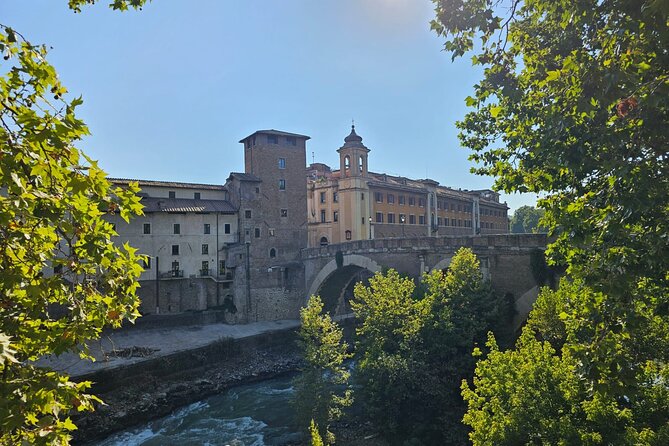
The tour crosses through Pont Fabricius, an ancient Roman bridge. Bridges are great storytelling locations because they connect two sides and force you to think about movement and trade. Even if you’re not studying engineering, you can feel why this would matter in the past.
Then you’ll go to Tiber Island, an island in the middle of the Tiber. Here, the tour connects it with ancient legends of healing. That’s a powerful thematic turn because it shifts the focus from politics and violence back toward human needs: health, recovery, and hope.
Possible consideration: river areas can be windy and cool later in the day, and the ground can be uneven. Comfortable shoes help more than good intentions.
Casa dei Mattei and Santa Cecilia: where the story tightens and the tour ends
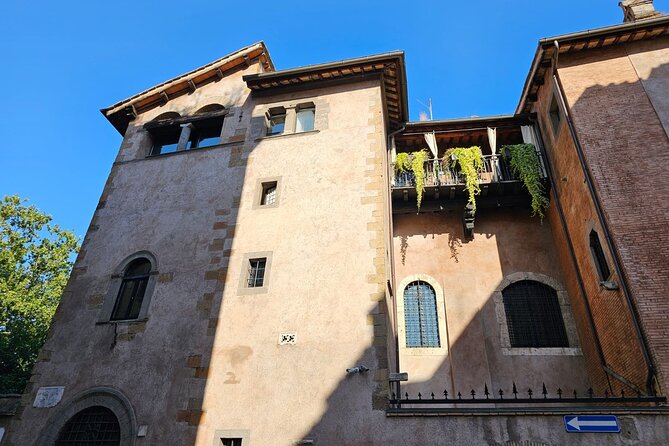
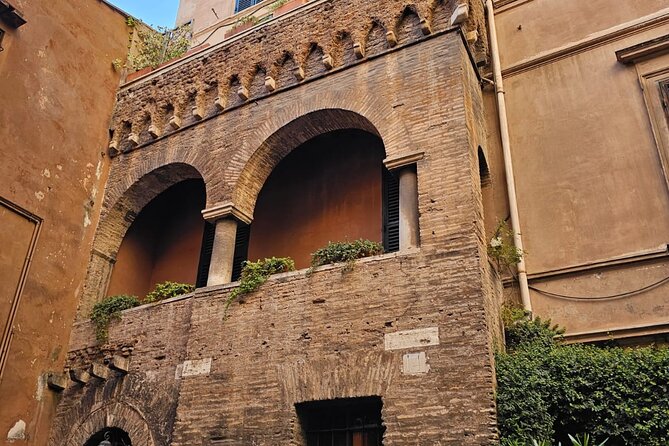
Casa dei Mattei is the next stop, described as the historical house of the Mattei family. This is a nice change of pace because it’s more personal than a major civic ruin. Houses carry a sense of private life, and the name-driven stop suggests you’re learning how families lived alongside the bigger story of Rome.
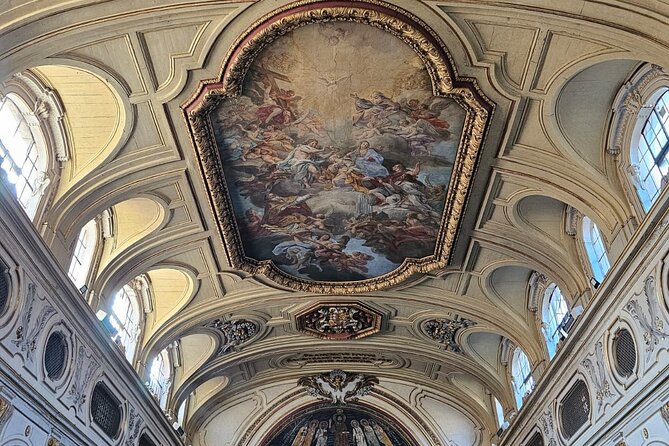
The tour ends at Santa Cecilia in Trastevere, a basilica dedicated to Saint Cecilia that contains the tomb of Cecilia. Entrance is included here, so you’re not only standing outside. This is your final payoff stop, and it lands in Trastevere’s evening zone where you can decide how long you want to keep the night going.
I also like that the tour isn’t trying to force a perfect “museum finish.” Instead, it finishes with an actual place of worship and a convenient launch pad for dinner or a river walk for sunset views.
Tips that make the route feel smooth (and not exhausting)
- Wear real walking shoes. You’re on an urban route with older stone surfaces and constant turns.
- Bring water even though bottled water isn’t included.
- Use your phone smartly. The tour uses a mobile ticket, so keep it available in your screen, not buried in a camera roll.
- Plan your timing around other sights. This is a 2.5-hour block that works best when you’re not rushing straight into a second long museum visit.
- Expect short stops. That’s the design: 10–15 minutes keeps the day moving and helps you remember names and links.
Who this tour is best for
I’d point you toward this tour if you want Rome through people and incidents, not only through big monuments. It’s especially good if you like the idea of “old Rome” as a mix of controversy, fear, humor, and everyday city corners.
It also fits well for first-timers who have already seen the headline sites (like the Colosseum and Vatican) and want something that feels more local and slightly off the beaten path.
It may feel less ideal if you’re looking for long time inside major indoor sites or a heavy museum-style experience. This tour is about street-level history and story connections.
Should you book this Rome walking tour?
Book it if you want a guided walk where the payoff is understanding the city’s characters and consequences, and you like the idea of ending in Trastevere with options for dinner and a river sunset. The price makes sense because it includes a licensed guide and the Santa Cecilia entry, while most other stops are free—so you’re paying for interpretation, not a pile of ticket fees.
I’d skip it only if you strongly prefer long indoor museum time or you hate walking between scattered locations. For most people, though, this is an efficient, memorable way to see Rome as more than postcard ruins: more street, more story, more connection.
FAQ
How long is the Hidden Gems of Rome Walking Tour experience?
The tour lasts about 2 hours 30 minutes.
What does it cost per person?
The price is $34.91 per person.
What’s included in the tour price?
You get a licensed guide, entrance fees are included, and you’ll also have a mobile ticket. Entrance is included at Santa Cecilia in Trastevere.
Is bottled water included?
No. Bottled water is not included.
Where do I meet the guide?
The meeting point is Campo de’ Fiori, 00186 Roma RM, Italy.
Where does the tour end?
The tour ends at Basilica di Santa Cecilia in Trastevere, Piazza di Santa Cecilia, 22, 00153 Roma RM, Italy.
How big is the group?
The tour has a maximum of 30 travelers.
What is the cancellation policy?
You can cancel for a full refund up to 24 hours in advance of the experience’s start time. Changes within 24 hours of the start time aren’t accepted, and cut-off times use local time.