REVIEW · ROME
Ghosts Legends and Mysteries of Rome Walking Tour
Book on Viator →Operated by What About Tours · Bookable on Viator
Rome gets darker after 8 pm. This short night walking tour threads iconic Tiber landmarks with real legends and grim mysteries—built for people who want atmosphere fast. You’ll be led by a licensed guide in English, and you’ll see how Rome’s past turns spooky with every street corner.
I especially like the mix of major sights and specific, name-based stories. I also like that the whole thing is short—about 1 hour 30 minutes—so you can fit it into an evening without blowing your schedule.
One thing to consider: this is storytelling, not a horror show with jump scares. Because it’s also tip-based, plan for a gratuity at the end rather than treating the listed price as the full cost.
In This Review
- Key things to know before you go
- Castel Sant’Angelo at 8:00 pm: the perfect opening mood
- Ponte Sant’Angelo: where angels guard the crossing
- Via Paola: a street story about executions and reputation
- Arco dei Banchi: haunted arch and a controversial exorcist
- Largo Ottavio Tassoni 319: Benvenuto Cellini’s genius and cruelty
- Vicolo della Moretta: Giulia Tofana and stories of Inquisition-era fear
- Via di Monserrato and Corte Savella: executions inside prison walls
- Via Giulia: the calm street between the grim stops
- Santa Maria dell’Orazione e Morte: skulls, bones, and a confraternity mission
- Fontana del Mascherone: the mask, the water, and the kidnapping crime scene
- Campo de’ Fiori: from market square to execution memory
- Price, tips, and what $3.63 really means in Rome
- How the guide style can change your experience
- Is it scary? A honest match between the title and the experience
- Should you book Ghosts, Legends and Mysteries of Rome?
- FAQ
- What time does the tour start, and where does it end?
- How long is the Ghosts Legends and Mysteries of Rome walking tour?
- Is the tour offered in English?
- What’s included in the price?
- Do I need to pay tips, and how does that work?
- Is it appropriate for children?
- Can I cancel if my plans change?
Key things to know before you go
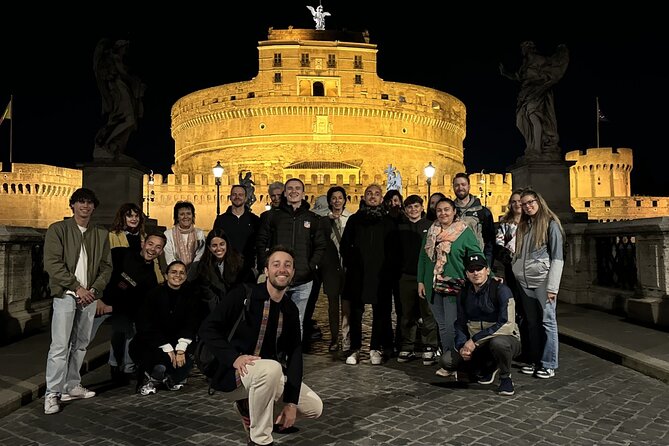
- Short, purposeful route: About 90 minutes from Castel Sant’Angelo to Campo de’ Fiori.
- Licensed English guides: The tour is offered in English with a professional, licensed guide.
- Legends tied to real landmarks: Expect names, institutions, and locations you can recognize during daylight too.
- Not a paranormal hunt: It’s urban legends and ghost stories, told on the street, not an investigation.
- Dark material: Includes graphic information and CSA topics; not recommended for children under 12.
- Tip-based format: Tips aren’t included, and guides work for tips alone.
Castel Sant’Angelo at 8:00 pm: the perfect opening mood
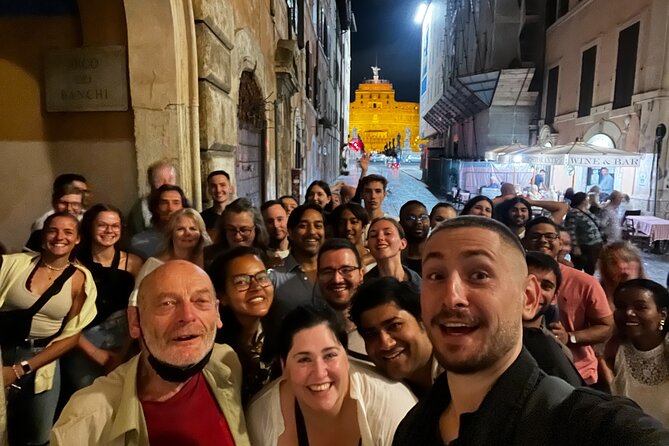
The tour starts at Lungotevere Castello, 50, and you’ll begin at 8:00 pm, when the Tiber area feels calmer and the city’s noise drops just enough to let stories land. The meeting place is practical too—you’re near main roads along the river, so you can get there with public transport and then just follow your guide’s lead.
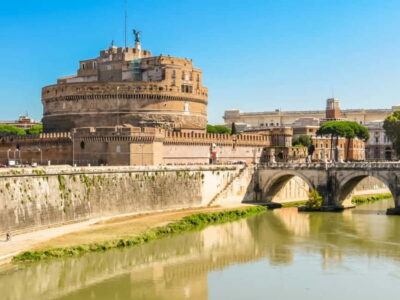
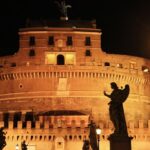
Your first major stop is Castel Sant’Angelo, a landmark that has worn many jobs over time: an emperor’s mausoleum, then a fortress, then a papal residence, and later a prison. Even if you’ve only seen pictures, the silhouette is unmistakable—the big cylindrical tower by the river, the sense of permanence that comes from its walls.
At night, the rooftop Archangel Michael statue becomes a visual anchor. The guide’s tales use that location as more than scenery: it’s presented as a place that shifted roles—from empire to power to confinement. That shift matters, because it explains why the stories around the building feel like they belong to Rome, not to some generic haunted theme park.
Practical tip: wear shoes that handle cobblestones and uneven pavement. This is a walking tour, and you’ll be on your feet for the whole stretch.
You can also read our reviews of more walking tours in Rome

Ponte Sant’Angelo: where angels guard the crossing
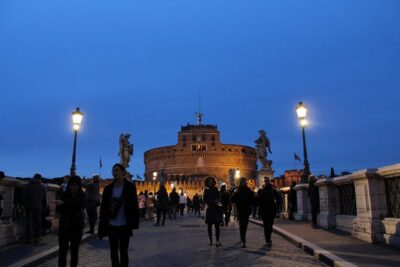
After Castel Sant’Angelo, you move to Ponte Sant’Angelo, the bridge that feels like it connects two states of mind. In daylight, it’s a gorgeous photo stop. At night, it turns eerie fast because of scale, shadow, and the way people’s attention naturally pulls toward the statues.
This bridge is famous for ten angel figures carved by Bernini and his students. Each angel carries symbols tied to Christ’s suffering. The guide frames those details as part of the bridge’s “between worlds” vibe—angels standing sentinel as souls cross toward what comes next.
You’ll notice how the tour uses art as storytelling. Instead of asking you to imagine ghosts, it asks you to look closer at the symbols already carved into stone. That’s a big part of the tour’s charm: it’s spooky because Rome already built the mood into its monuments.
Time-wise, this is a short stop, about ten minutes, so don’t expect a long museum-style pause. Do expect a quick, focused explanation—then move on before the night gets too cold.
Via Paola: a street story about executions and reputation
Next comes Via Paola, where the tour’s theme turns toward the way Rome handled punishment and authority. You’ll hear about the house of the kindest executioner in Rome—an idea that sounds almost like a contradiction until the guide connects it to how people coped with fear, order, and public morality.
This is the kind of stop that works well on a night walk because it’s based on a nearby address and a small slice of lore. You’re not just hearing that history was dark. You’re hearing that certain people and roles had reputations so specific they became part of the local storytelling.
The caution here is about expectations. If you’re hunting for chilling supernatural moments, this leg might feel more like grim legend mixed with real-world crime and punishment. That doesn’t make it less interesting—it just changes the flavor.
Arco dei Banchi: haunted arch and a controversial exorcist
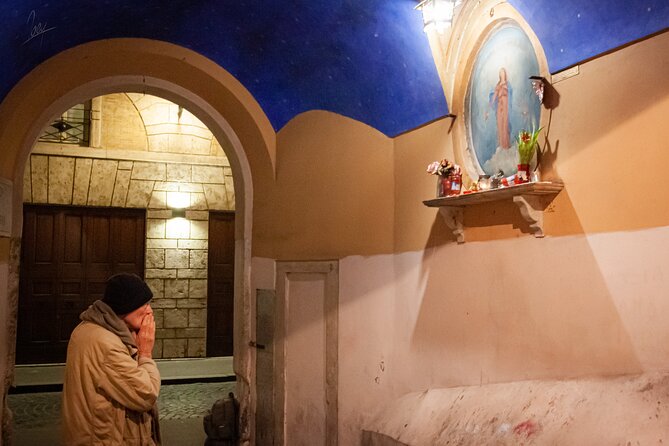
Then you’ll reach the Arco Dei Banchi, described as a haunted arch and also as a place of prayer for one of Rome’s most controversial exorcists. It’s a clever stop because it ties two ideas together: architecture as stage, and religion as response when people couldn’t explain what they saw.
Even if you don’t feel religious yourself, it’s hard not to appreciate the psychology here. Rome’s stories often reflect a world where the unseen had serious consequences. When the guide mentions exorcism and prayer connected to this site, the tone shifts from “old legend” to “old belief systems that shaped real behavior.”
This is a very quick stop—about five minutes—so if you like details, stand where you can hear clearly and stay just a step or two closer to the guide.
Largo Ottavio Tassoni 319: Benvenuto Cellini’s genius and cruelty
A few minutes later, you’re at Largo Ottavio Tassoni, 319, tied to Benvenuto Cellini, a 16th-century artistic genius. The stories do not sugarcoat him: he’s mentioned as someone notorious as a rapist and murderer.
This stop is part of why the tour earns its title. “Mysteries of Rome” here doesn’t mean secret treasure. It means complicated people, and a city that still carries the evidence of violence inside its streetscape.
It can be uncomfortable, and the guide keeps it grounded in the real-world context of who Cellini was and how fame can coexist with harm. If you’re someone who wants your evening entertainment clean and light, this is not that.
But if you want the Rome you see in biographies, court records, and local lore—the Rome where artistry and brutality sometimes share a name—you’ll appreciate why they include Cellini here.






Vicolo della Moretta: Giulia Tofana and stories of Inquisition-era fear
At Vicolo della Moretta, the tour turns toward the haunted house of the witch Giulia Tofana, plus stories involving the holy inquisition. This leg leans into the kind of folklore that spreads when rumor becomes survival: poison myths, secret societies, fear of hidden enemies.
One reason this works on foot is the setting. Narrow lanes change your sense of time. Even in a group, the street can feel private, like you’re hearing gossip that belongs only to the block.
Also, this is where the tour’s “dark” label becomes real. The material is described as including graphic information, and it is also not recommended for children under 12. If you’re bringing a teen, check your own comfort level with grim subjects and insist on a tone-matching conversation with the guide before you join.
Via di Monserrato and Corte Savella: executions inside prison walls
Then comes Via di Monserrato, tied to Corte Savella, described as the only prison in Rome authorized to execute convicts inside its walls. Here, the story centers on Beatrice Cenci, including her torture before execution.
This stop matters because it shifts the tour’s scale from individual legend to institutional power. You start to see the pattern: Rome didn’t just tell stories about punishment—Rome built the system into its physical spaces.
This is also a quick stop, around five minutes, so don’t expect a full explanation of the broader case. Expect a sharp, memorable outline that helps the next stops make sense, especially the religious and burial themes later in the walk.
Via Giulia: the calm street between the grim stops
After the darker institutions and names, you’ll walk along Via Giulia, designed by Bramante in the early 16th century for Pope Julius II. The guide frames the street as a quiet-elegant artery of aristocratic life, lined with Renaissance palaces and hidden courtyards.
This is not a random “pretty street” break. It’s a palette cleanser. You get to see how Rome can look composed and elegant while still carrying stories of fear and punishment nearby.
Even if you’re focused on the ghost side, Via Giulia helps you understand the contrast that makes Rome feel so layered at night. You don’t just get gloom; you get the sense that the city’s beauty and its violence share the same blocks.
Quick practical move: keep your eyes up. The street looks best when you notice the facades and the rhythm of the buildings, not just when you stare at the ground.
Santa Maria dell’Orazione e Morte: skulls, bones, and a confraternity mission
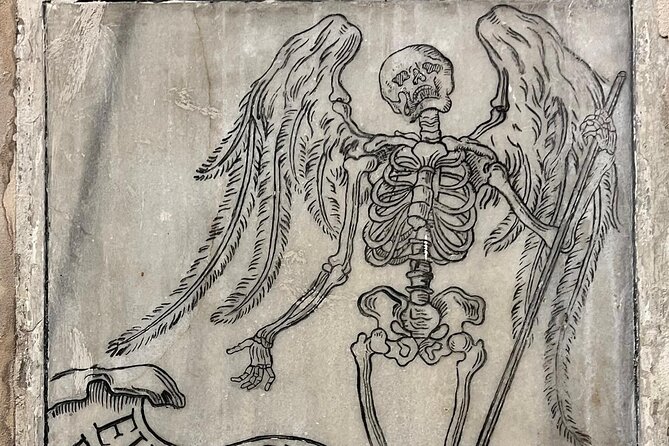
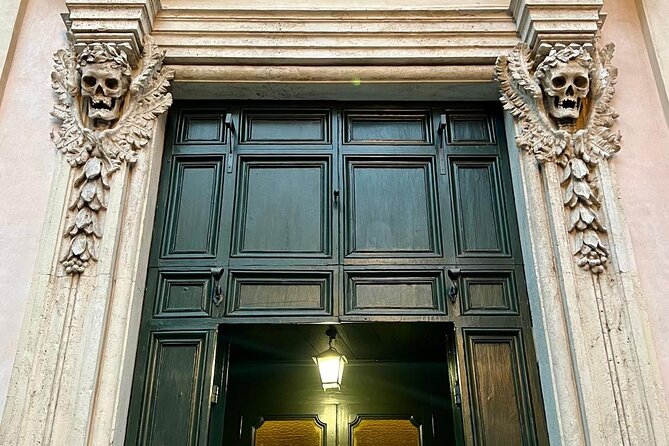
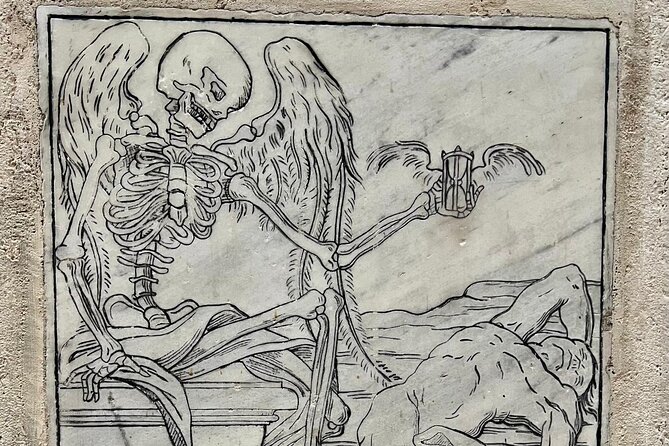
One of the most chilling stops is Chiesa di Santa Maria dell’Orazione e Morte, a Baroque church built by a confraternity dedicated to retrieving and burying abandoned corpses. The guide describes a shadowed interior with skulls, bones, and symbols of death.
This is the point where the tour’s content stops being metaphor. It gets physical and symbolic: the church turns mourning and burial into a visual language you can feel.
Again, this ties back to why the tour isn’t meant as a haunted house. It’s not about pretending. It’s about showing you how places of faith and service can also contain mortality reminders—because death was part of daily life, not a Hollywood twist.
Fontana del Mascherone: the mask, the water, and the kidnapping crime scene
Next, you’ll see the Fontana del Mascherone, a Baroque fountain on Via Giulia with a massive stone mask that spouts water. It sounds almost goofy at first—until the guide adds the grim detail: it’s presented as the crime scene where John Paul Getty III was kidnapped.
This is one of those stops that makes your brain stop “thinking ancient Rome only.” You realize the stories aren’t locked in the past. The same streets that hold legends also hold modern crimes.
That contrast is why the fountain lands so well at night: the mask looks fixed and unsettling, while the story gives it a real-world edge. You’ll also see why people remember this stop afterward. It’s memorable, not just spooky.
Campo de’ Fiori: from market square to execution memory
The tour ends at P.za Campo de’ Fiori. By day, this square is known for a market. By night, it becomes a lively hangout zone with bars and restaurants and a different crowd energy.
But the guide’s framing keeps it from becoming just another dinner spot. You’ll hear about Giordano Bruno’s statue, and the fact that the square connects to execution during the Inquisition.
This ending location is a smart move: you finish in a place with excellent transit links and taxi stands, so your night doesn’t require a long walk back across town.
Practical tip: plan your next step. Campo de’ Fiori is convenient, but it’s also easy to lose track of time with food and conversation. If you’re catching a late show or heading to another neighborhood, decide your exit plan before the tour ends.
Price, tips, and what $3.63 really means in Rome
The posted price is $3.63 per person, and the structure is tip-based: tips are not included, and guides work for tips alone. That combo can feel strange at first, because the ticket price looks like a bargain that barely covers anything.
Here’s how to think about it in practical terms: the “deal” comes from the company using a low upfront booking cost, while your end-of-tour tip is where the guide’s pay comes from. So if you do this tour, go in with a tip budget in mind. It’s part of the etiquette of the format.
Also, a tip-based model can affect how long and how carefully guides refine delivery. A guide who feels supported tends to tell better stories, keep the group together, and adapt to noise and street conditions. The tour’s content is built on storytelling, so your guide’s pace and clarity matter more than on a museum tour.
Finally: check your own tolerance level. Some people find the stories more like historical anecdotes than truly ghostly moments. If you expect cinematic terror, you might feel underwhelmed. If you want dark legends with real place names, you’ll likely find it worth it—especially for the low posted price.
How the guide style can change your experience
One of the most useful things you can do as a potential booker is to know what you want from the guide’s storytelling style.
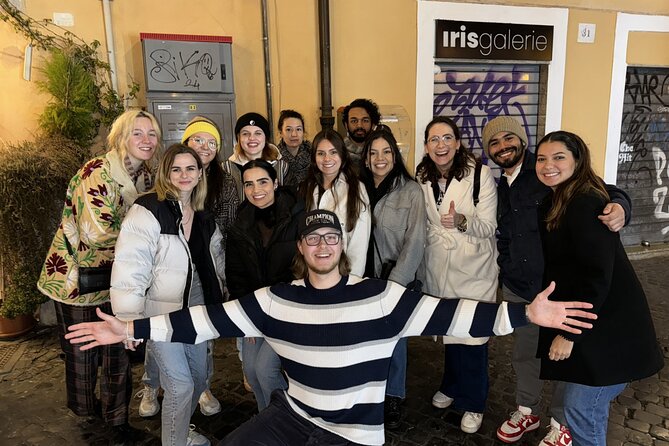
This tour is led by licensed professionals, and the guide’s English delivery is part of the deal. I’ve seen examples of guides like Ivan being enthusiastic and clear when pointing out where events happened, and Simone being jolly, witty, and well-prepared. There are also mentions of guides using photos to help you picture earlier times.
On the flip side, if you’re sensitive to audio issues, keep this in mind: street noise plus fast pacing can make a story harder to follow. Your best move is simple—stay close enough to hear, especially during the quick, five- to ten-minute stops.
If it’s raining hard, you’ll still be walking. One review example mentions heavy rain and umbrellas, which is a reminder to bring a rain layer even in warm seasons.
Is it scary? A honest match between the title and the experience
The title promises ghosts, legends, and mysteries. What you actually get is more grounded than a paranormal TV pitch.
This walk leans into:
- urban legends tied to real addresses,
- moral and religious history connected to execution, punishment, and burial,
- and the eerie mood you naturally get when you see stone symbols and dark stories at night.
So if you want jump scares, staged effects, or a paranormal investigation, you’ll probably feel like something’s missing. If you want an evening walk where history turns into campfire-style dread—without pretending to prove anything supernatural—you’ll likely enjoy the vibe.
The “darkness” here is not just spooky. It’s sometimes graphic, and the tour data explicitly says it includes CSA topics and graphic information. It also says it’s not recommended for children under 12. Keep that in mind when choosing whether it fits your group.
Should you book Ghosts, Legends and Mysteries of Rome?
Book it if:
- you want a short evening that still feels like a real Rome experience,
- you like legends tied to specific landmarks rather than vague “haunted Rome” talk,
- you enjoy stories that mix religion, crime, and the way cities remember.
Skip it (or at least think twice) if:
- you want a fully scary haunted attraction with actors or paranormal theatrics,
- you dislike graphic or disturbing historical material,
- you need kid-friendly content (it’s not recommended under 12).
If your goal is an atmospheric night walk with licensed storytelling and a route that ends in a convenient place for dinner, this is an easy pick—especially at the low posted price—just make sure you plan for tips and choose the kind of “spooky” you actually want.
FAQ
What time does the tour start, and where does it end?
It starts at 8:00 pm. The tour ends in Campo de’ Fiori (P.za Campo de’ Fiori).
How long is the Ghosts Legends and Mysteries of Rome walking tour?
It runs about 1 hour 30 minutes.
Is the tour offered in English?
Yes, the tour is offered in English. A mobile ticket is also provided.
What’s included in the price?
The tour includes a licensed guide, a walking tour, haunted places, and urban legends and ghost stories. Tips are not included.
Do I need to pay tips, and how does that work?
Tips are not included because it’s a tip-based tour, and the guide works for tips alone.
Is it appropriate for children?
The tour includes CSA topics and graphic information, and it is not recommended for children under 12.
Can I cancel if my plans change?
Yes. Free cancellation is available up to 24 hours before the start time for a full refund.