REVIEW · ROME
Exclusive ROME – Golf Cart City Tour with Italian Gelato
Book on Viator →Operated by Travel in Rome · Bookable on Viator
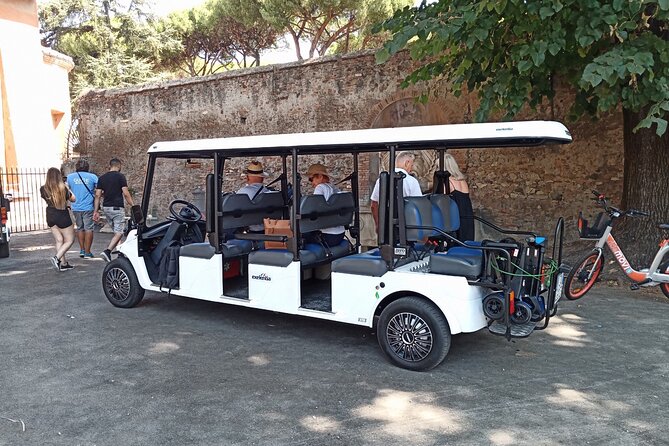
Rome is best when you slow down. This open-air golf cart tour strings together the big sights with far less squinting, plus Wi‑Fi so you can upload photos while you roll.
I love the small group size—a cap of 14 people—and the fact that hotel pickup and drop-off removes the stress of lining up transport. I also like the practical touches: bottled water on hot days (half-liter) and even fleece blankets when it’s chilly.
One thing to consider: the Colosseum and Pantheon are outside-only, and entry tickets aren’t included. If you want interiors, you’ll still need to budget for separate ticket plans.
In This Review
- Highlights You’ll Actually Notice
- Rome by Golf Cart: Why This Style Works
- Price and Value: What $167.01 Covers (and What It Doesn’t)
- The 3-Hour Rhythm: How the Tour Fits a Busy Day
- Quirinale Palace: Power, Shape, and the Loggia of Benedictions
- Trajan’s Market and the Imperial Forums: Administrative Rome
- Roman Forum and Via Sacra: Where Rome Made Decisions
- Via Veneto: The Street Behind the Myth
- Colosseum Exterior: Fast, Focused, and Ticket-Free
- Spanish Steps and the Trinità dei Monti Stairs
- Terrazza del Pincio: Views Over Piazza del Popolo and St. Peter’s
- Piazza del Popolo: The Northern Gateway and Flaminian Obelisk
- Campo Marzio: Luxury Streets with Ancient Layers
- Pantheon Area Outside Only: Still Worth It
- Piazza di Pietra and the Column of Marcus Aurelius
- Trevi Fountain: The Moment Everyone Wants to See
- Santa Maria Maggiore: A Different Kind of Grand Finale
- Gelato Included: The Sweet Stop That Makes It Feel Roman
- Should You Book This Rome Golf Cart Tour?
- FAQ
- How long is the Rome golf cart city tour?
- Is hotel pickup and drop-off included?
- Is Wi-Fi included during the tour?
- What about the gelato—does it really come with the tour?
- Is bottled water included?
- Does the tour include admission to the Colosseum and the Pantheon?
- Does the tour visit the Colosseum and Pantheon interiors?
- What group size should I expect?
Highlights You’ll Actually Notice
- Open-air views without bus-window neck strain
- Wi‑Fi on board for real-time photo uploads (and less roaming stress)
- Gelato included as part of the tour, not a random add-on
- 14-person limit for quieter conversation and more personal guiding
- Seasonal comfort extras: water in heat, fleece in cooler weather
- Outside-only key monuments that trade ticket lines for quick, efficient sightseeing
Rome by Golf Cart: Why This Style Works
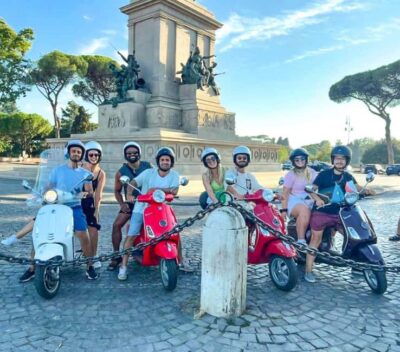
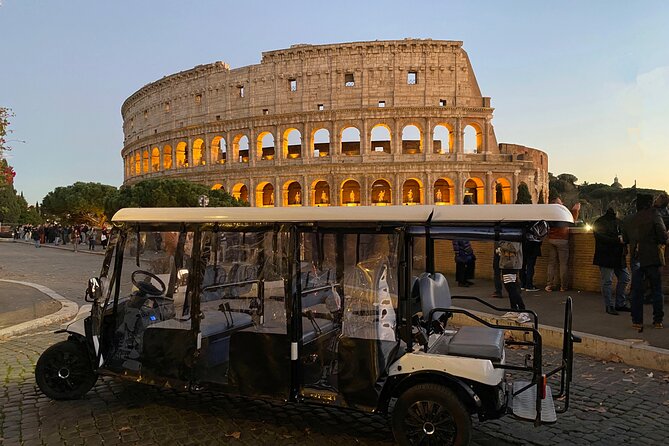
A golf cart tour makes sense in Rome because you’re moving through neighborhoods, viewpoints, and street grids—not sitting parked on one long route. The open-air design is a big deal. Instead of trying to angle your phone through glass, you can actually see the façades, domes, and bell towers as they appear.
The other win is group size. With a maximum of 14 people, the tour doesn’t feel like a conveyor belt. You’re able to ask questions, get quick context at each stop, and still have time to take photos without constantly stepping aside for a crowd.
And yes, the gelato matters. When it’s baked into the tour, you’re not hunting for dessert when you’re already tired. The experience naturally builds in that Roman rhythm: look, learn, snack, keep going.
You can also read our reviews of more city tours in Rome


Price and Value: What $167.01 Covers (and What It Doesn’t)
At $167.01 per person for about 3 hours, you’re paying mostly for logistics and access to the city’s “greatest hits” without losing half a day to transit. Hotel pickup and drop-off are included, and that alone can save time and energy compared with figuring out meeting points in Rome.
You’re also getting on-board Wi‑Fi and bottled water on hot days, plus seasonal blankets when temperatures drop. Those extras sound small until you’re doing real walking in Rome heat or battling a cool evening breeze.
What’s not included is where you should plan ahead:
- Colosseum tickets (not included; ticket pricing starts around €40)
- Pantheon tickets (not included; ticket cost €7)
So the value math is simple: if you’re happy with outside views of Colosseum and Pantheon, this tour is efficient. If you want interiors, treat those stops as bonus sightseeing while you keep ticket plans separate.
The 3-Hour Rhythm: How the Tour Fits a Busy Day
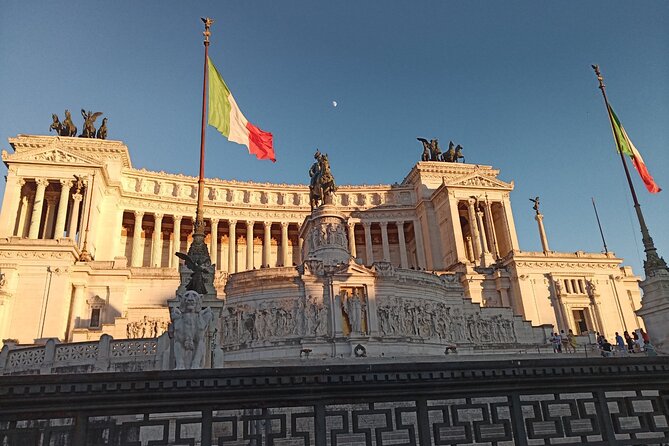
This is designed to be a “Roman orientation” tour. Think of it as a guided sampler that helps you understand where things are—so the rest of your trip feels easier.
Most stops are short, often around 10–20 minutes. That timing is intentional. You get enough time to look, frame photos, and absorb key context without getting trapped in long waits. You’ll then keep moving so you don’t spend your entire day at one site.
There’s also a smart practical element: the remainder of your schedule accounts for travel time between pickup and drop-off. In Rome, that matters. Waiting around for the next bus or tram connection can eat your day—this tour keeps the flow.
Quirinale Palace: Power, Shape, and the Loggia of Benedictions
Your first major stop is Palazzo del Quirinale, a massive palace complex tied to modern Italian state life. It’s described as the sixth largest building in the world, and it’s been the residence of Italian presidents since 1955.
What makes this stop worth your time is the architecture and the names you’ll hear. The design is attributed to Domenico Fontana, Carlo Maderno, and Gian Lorenzo Bernini, including the evocative Loggia delle Benedizioni. Even if you’re only seeing it from outside and stopping briefly, the guide framing helps you notice details you’d otherwise walk past.
Possible drawback: admission isn’t included, so you won’t be inside exploring rooms. If you’re the kind of person who needs interior access everywhere, you’ll want to add a separate palace visit later.
Trajan’s Market and the Imperial Forums: Administrative Rome
Next comes Mercati di Traiano – Museo dei Fori Imperiali, linked to Trajan’s Forum area. The site is described as a multifunctional center that supported administrative life in Trajan’s era, with judicial and legislative activities tied to the Forum.
Even in a short stop, the value is perspective. You’ll learn that this wasn’t only a place for spectacle. Ancient Rome also ran on paperwork, law, and administration, and the Forum complex reflects that reality.
Again, admission isn’t included. But short stops work here because the surrounding area gives you the “stage” for the story—stone, scale, and layout.





Roman Forum and Via Sacra: Where Rome Made Decisions
You then move into the Roman Forum itself, historically the center of political, religious, and commercial activity. You’ll hear about the valley setting between the Palatine and Capitoline Hill, and you’ll get pointed attention on major ruins and structures.
The tour focuses on what still reads clearly today:
- Temples such as the Temple of Saturn
- Basilicas such as Basilica of Maxentius
- Triumphal arches such as the Arch of Septimius Severus
- The Via Sacra, the main road that ran through the area and hosted celebrations
This part is especially useful if you’re trying to connect dots before you go deeper on your own. The Forum can feel like scattered stones if you don’t have a storyline. Here, you get that storyline in a way that fits into a half-day plan.
Via Veneto: The Street Behind the Myth
After the ancient core, the route shifts to Via Veneto, a famous central Rome street tied to the myth of the dolce vita era of the 1960s. It connects Piazza Barberini to Porta Pinciana near Villa Borghese, with luxury hotels and historic cafés shaping the feel of the street.
This stop is brief, but it plays a role. It reminds you Rome isn’t only ruins. It’s also culture, media, and the way modern Rome markets itself through iconic neighborhoods.
If you’re coming from big museums earlier in the day, this is a nice contrast. The Roman Forum area is about structure and power. Via Veneto is about atmosphere.
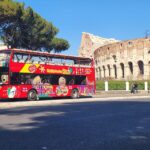
Colosseum Exterior: Fast, Focused, and Ticket-Free
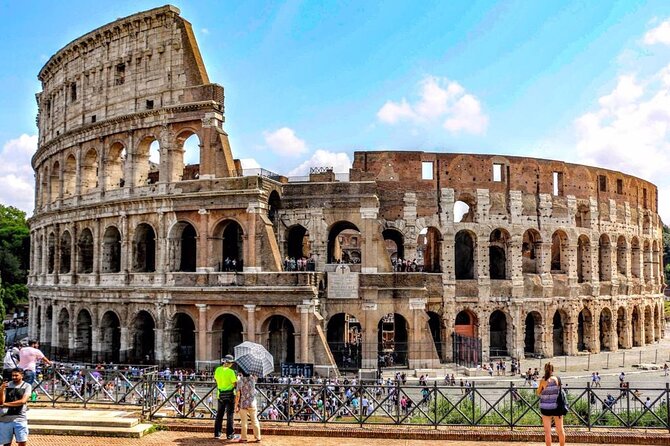
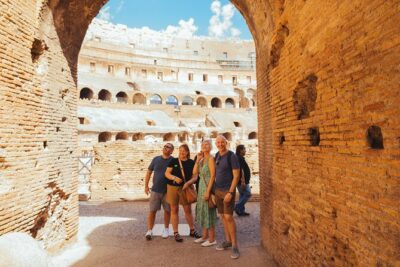
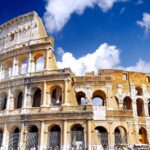
The tour’s Colosseum stop is outside only. You’ll spend about 30 minutes looking at the amphitheater and listening to the guide paint the scenes—especially the crowd energy behind gladiatorial contests.
Is it worth it? Often yes, because:
- You get major visual impact without dedicating hours to entry logistics
- You can keep your energy for later stops
- It acts as a highlight preview, especially if you might return for an interior visit
But here’s the trade-off: you won’t go inside. Colosseum entrance tickets are not included, and pricing starts around €40. If being inside the Colosseum is your top goal, you may want to pair this with a separate ticketed Colosseum experience.
Spanish Steps and the Trinità dei Monti Stairs
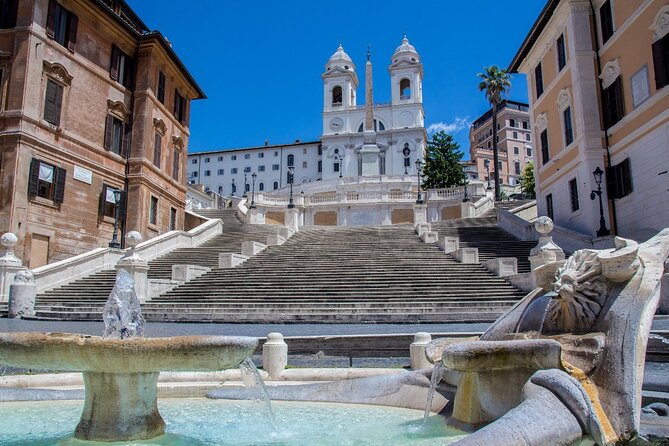
The tour then heads to the Spanish Steps, one of Rome’s most recognizable photo landmarks. You’ll have about 20 minutes here, enough time to enjoy the staircase view and snap pictures from multiple angles.
The context that helps: the steps are named after the historic presence of the Spanish embassy at the Holy See. Even if you’re familiar with the image, this detail gives the stop more meaning than just sightseeing.
Since the time here is limited, plan to focus on photos first and then linger. The area can get busy, and it’s better to get your key shots done early in the stop.
Terrazza del Pincio: Views Over Piazza del Popolo and St. Peter’s
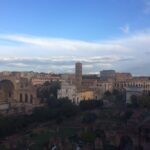
Next is Terrazza del Pincio, a panoramic terrace in Villa Borghese on the Pincio Hill. You get roughly 20 minutes, and it’s positioned for wide city views.
What’s useful here is what you can see at once: Piazza del Popolo and the historic center, including the dome of St. Peter’s. A terrace like this helps you understand Rome’s “shape.” After a viewpoint like this, street-level navigation feels easier.
This stop is free, so it’s a great value moment in your itinerary.
Piazza del Popolo: The Northern Gateway and Flaminian Obelisk
From the terrace, you head to Piazza del Popolo, Rome’s large northern gateway. You’ll spend about 10 minutes here.
The must-notice centerpiece is the Flaminian Obelisk, an Egyptian obelisk brought to Rome by Augustus and relocated in 1589 by Sixtus V. The guide context turns it into more than a photo object—it becomes a marker of how Rome absorbed and re-used older power symbols.
It’s also a key junction in the city. You’ll see how the square opens toward Via del Corso and connects with the Pincio steps.
Campo Marzio: Luxury Streets with Ancient Layers
Then comes Campo Marzio, an elegant, lively area tied to military exercises in ancient Rome and consecrated to the god Mars. During the Imperial Age, it held impressive monuments, including the Mausoleum of Augustus and Agrippa’s Pantheon.
In modern times, it’s a shopping and leisure hub, with luxury shopping, prestigious hotels, and recognizable sites nearby. You’ll have about 30 minutes, which is enough time to get a feel for the neighborhood rather than just rushing by it.
This section is one of those “you’ll thank yourself later” stops. It helps you decide where you might want to spend more time on a second day.
Pantheon Area Outside Only: Still Worth It
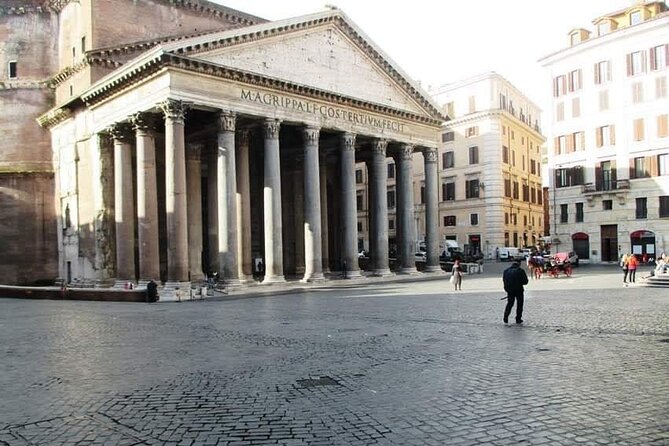
The tour includes a stop for the Pantheon, but it’s outside only. You’ll get about 20 minutes, and Pantheon entrance tickets aren’t included (ticket cost is €7).
Here’s the value of the exterior approach: you can focus on the overall massing and the famous form without being caught up in entry logistics. The guide info also helps you place it historically. The Pantheon was originally built by Marcus Vipsanius Agrippa between 27 and 25 BC, dedicated to worship of all the Olympian Gods.
If the Pantheon interior is a bucket-list priority, you’ll need a separate timed ticket. If your goal is to connect the monument to the rest of your Rome map, this stop does a lot in limited time.
Piazza di Pietra and the Column of Marcus Aurelius
In the Pantheon area zone, you’ll also see:
- The Temple of Hadrian, now known as Piazza di Pietra, where 11 Corinthian columns are visible and incorporated into a later structure
- The Column of Marcus Aurelius, about 100 Roman feet high (around 30 meters), built around 180 AD
The column stop comes with a specific story: bas-reliefs narrate Marcus Aurelius’s wars against the Germans (172–173 AD) and the Sarmatians (174–175 AD). That level of detail helps you look longer, not just snap and go.
These are short moments, but they give you “Rome reading skills.” After that, you’ll start noticing how monuments were designed to communicate power through image and text.
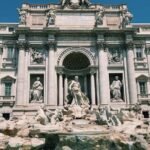
Trevi Fountain: The Moment Everyone Wants to See
Then it’s Trevi Fountain. You’ll have about 20 minutes and it’s free to view.
The context you’ll hear matters: the fountain began with the Acqua Vergine bringing water into the city, and the story includes a girl who showed the soldiers the source. Construction of the fountain as you know it began in 1732, and Clement XII inaugurated it in 1735.
Practical tip: this is a place where photos happen fast. You’ll do best if you choose your main photo angle right away, then use the remaining time to circle for calmer sight lines and better light.
Santa Maria Maggiore: A Different Kind of Grand Finale
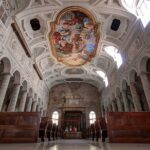
The tour ends at Basilica of Santa Maria Maggiore, one of Rome’s four papal basilicas. It’s noted as the basilica where Pope Francis is buried and as the only papal basilica that retained its early Christian structure intact, enriched by later additions.
This is a meaningful finish because it shifts you away from fountains and ruins. The stop also points to relics such as the Holy Cradle and the icon Salus Populi Romani.
If you’ve spent earlier parts of your trip in heavy archaeology mode, this is a refreshing change. If your trip is mostly “outdoors,” it adds an interior-focused sacred note—just remember the tour time here is part of the overall 3-hour flow.
Gelato Included: The Sweet Stop That Makes It Feel Roman
The tour includes artisanal Italian gelato for all participants. That’s not a small thing: a gelato stop during a short Rome tour keeps morale high and gives you an easy, shared moment that isn’t tied to tickets.
The best part is that the gelato isn’t treated like a random bonus. People on the tour seem to remember it as a highlight, and the guide recommendations tend to include where to go next for pizza and dinner—useful if you’re trying to plan the rest of your evening.
Should You Book This Rome Golf Cart Tour?
Book it if you want:
- A 3-hour Rome overview that hits major highlights without exhausting walking
- Outside-only viewing at Colosseum and Pantheon, paired with plenty of time for photos
- Hotel pickup, onboard Wi‑Fi, and comfort extras like water and fleece
- A guided experience where the best version feels personal, helped by a 14-person cap and guides who are praised for engaging storytelling (including guides named Samuel, Stefano, and Claudius)
Skip it or plan differently if:
- You need interior access at the Colosseum or Pantheon right now. Tickets aren’t included, and the tour time at those monuments is for the exterior
If you’re doing Rome for the first time and want the city to make sense fast, this is a smart, efficient way to start. You’ll leave with a clearer map, better photo angles, and an easier plan for what to do next day.
FAQ
How long is the Rome golf cart city tour?
It runs about 3 hours.
Is hotel pickup and drop-off included?
Yes. Pickup and drop-off from your hotel are included.
Is Wi-Fi included during the tour?
Yes. There is complimentary Wi‑Fi on board.
What about the gelato—does it really come with the tour?
Yes. An artisanal Italian gelato is included for all participants.
Is bottled water included?
Yes. Bottled water is provided during the hottest days (a free half-liter bottle).
Does the tour include admission to the Colosseum and the Pantheon?
No. Colosseum entrance tickets are not included, and Pantheon entrance tickets are not included (Pantheon ticket cost is listed as €7).
Does the tour visit the Colosseum and Pantheon interiors?
No. The Colosseum and Pantheon stops are described as outside-only.
What group size should I expect?
The tour has a maximum of 14 travelers.