REVIEW · ROME
Essential Walking Tour in Rome
Book on Viator →Operated by Joy of Rome · Bookable on Viator
Rome’s icons in one tight loop. This Essential Walking Tour in Rome is made for quick orientation: you move through some of the city’s most photographed landmarks, plus the piazzas that make Rome feel like Rome. You’ll also get an art historian guide to connect the “what” to the “why,” so the sights click instead of just passing by.
I especially like the route design: it’s efficient without feeling like a race, and you finish near Piazza di Spagna after starting at Campo de’ Fiori. The other big win is the mix of famous stops—Trevi Fountain, Spanish Steps, Pantheon, and Michelangelo’s Palazzo Farnese area—paired with short explanations that work even if you’re only in Rome for a few days.
One consideration: it’s walking-heavy and the stops are brief, so if you want long photo time or slow sightseeing, you may feel rushed. Also, there’s a strict dress code for places of worship and selected museums—plan accordingly.
In This Review
- Key highlights worth planning around
- A 2.5-hour loop that gives you Rome’s “greatest hits”
- Small-group format: why max 10 changes the experience
- From Campo de’ Fiori to Piazza di Spagna: practical routing for your day
- Piazza Navona: Bernini’s Four Rivers Fountain and the big-square feeling
- Trevi Fountain in 20 minutes: coin story plus photo reality
- Campo de’ Fiori: the market-square noise and a question worth remembering
- Pantheon with entry included: the dome that still stops you
- Spanish Steps: why Spain, and why so many steps
- Piazza Farnese and Palazzo Farnese: the French flag clue
- Why the art historian guide matters (and how guides can tailor it)
- Price and value: what you’re really paying for at $355.75
- Weather, walking, and the dress code you can’t ignore
- Who should book this Rome highlights walk
- Should you book Essential Walking Tour in Rome?
- FAQ
- How long is the Rome walking tour?
- Where does the tour start and end?
- What are the main sights included?
- Does the group enter the Pantheon?
- What group size should I expect?
- Is the tour offered in the morning and afternoon?
- Do I need to buy tickets for the stops?
- What should I wear to avoid entry problems?
- Does the tour run in bad weather?
- Is it refundable if I cancel?
Key highlights worth planning around
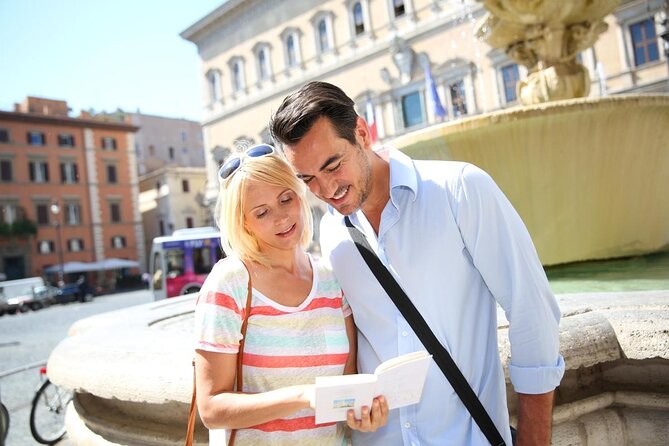
- Small group (max 10): easier questions, less waiting, and a smoother pace.
- Art historian guide: you learn context while you walk, not from a brochure later.
- Pantheon entry included: you don’t just stare from outside.
- Big landmarks, short stops: great for a first day or a partial afternoon.
- Start Campo de’ Fiori, end Piazza di Spagna: you end where you’ll likely want to go next.
- Weather runs either way: bring the right shoes and layers.
A 2.5-hour loop that gives you Rome’s “greatest hits”
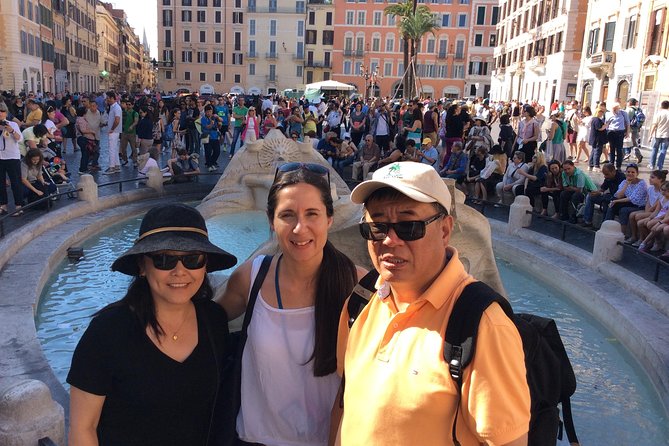
This tour is built for first-timers and for anyone with a short calendar. In about 2 hours 30 minutes, you hit the classic chain of Rome highlights—Piazza Navona, Fontana di Trevi, Campo de’ Fiori, the Pantheon, the Spanish Steps, and Piazza Farnese/Palazzo Farnese—plus the squares in between that make the whole city feel like a living stage.
The pacing is the secret sauce. Each stop is timed so you can see the landmark, capture a photo, and still hear the story. Think of it like getting your bearings fast: you’ll leave with a mental map of where the “main Rome” scenes are, which makes your later self-guided wandering far easier.
You can also read our reviews of more walking tours in Rome

Small-group format: why max 10 changes the experience
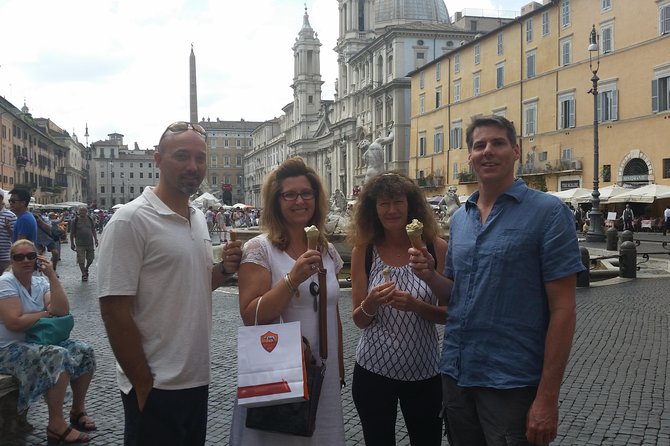
A maximum of 10 travelers matters in Rome. The streets and piazzas can get crowded, and big groups spend a lot of time bunching up or waiting. Here, the group stays tight, so you actually move together and the guide can keep the information flowing.
I also like how this format supports a dialogue. Multiple guides are mentioned by name in the feedback you provided—Emma is praised for lots of fun knowledge, Simone for interactive conversation, and Francesca for being both engaging and entertaining. That combination matters: you get the facts, but you also get the kind of explanations that help you remember what you saw when you’re back at your hotel.
From Campo de’ Fiori to Piazza di Spagna: practical routing for your day
The meeting point is Campo de’ Fiori, 23, 00186 Roma RM and the tour ends in Piazza di Spagna, 00187 Roma RM. That end point is handy because it drops you near one of Rome’s best “keep walking” neighborhoods. You can easily keep the day going with cafes, gelato, and more street-level wandering.
No hotel pickup is included, so plan on getting yourself there by foot or public transport. The good news is that the start is near public transportation. Also, you’ll want comfortable shoes—this is a walking tour, and the route links multiple major sites without pauses long enough to reset your legs.
Piazza Navona: Bernini’s Four Rivers Fountain and the big-square feeling
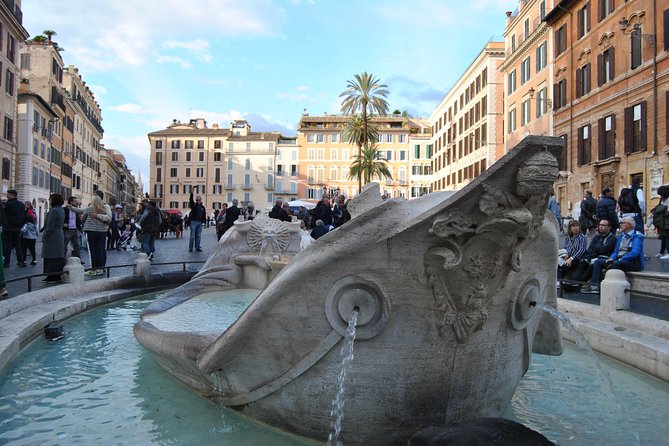
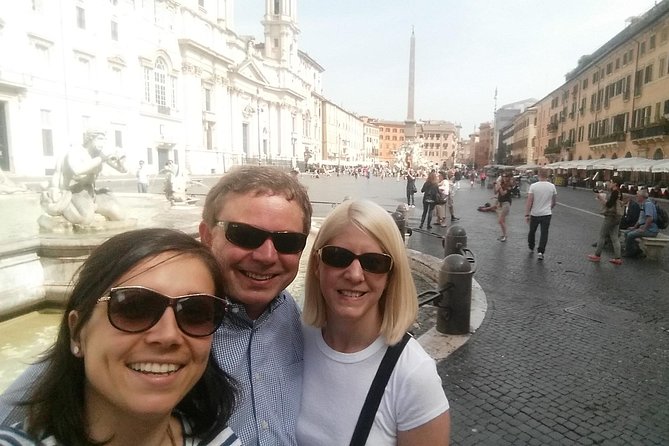
Your first stop is Piazza Navona, one of Rome’s most dramatic open rooms. It’s described as the largest square in Rome, and the centerpiece is the fountain of the four rivers by Gianlorenzo Bernini. Even if you’ve seen photos, standing near it makes the scale feel real.
What I like about starting here is momentum. Navona has that immediate “okay, I’m in Rome” effect: the architecture frames the fountain, and the square’s energy pulls you forward. The tour time is about 30 minutes, which is enough to see the fountain from different angles and let the guide’s explanation connect the art to the era that made it.
If you’re watching for the practical side: this is also a place where you’ll want to keep your camera ready, but not all day. You’re here to learn, not just snap.
Trevi Fountain in 20 minutes: coin story plus photo reality
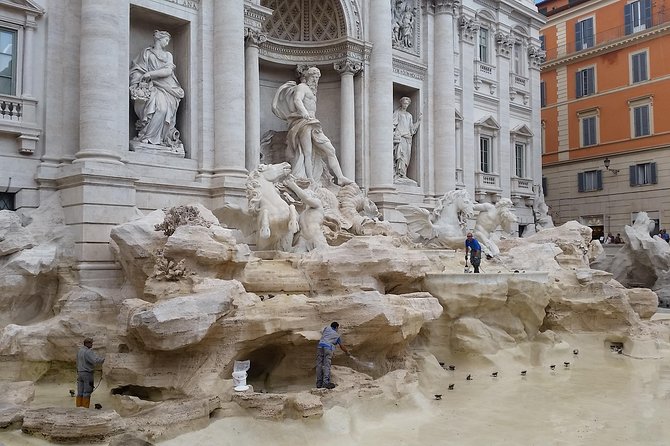
Next is Fontana di Trevi, where the classic moment is waiting for you: toss a coin, and make a wish. The tour gives you about 20 minutes here, which is a smart amount of time for a landmark this famous. It’s enough to do the ritual, absorb the fountain’s details, and get a workable photo—even with the inevitable crowds.
Because Trevi is so iconic, it’s also one of the easiest places to waste time if you’re unprepared. The guide’s role helps here: you’ll know where to look and what details matter, so you don’t just end up standing and waiting for the perfect angle that never comes.






Campo de’ Fiori: the market-square noise and a question worth remembering
After Trevi, you’ll head to Campo de’ Fiori, starting point for the tour and a key square in the day’s rhythm. The vibe here is described as noise, food, and crowds, which is exactly what you want if you’re trying to feel the city rather than just view monuments.
This stop is about 20 minutes and includes a great “street curiosity” moment. The tour asks a specific question: whose statue is in the center of the square? The point isn’t trivia for trivia’s sake. It’s a way to anchor you in the place—so when you walk past it later, you’ll remember what you learned and why it matters.
Pantheon with entry included: the dome that still stops you
The Pantheon is next, and the tour is explicit: the group will enter the Pantheon during the tour. That’s a big difference from the usual “see it from outside” approach.
You get about 30 minutes at the Pantheon. The focus is on what makes it extraordinary: it’s described as the best preserved temple of Rome and the site features the largest dome in the world (as framed in this tour’s messaging). Standing under that dome is one of those experiences where a guided explanation helps you notice the right things—proportions, design, and how the building still works as a space.
If you’re concerned about “is it worth an interior stop,” I’d say yes here. The tour’s structure makes Pantheon the intellectual center of the walk: you’re not just seeing another famous facade; you’re stepping into a key piece of Roman engineering and design.
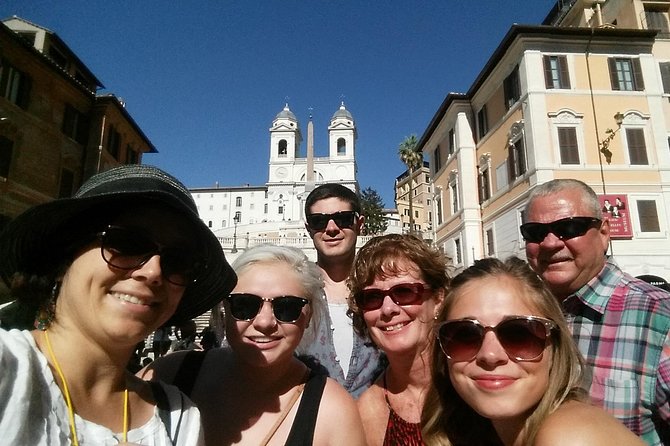
Spanish Steps: why Spain, and why so many steps
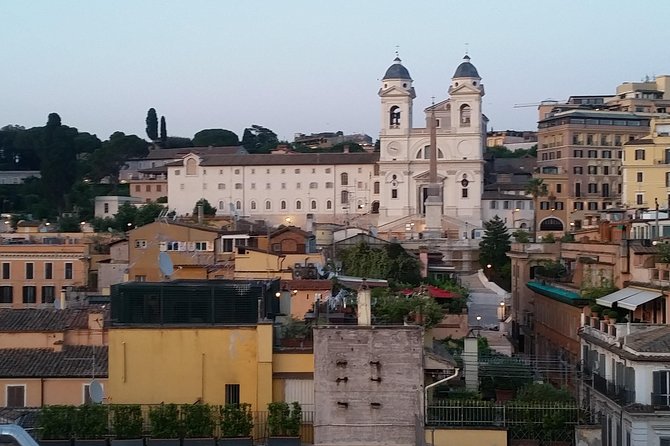
Your next stop is the Spanish Steps, with about 20 minutes. The guide is set up to answer two questions that people often wonder about but rarely get answered while they’re looking at photos:
- Why are they called the Spanish Steps?
- Why are there so many stairs?
That kind of explanation is exactly what makes this tour more than a sight list. You leave knowing the story behind the name and the design choice, so the steps stop being a background scene and become part of Rome’s language.
This is also one of those locations where timing helps. You don’t get dragged into a long sit-down. You get a focused look, learn the meaning, and then move on.
Piazza Farnese and Palazzo Farnese: the French flag clue
The day ends at Piazza Farnese, about 20 minutes. Here’s the hook the tour leads with: there’s a French flag hanging on a very famous facade. The guide also frames what you’re looking at today versus what it once was—now an embassy, but in the past the house of a famous family. This is where you start to see Rome as a city that keeps reusing important buildings.
This stop is closely connected to Michelangelo’s Palazzo Farnese mentioned in the tour overview. Even if you aren’t an architecture nerd, it helps to have someone point out what’s changing and what’s staying. You notice the facade differently when you know it’s tied to power, patronage, and political history—not just stone and windows.
Why the art historian guide matters (and how guides can tailor it)
The tour is led by a local guide plus a professional art historian guide, and that setup shows in how the stops are explained. The pacing alone forces focus, so you get stories that fit the environment: fountains and domes, names and symbols, architecture and civic life.
The feedback you shared also highlights the guide style. People mention guides like Alessandra, Emma, Simone, Damiano, and Angelica, praising not just facts but the delivery: humor, interaction, and context you can’t pick up from a signboard. There’s even a mention of one guide taking the group to a local bakery for sweets and espresso when requested—so if you want a small food break, it’s worth asking during the tour.
That matters for value. A walking tour that explains only what you can read online feels thin. Here, the guide’s job is to connect the landmarks to how Rome works—who built what, what symbols mean, and why these spaces still run the city’s daily life.
Price and value: what you’re really paying for at $355.75
At $355.75 per person (for this listed experience), it’s not a budget stroll. So the question is: does it deliver enough to justify the cost?
What you’re buying is three things that cost money in Rome:
- Time-saving route planning: you’re guided through a tight set of major stops in one session.
- Small-group attention: max 10 means you spend more time with the guide and less time stuck waiting.
- Paid access included at the Pantheon: the tour specifically says the group enters during the tour.
If you compare this to piecing together multiple paid entries and hiring an individual guide for several hours, the math gets closer. Even if you already have a guidebook, a human explanation saves you guesswork. You’ll also leave with a route you can replay later—so your next days feel easier.
My take: this is good value if you want a structured first look and you hate spending your first day trying to figure out what matters most. If you prefer slow, unstructured wandering, you may be happier with self-guided routes instead.
Weather, walking, and the dress code you can’t ignore
This tour runs in any weather conditions, which is classic Rome reality. Plan for rain with a light layer and shoes that handle wet cobblestones.
Then there’s the dress code. It’s not optional if you want smooth entry into places of worship and selected museums: no shorts or sleeveless tops, and knees and shoulders must be covered for both men and women. If you don’t meet it, you risk being refused entry.
The smart move is to dress like you might step into church at any moment. A light scarf can save your day. Also, skip bulky layers that make walking miserable. You’ll be moving for a few hours.
Who should book this Rome highlights walk
This tour is built for:
- First-time visitors who want a clean introduction.
- People with a short visit window who still want major sights and context.
- Families and groups who benefit from a lively, interactive guide style (you provided feedback that includes families and kids doing well on this format).
- Anyone who wants a structured route that ends near another key neighborhood.
It’s less ideal if you want:
- Long stays at each monument
- Multiple deep museum stops
- A fully flexible day with zero time pressure
Should you book Essential Walking Tour in Rome?
Yes—if your goal is getting your bearings fast and seeing the most important Rome icons in one well-timed walk. The small group size, art historian guidance, and Pantheon entry included make it feel like more than sightseeing-by-checklist.
I’d book it especially if you’re going to do Rome in pieces over several days. This tour gives you the framework so your later walks make more sense. Just go prepared: comfortable shoes, and covered knees/shoulders if you’re crossing into places where the rules apply.
If you want, tell me your travel dates (and whether you prefer morning or afternoon). I can suggest a simple follow-on plan from Piazza di Spagna based on how much time you’ll have after the tour.
FAQ
How long is the Rome walking tour?
It’s approximately 2 hours 30 minutes.
Where does the tour start and end?
The start is Campo de’ Fiori, 23, 00186 Roma RM, Italy. The end is Piazza di Spagna, 00187 Roma RM, Italy.
What are the main sights included?
The tour covers Piazza Navona, Fontana di Trevi, Campo de’ Fiori, the Pantheon, the Spanish Steps, and Piazza Farnese.
Does the group enter the Pantheon?
Yes. The group will enter the Pantheon during the tour.
What group size should I expect?
This tour has a maximum of 10 travelers.
Is the tour offered in the morning and afternoon?
Yes. You have a choice of morning or afternoon departure.
Do I need to buy tickets for the stops?
Admission is listed as free for the stops on the itinerary, and Pantheon entry is included in the tour.
What should I wear to avoid entry problems?
You need a dress code for places of worship and selected museums: no shorts or sleeveless tops, and knees and shoulders must be covered. You may be refused entry if you don’t comply.
Does the tour run in bad weather?
Yes. The tour runs in any weather conditions.
Is it refundable if I cancel?
Yes, free cancellation is available. You can cancel up to 24 hours in advance for a full refund. If you cancel less than 24 hours before the start time, the amount you paid will not be refunded.