REVIEW · ROME
COMBO: Rome’s Capuchin Crypts Tour & Rome’s Dark Side Ghost Tour
Book on Viator →Operated by Dark Side City Tours · Bookable on Viator
Rome at night turns history into something you can feel. This Capuchin Crypts + Dark Side Ghost Tour pairs the bone-chilling Capuchin Crypts (decorated with about 3,500 skeletons) with a compact, story-forward walk through Rome’s most famous landmarks, including Trevi Fountain from an unusual angle.
What I like most is how the tour keeps you moving without rushing the stories. You also get small-group attention (max 15), and the guides named Ben, Ivana, and Alethea are called out for their pacing, humor, and detail. One consideration: this is genuinely macabre. If you prefer light, feel-good sightseeing, the bones-and-murder vibe can be a lot.
In This Review
- Key things to know before you go
- Capuchin Crypts first: bones, meaning, and the odd comfort of craft
- Dark Side route begins at Via Rasella: Rome’s tragedies get a modern time stamp
- Trevi Fountain’s spooky angle: the beauty with a darker story behind it
- Pantheon area and Piazza Della Rotonda: a gruesome past across the street
- Piazza Navona at night: haunted window, the marble head, and two dark tales
- Giordano Bruno at Campo de’ Fiori: a statue that looks like it knows something
- Vicolo delle Grotte: a self-proclaimed magician who still haunts the street
- Ponte Sisto: from poverty to power—and a haunting on the bridge
- Church with unusual decoration: Santa Maria dell’Orazione e Morte
- Via di Monserrato and Via dei Banchi Vecchi: prison shadows and poison history
- Via del Banco di Santo Spirito: the executioner who served for over 60 years
- Castel Sant’Angelo wrap-up: the Cenci family story and the unfinished feeling
- Price and value: what $66.01 really covers
- Who should book this combo (and who might want a lighter night)
- Practical tips for a smoother 5:00 pm start
- Should you book this tour?
- FAQ
- How long is the Capuchin Crypts and Dark Side Ghost Tour combo?
- What’s included in the $66.01 price?
- What time does the tour start, and where do I meet?
- Where does the tour end?
- How big is the group, and is it offered in English?
- Can I cancel for a full refund?
Key things to know before you go
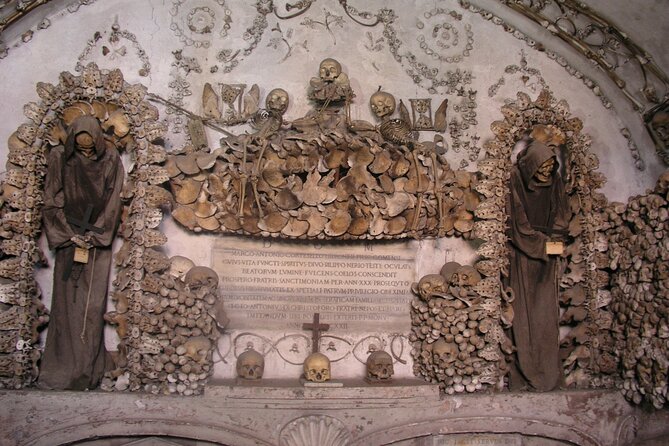
- Capuchin Crypts time with an included ticket: you’re in the crypt for about 40 minutes, not just a quick peek
- A short, focused ghost walk: many stops are 5–20 minutes, so you get story variety without getting stuck in one place
- Famous sights, darker explanations: Trevi, the Pantheon area, Piazza Navona, and Castel Sant’Angelo show up in a new light
- Max 15 people: smaller groups make it easier to hear the guide and ask questions
- Mobile ticket + English: convenient format and the tour is offered in English
- Evening start with free-standing stops: most stops are outside, with optional snack/drink breaks built in
Capuchin Crypts first: bones, meaning, and the odd comfort of craft
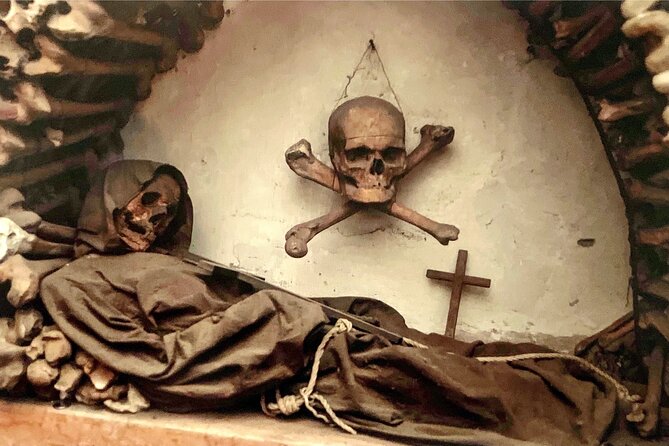
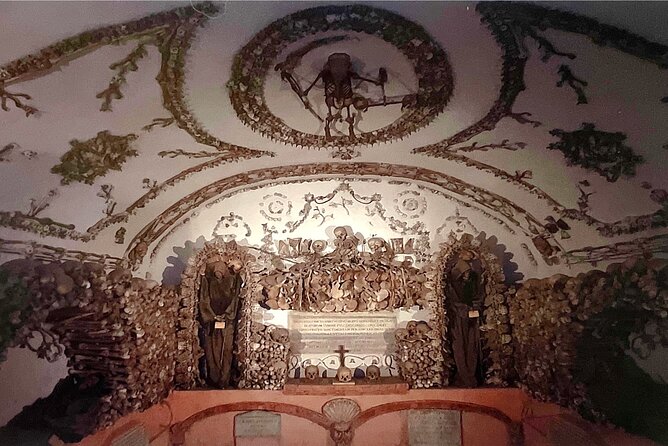
The combo starts with the museum and crypt area of the Capuchin Friars. It’s about 40 minutes long, and the Capuchin Crypt Entrance Fee is included. If you know the headline version—3,500 skeletons—it’s still worth going with your curiosity switched on, because the place is more than just shock value.
The Capuchin Crypts are arranged like a visual language. The decorations aren’t random. They connect to how people once understood death, grief, and memory. Even if you find the imagery intense, you’ll likely walk out thinking in a different direction than you expected—less about horror movie vibes, more about how culture turns loss into something structured.
Practical note: plan for close viewing. You’ll be seeing human remains made into a formal display. This isn’t a “blink and move on” stop. It’s the anchoring experience of the whole night.
You can also read our reviews of more tours and experiences in Rome.



Dark Side route begins at Via Rasella: Rome’s tragedies get a modern time stamp
After the crypts, you head toward Via Rasella. This is one of the shorter moments—about 5 minutes—but it sets the tone. The stories here lean on darker modern history, including a tragic event during the Second World War.
Why that matters: pairing the crypts with a 20th-century tragedy makes the whole tour feel like one long thread, not two separate attractions. You’re seeing how Rome carries memory in layers—some artistic and ceremonial, some brutal and immediate.
If you’re the type who likes context, this stop is a quick way to reset your brain before you hit the big postcard sights.
Trevi Fountain’s spooky angle: the beauty with a darker story behind it
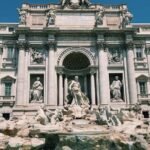
Then comes Trevi Fountain, one of the most recognizable places in Rome. Here, the stop is around 10 minutes, but the focus isn’t the fountain itself. It’s what the guide points to behind the beauty: a story of longing and murder, with the suggestion that the site may still feel haunted.
The value of doing Trevi this way is simple: you’re less likely to treat it like a photo stop and more likely to treat it like a place with a human pulse. You’ll start noticing details you’d normally skip—because the guide is steering your attention toward the parts tied to the tale.
It’s also a nice palate cleanser from the bones. Same city, different kind of “dark.”
Pantheon area and Piazza Della Rotonda: a gruesome past across the street
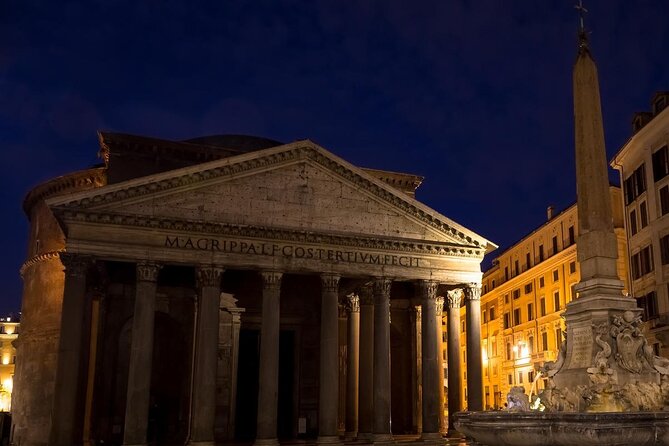
Next is Piazza Della Rotonda, roughly 10 minutes. You’re at the Pantheon’s orbit, but the story lands on what’s directly opposite, where a building with a gruesome past is said to have fed legends beyond Italy.
This is one of the tour’s smartest tricks: using a famous monumental setting as camouflage for a darker story that most people don’t look for. If you’ve walked past the Pantheon area before without really “seeing” it, this is where the night starts paying off.
Even if you don’t buy every legend detail, the tour makes you practice a better way to travel: slow down at the edge of what you think you already know.
Piazza Navona at night: haunted window, the marble head, and two dark tales
Your route continues to Piazza Navona for about 20 minutes. This stop leans hardest into the classic ghost-tour feel, with two darker stories. One includes a haunted window. Another involves a mysterious marble head watching over the square.
Navona is usually experienced as baroque spectacle and street life. The guide flips the emphasis so you’re paying attention to symbolism and storytelling quirks—how people point at objects in a square and make them mean something more.
What I like about the Navona timing is that it’s long enough for you to settle in, but not long enough to lose your attention. You’ll keep your energy for the next alleyway and church stops, instead of getting stuck in one location.






Giordano Bruno at Campo de’ Fiori: a statue that looks like it knows something
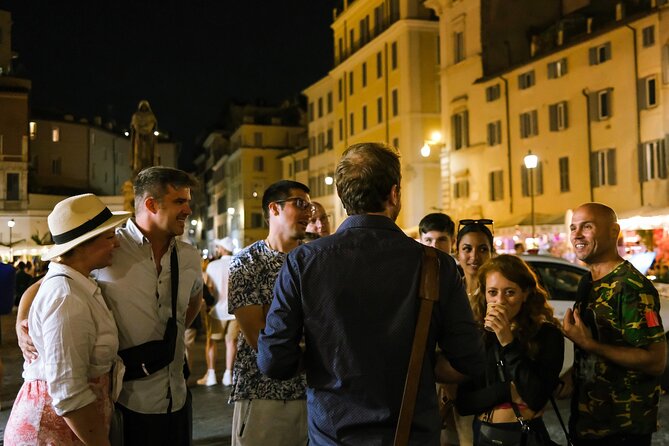
At Campo de’ Fiori, you get about 15 minutes. The story centers on Giordano Bruno, whose scientific and philosophical theories didn’t go down well with the Church. The statue’s expression—how it doesn’t look so happy—becomes part of the narrative.
This is one of those moments where a “dark story tour” becomes educational without turning into a lecture. You’ll come away with a clearer sense of how public memory gets shaped: who gets commemorated, what gets softened, and what gets left raw.
If you like when a tour teaches you how to interpret what you see, this is one of the stops to prioritize.
Vicolo delle Grotte: a self-proclaimed magician who still haunts the street
Then you slip into Vicolo delle Grotte for about 10 minutes. The guide tells a tale about a self-proclaimed magician said to still haunt the street.
This stop is shorter, but it’s valuable because it changes the pace and texture of the night. You go from big spaces and famous squares into narrower street energy, where the stories feel more immediate. Whether you take the legend literally or not, you’ll likely feel the point: Rome’s history isn’t stored only in museums. It’s also carried in local narrative.
Ponte Sisto: from poverty to power—and a haunting on the bridge
At Ponte Sisto, you get around 10 minutes. The story here is about a woman who rose from poverty to rule Rome, and is reputed to haunt the bridge.
This is a good example of how the tour uses place-based storytelling. You don’t just learn a name and move on. You stand where the story points, and the guide helps you imagine the past in physical space.
It’s also a nice change from execution-heavy themes that show up later. Here, the “dark” is about power, survival, and reputation—less about machinery of punishment, more about human ambition.
Church with unusual decoration: Santa Maria dell’Orazione e Morte
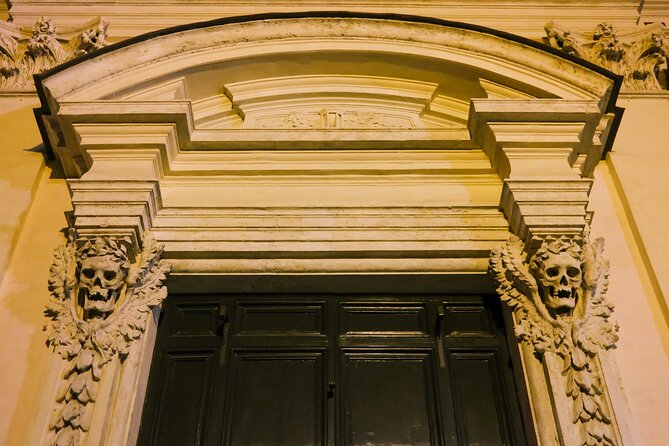
Your next stop is Chiesa di Santa Maria dell’Orazione e Morte for about 10 minutes. This church is described as having unusual decoration, plus monks with an unusual role in public life.
A church stop on a ghost tour can easily become “look at the building and move.” Here, the story gives you a reason to notice details. Even if you’re not an art-history person, this type of stop helps you read Rome as a system of places where faith, community, and social roles overlap.
Via di Monserrato and Via dei Banchi Vecchi: prison shadows and poison history
Two street stops follow close together, and both are built around people hurt by institutions.
- Via di Monserrato (about 10 minutes) focuses on a street that was once home to a notorious prison, with tortured souls still heard.
- Via dei Banchi Vecchi (about 10 minutes) shifts to the story of one of history’s prolific poisoners, including a twist about her job and how some viewed her work for the women of Rome.
These stops do something important for the overall experience: they make the “dark side” feel human. You’re not only chasing spooky entertainment. You’re seeing how fear and power can shape everyday life—sometimes through punishment, sometimes through survival strategies that society chose to condemn.
If you’re sensitive to true-crime-style storytelling, you’ll want to gauge your comfort level as the night progresses.
Via del Banco di Santo Spirito: the executioner who served for over 60 years
Next is Via del Banco di Santo Spirito, again about 10 minutes. This story is about Rome’s official executioner, who held the role for over 60 years, and the guide shares details meant to shock.
This stop is exactly where the combo earns its name. The tour isn’t just light spooky. It’s built on the logic that Rome’s legends grow in the shadow of real consequences.
For many people, this is also where the tour becomes most memorable. A long-serving executioner turns history from a “one-time event” into an atmosphere.
Castel Sant’Angelo wrap-up: the Cenci family story and the unfinished feeling
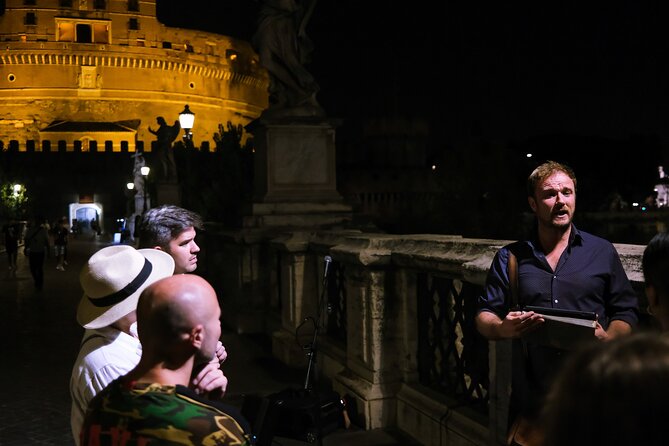
Finally, you end at Castel Sant’Angelo. You get about 10 minutes at this last stop, and the tour frames it as a former execution site. The bridge to Castel Sant’Angelo is described as supposedly haunted by a victim from one of Rome’s most tragic tales: the Cenci family.
Why this ending works: the route has moved from bones, to legends, to tragedies, to institutions, and now to a major fortress landmark. You’re left with a “Rome carries its past forward” feeling, not just a collection of scary stories.
And logistically, you’ll be in a good position to keep going afterward. The tour finishes at Castel Sant’Angelo, Lungotevere Castello, 50.
Price and value: what $66.01 really covers
At $66.01 per person for about 4 hours, the price isn’t just paying for walking and stories. The key value piece is that the Capuchin Crypt Entrance Fee is included.
Most of the other stops are outside, so you’re not paying separate admissions throughout the second half. You do get an optional moment for snacks and drinks, but those are not included, which is fairly typical for walking tours.
What you’re buying is:
- a guided format (so you don’t miss the “what to notice” parts),
- a full crypt visit (the most expensive “ticket-like” component),
- and a small-group experience (max 15) that keeps the stories interactive.
If you like your tours with personality—humor mixed with seriousness—this combo is priced like a “one-and-done night plan” rather than a set of random add-ons.
Who should book this combo (and who might want a lighter night)
This tour is a strong match if you:
- enjoy story-driven sightseeing more than museum-only travel,
- want to see major Rome sights like Trevi Fountain and Piazza Navona through a different lens,
- like small groups where the guide can actually keep up with questions.
You might want to skip or reconsider if:
- you’re uncomfortable with human remains and heavy themes like murder and executions,
- you prefer a straightforward, bright, postcard-only evening route.
Also, it’s offered in English, and the experience says most travelers can participate. That suggests the walking is manageable for many people, but it’s still a city walking route with multiple stops and the walking time baked in.
Practical tips for a smoother 5:00 pm start
A few things will make this night easier:
- Arrive a few minutes early at Via Vittorio Veneto, 19. You start at 5:00 pm, and it’s a fixed schedule.
- Wear shoes you trust. You’re moving between many points and standing during short story stops.
- Bring a “quiet comfort” mindset. The crypt stop is macabre; then the ghost stories keep that tone going.
- Plan for a snack break. The route includes a stop for optional snacks and drinks, so you won’t go the full 4 hours on empty.
- If you’re traveling with teens, this kind of tour can land well when the guide keeps it engaging; guides named in the tour experience have been praised for making it work for younger audiences.
Should you book this tour?
If you want Rome that feels alive—not just photographed—this is an easy yes. The value is clear because the crypt admission is included, and the small group size makes the storytelling feel personal. You’ll also come away knowing Rome’s famous sights in a new way: Trevi, Navona, and the Pantheon area get darker context instead of just turning into background.
Book it if you’re okay with a genuinely unsettling theme and you like your history with ghost stories attached. If you want a gentler introduction to Rome, you might pick a lighter first-night tour and save this one for a trip when you’re ready for bones, prisons, and legends.
FAQ
How long is the Capuchin Crypts and Dark Side Ghost Tour combo?
It runs for about 4 hours, including the walking time between stops.
What’s included in the $66.01 price?
The combo includes the Capuchin Crypt Entrance Fee, plus the guided tour content. Snacks and drinks are not included, though there’s an optional stop for them.
What time does the tour start, and where do I meet?
The tour starts at 5:00 pm. The meeting point is Via Vittorio Veneto, 19, 00187 Roma RM, Italy.
Where does the tour end?
The tour ends at Castel Sant’Angelo, Lungotevere Castello, 50, 00193 Roma RM.
How big is the group, and is it offered in English?
The tour has a maximum of 15 travelers and is offered in English.
Can I cancel for a full refund?
Yes. You can cancel for a full refund up to 24 hours in advance of the experience start time. Changes within 24 hours of the start time aren’t accepted, and there’s no refund if you cancel later than that window.