REVIEW · ROME
Rome: Between Holy Doors Small Group Walking Tour
Book on Viator →Operated by Treasures of Rome · Bookable on Viator
Holy doors, minus the tourist crush. This small-group Rome walk threads you through major and lesser-visited churches, with Roberto adding context to the art, relics, and Catholic symbols. You get a focused route that helps you understand what you’re actually seeing, not just where to stand for photos.
I love that you can visit up to seven churches and basilicas in a few hours, and the church entries are free for the stops on the route. The main catch is physical: it’s a walking tour with cobblestones, stairs, and a strict dress code (shoulders, back, and knees covered), so plan your day accordingly.
In This Review
- Key highlights worth planning for
- Holy Doors and seven churches in a few hours
- Where you start and how the route works
- Roberto’s role: stories you can carry forward
- Dress code and practical limits before you go in
- Stop 1: Basilica di Santa Maria Maggiore and its Holy Door
- Stop 2: Basilica di Santa Prassede and the apse mosaics
- Stop 3: San Pietro in Vincoli and Michelangelo’s Moses
- Stop 4: Basilica of San Clemente’s layered feel
- Stop 5: Ss. Quattro Coronati and the legends fresco
- Stop 6: Arcibasilica di San Giovanni in Laterano and major Catholic relics
- Stop 7: Pontifical Sanctuary of the Holy Stairs (Scala Sancta)
- Jubilee year reality: Holy Doors may come with detours
- Value check: does $83.48 make sense?
- Who this tour fits best (and who should reconsider)
- Should you book this Holy Doors walking tour?
- FAQ
- How long is the Rome Holy Doors small-group walking tour?
- How many churches or basilicas will I visit?
- Is entry to the churches included?
- Where does the tour start, and where does it end?
- What time does the tour start?
- Is there a dress code for entering the churches?
- Is the tour offered in English?
- Are Holy Door passages guaranteed during Jubilee events?
- Can I cancel for a full refund?
Key highlights worth planning for
- A tight route with up to seven churches in roughly 3 to 4 hours, so you cover a lot without feeling like you’re sprinting across Rome
- Roberto’s explanations on Catholic history and church art, delivered in a reverent, story-driven way
- Small group size (maximum of 5 people), which makes questions and conversation actually possible
- Free entry for each included church stop, so the value comes mostly from your guided time
- Holy Door access isn’t guaranteed in Jubilee crowds, since plans can change with events and waiting lines
Holy Doors and seven churches in a few hours
This is the kind of tour that fixes one common Rome problem: you walk into a church, and without context it’s easy to miss why it matters. Here, you move from one sacred site to the next with an explanation that connects the art on the walls to the big stories of the faith.
The Holy Door angle is also special. Even if you’re not a devoted pilgrim, these doors are tied to Rome’s religious identity and rituals. With the right guide, you notice details you would normally overlook—symbols, relic traditions, and why certain chapels became so important.
And because it’s a walking format, you also get the feeling of moving through real Rome neighborhoods, not just hopping between isolated landmarks.
You can also read our reviews of more walking tours in Rome
Where you start and how the route works
The tour starts at the Statua di San Giovanni Paolo II in the Esquilino area (00185 Rome) at 9:00 am. It ends at the Archbasilica of San Giovanni in Laterano in Piazza San Giovanni in Laterano (00184 Rome), which is close to the metro station Linea A – San Giovanni.
Expect a duration of about 3 to 4 hours. You’ll cover a fair bit of ground on foot, with a few steps and some cobblestones. One review-style note that’s worth taking seriously: you should be ready for around 2 to 3 miles of walking, plus stairs of different shapes and sizes.
There’s no bus ride cushioning the day. This is best for people who enjoy walking as part of the sightseeing, and who don’t mind taking entrances a little slowly to keep momentum.
Roberto’s role: stories you can carry forward
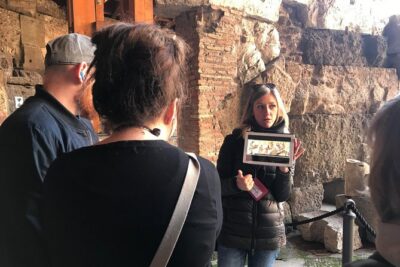
The biggest reason this tour gets strong word-of-mouth is the guide. Roberto is the name that shows up again and again, and the pattern is consistent: he’s patient, stays focused on what you’re seeing, and answers questions without rushing you out of the moment.
What I like about his style is that he doesn’t treat churches like a checklist. He connects statues, fresco scenes, and architectural features to the meaning behind them. That matters in Rome because the city has layers. Once you understand a church’s role, you start noticing how it fits into the bigger map of Christian history.
Also, the small-group size—up to 5 people—changes the whole tone. You’re not shouting over a crowd. You can ask a question when something catches your eye, and the guide can adjust if the group wants to linger on a detail.
Dress code and practical limits before you go in
Church rules in Rome can be strict, and you’ll want to be prepared. To enter the churches on this route, shoulders, back, and knees must be covered. This is not a suggestion you can gamble on. If your outfit is too short or too bare on top, you may be turned away.
Now for the other practical factor: the tour is active. You’ll be on your feet through multiple entrances, and there are stairs. If you’re the kind of person who likes a lot of sit-down breaks, plan for fewer moments to rest than a standard museum tour.
Restrooms aren’t treated like a travel-luxury amenity here. There are restroom opportunities at the start and at a later point during the walk, and if something is urgent, your guide can pause at a local bar. Still, if you know you’ll need frequent stops, it’s smart to plan your clothing and timing so you’re not scrambling.
Stop 1: Basilica di Santa Maria Maggiore and its Holy Door
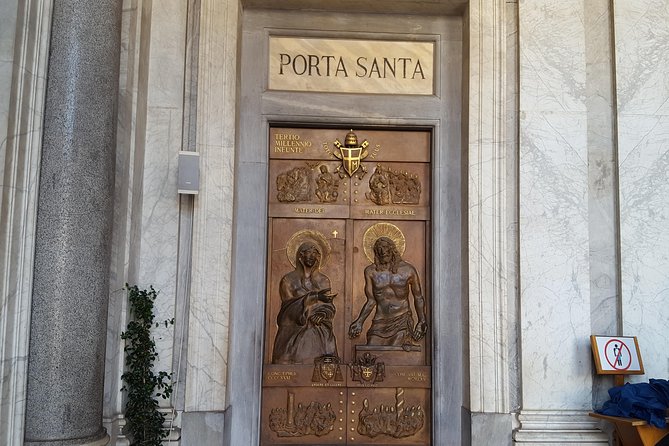
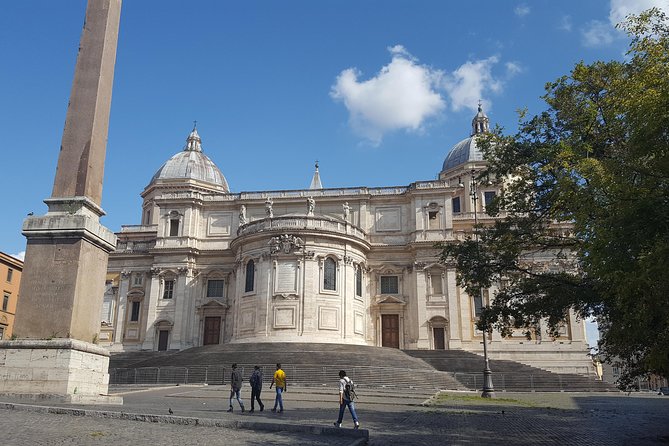
The tour begins with Basilica di Santa Maria Maggiore, a heavyweight in Rome. It’s the biggest church for Saint Mary, and it has the city’s highest bell tower—so even from outside, it signals you’re in the right place.
Inside, what really hooks people is how packed the building is with chapels and art. This is also where the Holy Door theme makes its first appearance. A Holy Door isn’t just a door—it’s part of a tradition tied to celebration and pilgrimage. With the guide’s framing, you understand why people make a point of seeking it out.
Time at this stop is around 40 minutes. That’s a good amount of time for a major church without getting stuck in a slow-moving crowd for too long.






Stop 2: Basilica di Santa Prassede and the apse mosaics
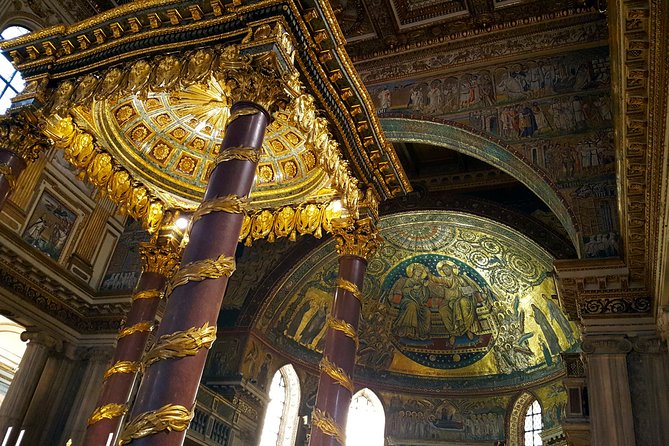
Next up is Basilica di Santa Prassede, a place that feels concentrated—like Rome decided to pack a few centuries into one focused room. The highlight is the church’s old apse mosaic, recognized as one of the oldest of its kind.
You also get the emotional side of the site. The church holds a relic connected to the passion of Christ. That combination—visual art plus devotional history—is exactly what turns a church visit into more than just looking.
This stop is shorter, about 20 minutes. Treat it like a targeted art lesson. Look for the mosaic details first, then let the guide explain why that imagery matters.
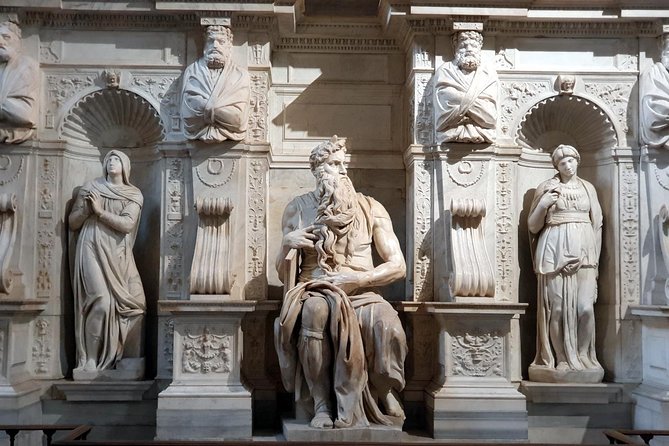
Stop 3: San Pietro in Vincoli and Michelangelo’s Moses
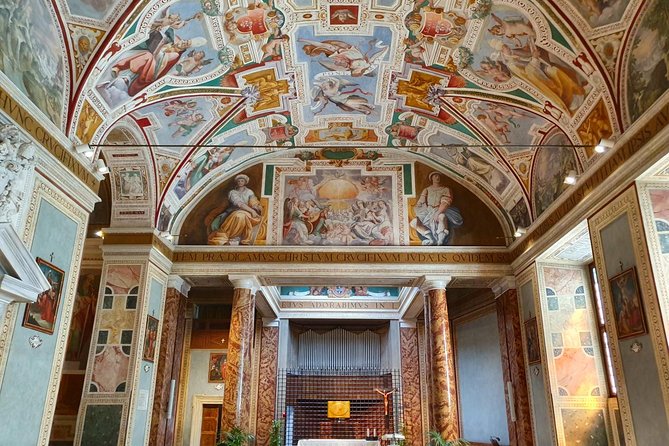
If you’ve heard Rome described as full of surprises, this is one of them. San Pietro in Vincoli holds Michelangelo’s Moses, one of the most famous sculptural works associated with the city.
It also contains the tradition of Saint Peter’s wonder-working chains, which is where the tour connects art and relic belief. Even if you’re not focused on relics, the symbolism becomes clearer when someone walks you through what the chains represent and why they’re remembered in this church.
This stop is about 20 minutes. You’ll be moving, but it’s enough time to see the main attraction and pick up the meaning behind it.
Stop 4: Basilica of San Clemente’s layered feel
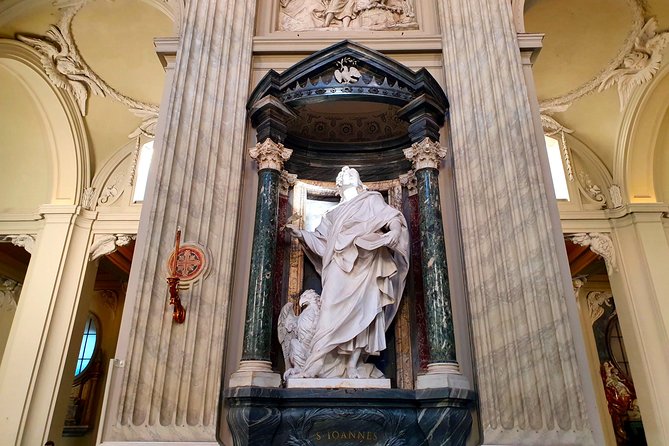
Basilica of San Clemente brings a different vibe. It’s one of the city’s oldest churches, and it’s known for the impressive apse.
What makes this stop valuable is pacing and contrast. After mosaics and sculpture, you get a chance to shift your focus to architecture and spiritual space. If you like Rome’s older structures—those that feel like they’ve been holding onto secrets for centuries—this is a strong mid-tour anchor.
Time on site is about 20 minutes. Quick, but not rushed in spirit, as long as you’re comfortable moving at a steady pace.
Stop 5: Ss. Quattro Coronati and the legends fresco
Next comes Ss. Quattro Coronati, a church with a specific art highlight: a fresco that depicts legends of Saint Silvester. Frescoes in Rome can look stunning, but without context you might not know what story you’re looking at.
Here, you get that story. The tour helps you read the fresco instead of just admiring it. That single shift makes it stick, especially if you’re the kind of person who remembers buildings better after you understand why they were painted.
This is another 20-minute stop. Think of it as a story-forward art moment.
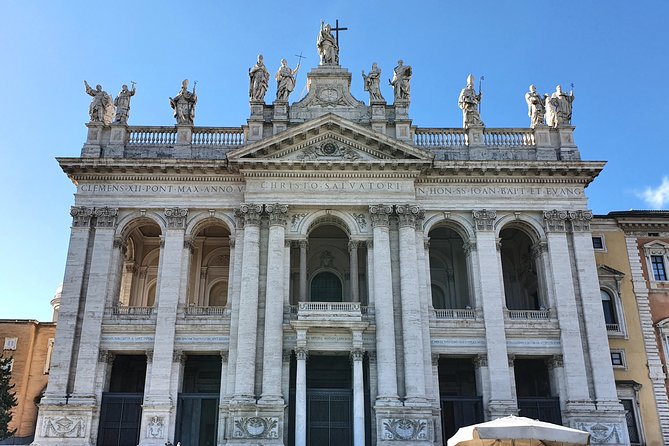
Stop 6: Arcibasilica di San Giovanni in Laterano and major Catholic relics
At Archbasilica di San Giovanni in Laterano, the tour becomes more explicitly “main event.” This church is described as one of the most important for Catholics, and it holds relics associated with Saint Peter and Saint Paulus.
This is also a good moment to reset your brain. Up to now, you’ve had a mix of art types—mosaics, sculpture, frescoes. Now you’re seeing how the faith traditions connect to specific churches and their roles in Rome’s religious map.
Time is about 40 minutes, which gives you a bit more room to take in the scale and really absorb the explanations.
Stop 7: Pontifical Sanctuary of the Holy Stairs (Scala Sancta)
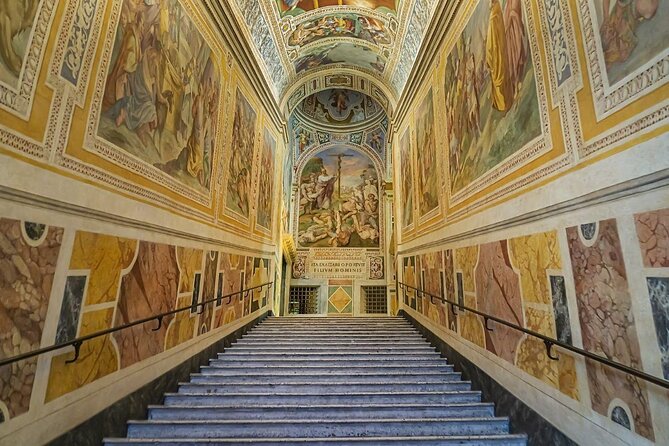
The final stop is the Pontifical Sanctuary of the Holy Stairs, often referred to around Rome as the Holy Stairs area. The highlight here is the stairs from the palace of Pontius Pilatus, plus impressive frescoes.
This part of the tour is handled a little differently than the church-entry stops, because devotion here is personal. The tour provides key context right outside where talking and photography aren’t permitted inside, and then the group is set up so people can go at their own pace. You can choose how you approach the experience.
Time is about 20 minutes on the schedule, but your experience can vary depending on your own level of devotion and the moment’s conditions.
Jubilee year reality: Holy Doors may come with detours
Rome’s Holy Doors are linked to major religious periods, and in Jubilee years, logistics can shift. The itinerary may be adapted due to special events and increased waiting times to enter sights.
Most important: the tour can’t guarantee passage through the Holy Doors when crowds and schedules make access unpredictable. What it can guarantee is the overall religious-art route and explanations, even if the exact Holy Door experience changes.
So if you’re planning your Rome trip around getting through a specific door, build flexibility into your day. This tour is still meaningful even when access is delayed.
Value check: does $83.48 make sense?
At $83.48 per person, you’re paying for more than movement between churches. You’re paying for (1) a tight route that saves you from figuring it out yourself, (2) expert storytelling tied to each stop, and (3) time in places where the details matter.
The part that boosts the value is that admission tickets for the included church stops are free. That means your money goes toward the guide and the structure of the walk, not toward a pile of paid entry fees.
You’re also not just seeing “a few churches.” The tour targets up to seven basilicas, churches, and chapels in a short window. That’s a strong fit for a Rome itinerary when you want a religious and art-focused day without spending the whole day on transit.
Who this tour fits best (and who should reconsider)
This is a great match if you want Rome’s Christian art and symbolism explained in plain language. It’s also ideal if you like structured walking days and you don’t mind stairs. The small-group size helps if you want to ask questions and feel like the guide is talking to your group, not performing to a crowd.
If you’re visiting Rome for the first time, this can be a strong way to balance the big-ticket sights. If you’ve been before and want a different angle, the focus on churches off the loudest tourist track can make the city feel new again.
The main reason to reconsider is the physical side. Expect walking over cobblestones, stairs, and a steady pace. If mobility is limited or you know church dress code will be hard to manage, you’ll need a different plan.
Should you book this Holy Doors walking tour?
Yes, book it if you want a focused day of Rome’s basilicas and sacred art, with a guide who connects what you see to why it exists. The combination of a small group, up to seven stops, and free entries makes the price feel more like value than cost.
Hold off or plan carefully if you can’t do stairs and longer walking stretches, or if you expect the Jubilee-era Holy Door access to be a must-have photo goal. In those cases, you’ll still get church art and context, but the doorway moment might not play out exactly as you imagined.
If your goal is meaning over sightseeing volume, this is the kind of tour that leaves you with details you can talk about long after you’ve left the church steps.
FAQ
How long is the Rome Holy Doors small-group walking tour?
It’s about 3 to 4 hours.
How many churches or basilicas will I visit?
The tour visits up to seven basilicas, churches, and chapels.
Is entry to the churches included?
Yes. Admission tickets for the included church stops are free.
Where does the tour start, and where does it end?
It starts at Statua di San Giovanni Paolo II (Esquilino) and ends at the Basilica of San Giovanni in Laterano in Piazza San Giovanni in Laterano.
What time does the tour start?
The start time is 9:00 am.
Is there a dress code for entering the churches?
Yes. Shoulders, back, and knees must be covered.
Is the tour offered in English?
Yes. It’s offered in English.
Are Holy Door passages guaranteed during Jubilee events?
No. During Jubilee, the itinerary might change because of special events and waiting times, and passage through the Holy Doors can’t be guaranteed.
Can I cancel for a full refund?
You can cancel for a full refund up to 24 hours in advance of the experience’s start time.