REVIEW · ROME
City walk through Spanish steps, Trevi fountain, Pantheon, Navona, Angel Castle
Book on Viator →Operated by Cris Roman Guide by Cristina Giannicchi · Bookable on Viator
Rome on foot makes sense fast.
This private 3-hour walking tour connects big names like the Pantheon and Piazza Navona with real explanations, not just a checklist. I love the relaxed pacing and flexible flow, and I like that the stops are short enough to keep energy up while still giving you context. One thing to consider: you’re covering many landmarks in a short window, so you won’t linger like you would on a slower day-trip.
You also get a clean plan built around the streets that actually shape Rome’s look and feel. I especially like how the guide points out what you’re seeing at each stop—architecture, how the area evolved, and what to notice when you’re standing right there. A possible drawback is that the route ends at Castel Sant’Angelo area, so you’ll want a clear plan for how you’ll finish your evening afterward.
The tour runs in English with a mobile ticket, and it’s priced per group (up to 3), which can feel fair if you’re traveling with someone. It’s also a practical way to get your bearings early—great if you want Rome’s highlights without spending your entire day in transit and lines.
In This Review
- Key things that make this tour worth your time
- Starting at Babington’s Tea Room near Piazza di Spagna
- Stop 1: The Spanish Steps and how the square works
- Stop 2: Fontana di Trevi and what the fountain is really saying
- Stop 3: Piazza Colonna and Rome’s political heartbeat
- Stop 4: The Pantheon, from outside shapes to inside details
- Stop 5: St. Louis of the French and Caravaggio connections
- Stop 6: Piazza Navona and the layers of city life
- Stop 7: A short pause by the Tiber, Fiume Tevere and bridge life
- Stop 8: Castel Sant’Angelo area and Museo Nazionale di Castel Sant’Angelo
- Why the private format is a real value (not just a luxury)
- What kind of traveler this tour fits best
- A quick, practical checklist for the walk
- Should you book this walking tour?
- FAQ
- FAQ
- How long is the Rome walking tour?
- What is the price and group size?
- Is the tour private?
- What language is the guide?
- Do I need to pay for admission to the stops?
- Where do I meet the guide?
- Where does the tour end?
- What ticket format is provided?
- Is cancellation free?
Key things that make this tour worth your time
- A true “how to see Rome” guide, with explanations that help the landmarks click in your mind
- Private group pacing that stays relaxed instead of rushing you trap-to-trap
- Short, efficient stops that still cover the main landmarks: Spanish Steps, Trevi, Pantheon, Navona, Castel Sant’Angelo
- Architecture-first storytelling, so you notice details instead of just taking photos
- Careful selection of viewpoints, including the river and bridges area before you finish near Castel Sant’Angelo
- Engaging guide moments, with feedback highlighting guides like Chris and Gigi for keeping attention through the full walk
Starting at Babington’s Tea Room near Piazza di Spagna
I like the start point because it places you right where you want to be. The meeting point is Babington’s tea room, Piazza di Spagna 23, and that’s a smart launchpad for the Spanish Steps area.
From the beginning, you’re not just walking to a landmark—you’re moving through a neighborhood that gives Rome its “layered” feel. If you’ve ever looked at photos of the Spanish Steps and wondered what surrounds it, this is how you start answering that question.
It’s also a practical setup for timing. You can choose a morning or afternoon slot, which helps if you’re trying to avoid the busiest parts of the day or match your energy level.
You can also read our reviews of more walking tours in Rome



Stop 1: The Spanish Steps and how the square works
The Spanish Steps are famous, but what makes them interesting on a guided walk is how the space functions. You’ll spend about 30 minutes in the area, with time focused on the history and architecture of the square and nearby streets.
Here’s what I’d watch for when you’re standing there: how the steps create a stage-like effect, and how the surrounding buildings frame movement up and down. A good guide helps you see it as more than a postcard staircase—it’s a public space that links viewpoints, fashionably busy streets, and classic Roman architecture.
Drawback-wise, the steps are popular. You’re going to notice crowds because you can’t avoid them entirely. Still, a guide can help you time your pauses so you get good sightlines without losing the flow.
Stop 2: Fontana di Trevi and what the fountain is really saying
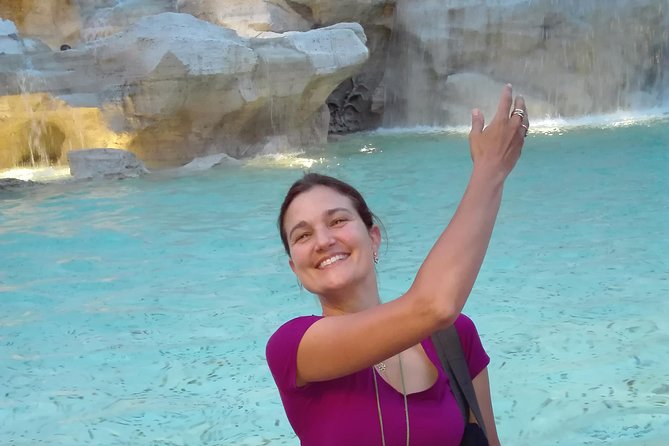
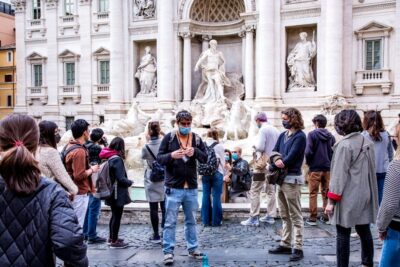
Next comes Fontana di Trevi, with around 25 minutes there. The most useful part of this stop isn’t just the fountain itself—it’s the way you’ll get the history and architecture behind it.
Trevi is one of those places where people end up staring only at the water. When a guide walks you through what you’re looking at—figures, design choices, and the meaning tied to the era—it changes the whole experience. Suddenly you’re not only photographing; you’re decoding.
You’ll also appreciate the timing. Trevi can feel chaotic, so the short, guided window keeps you from burning the day standing still and waiting for the crowd to thin.
Stop 3: Piazza Colonna and Rome’s political heartbeat
From Trevi you head toward Piazza Colonna, with about 20 minutes to understand what’s around you. This stop is described as a history-and-modern-center kind of moment, and that’s exactly the vibe of central Rome.
You’ll get a quick grounding in how this area fits into the city’s story—older layers of power alongside current political life. That context matters because Rome looks timeless until you realize it still functions as a working capital.
This is a stop that’s easy to overlook if you’re going landmark-to-landmark alone. With a guide, it becomes a useful bridge between big tourist icons and the city’s real everyday role.
Stop 4: The Pantheon, from outside shapes to inside details
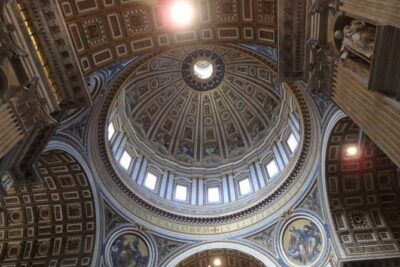
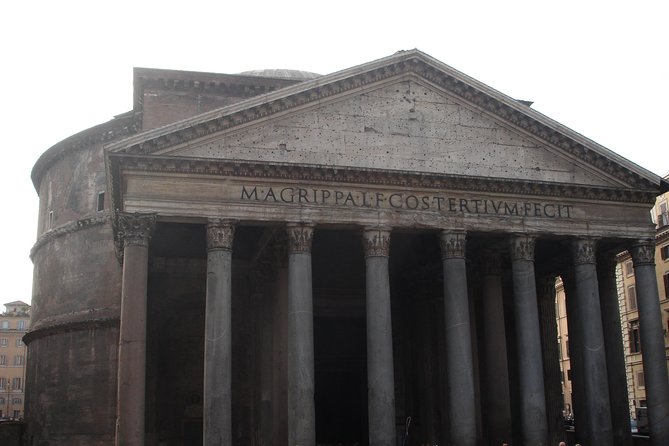
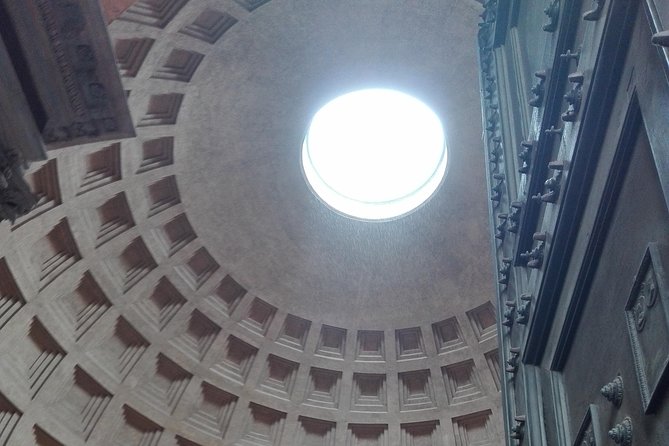
Then comes the big one: the Pantheon, with about 30 minutes covering both exterior and interior. I like this stop because it forces you to notice design logic—how the building’s forms work—rather than treating it like another must-see photo.
You’ll get architecture explanations and stories about the Pantheon from outside and inside. That matters because the outside view explains the silhouette, while the interior is where you understand the scale and geometry.
Practical note: the Pantheon can be busy. Having a plan for what to look at helps you get more value from less time, and it keeps you from just following other people’s walking rhythm.
If you love “why is it built this way?” moments, this is the part of the tour that usually clicks the hardest.
You can also read our reviews of more city tours in Rome




Stop 5: St. Louis of the French and Caravaggio connections
Next is the Church of St. Louis of the French, where you’ll spend about 20 minutes. The highlights here include the chapel of Saint Matthew and the chance to see Caravaggio paintings.
Even if you’re not a museum person, this stop tends to be a strong payoff because churches in Rome aren’t just pretty rooms. They’re full of art, symbols, and patronage history, and a guide can point out what matters without making you feel lost.
The key consideration here is atmosphere and focus. This is a quieter, more contemplative stop than the open squares. If you’re tired from walking, you’ll still get something out of the time because the guide can steer your attention to the right art details.
Stop 6: Piazza Navona and the layers of city life
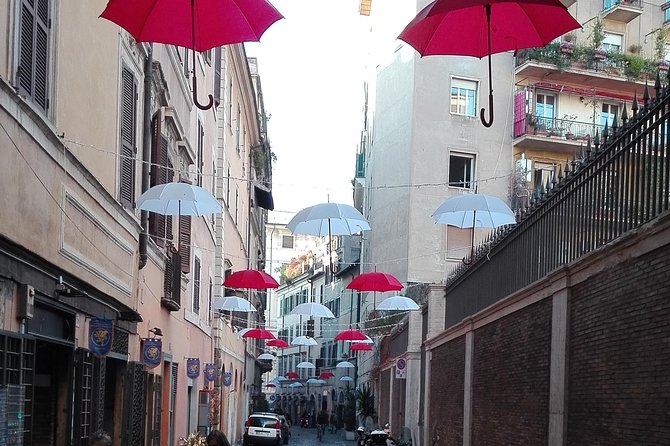
After the church, you’ll reach Piazza Navona, with about 25 minutes. This square is famous for its central fountains, but the best part is the explanation of its layers—how the site connects ancient functions to later Baroque styling.
I love places like this because you can see the timeline without a textbook. You’re standing where older Rome’s street-and-stadium logic influenced how space was used, then watching later eras reshape the public square into something more theatrical.
You’ll also get a sense of the fountain’s story and why it became the focal point. That helps you enjoy the square even if your goal is simply to wander and soak up atmosphere afterward.
Stop 7: A short pause by the Tiber, Fiume Tevere and bridge life
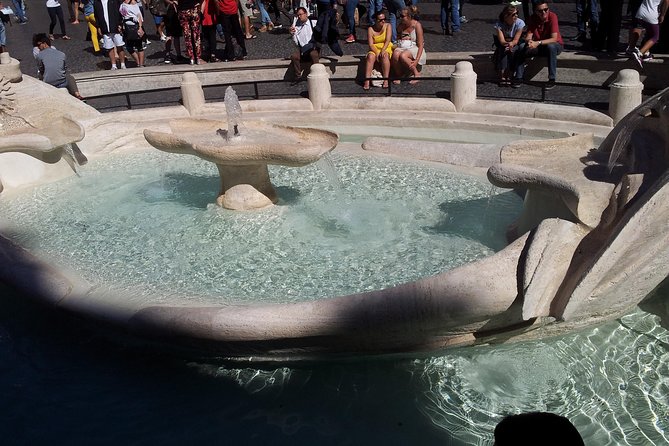
Next is a quick, purposeful segment by Fiume Tevere—about 10 minutes focused on river life and the bridges. This isn’t long, but it’s a smart add-on.
I think the river changes how you interpret Rome. Without it, the city can feel like an endless set of plazas. With this stop, you remember Rome is also a water-based city—routes, views, bridges, and movement.
This short timing is exactly why it works. You get the connection without losing too much time before the final anchor near Castel Sant’Angelo.
Stop 8: Castel Sant’Angelo area and Museo Nazionale di Castel Sant’Angelo
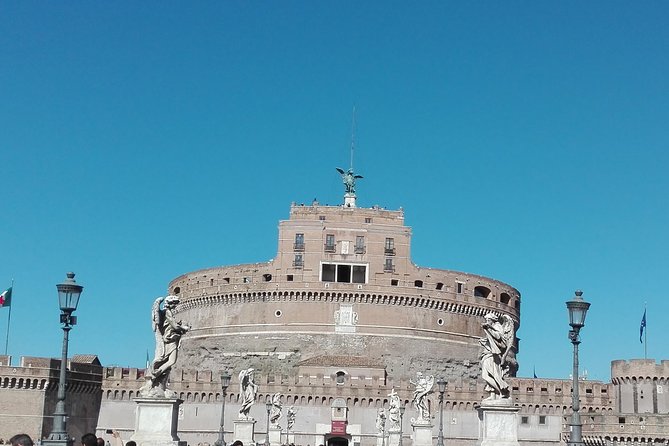
Your tour ends with Museo Nazionale di Castel Sant’Angelo, with about 20 minutes spent on history through the centuries from outside. You finish in front of Saint Angel Castle, and the end point is listed near P.Za Pia / Castel S. Angelo.
Even if you don’t go into the museum on this tour, the outside focus is useful. Castel Sant’Angelo looks like a fortress from certain angles, but a guide helps you understand why that shape and location mattered over time.
This stop also gives you a clean “wrap” to your Rome walk. You’re ending near a landmark that’s easy to navigate around after the tour, and it’s a natural place to decide what you want next—viewpoints, riverside strolls, or dinner planning in the surrounding area.
One consideration: because you end there, it’s worth checking how you’ll get home or where you’ll want to continue before the tour starts.
Why the private format is a real value (not just a luxury)
This is a private tour for your group only, up to 3 people, and it runs about 3 hours. That setup changes how useful the explanations feel. You can ask quick questions, adjust your walking rhythm, and stay focused on what you care about most.
At $524.97 per group, it can seem like a big number until you compare it to the cost of multiple tickets, multiple entrances, and the time value of not hunting down context on your own. Since admission is free for the listed stops and the main included item is the guide, you’re paying mainly for direction, pacing, and interpretation.
If you’re traveling solo, you might compare it to other options. But if you have two people traveling with you, the math gets more friendly fast—especially because you’re not just moving through sights, you’re learning how they connect.
Also, a mobile ticket is useful. It means fewer printed things to manage while you’re already carrying water, a phone, and a charge cable that never has enough juice.
What kind of traveler this tour fits best
You’ll likely love this tour if you want:
- A fast, guided overview of top Rome stops without feeling like you rushed
- Architecture and art context that helps you “read” what you see
- A morning or afternoon schedule that fits your sightseeing plan
- A walk that ends in a landmark area so you can keep going easily
It’s not the best choice if your style is to spend long stretches inside museums or to linger for hours in one place. This walk moves, even with a relaxed feel. Think of it as a great way to start knowing Rome, then return on your own for deeper time.
A quick, practical checklist for the walk
- Wear shoes you can handle on stone sidewalks and uneven pavement
- Bring water, especially for summer afternoons
- If you’re sensitive to crowds, pick your time slot carefully (morning often feels easier than late afternoon, depending on the day)
- Have a plan for your last leg after the tour ends by Castel Sant’Angelo
The good news: the stop lengths are short and purposeful. Even if you’re not a “stand still and listen” person, the variety keeps it engaging.
Should you book this walking tour?
I’d book it if you want your first taste of Rome to come with real orientation. The mix of Spanish Steps, Trevi, the Pantheon, Navona, and Castel Sant’Angelo is the kind of route that gives you instant recognition, but the guide layer is what turns it into something more than photos.
It’s especially worth it if you care about explanations and you like a guide who keeps the energy moving through the full walk. Based on past experiences with guides such as Chris and Gigi, the strongest praise is for clear city meaning and keeping attention through the entire time.
If you hate walking or you’re the type who needs hours in a single site, you might prefer a slower, fewer-stop plan. But for most people trying to make a limited schedule work, this hits a good balance.
FAQ
FAQ
How long is the Rome walking tour?
It lasts about 3 hours.
What is the price and group size?
It costs $524.97 per group, up to 3 people.
Is the tour private?
Yes. It’s a private tour/activity, and only your group participates.
What language is the guide?
The tour is offered in English.
Do I need to pay for admission to the stops?
Admission is listed as free for the stops included in the itinerary.
Where do I meet the guide?
You meet at Babington’s tea room, Piazza di Spagna 23, 00187 Rome.
Where does the tour end?
The tour ends near P.Za Pia / Castel S. Angelo, in front of Saint Angel Castle.
What ticket format is provided?
You get a mobile ticket.
Is cancellation free?
Yes, you can cancel for a full refund up to 24 hours before the experience’s start time.