REVIEW · ROME
Caravaggio Art Walking Tour of Rome with Pantheon Visit
Book on Viator →Operated by Nicom Tours · Bookable on Viator
Caravaggio is louder than you expect. This 3-hour Rome walk strings together his dramatic art across real churches, then ends with a calm, awe-filled Pantheon interior visit. I love how the route connects paintings to the streets and politics of late-1500s Rome, and I also like the small-group feel that keeps questions flowing.
Two things I especially liked: you get major Caravaggio works in their original settings (not reproductions), and the guide work tends to be strong and story-driven. In the past groups I’ve seen described, guides like Giuseppe, Maria, Valentina, Jeanette, and Barbara were praised for putting the art into context—sometimes even tying it to Roman life and how these artists thought.
One possible drawback: this is still a walking tour, with a fair amount of time on your feet and a late-day start. If you hate schlepping between churches, you may feel it—especially if weather turns wet, as it has for some groups.
In This Review
- Key Highlights You’ll Actually Feel
- Caravaggio and the Pantheon: The Value Behind the $65.17 Price
- Starting at Piazza del Popolo and Santa Maria del Popolo’s Caravaggio
- Campo Marzio Walk: Via Ripetta, Street Life, and Caravaggio’s Inspiration
- Santa Maria della Pace: Raphael’s Frescoes and Angels Over Your Head
- Sant’Agostino and the Cavaletti Chapel Connection to Madonna del Loreto
- The Pantheon Interior: From Pagan Temple to Italian Kings and Raphael
- Aperitivo Break: Why the Included Wine Stop Works
- Group Size, Headsets, and Pace: What Your Afternoon Feels Like
- Guides Matter: What the Best Versions of This Tour Do
- Should You Book This Caravaggio and Pantheon Tour?
- FAQ
- How long is the Caravaggio Art Walking Tour of Rome with Pantheon Visit?
- What’s the meeting point and start time?
- Where does the tour end?
- What is included in the price?
- Do I need to buy tickets for the places you visit?
- Is the group size small?
- Is hotel pickup included?
- Is there luggage storage?
- What is the cancellation policy?
Key Highlights You’ll Actually Feel
- Caravaggio in place: you see major works inside churches tied to his Rome years.
- A guide who explains why it looks that way: Caravaggio’s life and dramatic style are part of the lesson.
- Aperitivo included: a planned break at a local wine bar with drinks and small bites.
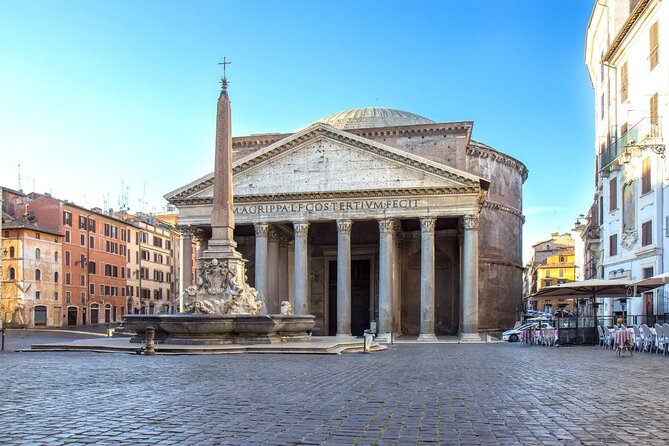
- Pantheon interior visit: learn the building story, then see where major Italian figures are buried.
- Small group size: capped at 15, with headsets to keep every word clear.
Caravaggio and the Pantheon: The Value Behind the $65.17 Price
This tour costs $65.17 and runs about 3 hours, starting at 4:00 pm. That price is fairly reasonable for what you get, because you’re paying for three big ingredients: a real expert guide, multiple church visits tied to specific artworks, and an included Pantheon interior entry plus a guided aperitivo stop.
If you try to do this on your own, you’ll still spend time figuring out which churches match which paintings, and you’ll likely miss the “why this painting, why here” connections that make Caravaggio click. The guide’s job is to connect the dots fast—life, style, and setting—so you don’t just look at dark paintings and guess what to think.
Also, the tour uses headsets, which matters in churches where sound bounces around or you’re standing in clusters. It keeps the experience from turning into a strained group huddle trying to hear over stone walls.
You can also read our reviews of more walking tours in Rome
Starting at Piazza del Popolo and Santa Maria del Popolo’s Caravaggio
The walk begins near Piazzale Flaminio, Roma, with the start point at Piazzale Flaminio and the tour time at 4:00 pm. You’ll start at Piazza del Popolo, one of Rome’s liveliest squares, where Santa Maria del Popolo anchors the whole story.
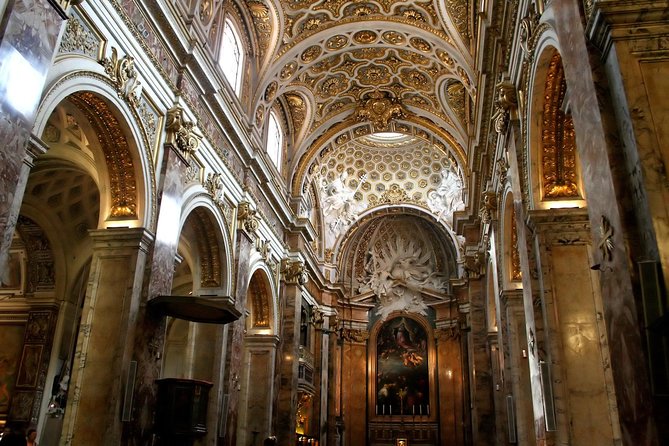
This first church stop is the tour’s emotional launch pad. Inside Santa Maria del Popolo you’ll see two Caravaggio masterpieces: Crucifixion of St. Peter and Conversion on the Way to Damascus. You’re not just collecting famous titles here. The guide uses these works to explain Caravaggio’s urgency—how he pushes emotion and drama using light, gesture, and a sense of real human conflict.
One extra bonus: Santa Maria del Popolo has a dome designed and frescoed by Raphael. That gives you an instant contrast—two giants, two approaches—while you’re still in the same building. It’s a clever way to help your brain switch from Caravaggio’s grit to Renaissance ideals without changing locations.
What to watch for: churches can be crowded, and you’ll likely stand in a spot for a while while the guide points out details. If you’re short on patience for waiting your turn, keep expectations flexible.
Campo Marzio Walk: Via Ripetta, Street Life, and Caravaggio’s Inspiration
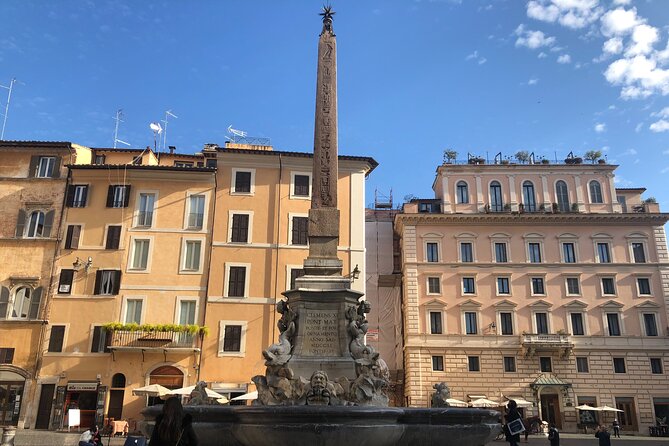
After the first stop, you head through the center toward Campo Marzio. The route includes Via Ripetta, where Caravaggio drew inspiration from the street life in the area—specifically the large number of prostitutes who inhabited the street.
This isn’t just local color. It’s useful context for understanding Caravaggio’s realism and his interest in ordinary people caught in intense moments. When you’ve seen the church paintings already, this stretch helps you connect the darker human themes in his work to a Rome that was visibly lived-in, not sanitized.
You’ll also pass along routes that many art lovers associate with classic Rome strolling—narrow streets like Via Condotti and Via Marguttam come up as you move through the center. There’s even a photo stop at the Spanish Steps area, which is handy if you want a quick break from church interiors.
My advice: use this “outside walking” segment to catch your breath. From here onward, you’ll spend a lot of time inside churches, so a reset outside helps the later stops land harder.
Santa Maria della Pace: Raphael’s Frescoes and Angels Over Your Head
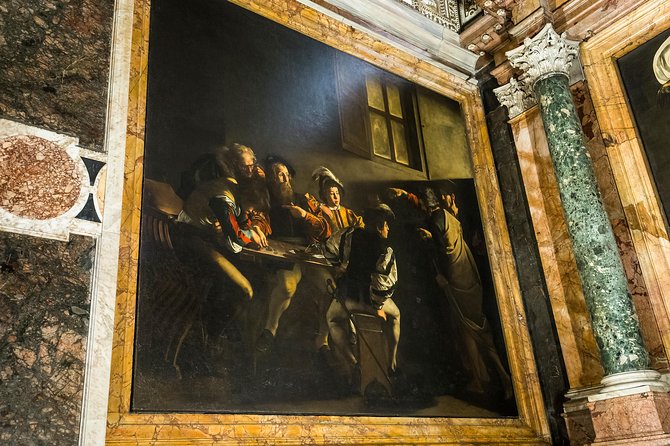
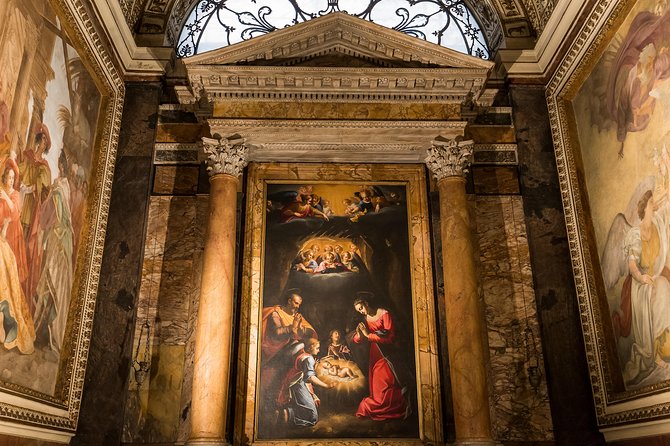
Next up is Santa Maria della Pace, a church that’s easy to miss if you’re just wandering. Here, the tour focuses on Raphael’s fresco of Sybil’s dance and the dramatic angels decorating the ceiling.
This stop works well even if you think you’re only here for Caravaggio. It gives you a benchmark for style and storytelling. Raphael’s world is more idealized and carefully arranged; seeing that right after Caravaggio sharpens your eye for what changes when an artist chooses different emotion, composition, or spiritual tone.
Admission is included for this stop, and the timing is about 30 minutes, which is perfect for staying attentive without getting bored. Churches can be slow by nature—everyone needs a moment to find where the art is—so a structured time box keeps the tour from dragging.
Consideration: if you’re extremely light on walking endurance, these transitions can feel like a lot. The upside is that each church stop is planned to stay focused on specific works, not random sightseeing.
Sant’Agostino and the Cavaletti Chapel Connection to Madonna del Loreto
Then you move to Sant’Agostino, a less trafficked church that still has serious star power. This is where Caravaggio’s Madonna del Loreto appears in the Cavaletti Chapel.
The tour description also highlights that Raphael’s work is present here too. That pairing matters. You get a sense of how Caravaggio’s dramatic intensity can sit in the same larger church world as more polished Renaissance work. The guide can then explain what’s different in the painting language—how the drama is built and what the church context is doing for the viewer.
The guide also brings in Caravaggio’s life—his non-conformist tendencies, persecution, and an early tragic death. That biographical angle can be helpful, because Caravaggio’s choices often look like they come from conflict rather than calm artistic experimentation.
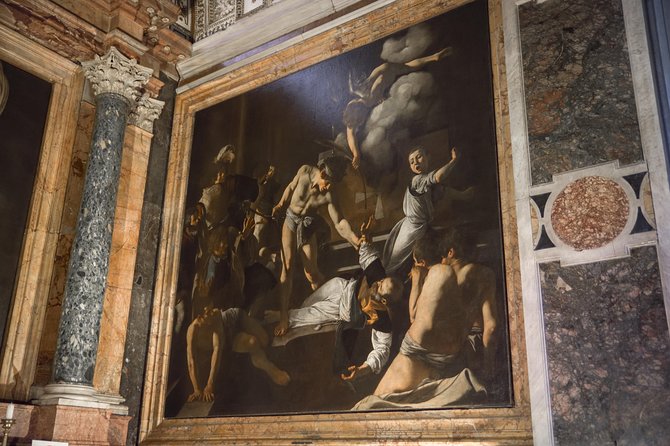
Within this general segment, the tour also points you toward San Luigi dei Francesi, where the San Matteo trilogy is kept. The theme is still Caravaggio—mysterious, intense works in a church setting—so you keep building the same thread: art meets real life.
What I like about this stop: the guide usually makes you look twice. You don’t just spot a painting; you learn what the church setting changes about how you read it.






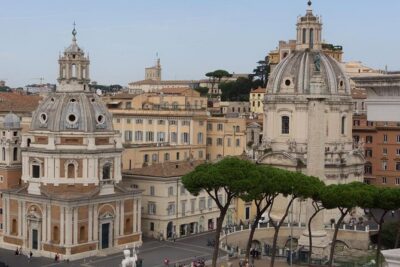
The Pantheon Interior: From Pagan Temple to Italian Kings and Raphael
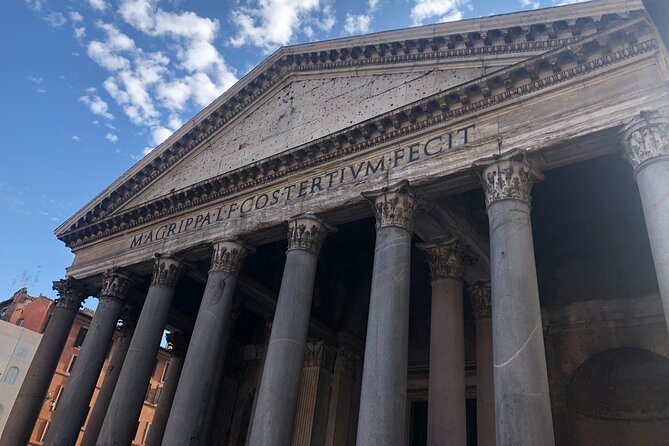
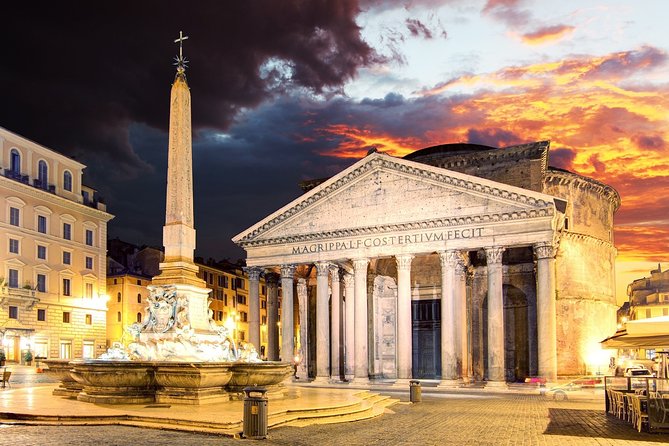
The final major attraction is the Pantheon, with an included interior visit and about 30 minutes. This is the part where your brain gets a breather.
The guide explains how the Pantheon was the first pagan temple converted to Christianity. That shift is not just a religious footnote—it’s part of why the building’s survival feels so important. Then you’ll stand inside and learn about the tombs of the first two kings of Italy, placed there after unification in 1861.
You also get a connection to Renaissance art through Raphael, whose tomb is located here as well. That’s a neat way to complete the arc: Caravaggio’s Rome is the tour’s loud beginning, and the Pantheon’s grand quiet pulls the story into a longer timeline.
Practical tip: the Pantheon interior can be visually intense because it’s so central and so famous. Let the guide slow you down for the key points about structure and the tomb locations, or you may rush through it like a checklist.
The tour ends around Piazza delle Coppelle after the Pantheon visit.
Aperitivo Break: Why the Included Wine Stop Works
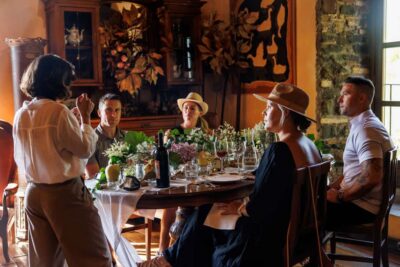
You get an included aperitivo at a local wine bar. This is more than a perk. It helps your brain reset between churches and lets you talk with your guide in a less formal setting.
Some groups in the past described an after-tour food and wine stop at a restaurant like Casa Coppelle/Casa Coppella, with Prosecco and wine and enough small bites to feel like a real break. Even if you’re not a wine person, aperitivo in Rome is a fun way to transition from art facts into normal human conversation.
This is also where the small group format really shows. With a group size up to 15, people tend to ask more questions, and the guide can answer without repeating the same thing 12 times.
Best use of the break: ask one question you’ve been thinking about since the last church. The answers land better after you’ve had a chance to relax.
Group Size, Headsets, and Pace: What Your Afternoon Feels Like
This tour caps at 15 travelers, and reviews have mentioned everything from small groups to almost private-sized experiences. That smaller size is a big reason people seem to love it. In churches, you want attention, not a tug-of-war crowd.
The guide provides headsets, which keeps you from constantly turning your head or guessing what was said. In stone churches and crowded streets, that’s a real quality-of-life detail.
Pace-wise, expect steady walking plus timed church stops. Reviews have also flagged weather as a possible factor, including standing in rain for parts of the tour. Rome weather can change quickly, so bring a light layer or umbrella if you’re traveling in spring or shoulder season.
Who should do it: art lovers who want more than basic facts, people who like context (life and politics behind paintings), and anyone who wants a structured route through multiple churches without research stress.
Who might struggle: anyone with low walking tolerance or strong dislike for changing streets between multiple church interiors.
Guides Matter: What the Best Versions of This Tour Do
The strongest feedback for this tour focuses on the guide. Names that came up positively include Giuseppe, Maria, Valentina, and Jeanette, plus Barbara mentioned in one account. The common thread is how they taught the art: not just what Caravaggio painted, but why he painted it the way he did.
A good guide on this route makes three connections that matter:
- biography to style (Caravaggio’s life informs the emotion and subject choices)
- painting to location (why these works belong in these churches)
- art to Rome (street life, church culture, and the era’s tension)
That’s why this doesn’t feel like a random church crawl. The route is built around the same theme, and the guide keeps it coherent.
If you’re hoping for a tour that makes Caravaggio click for non-art people too, this is the kind of format that can actually work.
Should You Book This Caravaggio and Pantheon Tour?
Book it if you want a focused Caravaggio route with real works in real churches, a structured small-group walk, and an included aperitivo break. The Pantheon ending is the right kind of contrast: drama first, then architecture and calm.
Pass or consider alternatives if you’re determined to avoid walking between multiple churches, or if you need a very flexible, slow pace. The tour is designed to move, and it assumes you’re okay with that.
If you’re on a shorter Rome visit and want maximum art payoff per hour, this is a strong choice. You’ll leave with a clearer sense of Caravaggio as a person, not just a name on a museum label—and you’ll end in one of Rome’s most iconic interiors.
FAQ
How long is the Caravaggio Art Walking Tour of Rome with Pantheon Visit?
It lasts about 3 hours.
What’s the meeting point and start time?
The start is at Piazzale Flaminio, Roma, with a start time of 4:00 pm.
Where does the tour end?
After the Pantheon visit, the tour ends in the area of Piazza delle Coppelle.
What is included in the price?
The Pantheon interior visit, an expert local guide, headsets, and an aperitivo are included.
Do I need to buy tickets for the places you visit?
The tour includes internal visits as listed, and admissions are included for some stops while others are listed as ticket free. Headsets are also provided.
Is the group size small?
Yes. The tour has a maximum of 15 travelers, so it stays relatively personal.
Is hotel pickup included?
No, hotel pickup and drop-off are not included.
Is there luggage storage?
No, luggage storage is not available.
What is the cancellation policy?
Free cancellation is available up to 24 hours in advance for a full refund. If you cancel less than 24 hours before the start time, the amount paid is not refunded.