REVIEW · ROME
Appian Way and Aqueducts Electric Bike Tour
Book on Viator →Operated by Easy Bike Rent Rome · Bookable on Viator
Rome’s old roads feel close on an e-bike. This electric bike tour takes you off the busy center and onto the Appian Way, with stops at major Roman sights and green, open-air stretches tied to aqueducts. You’ll also hear the legend of Egeria and see places that feel like time travel, without the museum-only vibe.
I love the mix of big monuments and real countryside. You get the Circo Massimo scale, plus the quieter mood of Parco degli Acquedotti and Caffarella Valley. I also like how the tour stays guide-led and story-heavy—guides named Monica, Adriana, Monika, Filipe, and Milton show up again and again in great feedback.
One thing to weigh: some parts can be bumpy. You’re on a bike on older surfaces, and even fit riders should expect rocky sections and take it slow—one review included a minor fall.
In This Review
- Key points before you go
- Why the Appian Way feels different on two wheels
- Price and value: what you’re really paying for
- E-bike setup, group size, and meeting point
- Stop 1: Circo Massimo, where chariots used to rule
- Stop 2: Terme di Caracalla and the scale of Roman public life
- Stop 3: Porta San Sebastiano and the Aurelian Walls
- Stop 4: Catacombs of Saint Callixtus on a calmer stretch
- Stop 5: Circus of Maxentius, built for show
- Stop 6: Tomb of Caecilia Metella (and why it still looks impressive)
- Stop 7: Villa of the Quintilii and wealthy Rome beyond the milestone
- Stop 8: Parco degli Acquedotti, riding through the water story
- Stop 9: Parco della Caffarella, countryside Rome in the city
- Stop 10: Ninfeo di Egeria and a legend you can picture
- What the ride feels like (and how to prepare for the real terrain)
- Who this tour suits best
- Should you book the Appian Way and Aqueducts Electric Bike Tour?
- FAQ
- How long is the Appian Way and Aqueducts Electric Bike Tour?
- What is the price per person?
- Is the tour offered in English?
- Are food and drink included?
- Is a helmet provided?
- Who should not book this tour?
- Which admission tickets are not included?
- How large is the group?
- Where does the tour meet?
- What’s the cancellation policy?
Key points before you go
- Appian Way + aqueduct parks outside the city center, so the route feels like a break, not another walking day.
- A small group size, with a maximum of 10 travelers, which helps with navigating.
- E-bike support means this works for many people who want “bike touring” without suffering the whole time.
- Several major sights in about 4 hours, so it packs a lot without feeling like a sprint.
- You may pay for entry at a few stops; some attractions are not included.
- Terrain varies, and you should be ready for rocky, uneven paths.
Why the Appian Way feels different on two wheels
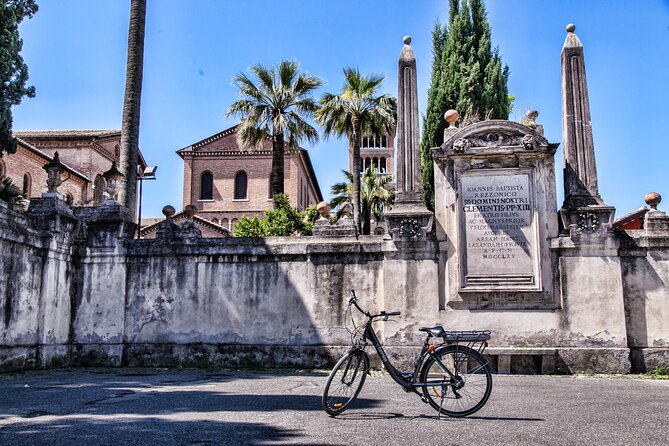
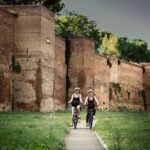
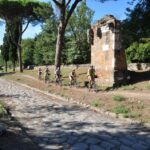
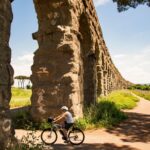
Riding an electric bike along the Appian Way changes the whole tone of Rome. In the center, you hit crowds, lines, and tight streets. Out here, the route stretches into parks and historic corridors where aqueducts slice across the landscape.
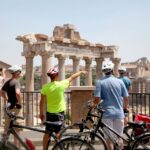
You’ll get a guided walk-and-ride rhythm: bike for the connecting segments, then pause at standout ruins and landmarks. That matters because Roman history isn’t just statues and columns. It’s roads, water systems, gates, and arenas that shaped daily life and power.
You can also read our reviews of more cycling tours in Rome
Price and value: what you’re really paying for
At $90.02 per person for about 4 hours, the value mostly comes from three things: the e-bike rental, the helmet and phone holder, and a guide who keeps the story moving while you ride. This isn’t just transportation. It’s a curated route that strings together sites that are hard to assemble on your own in one clean half-day.
Also, a bike tour can be a smart use of limited time. You cover a lot more ground than a typical guided stroll, and you get the Appian Way setting without needing to figure out every transit detail.
E-bike setup, group size, and meeting point
This tour caps at 10 travelers, so you’re not stuck in a big swarm. That helps when you’re threading from one historic zone to the next.
You meet at Via dei Cerchi, 59, 00186 Roma RM, and the tour ends back at the same place. Tickets are mobile, and the tour is offered in English.
What’s included is straightforward:
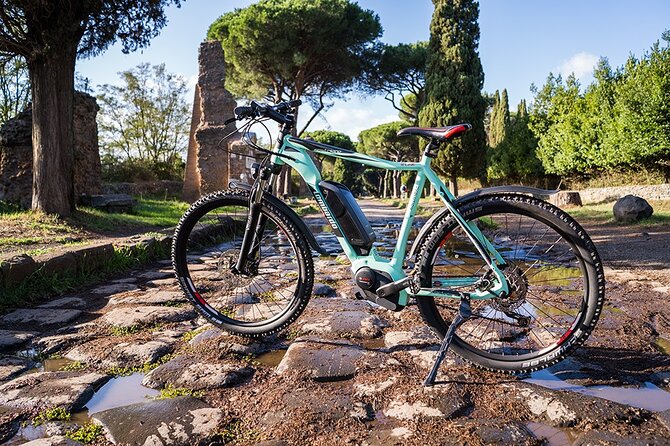
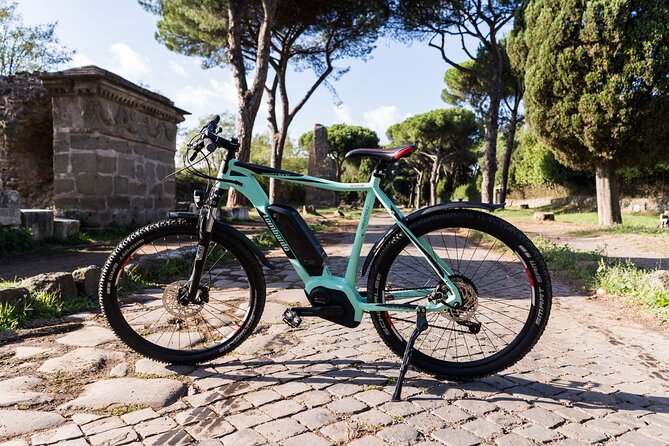
- several sizes of quality e-bikes
- helmet
- mobile phone holder
What’s not included: food and drink, and tips.
Stop 1: Circo Massimo, where chariots used to rule
Your first major “wow” is Circo Massimo, the ancient chariot-racing stadium. It sits in the valley between the Aventine and Palatine hills, and it was the first and largest of its kind in ancient Rome.
This stop sets the theme early: Rome wasn’t quiet. It was spectacle—crowds, speed, and politics wrapped together. Even if you don’t know the details, you can stand in the setting and feel why these events mattered.
- Time on this stop: about 10 minutes
- Ticket note: free admission
Stop 2: Terme di Caracalla and the scale of Roman public life
Next up is Terme di Caracalla, the Baths of Caracalla—Rome’s second-largest thermae complex after Diocletian’s. These baths were built in the early 3rd century (around AD 212/211 to 216/217 under Septimius Severus and Caracalla), and they ran for centuries before falling into ruin.
This is one of those stops where a guide really helps. Baths weren’t just hygiene. They were social space, exercise, conversation, and status. You’ll see a lot more than a pile of stones if someone explains how people used these places.
- Time: about 20 minutes
- Ticket note: admission not included
You can also read our reviews of more tours and experiences in Rome



Stop 3: Porta San Sebastiano and the Aurelian Walls
Then you move to Porta San Sebastiano, one of the largest and best-preserved gates in the Aurelian Walls. Gates are powerful in Rome because they’re the border between inside and outside—between the everyday city and the roads that lead away.
This is a good “breather” stop. You’re learning context for why the Appian Way mattered: Rome’s power didn’t stop at the walls.
- Time: about 20 minutes
- Ticket note: free admission
Stop 4: Catacombs of Saint Callixtus on a calmer stretch
Now you get into the Appian Way’s underworld side: the Catacombs of Saint Callixtus. These catacombs are part of the Appian Way area and are described as being in a nice, almost pedestrian-feeling zone—so you’re not stuck in traffic chaos.
Catacombs trips work best when you’re not rushed. Expect to pause, listen, and connect the underground space to the wider history above it. It’s a striking contrast after the gates and stadiums.
- Time: about 30 minutes
- Ticket note: free admission
Stop 5: Circus of Maxentius, built for show
After the catacombs, you’ll visit the Circus of Maxentius, part of a complex created by Emperor Maxentius on the Via Appia between AD 306 and 312.
This stop keeps the spectacle theme going, but with a different mood than Circo Massimo. Maxentius built his statements in stone—this is one more piece of how rulers used grand public spaces to cement legitimacy.
- Time: about 20 minutes
- Ticket note: free admission
Stop 6: Tomb of Caecilia Metella (and why it still looks impressive)
Along the Appian Way, the Tomb of Caecilia Metella (Mausoleo di Cecilia Metella) is one of the best-preserved monuments. It was built in the 1st century BC to honor Caecilia Metella, described as the daughter of Quintus Caecilius Metellus Creticus.
This is where you start seeing the “layers” of the Appian story. You’re moving from arenas and public systems to family power and elite commemoration. Even from a short stop, it’s a strong visual anchor.
- Time: about 20 minutes
- Ticket note: admission not included
Stop 7: Villa of the Quintilii and wealthy Rome beyond the milestone
Next: Villa dei Quintilii, the Villa of the Quintilii brothers. This is beyond the fifth milestone along the Via Appia Antica, built by Sextus Quintilius Valerius Maximus and Sextus Quintilius Condianus (both consuls in AD 151).
This stop helps you understand that the Appian Way wasn’t only for emperors and events. It was a corridor for wealthy estates and big ambitions. When you pause here, you’re seeing the leftover footprint of elite lifestyle—production, power, and presence.
- Time: about 30 minutes
- Ticket note: admission not included
Stop 8: Parco degli Acquedotti, riding through the water story
Now you get to the Aqueduct Parks zone: Parco degli Acquedotti. The park is named for the aqueducts that cross it, including parts of Aqua Felix and stretches of Aqua Claudia, plus remnants of Villa delle Vignacce.
You can also spot a short stretch of the original Roman Via Latina. That’s a fun detail because it reminds you how these “roads of Rome” weren’t one single thing. They were a network.
This area is also where the e-bike really shines for most people. You’re not stuck in hard walking mode, and you get open-air time that feels like you escaped city density for a few hours.
- Time: about 40 minutes
- Ticket note: free admission
Stop 9: Parco della Caffarella, countryside Rome in the city
Then comes Parco Della Caffarella, part of the Parco Regionale Appia Antica. It sits in the Caffarella Valley and is bordered on the north by Via Latina and on the south by the Appian Way.
If you want Rome that feels less like monuments and more like space—this is it. You’re still in historic territory, but the vibe is green and outdoorsy.
- Time: about 30 minutes
- Ticket note: free admission
Stop 10: Ninfeo di Egeria and a legend you can picture
The final stop is Ninfeo di Egeria, tied to one of Rome’s more myth-flavored characters. Egeria is linked to a legendary role in early Roman history as a divine consort and counselor of Numa Pompilius, the second king of Rome. In the story, she imparts laws and religious rituals, and her name becomes a shorthand for a female advisor.
You’ll hear this while in the setting that matches the story’s mood—calm, quiet, and a little surreal after the arenas and catacombs.
- Time: about 20 minutes
- Ticket note: free admission
What the ride feels like (and how to prepare for the real terrain)
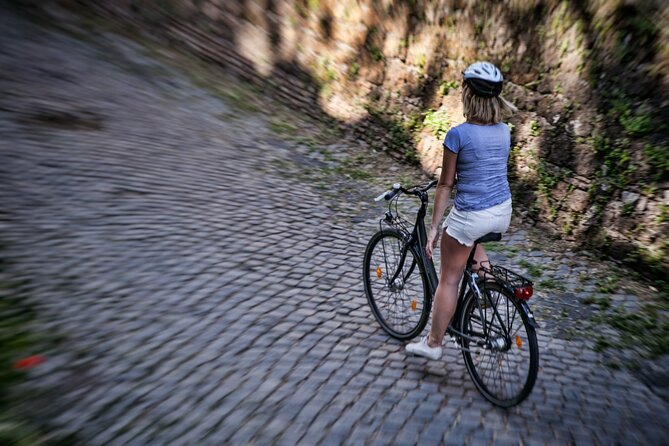
The big theme you should plan around is terrain. This is not just an easy bike path the whole way. Expect some older, rougher surfaces. One standout note from past riders called it bouncy, and another mentioned rocky paths causing a minor accident.
So here’s my practical advice:
- Take it slow on the rough bits. Let the e-bike do the work, not your ego.
- If you’re new to biking, start cautiously and follow the guide’s pace.
- If you’re sensitive to uneven ground, you might want to think of this as a historical route that happens on a bike, not a smooth, flat cycling holiday.
The good news: e-bikes here are described as easy to use, including for first-timers. And since the group stays small, the guide can keep people together and adjust when conditions get trickier.
Who this tour suits best
This works best if you want an authentic Appian Way experience without spending half your day figuring out logistics. You’ll probably enjoy it if you:
- like history beyond the usual top-10 sights
- want a bike tour that mixes riding with guided stops
- appreciate parks and aqueducts as much as ruined buildings
It’s less of a fit if you:
- don’t know how to ride a bike
- are not comfortable with moderate physical activity
- are traveling with kids under 12 (not recommended)
Should you book the Appian Way and Aqueducts Electric Bike Tour?
If you want one half-day in Rome that feels like a real change of scenery, this is a strong choice. For the price, you get an e-bike plus a guided route that stacks major sites—Circo Massimo, Baths of Caracalla, catacombs, Circus of Maxentius—along with aqueduct parks and countryside like Parco degli Acquedotti and Caffarella.
Book it if: you’re excited by the Appian Way setting, you can handle some uneven terrain, and you want history with movement.
Skip it (or rethink it) if: you’re expecting a smooth, easy bike path the whole time, or you’re not comfortable riding.
FAQ
How long is the Appian Way and Aqueducts Electric Bike Tour?
It runs for about 4 hours.
What is the price per person?
The price is $90.02 per person.
Is the tour offered in English?
Yes, it is offered in English.
Are food and drink included?
No. Food and drink are not included.
Is a helmet provided?
Yes. Helmet and a mobile phone holder are included, along with quality e-bikes in several sizes.
Who should not book this tour?
It’s not recommended for kids under 12 years old and not recommended for those who don’t know how to ride a bike. The tour also calls for moderate physical fitness.
Which admission tickets are not included?
Admission is not included for Terme di Caracalla, Mausoleo di Cecilia Metella, and Villa dei Quintilii.
How large is the group?
The tour has a maximum of 10 travelers.
Where does the tour meet?
It starts at Via dei Cerchi, 59, 00186 Roma RM, Italy and ends back at the meeting point.
What’s the cancellation policy?
Free cancellation is available up to 24 hours in advance for a full refund. If you cancel less than 24 hours before the start time, the amount paid is not refunded.