REVIEW · ROME
Ancient Rome’s Ultimate Night Walk
Book on Viator →Operated by Rome's Ultimate Free Walking Tours · Bookable on Viator
Rome after dark tells a different story. This 2.5-hour walk links Rome’s past and present through piazzas of power, faith, and art—plus a stop tied to Michelangelo’s design. I especially like how the route jumps across time without feeling random, and I also like the way it ends with a simple city-center nightcap instead of a hard stop.
One thing to consider: this tour needs good weather, and if rain hits hard, your outdoor plans may get shaken.
In This Review
- Key highlights to look for
- A 7:00 pm route that links Unification, Papal Rome, and the Forum
- Piazza Venezia and the monument story behind Italian Unification
- Piazza del Quirinale: where power has changed hands for centuries
- Piazza del Campidoglio and Michelangelo’s designed idea of Rome
- Via dei Fori Imperiali: views toward the Roman Forum
- Piazza di Pietra: Hadrian’s columns hiding in plain sight
- Piazza Colonna: from church power to the seat of the prime minister
- The complimentary nightcap finish in the city center
- Price and value: what $84.33 covers (and why it may be worth it)
- The route in practice: meeting point, timing, and staying comfortable
- Who this night walk is perfect for (and who should skip it)
- Should you book Ancient Rome’s Ultimate Night Walk?
- FAQ
- What time does the tour start, and how long is it?
- Where is the meeting point?
- Where does the tour end?
- What language is the tour offered in?
- Is there a mobile ticket?
- How much does it cost per person?
- How many people are on the tour?
- Is there a nightcap at the end?
- Do stops require paid admission tickets?
- What if the weather is bad or I need to cancel?
Key highlights to look for
- A 7 pm start with a tight, walkable pace that keeps the focus on key sights
- Michelangelo’s Campidoglio—Rome’s design brain in stone
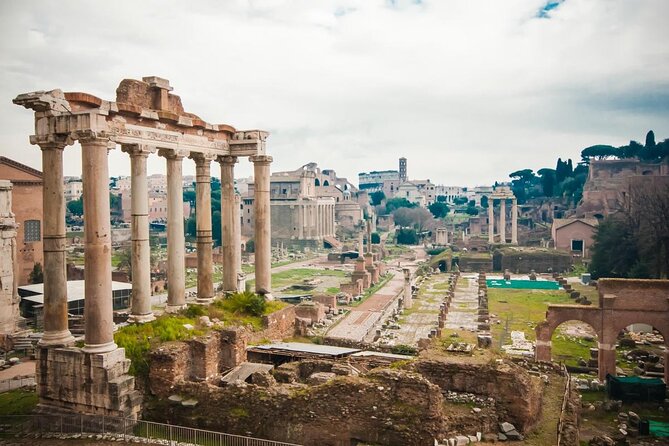
- Via dei Fori Imperiali views of the ancient Forum area
- Temple of Hadrian columns reused on a modern facade at Piazza di Pietra
- Piazzas mapped to power: unification, papal history, and today’s government
- A complimentary nightcap in the city center to cap the night off
A 7:00 pm route that links Unification, Papal Rome, and the Forum
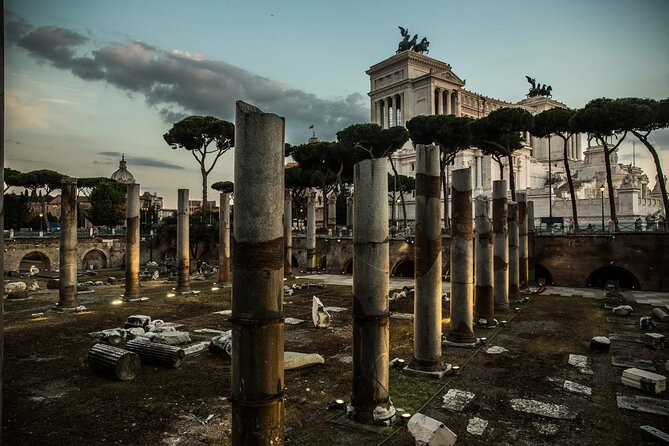
This is a night-focused walking tour, starting at 7:00 pm and running about 2 hours 30 minutes. That timing matters. After sunset, Rome feels less like a daytime checklist and more like a city you’re moving through, watching how each era left its mark. You’re also not stuck for hours in one spot. The pace is broken into short stops, generally around 15 minutes each, so you get context without getting bored.
I like that the tour doesn’t treat Rome as just ruins. You move from symbols of Italian unification into seats of modern state power, then step into the long shadow of the Roman Empire. Even if you only know a little about Rome going in, the story stays clear because the stops are chosen for what they represent, not just what they look like.
Small groups help. The tour caps at 15 people, which usually means you can ask questions and get answers instead of listening from the back row all night. You’ll also use a mobile ticket, and the tour is offered in English.
You can also read our reviews of more walking tours in Rome
Piazza Venezia and the monument story behind Italian Unification
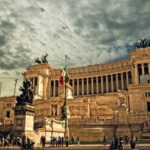
The tour begins at Piazza Venezia, where you get a quick grip on modern Italy’s origin story. This is the kind of place where a monument isn’t just decoration—it’s a signal. You’ll hear the story of Italian unification and how the area became a symbol for it, right in the heart of Rome.
Practically, this is a smart first stop. Piazza Venezia is easy to orient yourself because it’s a big public square with clear lines of sight. In a night walk, that’s important. You want your bearings early, and you want the guide’s voice to set the tone before you start moving deeper into the city’s layered fabric.
Potential drawback: it’s a popular area, so it can be busy. You’ll want to arrive on time so you can actually start your 7:00 pm walk with the group and not get pulled along at the edge.
Piazza del Quirinale: where power has changed hands for centuries
Next you’re at Piazza del Quirinale. This square is all about continuity and change: the current seat of the Italian president, and also what used to be a main papal residence before it became inhabited by the Italian royal family.
What I like here is the way this stop connects politics to architecture. You’re standing in one of those places where the buildings have survived different regimes, but the meaning changed as rulers changed. The tour helps you notice that Rome isn’t just ancient. It’s also a living stage where today’s institutions still sit in the shells of older power.
This is a short stop—about 15 minutes—so don’t expect a long pause for photos from every angle. Instead, treat it like a mental reset: learn what this place used to be, then look at what it is now.
Piazza del Campidoglio and Michelangelo’s designed idea of Rome
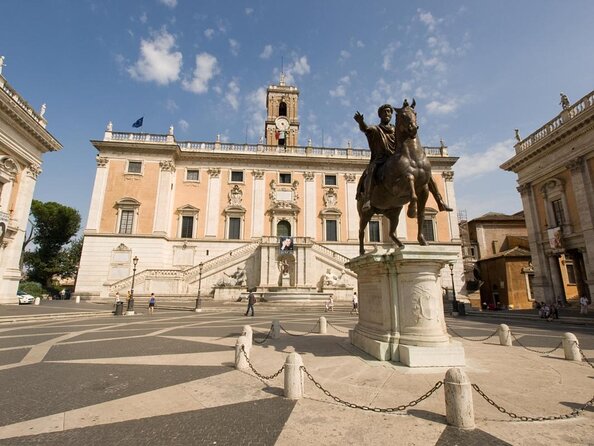
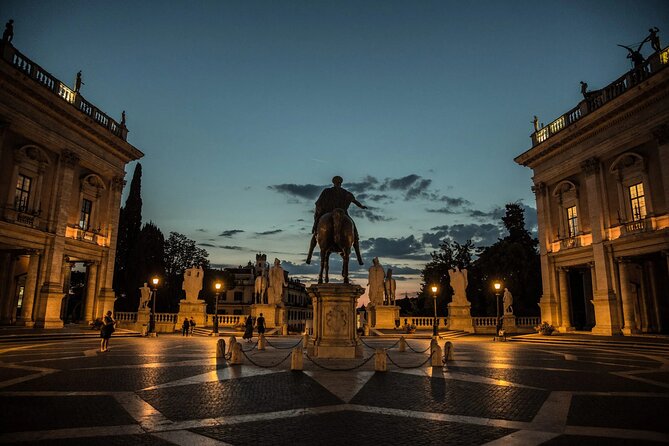
Then comes one of the highlights: Piazza del Campidoglio. You’ll see the breathtaking piazza designed for the Roman Mayor’s seat by Michelangelo. This is where design becomes political. The space is shaped to frame your view and push you toward a certain way of seeing Rome.
If you care about how cities are planned, this stop clicks. Michelangelo’s involvement isn’t just trivia. It helps explain why certain viewpoints feel “made” for drama. In a night walk, the piazza’s lines can feel even more intentional, because you’re not distracted by noon crowds and full daylight.
Time is tight here too—about 15 minutes—so I suggest using that window to focus on the overall geometry first, then pick one or two photo angles. If you rush for every picture immediately, you’ll miss what the piazza is doing to your sense of perspective.
Via dei Fori Imperiali: views toward the Roman Forum
After Campidoglio, you intersect toward Via dei Fori Imperiali, a long corridor that gives you a view of the Ancient Roman Forum, once described as the center of Western civilization. Even when you’re not standing inside excavated structures, the “big picture” matters. You start understanding why this area was so central: it wasn’t just one monument. It was a whole hub of civic life.
This stop is about 15 minutes, which is ideal because it’s not an exhausting wandering segment. You get to look, listen, and connect the Forum idea to the other places you’ve already seen—unification symbols, seats of authority, and Rome’s repeated habit of building on top of itself.
One consideration: if you’re the type who hates crowds, you might want to keep your photo expectations realistic. This corridor can get busy. Also, because it’s outdoors for part of the experience, it loops back to the tour’s weather requirement. If conditions are rough, your walking comfort can change.
You can also read our reviews of more evening experiences in Rome
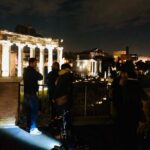
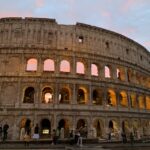
Piazza di Pietra: Hadrian’s columns hiding in plain sight
At Piazza di Pietra, the tour points out something you might miss on your own. You’ll see the facade of the local Camera di Commercio, with original columns of the Temple of Hadrian still present.
This is one of those Rome moments that feels like a quiet cheat code. It’s not an isolated ruin. It’s architecture that stayed in use, repurposed, and preserved by being folded into modern life. The tour helps you notice those connections instead of treating ancient Rome as distant and untouchable.
This is a shorter stop—around 5 minutes—so keep your eyes open. If you blink, you’ll probably miss the detail the guide is pointing out. Quick stop, clear payoff.
Piazza Colonna: from church power to the seat of the prime minister
The tour ends at Piazza Colonna, and along the way you’ll learn what this square represents in Roman power history. The focus is on the history of Roman families who helped run the Catholic Church, and also that the area is home to the Italian Prime Minister.
What’s useful here is the framing. The tour isn’t just listing facts. It’s drawing a line between institutions: church authority, political authority, and how they shaped where people gathered. You’re standing in a place that has been significant more than once, under different systems, across different centuries.
This stop is about 15 minutes. It’s also where the tour’s ending energy matters. You’re not just walking from one sight to the next; you’re finishing at a central location where the story you learned can stick.
The complimentary nightcap finish in the city center
After Piazza Colonna, the tour includes a complimentary nightcap in the city center. This matters more than it sounds. A night walk can feel like rapid-fire impressions. Ending with something small but communal helps you slow down just enough to digest what you saw and heard.
In a group capped at 15, this informal finish also gives you a chance to ask the guide follow-up questions without needing to keep the pace. It’s a nice way to turn a moving tour into an actual evening experience.
Practical note: since it’s an outdoor-first walk that runs roughly 2.5 hours, you’ll likely appreciate having a light layer and comfortable shoes. The tour requires good weather, but comfort still depends on you.
Price and value: what $84.33 covers (and why it may be worth it)
At $84.33 per person, this isn’t a bargain-basement walk. So you should ask: where does the value come from?
Here’s the honest math as I see it:
- You get a 2.5-hour structured route with short stops and a clear storyline.
- It’s English-speaking and designed to connect eras, not just recite names.
- The group size stays small (up to 15), which usually improves interaction.
- You also get a complimentary nightcap at the end, which softens the overall cost.
- The sightseeing is ticket-free at each stop (the provided admission notes list free entry), so you’re paying mainly for guiding and interpretation rather than entrance fees.
The key value isn’t access to restricted sites—it’s the thread the guide gives you. And the quality of that thread matters in Rome, where it’s easy to get lost in random monuments.
Speaking of that guide: the name Nick comes up strongly in the feedback, with people praising how he made the history come alive and kept the tone friendly and engaging. That’s exactly what you want in a night walk, when you’re relying on the guide to turn geography into meaning.
The route in practice: meeting point, timing, and staying comfortable
You meet at Via dei Serpenti, 89 (00184 Roma RM) at 7:00 pm and the tour ends at Piazza Colonna. Since it ends in a central area, you’re set up to continue your evening without needing a long ride right away.
A few practical tips that matter for this kind of walk:
- Arrive early enough to settle in before the official start time. A night tour is not the moment to rush.
- Bring a layer. Even if Rome is warm in your head, evening temps can shift.
- Since the tour requires good weather, consider rain protection if the forecast looks sketchy. You don’t want soaked shoes to ruin the last hour.
- Use the mobile ticket and have your phone ready at check-in time so you’re not hunting for details once you’re on the move.
If you like a guided story and want your time to feel intentional, this tour style fits well. If you prefer wandering alone without structure, you might find the stop rhythm a little tight.
Who this night walk is perfect for (and who should skip it)
This tour is best if you:
- Want a connection-based Rome experience (not just isolated monuments).
- Like the idea of seeing how modern Italy sits on top of older Rome.
- Prefer a small group and short stop windows.
- Plan your sightseeing for evening rather than midday.
You might want to consider another option if:
- Weather is uncertain and you hate walking outdoors in rain.
- You want long time inside major sites, because this tour focuses on the power of piazzas and views rather than extended museum-style time.
- You’re looking for a slow, open-ended stroll. The pacing is structured, with defined stop lengths.
Should you book Ancient Rome’s Ultimate Night Walk?
Yes—if you want Rome that tells a story, not Rome that just throws monuments at you. The route smartly links symbols of Italian unification, the Quirinale’s shifting roles, Michelangelo’s Campidoglio, and the Forum corridor view, then wraps it with a nightcap at a central endpoint. The price is not low, but the small group size and guided interpretation help justify it.
If you’re booking last-minute with iffy weather, think twice. This one depends on the evening staying walkable. Otherwise, grab a spot, show up a bit early, and let the route do its job: turning Rome’s history into something you can actually follow on foot.
FAQ
What time does the tour start, and how long is it?
The tour starts at 7:00 pm and runs for about 2 hours 30 minutes.
Where is the meeting point?
The meeting point is Via dei Serpenti, 89, 00184 Roma RM, Italy.
Where does the tour end?
The tour ends at Piazza Colonna.
What language is the tour offered in?
The tour is offered in English.
Is there a mobile ticket?
Yes, the tour includes a mobile ticket.
How much does it cost per person?
The price is $84.33 per person.
How many people are on the tour?
The tour has a maximum of 15 travelers.
Is there a nightcap at the end?
Yes, the tour ends with a complimentary nightcap in the city center.
Do stops require paid admission tickets?
All the stops listed here note admission ticket free.
What if the weather is bad or I need to cancel?
The tour requires good weather. If it’s canceled due to poor weather, you’ll be offered a different date or a full refund. You can cancel up to 24 hours in advance for a full refund.