REVIEW · ROME
Walking Tour of the Colosseum, Roman Forum and Palatine Hill
Book on Viator →Operated by Rome in tours · Bookable on Viator
Ancient Rome hits different on foot. This walking tour strings together three of the biggest sites—the Colosseum, Roman Forum, and Palatine Hill—with stories grounded in archaeology and history. The result is less like a checklist and more like watching the city explain itself, stop by stop.
I especially like two things: first, you get a guide who can read the ruins like a map, with real-world context (names that come up include Ferdinando, Francisco, and Chiara). Second, you start with Colosseum admission already built into the experience, including the reservation fees, so you spend your time looking at stone instead of dealing with forms.
One consideration: if you’re going on the first Sunday of the month, Colosseum and Forum access is free, but they can’t pre-buy a timed slot to skip the line. Plan for a wait, and meet at 8:00am so you can still enter with the group.
In This Review
- Key highlights you’ll feel right away
- Entering the Colosseum without wasting your day
- Quick practical notes before you go
- Colosseum first: underground levels and top-tier viewpoints
- What the guide adds at the Colosseum
- The main drawback: first-Sunday lines
- Palatine Hill: emperor palaces, Romulus and Remus, and big views
- Tradeoff to consider
- Roman Forum: where politics, religion, and memory overlap
- A good way to think about the Forum
- What you get at the end of the tour
- What the included tickets and headsets really change for you
- Tour pacing, group size, and how crowded days feel
- Who this tour is best for (and who might not love it)
- Should you book this Colosseum–Forum–Palatine tour?
- FAQ
- What’s included in the ticket portion of the tour?
- How long is the walking tour?
- What language is the tour offered in?
- Do I need ID to enter?
- What happens on the first Sunday of the month?
- Where does the tour end?
Key highlights you’ll feel right away
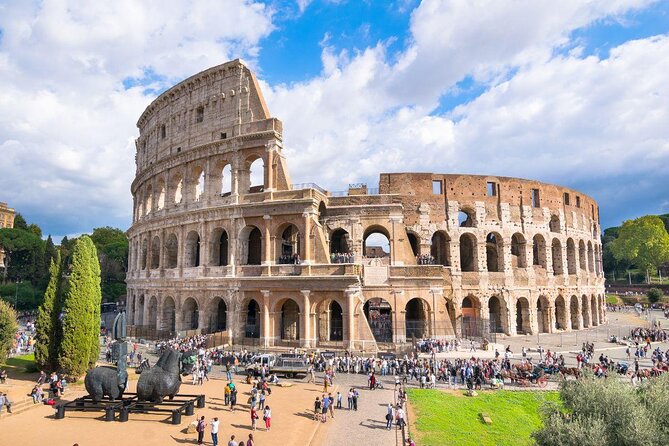
- Archaeologist-led storytelling: Expect clear explanations, plus reconstructed ideas that help buildings make sense.
- A tight route through Rome’s core: Colosseum → Palatine Hill → Roman Forum in about 3 hours.
- Panoramas from Palatine Hill: You get wide views over the Forum and Circus Maximus area.
- Headsets when groups get larger: Helpful for clarity without shouting over crowds.
- Tickets handled for you: Colosseum entrance and reservation fee are included.
- Small-group feel: The tour caps at 50 travelers.
Entering the Colosseum without wasting your day
This tour is designed for one thing: getting you into Rome’s power core with enough structure that you don’t feel lost in the noise. You’ll start at Via di San Gregorio (Via di S. Gregorio, 00186 Roma) and end near Largo Corrado Ricci close to Saint Peter in Chains.
You don’t need to be a Roman-empire nerd to enjoy it. The guide’s job is to translate what you’re seeing—tiers, corridors, religious-political spaces—into plain English you can picture. And when the guide is an archaeologist (that’s a big theme here), the explanations tend to land because they connect details you can actually spot on the ground to how the site worked.
You’ll walk at a real touring pace for about 3 hours (approx.). That’s long enough to feel like you did something meaningful, but short enough that you can still plan dinner afterward without losing your whole afternoon.
You can also read our reviews of more walking tours in Rome

Quick practical notes before you go
The tour runs in all weather conditions, so dress properly. Also, take the ID rules seriously: you must present a valid passport or ID document that matches the name used at booking. If you’re traveling under 18, a valid ID is required at entry.
And yes, this is a place where people cluster hard. The experience includes a mobile ticket, which helps you move through the process more smoothly once you’re at the entrance area.
Colosseum first: underground levels and top-tier viewpoints
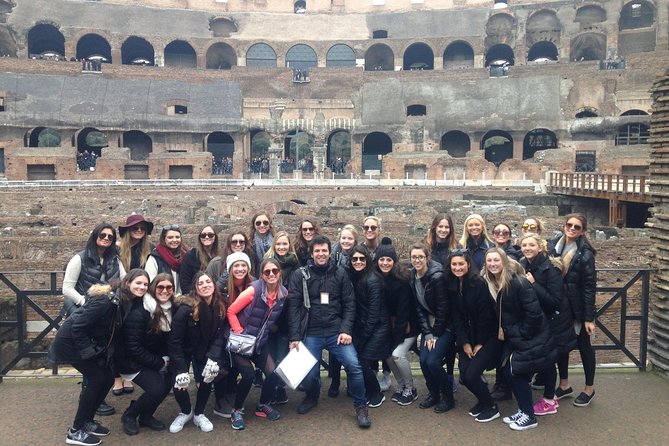
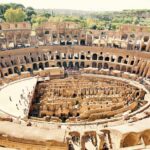
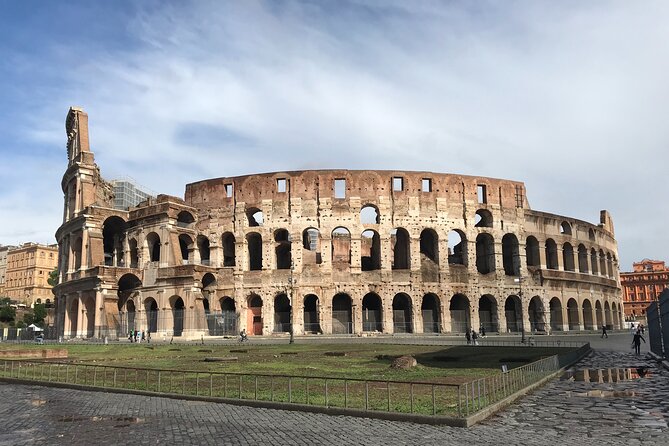
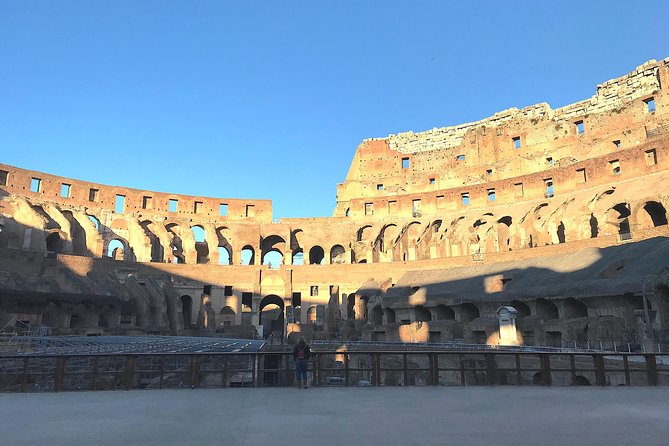
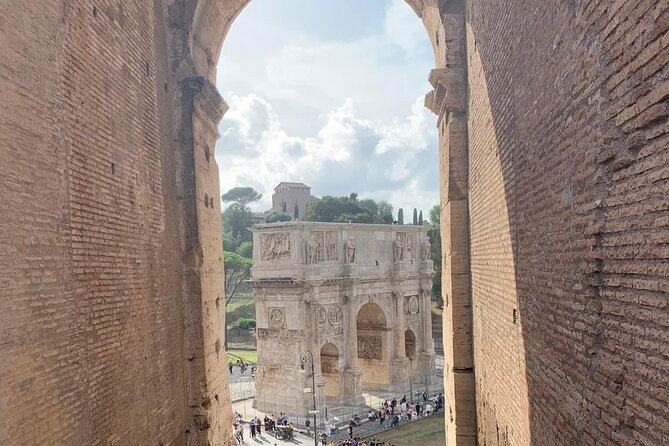
The Colosseum portion is built around both the dramatic views and the less-obvious parts of the building. You start with the big wow: the ground level and a look at the underground levels—the area that helps you understand what spectators couldn’t see when the show started.
Then the tour slows just enough to point out structural details that most first-timers miss. For example, you’ll stop to take in the corridor dividing the second by third tier—a reminder that this wasn’t only an arena. It was a designed machine for movement, seating, and control.
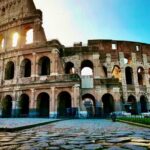
You also get several short stops aimed at panoramic viewpoints of the Colosseum and the surrounding area. Those pause moments matter. Without them, you tend to rush from photo spot to photo spot and never quite get the building’s layout in your head. With the stops, you leave with a better mental model: where you’re standing, how the tiers relate, and why the underground spaces mattered.
What the guide adds at the Colosseum
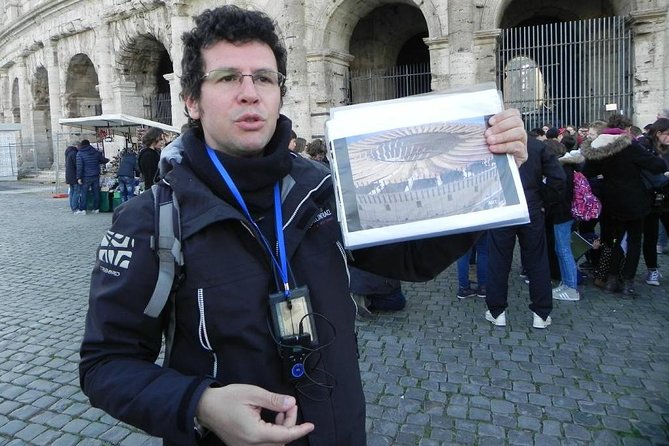
This is where the archaeologist angle pays off. Guides in this experience are described as having archaeological training, and names like Ferdinando show up repeatedly in reviews for bringing excavations and reconstructions into the talk.
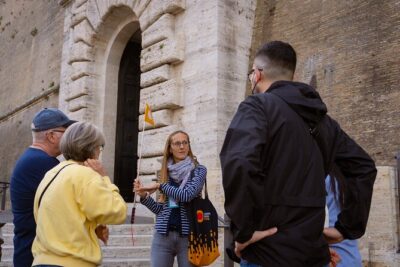
What that means for you: you’re not just hearing dates. You’re connecting the site to how people lived, worked, and staged spectacles. Even better, the pace is often described as considerate—one review notes the guide adjusted for a pace that worked well for a parent and a child, and another praises shade breaks on a hot day. So if you’re not into sprinting through crowds, this format tends to feel manageable.
The main drawback: first-Sunday lines
If you’re visiting on the first Sunday of the month, Colosseum access becomes free. That’s great in price, but not great for skip-the-line expectations. The experience notes they can’t pre-buy a slot on those dates, so you’ll queue with the guide. You’ll meet at 8:00am to help avoid the worst of it, but expect waiting time before entering.






Palatine Hill: emperor palaces, Romulus and Remus, and big views
After the Colosseum, the tour moves to Palatine Hill, and that change of mood is one reason I like this route. The Colosseum is dense, vertical, and loud with crowds. Palatine Hill is open-air and panoramic, and it pulls you upward toward the kind of scenery that makes Rome feel huge.
You’ll spend about 45 minutes here. The focus is on the emperor palaces area and the legends that cling to this hill. You’ll also hear the story of Romulus and Remus, including where the twins were abandoned and then raised by the she-wolf (as the legend goes). Even if you know the tale already, seeing it tied to the actual place makes it feel less like a textbook myth and more like a landscape with a memory.
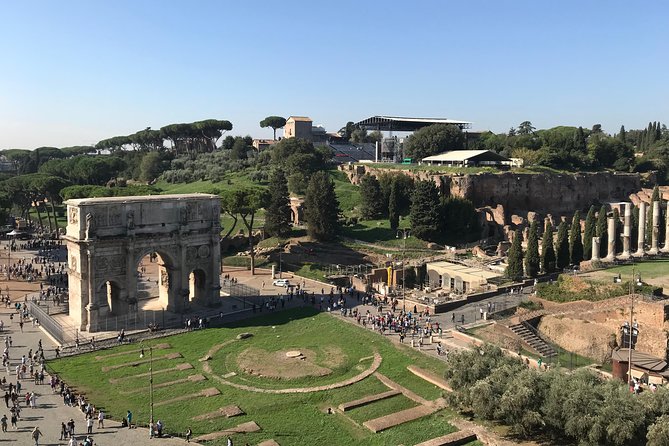
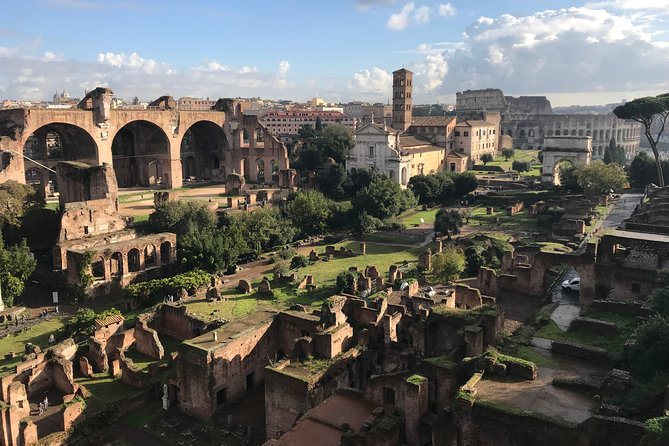
Then you get the views. Palatine Hill offers some of the best “now you see it” moments for the Roman Forum and the Circus Maximus area. From up here, you can better understand why the Forum mattered. It’s not just ruins in a flat field—it’s a network of spaces designed for power, ceremony, and civic life.
Tradeoff to consider
You’re going to be on your feet for several hours across three areas. The hill part is worth it for the scenery, but if you’re planning this on a day when your legs already feel tired, that’s something to think about. This tour is short by Rome standards, but it is still a walking tour with stops.
Roman Forum: where politics, religion, and memory overlap
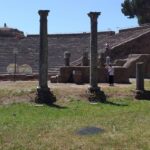
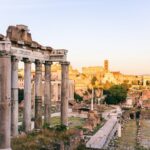
The final leg is the Roman Forum, also about 45 minutes. This is the “beating heart” stop—an area that shaped political, social, and religious life in Roman times. It’s also the most visually complicated portion for new visitors, because it’s big, spread out, and loaded with ruins that overlap in your field of view.
That’s where guided structure helps. Instead of wandering, you’ll hit key sites tied to major stories:
- the Sacra Via, a central processional route
- sites connected to Julius Caesar, including the place of his cremation and the podium where Mark Anthony delivered his funeral speech
- major temples and civic buildings such as the Temple of Antoninus and Faustina, the Temple of Julius Caesar, and the Arch of Septimius Severus
- more “behind the curtain” spaces like the Curia Iulia and the Tabularium, described as the ancient state archive
You’ll also see large religious and public anchor points like the Temple of Concordia, the Temple of Vespasian, the Temple of Castor and Pollux, and the Temple of the Vestal Virgins. The guide’s job is to connect these to how Romans marked authority and how the Forum worked as a staged space for public life.
A good way to think about the Forum
I like to treat the Forum as three layers:
1) the big story layer (Caesar, power, speeches),
2) the civic layer (councils, archives, administration),
3) the sacred layer (temples and ritual spaces).
This tour points you to those layers without turning it into a lecture you’ll forget ten minutes later. When it’s done well, you walk through and your brain starts organizing the stones into relationships rather than random fragments.
What you get at the end of the tour
The tour ends near Largo Corrado Ricci, close to Saint Peter in Chains. That’s a handy location because you’re also near the Metro stop Cavour on Line B, about one stop from Termini. In practical terms, you can keep exploring without needing to backtrack across town.
What the included tickets and headsets really change for you
This experience isn’t just “a guide with a script.” It includes Colosseum entrance and the Colosseum reservation fee, with those items listed as valued at €18 and €2 per person. The rest of what you pay covers the guide and the service around admissions.
If you’ve ever tried to DIY this on a busy day, you know the hidden cost is time and frustration. Here, the ticket pieces are pre-handled. That doesn’t magically erase crowds, but it reduces the friction so you can focus on the experience itself.
The headsets are another practical win. When the group is 6 people or more, you’ll get headsets for clearer audio. That matters in a place where crowds and echoes can swallow normal conversation.
Tour pacing, group size, and how crowded days feel
The tour caps at 50 travelers, and that matters because the route through these monuments can feel tight. A big group doesn’t automatically ruin it, but smaller feels easier to hear and easier to move between viewpoints.
It’s also designed with enough time for photos and re-positioning. Reviews highlight that guides take care to show you good vantage points and guide you through crowds. One review also notes how the guide helped by using shade and breaking up the walking on a hot day—so if you’re traveling in the summer, pick this kind of organized tour over a free-for-all plan.
Still, you should expect some waiting at the Colosseum area, especially on the first Sunday of the month when free access applies.
Who this tour is best for (and who might not love it)
I think this tour fits best if you want a “big Rome” hit without spending your whole day mapping logistics. It’s ideal for:
- first-timers who want the three iconic ancient sites connected in one flow
- travelers who like archaeology-focused explanations
- anyone who hates losing time to ticket lines and prefers a guided route with admissions handled
- families who want structure and stops rather than aimless wandering
You might want to consider a different format if:
- you have very limited walking ability, since this is a walking tour with multiple stops across the sites
- you’re visiting on the first Sunday and you don’t want to deal with a line before entry
Should you book this Colosseum–Forum–Palatine tour?
Yes, if you’re aiming to get real understanding, not just photos. The biggest reason is the guide approach: multiple reviews praise guides with archaeology backgrounds—names like Ferdinando come up often—with clear explanations and even reconstructed visuals that help you picture how things looked and worked. Add ticket handling for the Colosseum and headsets for group clarity, and the $240.15 price starts to feel like paying for time and expertise, not just access.
If you’re going on the first Sunday, go in knowing you’ll still queue even with the tour. If that doesn’t bother you, you can still make a great day of it, especially because the guide uses the waiting time to set context.
FAQ
What’s included in the ticket portion of the tour?
The tour includes a Colosseum entrance ticket and a Colosseum reservation fee (both specifically listed as included).
How long is the walking tour?
It lasts about 3 hours (approx.).
What language is the tour offered in?
The tour is offered in English.
Do I need ID to enter?
Yes. You’ll need a valid passport or ID document that matches the name provided at booking. The experience also notes that participants under 18 must present valid ID at the Colosseum and Roman Forum entrance.
What happens on the first Sunday of the month?
Access is free on the first Sunday, but the experience says they cannot pre-buy an entrance slot. You’ll meet the guide at 8:00am and there will be waiting time before entering.
Where does the tour end?
It ends at Largo Corrado Ricci, 42, close to the church of Saint Peter in Chains and near Metro Line B (Cavour), about one stop from Termini station.