REVIEW · ROME
Vespa Tour – The Essence of Rome
Book on Viator →Operated by Rome for You Soc. coop · Bookable on Viator
Rome by scooter is the speed run you can feel.
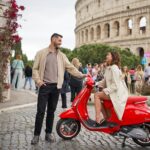
This Vespa tour turns major sights into a moving street-level experience, with helmets and fuel included so you can focus on the ride. I also like the way you cover a lot in about three hours, with guided stops at places such as the Colosseum area and Trevi Fountain without getting stuck in slow, long-walk circles (short sightseeing stops). The main catch: this is for people comfortable riding scooters in real Rome traffic and tight streets, not for the faint of heart.
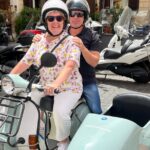
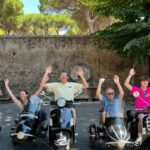
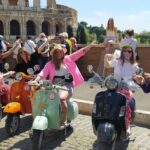
The best part for me is how the guide keeps the story going while you’re already in motion. If you’re lucky with your guide, names like Marco and Victorio show up in past groups, and they clearly lean into photos, pacing, and little moments that make the city feel less like a checklist and more like a first-hand ride. You also get flexibility on the scooter setup, since you can choose one or two riders per Vespa depending on how your group is arranged.
One more consideration before you book: you need the right license. A B driver’s license is required, and for US citizens an International driver’s license is needed. If you don’t have that, or if you’re not ready for scooter handling, you’ll feel it quickly and the fun can turn into stress.
In This Review
- Key Things to Know Before You Ride a Vespa in Rome
- Why This Vespa Tour Feels Like Rome’s Shortcut
- Price and Value for a 3-Hour Highlights Loop
- Licenses, Helmets, and the Reality of Riding in Rome Traffic
- Ancient Rome Highlights: Largo Argentina, Foro Romano, and the Colosseum Area
- Circo Massimo, the Mouth of Truth, and the Big-View Stop at Piazza Venezia to Trevi
- Spanish Steps, the Pantheon, and Piazza Navona’s Fountain Circuit
- Castel Sant’Angelo, St. Peter’s Square, and Campo de’ Fiori Market Energy
- Who Should Book This Vespa Tour (and Who Should Skip It)
- FAQ
- FAQ
- How long is the Vespa Tour The Essence of Rome?
- What is the price per person?
- Is the tour offered in English?
- Do I need tickets for Foro Romano or the Colosseum?
- Is the Pantheon stop ticketed?
- Where do I meet the guide, and where does the tour end?
- What’s included in the tour price?
- What’s not included?
- What license do I need to ride?
- Can I cancel for a refund?
- What should I wear or bring?
- Should You Book This Vespa Tour?
Key Things to Know Before You Ride a Vespa in Rome
- Helmet and fuel included, so the tour budget stays predictable.
- A small group (max 10) on a private tour, which helps with pacing on crowded streets.
- You’ll hit iconic and ancient landmarks fast, with guided explanations at each stop.
- Two-rider option per scooter can work well for couples and friends.
- License requirements are strict (B license, and International license for US travelers).
- Exteriors and quick stops are the model here, not long indoor museum visits.
Why This Vespa Tour Feels Like Rome’s Shortcut
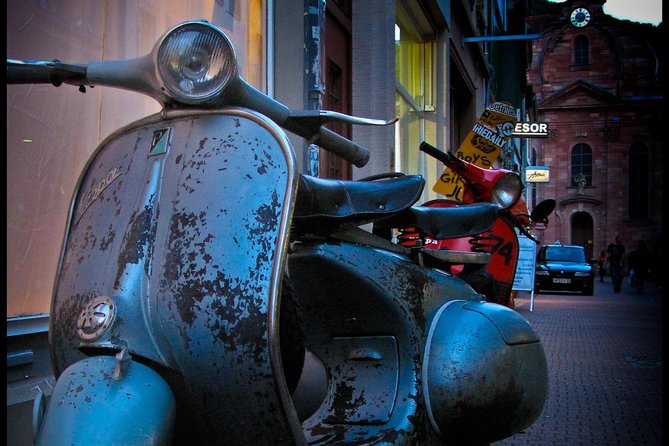
Rome has a way of making you choose between time and experience. Walk too slow and you miss chunks of the city. Rush too hard and you miss what makes places memorable. This Vespa format hits a sweet spot: you’re moving through real neighborhoods and streets, but the guide stops you at key points often enough that the landmarks still land.
I like that the tour keeps the experience practical. You get a “ride, stop, learn, move on” rhythm, which works well for a short stay. You’re not stuck spending your whole day waiting for entrances, relocating buses, or doing a long chain of transit transfers. Instead, you get guided context while Rome is still around you—sound, traffic flow, and the feel of the city.
And yes, it’s fun in a very literal way. Past guides with names like Ricardo and Marc have been credited for keeping energy high and making the trip feel like a lively local outing, not a stiff lecture on wheels. That matters, because scooter tours can be mentally tiring. A guide who manages pace and attention helps you enjoy it rather than just survive it.
You can also read our reviews of more tours and experiences in Rome

Price and Value for a 3-Hour Highlights Loop
At $137.80 per person for about 3 hours, this is not a bargain tour. It’s also not overpriced if you look at what’s included. You’re paying for the Vespa itself, helmets, fuel, and a professional guide, plus the advantage of covering big-name sights on a single route.
Here’s how I think about value: three hours is enough time to see a ton of “first Rome” icons, but it’s not enough time to do them all deeply. This tour is built for that reality. You should come expecting guided looks and fast explanations—perfect if you want to get your bearings fast and then choose what to revisit later.
If your ideal Rome day means long museum interiors at every stop, this probably won’t match your style. The model here is short stops and strong orientation. That trade-off is the whole deal, and once you accept it, the price starts to make sense.
Licenses, Helmets, and the Reality of Riding in Rome Traffic
This is the part you shouldn’t skim.
The tour requires a B driver’s license, and US citizens need an International driver’s license. Minimum age is 21. The dress code is smart casual. Helmets are provided and you’ll have use of the Vespa plus fuel included, which is great because you don’t have to worry about extra costs.
What’s not provided is the confidence to ride. The guidance given for this experience is clear: you need strong experience driving scooters in city traffic conditions. Rome streets can be narrow, crowded, and full of unpredictable movements from cars, buses, scooters, and pedestrians. Even with a slow guide, you’re still actively riding.
So my practical advice is simple:
- If you’ve ridden scooters before in dense city traffic, you’ll probably enjoy this a lot.
- If you’ve mostly ridden in quiet areas or only on vacation roads, consider this a safety red flag.
- If you’re nervous, you’ll feel that during the tight turns and stop-start flow. Better to be realistic up front.
Ancient Rome Highlights: Largo Argentina, Foro Romano, and the Colosseum Area
You start near the action and history right away. Your first stop is Area Sacra di Largo Argentina, where you pick up your Vespa and meet your guide. The key point here is momentum: you’re on the scooter early, not waiting around all morning.
From there you head to Foro Romano. This stop is short, and the ticket is listed as not included, which tells you the pacing story: you’re getting guided interpretation and major ruins context, not a long inside visit. I love stops like this when I’m in Rome for the first time. You get a quick map of the “heart of Ancient Rome,” so the bigger later visit feels smarter.
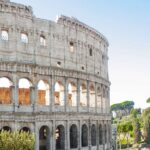
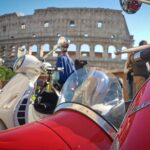
Next is the Colosseum area (the Flavian Amphitheatre), with guidance that connects the site to the history of Imperial Rome. The tour also mentions the Arch of Constantine. Again, expect explanation and viewpoint time rather than a full paid entry experience. Admission is not included, so plan on seeing it from the outside and soaking up what makes it historically meaningful.
One drawback with any fast-track ancient route is that you can’t fully explore every corner at museum pace. But as an orientation tool, this works well. You’ll leave with enough context to know where you want to spend your next hour on foot later.
Circo Massimo, the Mouth of Truth, and the Big-View Stop at Piazza Venezia to Trevi
After the Colosseum-area storytelling, the tour shifts to a mix of ancient grandeur and the classic Rome postcard stops.
You pause at Circo Massimo, the ancient stadium known for chariot racing, and you get a view toward Palatine Hill, one of the Seven Hills of Rome. This is a good stop for two reasons: first, the scale makes sense when you can see it from street level. Second, you’re not trapped inside a ticketed site; you’re learning from the urban layout.
Then you reach a spot tied to a famous oddity: a tall medieval belfry that houses the Mouth of Truth. Across the street you’ll see the Temple of Hercules Victor and the Temple of Portunus. Even if you don’t do a deep inside visit, this cluster is a great example of how Rome stacks time periods right next to each other. You’ll also likely appreciate it more because the tour is already moving you across different eras.
From there, you hit Piazza Venezia, a heavy-hitter square where the guide points out several monuments and viewpoints. Expect time to take in Trajan’s Column, the Vittoriano Monument, and Altare della Patria (Italy’s Tomb of the Unknown Soldier), along with sights tied to Capitoline Hill, including Church of Saint Mark and Palazzo Venezia. It’s a dramatic contrast after ancient ruins—less about the amphitheatre and more about Rome’s national-story presentation.
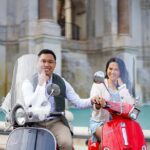
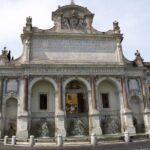
Then it’s on to Fontana di Trevi. This is classic Rome, and the tour lists it as free admission. The stop is about 15 minutes, which is enough to see the fountain properly and get your photos, even if you’re not planning a long sit-down. You’ll hear the tradition about tossing a coin over your shoulder to return to Rome someday. My advice: do it quickly and keep your attention on the road crowding. Trevi is popular, and a scooter tour means you move on fast.
You can also read our reviews of more tours and experiences in Rome

Spanish Steps, the Pantheon, and Piazza Navona’s Fountain Circuit
Next up: the look of Rome that most people dream about before they arrive.
At the Spanish Steps, the focus is on the monumental stairway and the surrounding landmarks, with about 15 minutes there. The tour highlights the Scalinata di Trinità dei Monti, plus the church Santissima Trinità dei Monti. You’ll also see the early Baroque fountain called Fontana della Barcaccia and the Column of the Immaculate Conception. This is a good stop to slow your brain down for a minute—stone, height, and layout. Even if you’re in motion the rest of the day, this is where the city feels like a stage set.
Then comes Pantheon, with a note that you’ll get the full history and architectural description. The stop is about 10 minutes and marked as free admission. I like this model because architecture is the kind of thing a guide can explain quickly, and you can still decide if you want to go inside afterward. Even without long time, you’ll come away understanding what you’re looking at.
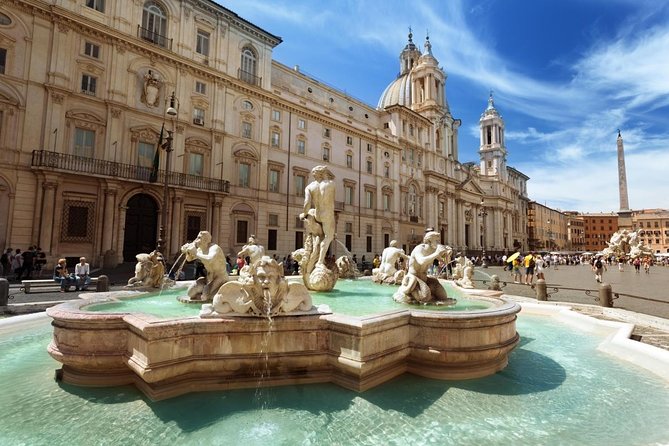
After that is Piazza Navona, one of Rome’s best squares for fountain watching. You’ll stroll with the guide to see Fountain of the Four Rivers, Fountain of Neptune, and the Moor Fountain, plus the church Sant’Agnese in Agone. The stop is about 15 minutes. This is a pleasant break from the heavy history stops because it feels social. If you like people-watching and street life, this is where your eyes naturally linger.
As a timing note: each of these stops is short. That’s not a flaw if you accept the format. It’s a feature of this tour’s value: you get a guided highlight path without spending the whole day standing in lines.
Castel Sant’Angelo, St. Peter’s Square, and Campo de’ Fiori Market Energy
The last stretch turns the route toward Rome’s spiritual and river-adjacent landmarks, and then finishes in everyday street life.
First is Castel Sant’Angelo. The tour describes admiring it from outside as the Mausoleum of Hadrian, plus the view of Ponte Sant’Angelo with its ten angel sculptures. This stop works because it’s visual even from the street. You don’t need a long visit to get the dramatic feel of the structure and the bridge art.
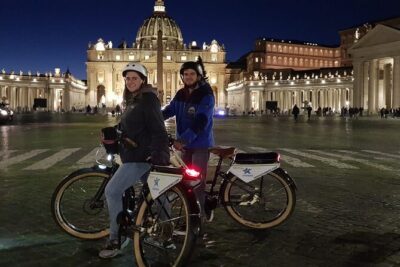
Then you arrive at St. Peter’s Square. The guide shares details about St Peter’s Basilica, the square’s obelisk, and Bernini’s Colonnades. It’s listed as about 15 minutes, and the emphasis here is explanation—helping you understand what you’re seeing at a glance.
Finally, you end at Campo de’ Fiori, a lively daily market area. The stop is about 15 minutes. This is a strong closer because it’s not just Rome’s monuments; it’s Rome’s daily life. After the big-name sightseeing, it’s a nice gut-check moment: you’re back in regular city rhythm.
Who Should Book This Vespa Tour (and Who Should Skip It)
I’d recommend this tour if:
- You want a fast, guided Rome overview in about three hours.
- You’re comfortable riding a scooter in a busy city.
- You prefer seeing many landmarks with quick interpretation over long indoor visits.
- You like photo stops and want the guide to help you understand what you’re seeing.
I’d tell you to skip it (or seriously reconsider) if:
- You don’t meet the license requirements.
- You’re not a confident scooter rider in traffic.
- You want deep time inside sites and churches at every stop, because ticketed entry is not the model here and several major locations are marked as admission not included.
One small-group note that matters: this is limited to a maximum of 10 people per booking and is private for your group. That usually helps with controlling pace and keeping everyone together, which is important on a Vespa route.
Also, booking ahead helps. It’s commonly reserved about 28 days in advance, so plan to lock in your date early if your schedule is tight.
FAQ
FAQ
How long is the Vespa Tour The Essence of Rome?
The tour is approximately 3 hours.
What is the price per person?
The price listed is $137.80 per person.
Is the tour offered in English?
Yes, the tour is offered in English.
Do I need tickets for Foro Romano or the Colosseum?
Admission tickets are not included for Foro Romano and the Colosseum stop.
Is the Pantheon stop ticketed?
The Pantheon stop is listed as free admission.
Where do I meet the guide, and where does the tour end?
You start at BigaBike – Rent Scooter Rome, Via di S. Calisto, 9, 00153 Roma RM, Italy, and the tour ends back at the meeting point.
What’s included in the tour price?
Included are use of the Vespa, helmets, and fuel, plus a professional guide.
What’s not included?
Food and drinks are not included unless specified, and there is no hotel pickup or drop-off.
What license do I need to ride?
A B driver’s license is required, and US citizens need an International driver’s license.
Can I cancel for a refund?
You can cancel for a full refund if you cancel at least 24 hours before the experience’s start time.
What should I wear or bring?
The dress code is smart casual. Helmets are provided, and the tour provides the Vespa and fuel.
Should You Book This Vespa Tour?
If you want a smart first look at Rome with a guide, and you’re genuinely ready to ride in traffic, this is a fun way to see a lot without turning your day into a series of ticket lines. The biggest draw is the scooter format: it keeps the city feeling alive while the guide gives you context at stops like Largo Argentina, Trevi Fountain, the Pantheon, and St. Peter’s Square.
Just be honest with yourself about riding skill and licensing. If those boxes are checked, you’ll likely feel like the route is tailor-made for a short stay—and you’ll know exactly which neighborhoods and landmarks deserve a slower walk afterward.