REVIEW · ROME
Vespa Sidecar Tour at Day/Night with Pickup
Book on Viator →Operated by Romaround Tours · Bookable on Viator
Rome on a scooter makes sense fast. This shared Vespa sidecar tour strings together major sights with quick photo stops, and it runs in both day and evening modes for different vibes. You’ll ride past big landmarks, then hop off for viewpoints like Aventine Hill and finish with a panoramic moment on Janiculum Hill.
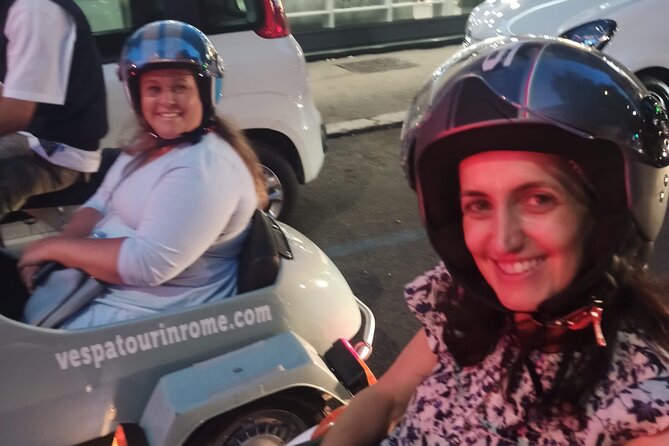
I like the small group feel (max 12) because it usually means less waiting and more attention from the guide. I also love the mix of sights and comfort breaks: you get helmet use, and there’s an included coffee/tea plus gelato-style stop during the tour.
One thing to consider: you’re on a scooter (and sidecar sharing can affect how the timing feels), so if you’re uneasy on two wheels, or you’re above the stated limits (220 lbs / 100 kg, 195 cm / 6.4 ft), this may not feel like the right fit.
In This Review
- Key highlights you’ll feel right away
- Why a Vespa sidecar tour is the smart way to see Rome fast
- Price and what you actually get for $156.07
- Getting going: meeting point, pickup, and your first ride to Piazza Venezia
- Piazza Venezia to the Colosseum: setup for photos and stories
- Terme di Caracalla: the Roman Baths stop that feels like a time jump
- The Pyramid of Cestius: the quick drive-by you’ll actually remember
- Aventine Hill ride: the calm-and-classy contrast
- Giardino degli Aranci (Orange Tree Garden): a short break that feels like a breather
- Circus Maximus drive-by and the Tiber River: shifting from ruins to real views
- Trastevere coffee and gelato stop: the break that keeps you smiling
- Final stop on Janiculum Hill: Fontanone and the panoramic wrap-up
- Who this tour suits best (and who should think twice)
- Day vs night: how to pick the best mood
- Booking advice: small choices that improve your experience
- Should you book the Vespa sidecar tour at Day/Night?
- FAQ
- How long is the Vespa sidecar tour?
- Does the price include the guide and helmets?
- What food and drink are included?
- Is pickup included, or do I meet somewhere specific?
- What language is the tour offered in?
- What are the main stops during the ride?
- Are attraction tickets included?
- What if it rains?
- Are there size or weight limits?
- What’s the cancellation policy?
Key highlights you’ll feel right away
- Day-and-night options: evening rides can feel cooler and smoother as you zip through streets after the heat drops
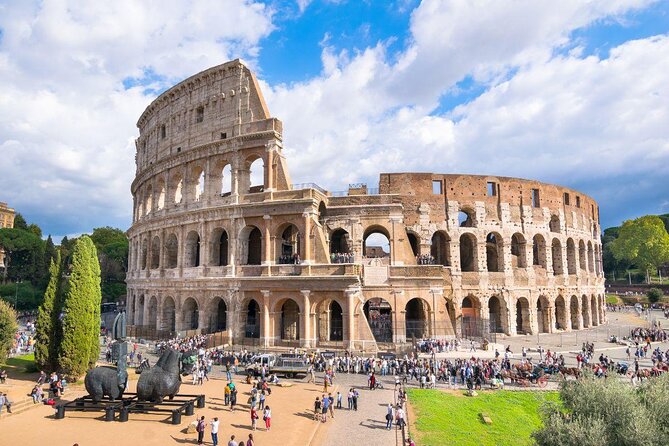
- Photo-first stop design: quick pull-offs at places like the Colosseum area and Janiculum views help you capture moments without long walks
- A guide who performs history: stories can come with humor and big-picture context, with guides like Enrico, Stefan, Simon, and Marco cited for style and energy
- Aventine Hill break with real calm: Giardino degli Aranci is a quieter pause when you’re done with the motion
- Coffee/tea plus gelato stop: you get a break in Trastevere so the ride doesn’t feel like one nonstop sprint
- Rain doesn’t usually cancel the fun: ponchos are provided and the tour still runs
Why a Vespa sidecar tour is the smart way to see Rome fast
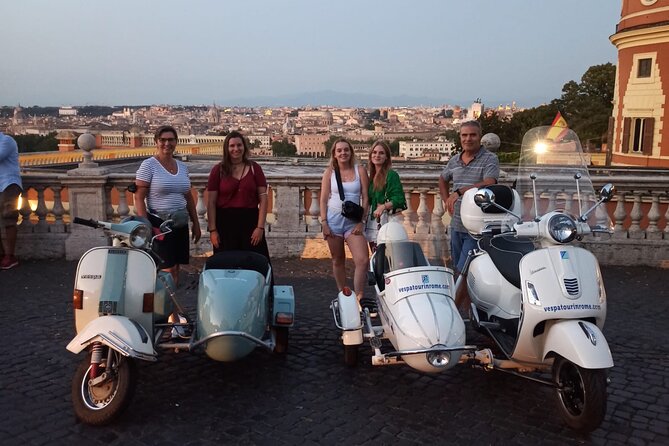
Rome has two faces: the classic postcard views and the real daily grid of streets where people actually move. A Vespa tour hits both. In the evening, you often get that bonus of cooler temps plus less of the daytime crush. You still see the icons, but from a moving perspective that most walking routes can’t match.
The sidecar format matters. It’s not just transportation; it’s built for sightseeing. You sit lower, look around more easily, and you get help with navigation by a driver who knows where to stop for photos. Many people book this as their best “first map of Rome,” because it gives you a fast layout of where everything sits.
Small group size (12 max) is also a practical quality. When the group is bigger, you lose time to regrouping. Here, it tends to feel tighter—more chances for the guide to respond and for you to hear the stories over engine noise.
You can also read our reviews of more evening experiences in Rome
Price and what you actually get for $156.07
At $156.07 per person for roughly 3 hours, the value here is mostly about access and time. You’re paying for a guided scooter ride that covers a lot of ground in a short window, including multiple major sights that would take hours to connect on foot.
You’re also not paying extra for the “tour parts” that are viewing moments. The plan includes helmet use and a coffee/tea plus gelato-style stop. Attraction entry isn’t included, but many stops are positioned for photos and context rather than paid museum time.
So the math works best if you want two things:
- a guided orientation to Rome’s layout and eras
- a fun, low-friction way to see more than the obvious spots in one evening or afternoon block
If you’re the type who only wants to visit ticketed attractions for long stretches, you might feel the stops are brief. But if you want movement plus meaning, this is priced like a practical experience, not a museum ticket.
Getting going: meeting point, pickup, and your first ride to Piazza Venezia
The tour starts at P.za della Cancelleria, 1, 00186 Roma RM and ends back near the same spot. Pickup is listed as part of the day/night experience, so you should plan for a smoother start than a “meet us and go” style tour—just confirm the exact pickup details at booking.
From the start, you’ll head into the heart of central Rome and begin at Piazza Venezia. This is a smart first stop because it puts you in the action right away: open views, landmark energy, and easy context for the route you’re about to follow.
You’ll spend about 30 minutes here, with the emphasis on getting settled, strapping on your helmet, and catching early sightlines—especially toward the Vittoriano (the huge white monument that dominates the area).
Practical tip: wear closed-toe shoes and keep your phone secure. Rome streets can be uneven, and you’ll want both hands ready when your driver slows down for pull-offs.
Piazza Venezia to the Colosseum: setup for photos and stories
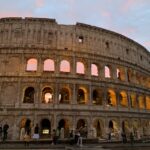
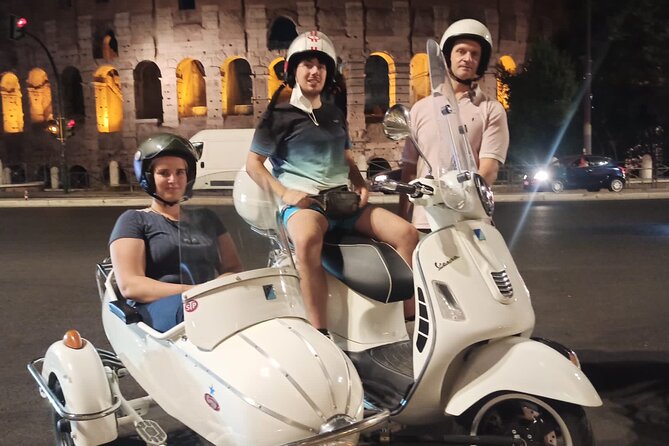
After Piazza Venezia, the tour moves to the Colosseum area for a short 15-minute stop. This isn’t a long history lecture. It’s a quick, effective photo window plus guided storytelling about what you’re looking at and what’s nearby.
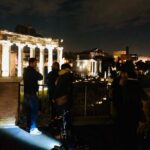
What makes this stop worth it is the way the guide ties together the big names. Even in a brief stop, you’ll get context about the Aventine Hill and the Roman Forum—so the rest of the tour doesn’t feel random. And if you’re riding the night version, you may get access to a more open view after sunset, which is the kind of difference that’s hard to replicate on your own without planning.
The drawback of a timed stop is obvious: if the Colosseum area is crowded, you’ll have to work quickly with the group. But the upside is that you don’t lose the whole evening waiting in one spot.
Terme di Caracalla: the Roman Baths stop that feels like a time jump
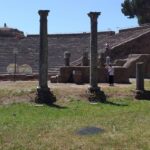
Next comes Terme di Caracalla (the Baths of Caracalla) for about 10 minutes. If you’ve only seen Rome through the big headline sights, this stop helps broaden your picture of the city. Baths weren’t just bathing—they were social and civic spaces. So even a short visit can give you a stronger sense of what daily Roman life could feel like.
This part of the itinerary also helps break up the “marquee” rhythm. It’s a change of pace: less “everyone’s at the same Instagram angle,” more “wait, that’s still ancient structures right here.”
Since attraction entry isn’t included, this is about seeing from the outside and soaking in context, not touring rooms. If you want to go inside for a full deep look, plan a separate ticketed visit another day.
You can also read our reviews of more tours and experiences in Rome

The Pyramid of Cestius: the quick drive-by you’ll actually remember
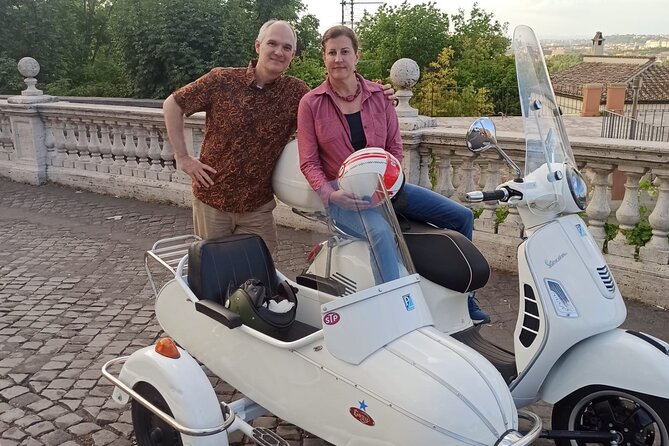
Then the route includes a drive-by of the Pyramid of Cestius, that Egyptian-style shape sitting in the middle of a normal Roman streetscape. It’s the kind of sight you’d miss if you only follow the standard big-walk routes.
A drive-by can feel like a cheat to some people. Here, it works because the guide frames it for you. You’re not just seeing a random oddball; you’re learning how Rome absorbed influences and how “foreign” shapes can become part of the city’s identity.
If you’re chasing variety, this quick beat is a win.
Aventine Hill ride: the calm-and-classy contrast
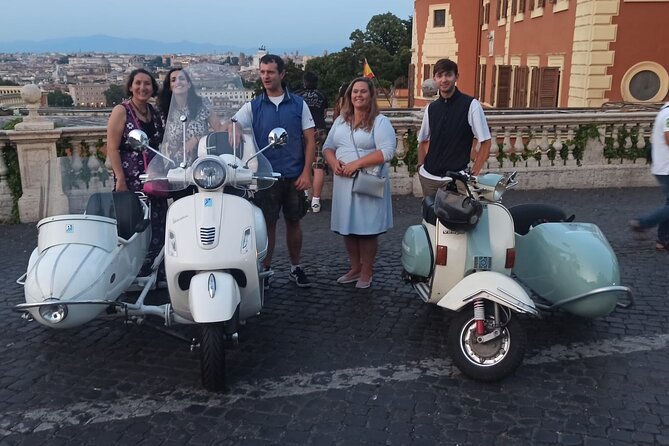
After the pyramid, you ride up toward Aventine Hill, passing through a more upscale, residential stretch with villas along the way. Even if you don’t get out of the scooter right away, the hill matters. It’s one of those places where Rome feels less like a tourist corridor and more like a real neighborhood.
The ride here is more than scenery—it’s pacing. After the busier central zones, the slope and quieter lanes create a mental reset. That makes the next stop hit harder.
Giardino degli Aranci (Orange Tree Garden): a short break that feels like a breather
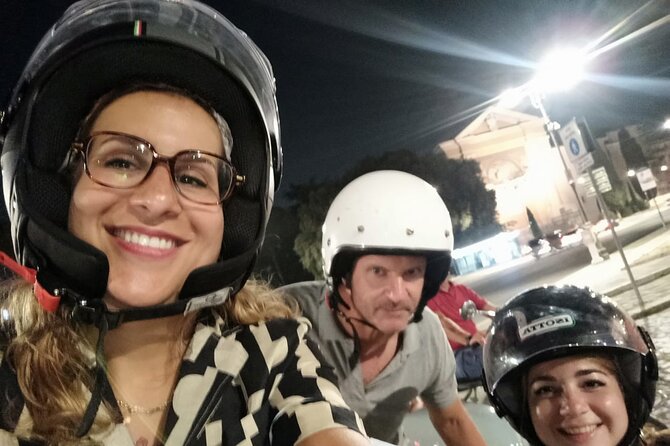
This is one of the most peaceful moments in the whole route: Giardino degli Aranci on Aventine Hill. You’ll step off for about 15 minutes, walk through greenery, and enjoy the view area and citrus-scent atmosphere.
This stop is valuable because it gives your body a chance to decompress. When you’re on a scooter, you’re still moving and scanning. A garden pause resets you for the final stretch toward the river and the evening neighborhoods.
If you’re the type who only wants big monuments, gardens can feel like “extra.” But in Rome, this one works because it’s tied to a specific viewpoint experience on a major hill.
Circus Maximus drive-by and the Tiber River: shifting from ruins to real views
From Aventine, the route heads down toward Circus Maximus with a drive-by glimpse. It’s another place that’s easy to overlook if you’re only thinking about the Colosseum. Seeing the scale of the old arena from the street gives you a different sense of how massive this part of the city used to be.
Then you shift to a scenic route along the Tiber River, passing calming stretches and the bridges that cross it. This part of the tour is a breather visually—less stone walls, more open sky and river rhythm.
This matters because by now you’ve stacked several major stops. A river ride keeps the evening from becoming one long sequence of “look at another ruin.” It also gives you a calmer photo set, usually with better lines of sight.
Trastevere coffee and gelato stop: the break that keeps you smiling
Next up is Trastevere, one of Rome’s most lively neighborhoods. You’ll have about 20 minutes here for an included break—coffee or tea plus gelato-style treat.
This is a practical design choice. Scooter tours feel quick, but people get hungry. Trastevere is a strong place to pause because you get atmosphere without needing an entry ticket. You’re also close to a bunch of evening energy, so the neighborhood doesn’t feel like a random stop.
One consideration: since Trastevere is popular, expect some street activity. The good news is your stop is timed, so you aren’t stuck there for hours.
Final stop on Janiculum Hill: Fontanone and the panoramic wrap-up
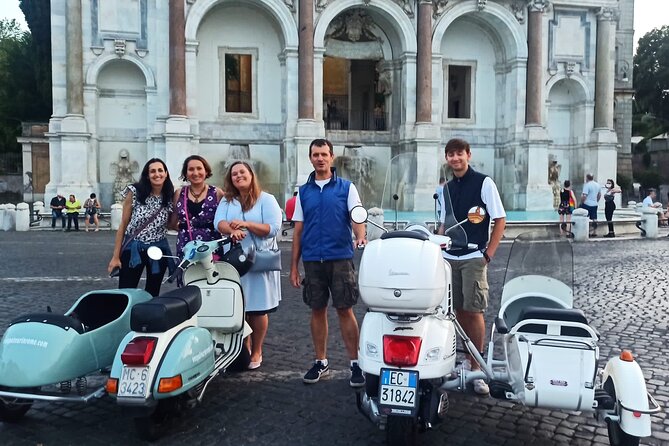
The tour ends with Fontanone on Janiculum Hill (about 15 minutes). You’ll park the Vespas and get time for photos at the fountain area. Then you’ll have a panoramic viewpoint over Rome’s rooftops.
This stop functions like a period at the end of a sentence. You’ve seen the big monuments, then calmer viewpoints, and now you finish with a wider “you are here” view of the city. It’s the moment that helps your brain connect all the stops.
If you’re booking the night tour, this is often where the lighting helps most for photos and skyline atmosphere. Even if you’re not a camera person, the view is the payoff.
Who this tour suits best (and who should think twice)
This tour is a great fit if you want:
- a guided Rome orientation in a short window
- major sights plus a few off-the-beaten-path moments like the Pyramid of Cestius
- an evening experience that skips some of the discomfort of walking during warmer parts of the day
- a guide who can make history feel like a story, with named drivers and guides such as Manuel, Marco, Stefan, Enrico, Andreas, and Simon showing up in the experience descriptions
It’s also a solid choice for couples, solo visitors, and families where everyone can ride comfortably in the group setup. The max group size (12) helps keep it from feeling chaotic.
You should think twice if:
- you hate the idea of being in traffic-adjacent streets, even if the tour’s rhythm aims to keep things moving
- you’re concerned about balance or comfort on a scooter-style ride
- you’re outside the posted size limits (max weight 220 lbs / 100 kg; max height 195 cm / 6.4 ft)
Day vs night: how to pick the best mood
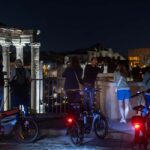
Night tours can be extra fun because Rome cools down and you get that feeling of moving through warm streets with the city lit up. Many people love the sensation of riding when the temperature drops, and the route tends to feel less stop-and-go than midday walking.
Day versions include time for coffee and gelato as well, and they can work well if you’d rather not be out late. The big difference is pacing and atmosphere: day emphasizes daylight photo clarity; night emphasizes ambiance and skyline mood.
Also note: the 9:30 PM tour runs about 2 hours (shorter than the usual 3 hours). If you’re choosing that one, go in expecting a tighter hit list, not a slower stroll.
Booking advice: small choices that improve your experience
- Choose the time that matches your energy. If your day is packed with museums and long walks, the night ride can feel like a fun reset.
- Pack light. You’ll be moving on and off at stops, and you’ll want your hands free for photos.
- Bring a light layer. Even when it’s warm, evenings can feel breezy during the ride.
- If rain shows up, don’t panic. Ponchos are provided and the tour is still scheduled to run.
Should you book the Vespa sidecar tour at Day/Night?
Book it if you want a high-value Rome experience that mixes icons, neighborhoods, viewpoints, and comfort breaks in about a half-day rhythm. The route logic makes sense: central landmark start, Colosseum area context, Roman Baths contrast, hill views, garden calm, then river and Trastevere energy, finishing with a panoramic Janiculum moment.
Skip it if you only care about long, ticketed attraction time inside major sites. This isn’t built to replace museum-heavy days. It’s built to give you momentum, variety, and a Rome layout that sticks.
If you’re on your first trip to Rome, I’d put this near the top of your list—especially the night version—because it turns the city into a story you can feel while you move.
FAQ
How long is the Vespa sidecar tour?
It runs about 3 hours on average. The 9:30 PM tour is shorter, at about 2 hours.
Does the price include the guide and helmets?
Yes. The tour includes the driver/guide, helmet use, and the included refreshments.
What food and drink are included?
Coffee and/or tea are included, along with gelato as part of the tour stops.
Is pickup included, or do I meet somewhere specific?
Pickup is part of the experience. The listed start meeting point is P.za della Cancelleria, 1, 00186 Roma RM, Italy.
What language is the tour offered in?
The tour is offered in English.
What are the main stops during the ride?
You’ll visit or pass major places including Piazza Venezia, the Colosseum area, Terme di Caracalla, the Pyramid of Cestius, Aventine Hill (including Giardino degli Aranci), Circus Maximus (drive-by), the Tiber River (scenic drive), Trastevere (coffee/gelato break), and Janiculum Hill at Fontanone.
Are attraction tickets included?
No. Entry to attractions is not included, and gratuities are not included as well. Some viewing stops are listed as free, but paid attraction access is not part of the package.
What if it rains?
The tour still runs in rain, and ponchos are provided.
Are there size or weight limits?
Yes. The max weight is 220 lbs/100 kg and the max height is 195 cm/6.4 ft.
What’s the cancellation policy?
You can cancel for a full refund up to 24 hours before the experience’s start time. If you cancel less than 24 hours before, the amount paid is not refunded.