REVIEW · ROME
Vatican Museums and St. Peter’s Basilica Private Tour Options
Book on Viator →Operated by Eyes of Rome · Bookable on Viator
Short line, big art, and a guide with answers. This private Vatican tour gets you into the Vatican Museums fast with a Blue Badge guide, then carries you through the standouts most people never reach without getting lost. I love how the skip-the-line setup saves your time for the parts that really matter, and I also love the way a good guide changes your whole visit by pointing out details you’d likely miss on your own.
You’ll get a real plan for a famously chaotic place. The pacing is built for a 3 to 4 hour visit, so you’re not stuck wandering halls while your feet protest. One possible drawback: St. Peter’s Basilica and the Sistine Chapel can close last-minute for ceremonies, and the tour may shift, ending at the Vatican Museums exit if access is blocked.
In This Review
- Key Highlights That Make This Tour Worth Considering
- Skip-the-Line Vatican Entry That Actually Buys You Time
- The Courtyard of the Pigna and Pomodoro’s Sphere Within a Sphere
- Gallery of Maps: Italy as It Looked 500 Years Ago
- Gallery of Tapestries and the Candelabra: Art That Tells Stories
- Raphael Rooms (Optional): Renaissance Ideals on the Walls
- Sistine Chapel: What Your Guide Helps You Notice
- St. Peter’s Basilica Add-On: Pietà, Tombs, and Big Church Drama
- Cupola di San Pietro: The Climb and the Reward
- St. Peter’s Square: Bernini’s Layout from Ground Level
- Price, Timing, and Why the Value Can Make Sense
- What to Expect on the Ground: Dress, Pace, and Closures
- Who This Private Tour Is Best For
- Should You Book This Vatican Museums and St. Peter’s Basilica Private Tour?
- FAQ
- How long is the Vatican Museums and St. Peter’s Basilica private tour?
- What’s included with the tour?
- Is the tour offered in English?
- What are the main stops in the Vatican Museums?
- Does the tour include St. Peter’s Basilica?
- Can I climb the dome during the tour?
- What should I wear?
- What if St. Peter’s Basilica or the Sistine Chapel closes on my day?
- What is the cancellation cutoff?
Key Highlights That Make This Tour Worth Considering
- Skip-the-line entry into the Vatican Museums plus a shortcut toward St. Peter’s Basilica
- Private, Blue Badge guidance in English, tailored to your group
- Structured highlights including the Gallery of Maps, Gallery of Tapestries, and Candelabra
- Optional upgrades like the Raphael Rooms and the Cupola di San Pietro climb
- “Made for you” extras sometimes happen, like additional access requests being arranged when possible
Skip-the-Line Vatican Entry That Actually Buys You Time
The best part of a Vatican visit is also the hardest part: crowds move like slow water. This tour reduces your worst bottleneck by giving you Vatican Museums skip-the-line access, which matters more here than almost anywhere else in Rome. You’re not just buying a ticket. You’re buying time and focus.
Because it’s private, you’re not stuck following a big group through the same photos and the same stopping spots. Your guide can help you make sense of what you’re seeing, and that makes the Vatican feel less like a storage unit for famous art and more like a place with a story. Even if you’ve been to Rome before, this setup helps you get your bearings fast.
The tour also includes a shortcut to St. Peter’s Basilica for options that pair both museums and the basilica. If you’re doing both in one day, that can turn a stressful “will we make it” moment into something calmer.
You can also read our reviews of more private tours in Rome


The Courtyard of the Pigna and Pomodoro’s Sphere Within a Sphere
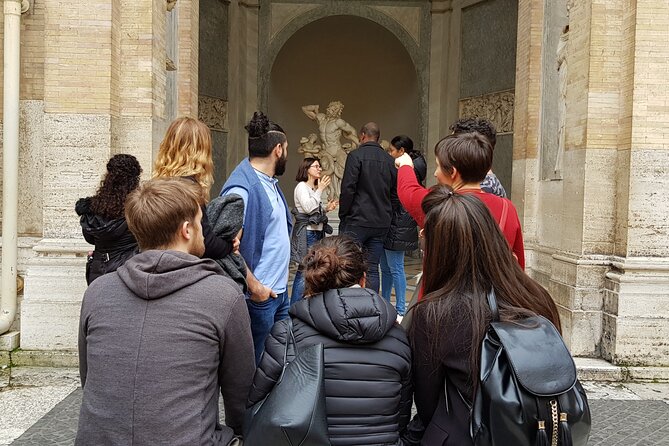
After you enter the Vatican Museums, you’re not thrown straight into the busiest gallery crush. You start with a moment that gives you a sense of scale: the Courtyard of the Pigna and its surrounding classic sculptures.
In this same museum complex, you’ll also encounter Arnaldo Pomodoro’s sculpture, the Sphere within a Sphere. It’s one of those pieces that feels almost scientific and spiritual at the same time. The big fractured bronze sphere and the smaller inner one play with light as you move, so your view changes even if you think you’ve “seen it.”
This stop is a good palate cleanser. You’re standing somewhere between courtyard and grand interior, and it helps you switch your brain from sightseeing to looking. I especially like this kind of early anchor when the rest of your day is packed with long corridors and famous ceiling moments.
Gallery of Maps: Italy as It Looked 500 Years Ago
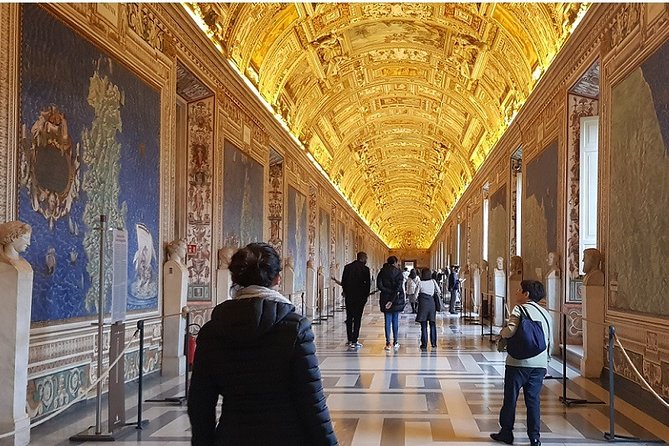
One quick sprint inside, and you hit the Gallery of Maps. This is not just decorative. The maps span about 120 meters and were created in the 16th century under Pope Gregory XIII, showing a picture of Italy in a world with different borders and fewer satellites than we have today.
Your guide’s job here is practical: help you read what you’re seeing without turning it into a history lecture that loses kids or adults. It’s a rare kind of museum stop where the “wow” can come from geography and artistry working together.
A short stop like this also works well for families. You still get the highlight, without dragging everyone through one more room just to prove you were there.
Gallery of Tapestries and the Candelabra: Art That Tells Stories
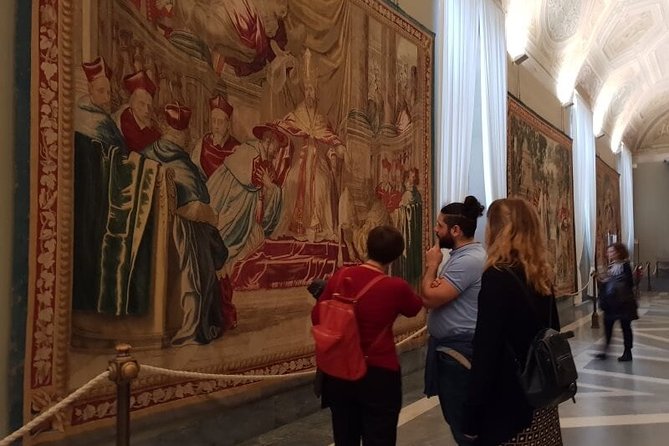
Next comes the Gallery of Tapestries, where 15th and 16th century works show biblical and historical scenes. These tapestries were woven using designs inspired by Raphael’s school, so you’re looking at Renaissance storytelling in a medium that looks like fabric but acts like a visual book.
Even if you don’t usually care about tapestries, this room is worth it because it connects art to power: who commissioned it, what it tried to say, and why it was meant to impress. It also helps you understand why the Vatican Museums feel like more than one museum. They feel like a carefully arranged message.
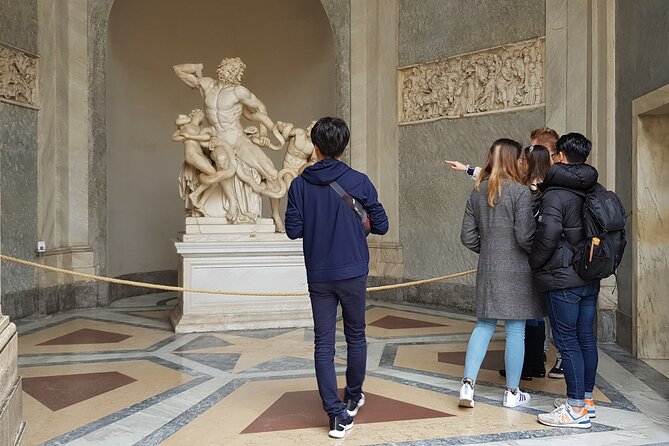
Then you’ll move to the Gallery of the Candelabra, named for the grand marble candelabra that divide the space. This gallery mixes Greek and Roman statues, sarcophagi, and reliefs, and it’s a strong reminder that the Vatican’s collection includes an ongoing conversation with the ancient world.
One drawback to plan for: these rooms are timed to a tight itinerary. If you’re the type who likes to linger ten extra minutes in every room, you might feel slightly rushed. But that’s a trade-off for seeing more of the complex in one visit.
Raphael Rooms (Optional): Renaissance Ideals on the Walls
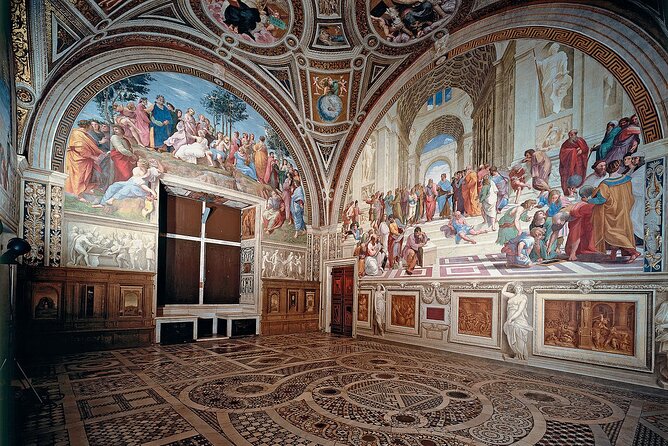
If you choose the Renaissance option, you’ll add the Rooms of Raphael, or Stanze di Raffaello. This is where the tour becomes more than “great highlights.” It turns into a guided lesson in Renaissance thinking: harmony, intellect, faith, and history.
These rooms are famous for a reason, but the experience becomes smoother when someone points out the themes and the structure. In other words, you don’t just stare up at walls—you learn how the paintings communicate ideas.
This is also a smart option if you like art that feels organized. The Vatican can be overwhelming. The Raphael Rooms give you a clean, human-shaped entry into the larger museum maze.
You can also read our reviews of more museum experiences in Rome




Sistine Chapel: What Your Guide Helps You Notice
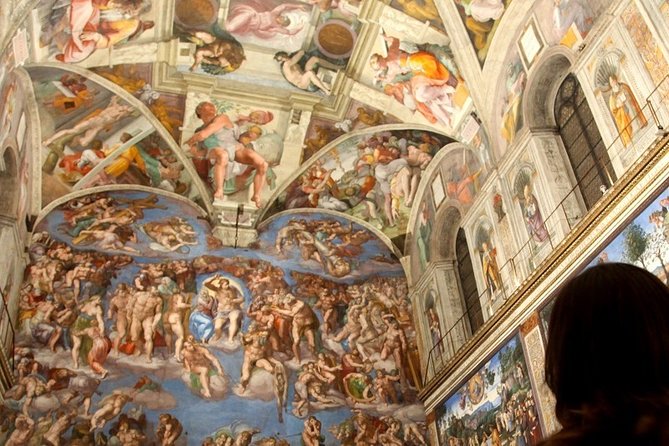
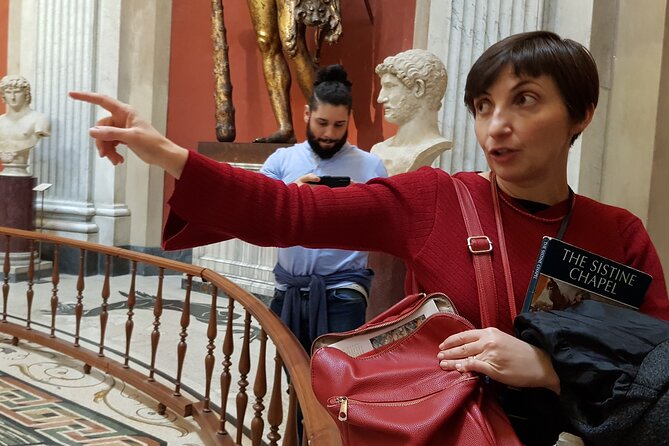
You’ll spend time in the Sistine Chapel, including the frescoes by Michelangelo. This place has an unusual kind of gravity: even when you’re standing with hundreds of other people, your attention feels pulled upward and inward.
Your guide’s value here is not about repeating obvious facts. It’s about pointing out how the figures work together—what to look for first, how to read the composition, and why Michelangelo’s choices feel so dramatic. That’s why the tour includes a dedicated stop and a time window that doesn’t just treat the chapel as a photo wall.
One practical note: the Sistine Chapel can close last-minute for religious ceremonies. When that happens, the tour may offer an extended Vatican Museums experience instead. You won’t lose the day, but it can change the exact highlight mix you were expecting.
St. Peter’s Basilica Add-On: Pietà, Tombs, and Big Church Drama
If you pick the options that include St. Peter’s Basilica, the tour continues into one of Christianity’s most important sites. This is the part that feels different from the museums. The mood shifts from “collecting art” to “visiting a working sacred space.”
You’ll have time to see Michelangelo’s Pietà, plus stops connected to the tomb of Saint John Paul II, also known as Karol Wojtyla. The guide can help you appreciate why this sculpture has lasted for centuries—its realism, its emotion, and the way it’s placed where people can actually face it.
You also get time around other major artistic focal points, including the St. Peter’s Baldachin in the basilica. Designed by Gian Lorenzo Bernini, it’s a huge bronze canopy over the high altar. It’s the kind of work that makes you look up without trying.
This is where your dress and behavior rules matter most. The tour clearly notes a dress code: knees and shoulders must be covered. If you arrive in shorts or a tank top, you can risk being refused entry. I’d treat this as a non-negotiable Rome checklist item.
Cupola di San Pietro: The Climb and the Reward
Choose the dome option and you’ll get time for the Cupola di San Pietro. You’re climbing one of Rome’s top viewpoint experiences, and it’s not just a gimmick. The dome is designed by Michelangelo and offers views that connect the basilica’s architecture to the city’s layout.
Reality check though: the instructions are clear about the physical commitment. Even with a lift taking you partway, you still face about 320 steps, and the spaces can feel tight in places. If you’re claustrophobic or have mobility limits, this option is not recommended.
If you do handle the climb, this is often the “I’m really glad we did that” moment. The view from above is the kind of reward that makes earlier museum rooms feel like setup, not just stops.
St. Peter’s Square: Bernini’s Layout from Ground Level
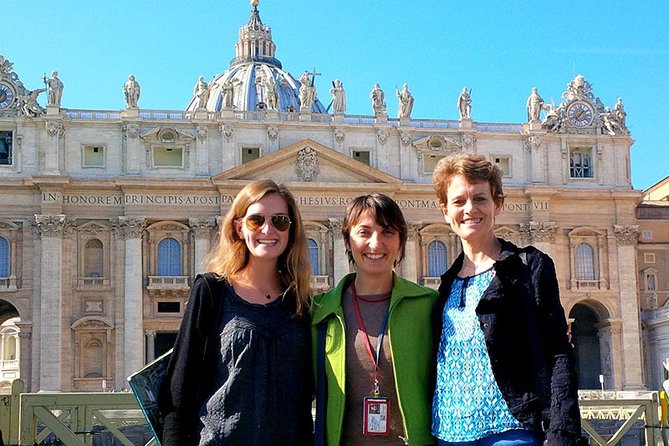
When the itinerary includes St. Peter’s Square, you’ll also see the monumental elliptical space designed by Gian Lorenzo Bernini. The geometry is the star here: 284 Doric columns arranged in four rows, framing the square’s dimensions.
This stop is short, but it works because it’s a quick way to understand what you saw inside the basilica. The square isn’t just a landmark. It’s a stage set made to funnel crowds and guide attention.
If your basilica time gets adjusted due to ceremonies, you might still get some version of this open-air perspective. But if you care most about architecture and spatial design, you should choose the basilica-inclusive options.
Price, Timing, and Why the Value Can Make Sense
At $317.54 per person for a 3 to 4 hour private tour, you’re not paying for a cheap ticket. You’re paying for fewer headaches.
Here’s where the value comes from:
- Private guide time instead of a rigid group script
- Skip-the-line access at the Vatican Museums
- Time-saving shortcuts toward St. Peter’s Basilica (for the paired options)
- A structured route that hits big priorities like Maps, Tapestries, Candelabra, and Sistine Chapel
Booking averages about 68 days in advance, which is a clue that dates fill up and the Vatican is not a last-minute-friendly plan. If you’re traveling in peak season or have only one realistic day for Vatican sights, early booking helps you lock in the time slot you want.
Also, this is offered in English, and the tour provides a mobile ticket. That’s a small thing, but in Rome, small things can prevent big stress.
What to Expect on the Ground: Dress, Pace, and Closures
The Vatican punishes “oops” moments. Before you go, plan your clothing like you mean it. The tour states that you must cover knees and shoulders. Bring a light layer you can manage easily through security and galleries.
Plan for security too. Everyone passes through a monument/attraction security check, and it’s smart to allow at least 20 minutes to clear it. This is especially important if you’re someone who likes to arrive late because you love living dangerously. (This is one of the few places where that strategy can backfire.)
Finally, keep your expectations flexible. St. Peter’s Basilica and the Sistine Chapel can close at the last minute for ceremonies. When that happens, the tour may shift to an extended Vatican Museums route, and refunds or discounts aren’t guaranteed.
On the bright side, the guide team has shown flexibility. In one case, a guide arranged additional access like the holy doors request during a longer tour. That’s not something you should count on every time, but it’s a sign of the human factor you’re paying for.
Who This Private Tour Is Best For
This tour is a strong match if you want:
- A focused Vatican visit with high-impact stops rather than a random walk
- A private guide who can keep a wide range of ages engaged (families often benefit here)
- Clear options for customizing your day, like Raphael Rooms or Cupola
It’s also ideal if you care about art and want explanations tied to what you’re actually looking at. The guide names shared in feedback stand out—Alberto, Michela, Alessia, Giulia, Luigi, Maria, Denis, Rosie, Lorenzo, and Manuela—all associated with smooth pacing and good explanations in English.
If you hate stairs, avoid the dome option. If you want a long, slow art museum day with no pressure, you may find the structured timing a bit tight.
Should You Book This Vatican Museums and St. Peter’s Basilica Private Tour?
I think you should book this tour if you want to spend your limited Rome time seeing the right things with less crowd stress. The skip-the-line piece plus a private guide is the combo that turns Vatican sightseeing from a chore into a clear, satisfying route.
Don’t book if you can’t handle the basilica religious space rules (especially clothing), or if the dome climb is a no-go for you. Also, if you absolutely need St. Peter’s Basilica and the Sistine Chapel no matter what, accept that last-minute closures can change the plan.
If you pick the time carefully, dress for entry, and choose the options that match your energy level, this is a very solid value for a first-rate Vatican day.
FAQ
How long is the Vatican Museums and St. Peter’s Basilica private tour?
The tour runs about 3 to 4 hours, depending on which options you select (like Raphael Rooms and the dome climb).
What’s included with the tour?
Included items are the Vatican Museums skip-the-line ticket, Sistine Chapel visit, a private tour with a Blue Badge guide, and depending on your options, Raphael Rooms, dome climbing, and shortcuts toward St. Peter’s Basilica.
Is the tour offered in English?
Yes, the tour is offered in English.
What are the main stops in the Vatican Museums?
You’ll visit major highlights such as the Courtyard of the Pigna area, the Gallery of Maps, the Gallery of Tapestries, the Gallery of the Candelabra, and the Sistine Chapel. Raphael Rooms can be included if you choose that option.
Does the tour include St. Peter’s Basilica?
St. Peter’s Basilica is included only for options that list it. When included, you’ll have time for highlights such as Michelangelo’s Pietà, St. Peter’s Baldachin, and St. Peter’s Square.
Can I climb the dome during the tour?
If you select the dome option, the climbing of the Cupola di San Pietro is included. The guidance notes that even with a lift partway, there are still about 320 steps, and it is not recommended for claustrophobia or mobility issues.
What should I wear?
A dress code is required. Knees and shoulders must be covered for both men and women. Shorts or sleeveless tops can lead to refused entry.
What if St. Peter’s Basilica or the Sistine Chapel closes on my day?
The tour notes that both can close last-minute for religious ceremonies. If that happens, you may get an extended Vatican Museums visit instead, and refunds or discounts are not guaranteed.
What is the cancellation cutoff?
Free cancellation is available up to 24 hours in advance for a full refund. If you cancel less than 24 hours before the start time, you won’t receive a refund.