REVIEW · ROME
Skip-The-Line Vatican Museums, Sistine Chapel & Basilica Tour
Book on Viator →Operated by The Tour Guy · Bookable on Viator
The Vatican can feel like a maze. This tour turns it into a clear path, with skip-the-line entry and tight storytelling that helps the big sights make sense fast. I especially like the small-group pace and the way the guide connects famous masterpieces to the real history behind them. You’ll cover the Museums, the Sistine Chapel, and then St. Peter’s Basilica in about three hours, which is great when Rome time is tight.
One thing to plan for: it’s still very crowded, and the day runs on fixed entry windows. If you’re late or you don’t meet the dress code rules (covered knees and shoulders), you can lose access at the most important moments.
If you want a low-stress, organized way to see Vatican City’s top art without getting stuck in chaos, this is a strong pick.
In This Review
- Key points worth knowing
- Entering The Vatican Without the Line Game: How the first 30 minutes set the tone
- Vatican Museums entry: What you actually see before the big galleries
- The Museum route that focuses on famous rooms (and the stories that make them click)
- Candelabra Gallery and tapestries: where scale becomes the lesson
- Gallery of Maps: a surprising favorite stop for many people
- Pio-Clementino Museum: the “how did they do that?” sculpture set
- Raphael Rooms: your art lesson meets Renaissance power
- Sistine Chapel: the quiet rules, and why prep outside the room helps
- Dress code: don’t lose the ticket to a wardrobe mistake
- Time inside: you’re there to look, not rush
- St. Peter’s Basilica via Scala Regia: what priority access changes
- Wednesday warning: St. Peter’s is special on that day
- Group size, pacing, and why “small” helps in the Vatican
- Walking and comfort: the truth about how your body will feel
- Price and value: is $52.45 a fair deal for Vatican triad access?
- Who should book this Vatican Museums, Sistine Chapel & Basilica tour?
- Should you book it? My practical take
- FAQ
- How long is the Skip-The-Line Vatican Museums, Sistine Chapel & Basilica tour?
- Is the tour offered in English?
- What’s included in the price?
- Does the tour visit the Sistine Chapel?
- Is St. Peter’s Basilica included every day?
- What are the dress code rules?
- Where does the tour start and where does it end?
- Is hotel pickup or drop-off included?
- Do I need to pick a time in advance?
Key points worth knowing
- Multiple start times let you match the tour to your schedule, not the other way around
- Priority entry helps you bypass the main lines at the Vatican Museums and St. Peter’s Basilica
- Headsets may be used on larger groups (great for Sistine audio and quick explanations)
- Sistine Chapel prep outside the room matters since your guide can’t talk once you’re inside
- Real highlight stops like the Raphael Rooms and Pio-Clementino Museum keep your time focused
- Scala Regia route can make reaching St. Peter’s feel quicker than the usual scramble
Entering The Vatican Without the Line Game: How the first 30 minutes set the tone
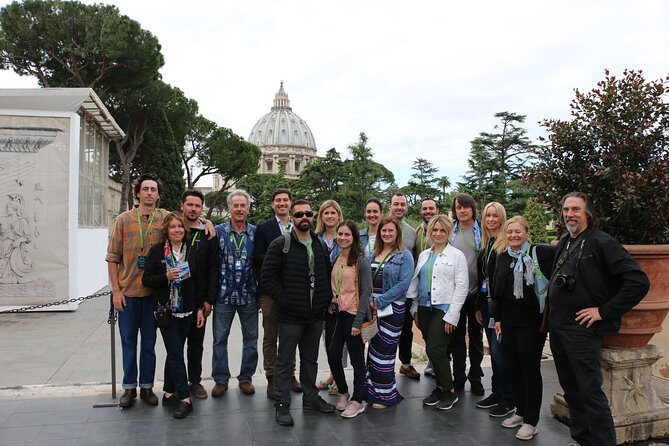
This is one of those tours where the start matters more than you’d think. You meet at Viale Vaticano, 100 (Rome), and then the group moves as one unit into Vatican City for guided entry. The practical win: you’re not spending your precious morning (or afternoon) trying to figure out which line is the right one.
The tour also uses the “right time” approach. You can choose from different start times, so you can plan around peak crowds. If your schedule is flexible, I’d aim for the time that feels closest to a low-pressure window. Inside the Vatican Museums, everything is time-linked, so starting on schedule protects the experience later when you want time in the Sistine Chapel and St. Peter’s.
And yes—this is active sightseeing. Expect walking, stop-and-start pacing, and a steady rhythm. The overall duration is about 3 hours, and most of that time is packed with museum highlights and two major church visits.
You can also read our reviews of more museum experiences in Rome



Vatican Museums entry: What you actually see before the big galleries
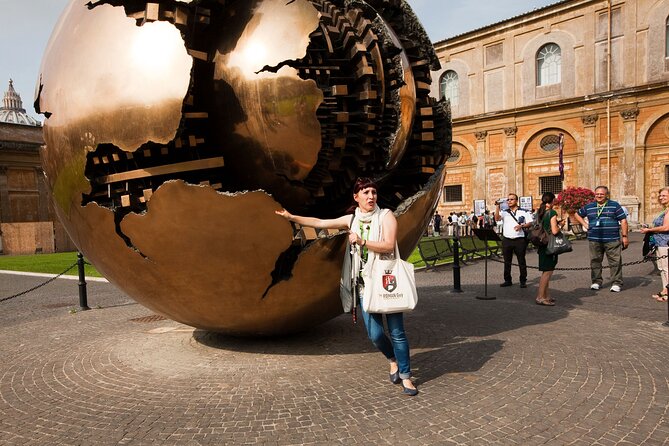
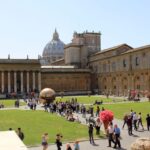
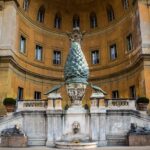
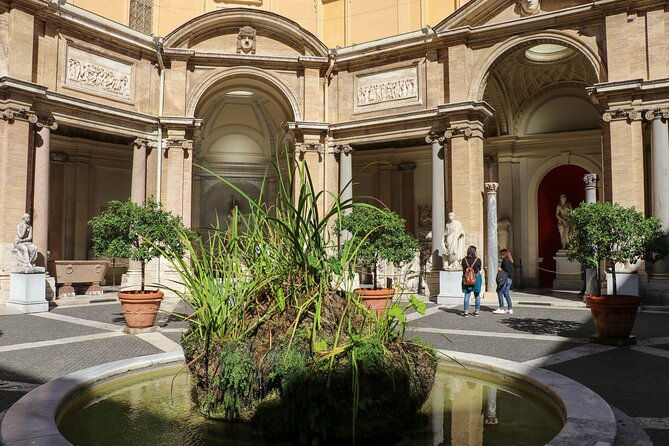
The tour begins in Vatican City, then it quickly ramps up. One stop that helps you get your bearings is the Pinecone Courtyard, where you’ll see the famous Sphere within a Sphere sculpture before entering the Museums. It’s a fast, visual warm-up. You go in knowing what you’ll recognize later, and it helps the space feel less abstract.
From there, you head straight into the Vatican Museums at your chosen time. The tour’s whole promise is skip-the-line access for the museum portion, and the value is simple: it protects your viewing time. Even if you could tolerate standing around, the Vatican is famous for squeezing everything into narrow time windows—so “standing less, seeing more” is the point.
The Museum route that focuses on famous rooms (and the stories that make them click)
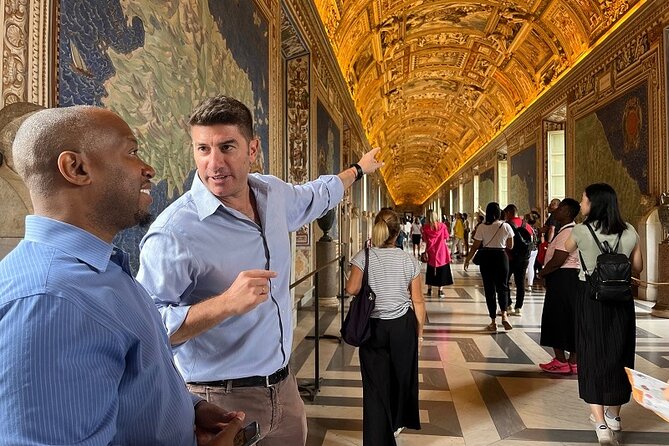
You’ll hit several high-impact areas in the Vatican Museums. The plan is designed so you don’t just float through rooms—you stop where the art is strong and where context helps.
Candelabra Gallery and tapestries: where scale becomes the lesson
Early on, you’ll pass through spaces like the Candelabra Gallery and the Gallery of Tapestries. These aren’t just pretty rooms. They show you how the Vatican curated art like a whole system: statues, decorative works, and visual storytelling all working together. In plain terms, you’ll start to notice details you’d miss if you walked through alone.
Gallery of Maps: a surprising favorite stop for many people
One of the standout stops is the Gallery of Maps. It’s a change of pace from sculpture-heavy rooms, and it helps anchor the Vatican’s influence beyond religion—into geography, politics, and the way power gets represented visually.
If you like when a tour gives you something you can remember later (“Oh, that’s the map gallery”), this is it. It also breaks up the walking so the day doesn’t feel like one long corridor.
You can also read our reviews of more tours and experiences in Rome
- Skip-the-Line Group Tour of the Vatican, Sistine Chapel & St. Peter’s Basilica
★ 4.5 · 12,779 reviews


Pio-Clementino Museum: the “how did they do that?” sculpture set
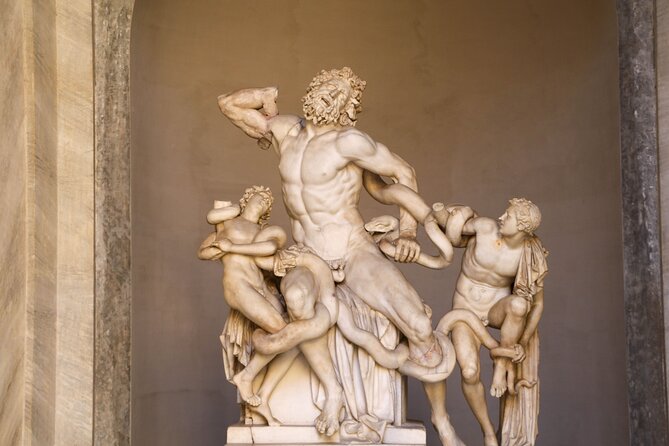
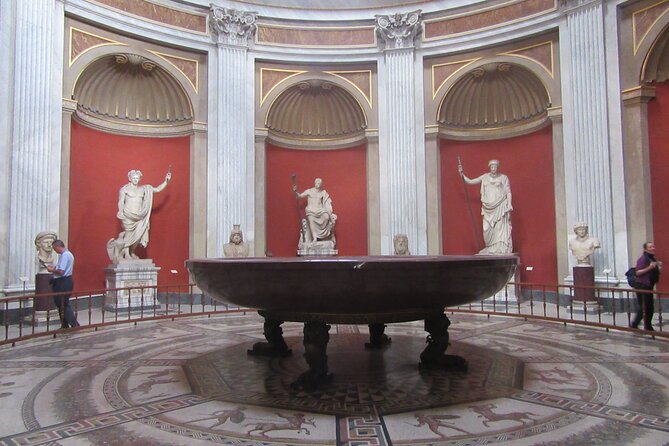
Next comes the Pio-Clementino Museum, where you’ll see a set of sculptures that people come to Rome just to photograph and study. Expect stops for Laocoön and His Sons, the Belvedere Torso, and the sarcophagus of St. Helen.
This portion is a big value moment. The guide’s explanations matter here because you’re not only looking at famous names—you’re learning why the works were admired and how artists thought about form, body, drama, and materials. It’s the difference between seeing statues and seeing why these statues mattered.
Raphael Rooms: your art lesson meets Renaissance power
Then you move into the Raphael Rooms, a major highlight in the Vatican. You’ll see frescoed rooms by Raphael, including his famous The School of Athens. What I like about this stop is that it turns the Vatican from “museum chaos” into a coherent story about ideas—learning, philosophy, and Renaissance ambition.
If you tend to get overwhelmed in big sites, this is the kind of guided structure that keeps you from wandering too long. You move when you should, linger when it counts, and you’re not left asking What am I looking at?
Sistine Chapel: the quiet rules, and why prep outside the room helps
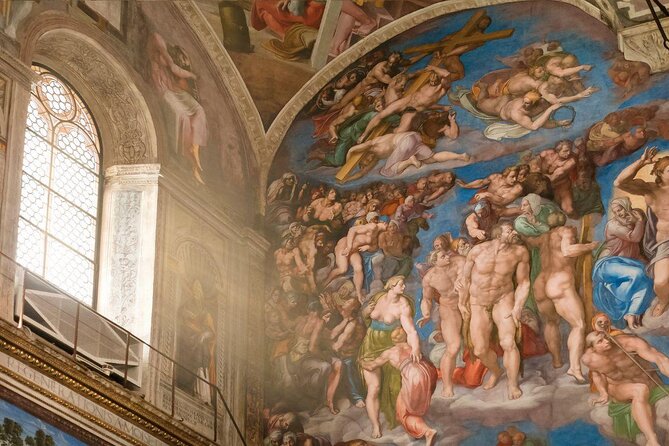
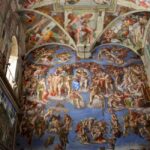
Now for the part everyone talks about: the Sistine Chapel ceiling. You’ll enter after the guide sets expectations. That’s important because the Sistine is a sacred space of worship, and conversation is not permitted inside. Translation: your guide can’t talk once you’re in the chapel.
So the tour does the smart thing—explains the background and what to notice before you step in. Then you’re free to look without someone trying to explain everything over the rules. You’ll get the “how to see it” info up front, which makes the ceiling far more than just a wow photo.
Dress code: don’t lose the ticket to a wardrobe mistake
Staying for the Sistine means following a dress code. Both men and women need knees and shoulders covered. No shorts, no sleeveless tops. This isn’t optional. If you show up wrong, entry can be refused.
Rome summers can be hot, so the tour notes that a shawl, scarf, or light sweater is a helpful backup. I’d treat this as part of packing, not an afterthought.
Time inside: you’re there to look, not rush
The tour stops for about 15 minutes at the Sistine Chapel. That might sound short, but it’s realistic given how the chapel flows and how the line system works. If you want the moment to land, prepare to look up, pause when you see something you want to study, and accept that you’ll be moving in the same human current as everyone else.
St. Peter’s Basilica via Scala Regia: what priority access changes
After the Museums and Sistine Chapel, you finish at St. Peter’s Basilica. This portion runs on a different kind of crowd control: the basilica is huge and popular, and the lines can be ugly in peak hours.
Here’s what you’re really paying for: priority admission through Scala Regia (the Holy Staircase). That group-only corridor helps you move more efficiently into the basilica complex than wandering with everyone else.
Once you’re inside, you take your time exploring key areas. The tour highlights Michelangelo’s La Pietà and Bernini’s Baldacchino, and it gives you a feel for the quiet power of the space. I like that the guide doesn’t turn St. Peter’s into a speed run. The goal is to let the scale hit you, then point out the key works so you leave with a map in your head.
Wednesday warning: St. Peter’s is special on that day
St. Peter’s Basilica is closed on Wednesdays for the Papal Audience, and it may occasionally close without warning. If that happens, the guide is supposed to adjust the itinerary to make the best use of your time in the Vatican area.
So if your trip lands on a Wednesday, I’d check your travel plans early. The Sistine and Museums part still matters, but your ending can change.
Group size, pacing, and why “small” helps in the Vatican
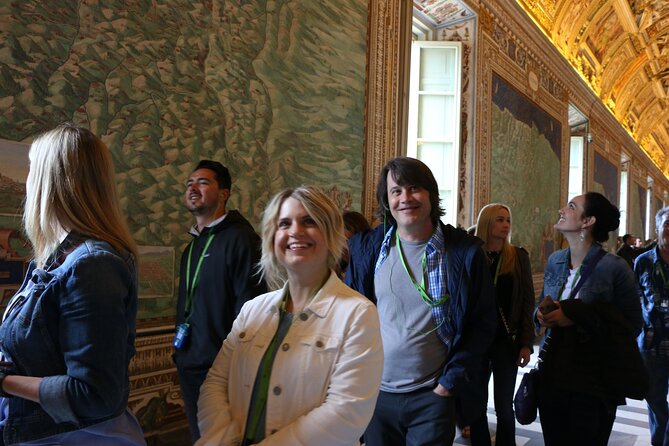
This tour has a maximum of 20 travelers. That’s a meaningful difference in a place like the Vatican, where crowds can break the illusion of a guided experience if the group is too big.
On groups of 6+, headsets may be provided. This helps you hear the guide without craning your neck or letting distance steal your focus. It’s also useful near the big rooms where space becomes tight.
In practical terms, you’ll get a pace that tries to balance:
- quick navigation between key rooms
- enough time to see major works clearly
- explanations that prevent “random museum fatigue”
Some guides are especially strong at photo timing and pacing. You may end up with someone like Eleonora, Fabbie, Bogdan, Marco, Monica, Sarah, Raffi, Daniel, or Mitzya—names that show up as standout guide examples in the tour’s guide history. Even if your guide isn’t one of those, the best sign is the same: clear structure, calm leadership through crowds, and art context that doesn’t ramble.
Walking and comfort: the truth about how your body will feel
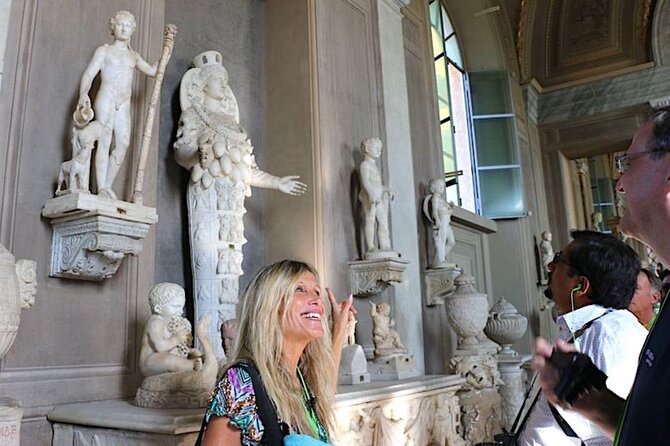
This tour assumes moderate physical fitness. It’s not a smooth tram ride through museums. You’ll walk, stand, and shift directions many times across marble floors and long corridors.
A simple strategy:
- wear comfortable shoes with grip
- plan to keep water handy
- bring a light layer for indoor air and the dress code coverage
Even on “low season” days, the Vatican has an unstoppable flow of people. Your job is to keep your energy for the rooms that matter most.
Price and value: is $52.45 a fair deal for Vatican triad access?
At $52.45 per person, you’re paying for more than a ticket. You’re paying for the combination of:
- skip-the-line museum entry
- guided highlights in major Vatican Museums sections
- Sistine Chapel access with proper prep
- priority entry into St. Peter’s Basilica via Scala Regia (guided tour only)
If you try to piece this together on your own, you’ll usually end up managing ticket timing, line logistics, and a self-guided “what am I looking at?” problem in the Museums. The tour solves those issues with one structured plan.
Is it perfect value? It’s worth it most if:
- you’re visiting for the first time
- you want the key works without planning a whole day around them
- you want a guide to help you see meaning, not just surfaces
One careful thought: even with skip-the-line access, congestion can still happen inside the Vatican and the Sistine Chapel because those spaces are inherently crowded. The tour can’t change human density. What it can do is help you arrive faster and keep your time guided and intentional.
Who should book this Vatican Museums, Sistine Chapel & Basilica tour?
This is a great fit if:
- you want a first-time Vatican experience that’s organized and not overwhelming
- you like history and art explanations while you walk
- you’d rather solve the logistics once than risk wasting time late in the day
- your group benefits from a clear meeting point and a maximum of about 20 people
You might think twice if:
- you want a long, self-paced museum crawl with no fixed rhythm
- you’re hoping to fully avoid crowds in the Sistine Chapel (you can’t fully control that)
- you’re sensitive to walking and standing for a few hours
If you’re visiting on Wednesday, make peace with the possibility that St. Peter’s is not part of the finish in the usual way.
Should you book it? My practical take
Book it if you want the best shot at a calm, guided “greatest hits” Vatican day: Museums → Sistine Chapel → St. Peter’s, with priority entry and an English guide to connect the art to context.
Skip it or consider a different format if you prefer total freedom, have the stamina to handle queues, and don’t care about structured explanations. Also, if your schedule is tight and you can’t reliably show up on time, this is the kind of tour where being late can cost you access because entry windows are strict.
If you do book, pack for the dress code, wear good shoes, and show up with a little buffer. You’ll get a smoother Vatican day—and you’ll spend your time looking up at Michelangelo instead of watching the clock.
FAQ
How long is the Skip-The-Line Vatican Museums, Sistine Chapel & Basilica tour?
It’s listed at about 3 hours (approx.), with set stops including the Vatican Museums, the Sistine Chapel, and St. Peter’s Basilica.
Is the tour offered in English?
Yes. The tour is offered in English.
What’s included in the price?
The tour includes a passionate English-speaking guide, skip-the-line tickets and guided tour to the Vatican Museums (including the Raphael Rooms and Sistine Chapel visit), and guided entry to St. Peter’s Basilica via the Scala Regia route (except Wednesdays). Headsets may be used for some group sizes.
Does the tour visit the Sistine Chapel?
Yes. You’ll visit the Sistine Chapel, and the tour notes that speaking is not allowed inside. The guide provides background before entry.
Is St. Peter’s Basilica included every day?
St. Peter’s Basilica is included except on Wednesdays. It’s also noted that the basilica may occasionally close without warning, and the guide may adjust the tour.
What are the dress code rules?
To enter places of worship and selected museums, you need covered knees and shoulders. That applies to both men and women. Shorts and sleeveless tops are not allowed.
Where does the tour start and where does it end?
It starts at Viale Vaticano, 100, 00192 Roma RM, Italy and ends inside the Vatican Museums, Vatican City (00120).
Is hotel pickup or drop-off included?
No. Hotel pickup and drop-off are not included.
Do I need to pick a time in advance?
Yes, you select a start time. The tour is designed so you can choose the time that fits your schedule, and strict entrance timing means it’s best to arrive at the meeting point up to 15 minutes early.