REVIEW · ROME
Trastevere: A Self-guided Audio Tour of Rome’s Medieval Village
Book on Viator →Bookable on Viator
Trastevere is Rome without the same old crush. This self-guided walk uses GPS-triggered audio to turn quiet lanes into a story you can follow at your pace. You’ll get that medieval feel fast, without booking a group tour or hunting for the right street at every corner.
What I really like is the offline VoiceMap setup: audio, maps, and geodata are all available without Wi-Fi or data. I also love how the narration feels local, with practical breaks and guidance built in—plus helpful ideas like lunch, coffee, and gelato timing and picks.
One thing to consider: the app works best when you stay close to the suggested route. If you drift too far, the narration can lose its place, and you may need to restart the guide.
In This Review
- Key highlights worth your attention
- Trastevere by Audio: A calmer Rome moment
- Price and time: is $9.99 worth it?
- Starting at Piazza Trilussa: what to expect on the ground
- Using VoiceMap: GPS audio that follows your feet
- Stop 1: Porta Settimiana and the Aurelian Walls story
- Stop 2: Piazza di Santa Maria and the Trastevere after-dark vibe
- Stop 3: Fontana della Botte and Pietro Lombardi’s rioni fountains
- The “it feels like a guide” factor
- Staying on the GPS route without ruining the vibe
- What this tour is really best for
- Who might find it less satisfying
- Should you book this Trastevere audio tour?
- FAQ
- How long is the Trastevere audio tour?
- What does the tour cost?
- Do I need Wi-Fi or data during the walk?
- What app do I use for the audio tour?
- Where does the tour start and end?
- Do I need to bring a smartphone?
- Is this tour private?
- Is the booking refundable or changeable?
Key highlights worth your attention
- GPS-triggered audio so the story matches where you are, not just where you planned to be
- Offline access to audio, maps, and geodata, which makes this easy even on spotty networks
- Porta Settimiana + Aurelian Walls backstory, including a late-1400s restoration
- Piazza di Santa Maria as Trastevere’s main square and a prime hangout after dark
- Fontana della Botte: Pietro Lombardi’s 1927 rioni fountain representing Trastevere
- Lifetime access to the tour content, so you can repeat it or use it on a later trip
Trastevere by Audio: A calmer Rome moment
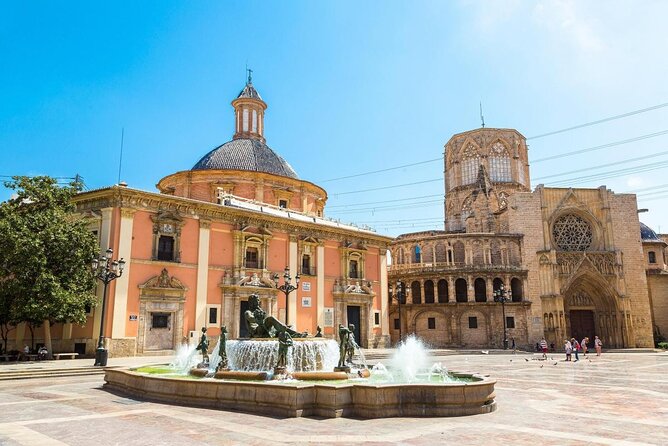
Trastevere is one of those Rome neighborhoods where you can feel the city layered on itself. You’ve got cobbled lanes, walls that look like they’ve heard secrets for centuries, and that slightly theatrical “every corner has a story” vibe. The nice part here is that you don’t need to be a Roman-history expert to enjoy it.
This tour keeps you in motion, but not rushed. The audio guides you through the neighborhood while you walk, so you’re not stopping every 20 seconds to read signs. And because it’s self-guided, you can slow down when you spot a pretty archway or speed up when the next block looks like it might be boring.
I also like the tone: it’s presented as if the narrator genuinely knows the area. That matters in Rome, where a lot of tours sound like they’re reciting. Here, the neighborhood voice helps the facts land as real places you’re actually passing.
You can also read our reviews of more guided tours in Rome


Price and time: is $9.99 worth it?
At $9.99 per person for an approximately 50-minute walk, the value is mostly about friction. You’re buying convenience plus context. You skip the whole “find a meeting point, wait for the group, listen over chatter” problem. Instead, you get a guided-feeling experience while you move through Trastevere at your own speed.
Is it a long, deep course? No. It’s designed as a short Roman stroll with built-in listening. That’s a strength if you want a quick win on a day when you’ve already done the big-ticket sights. It’s also smart if you’re jet-lagged or just don’t want another multi-hour commitment.
The tradeoff is simple: in 50 minutes, you’re not going to cover the entire neighborhood. You’ll focus on key stops and the “medieval village” atmosphere. If you’re craving lots of stops and lots of architecture, you might wish there were more time in quieter, less visited pockets.
Starting at Piazza Trilussa: what to expect on the ground
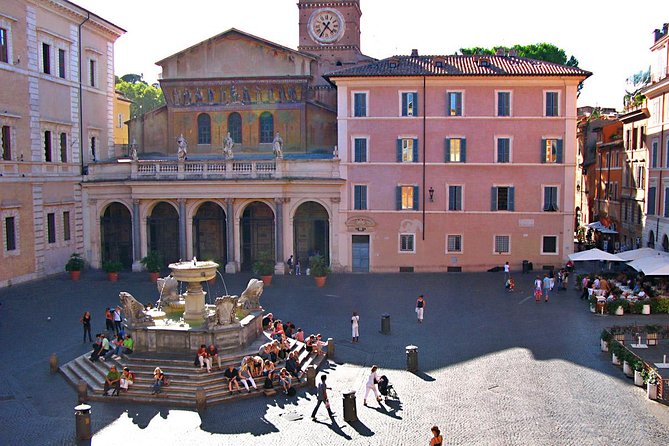
The walk starts at Piazza Trilussa, 00153 Roma RM, Italy and ends at casadante, Piazza Dante 8, 00185 Roma RM. The end point is helpful because you’re not retracing your steps back to the same square—you can keep exploring after the audio finishes.
Timing is flexible. The listing shows access throughout the day (12:00 AM to 11:59 PM). In practice, I’d think about the story you want. Trastevere’s Piazza di Santa Maria is described as a main square and a meeting place for young people after the sun goes down. If you’re aiming for that lively evening feel, plan your walk so you catch that part around dusk.
Practical note: your phone isn’t included. You’ll need a smartphone to run the app. Good news: the tour is designed for independence—near public transportation and service animals are allowed, and it’s labeled as suitable for most people.
Using VoiceMap: GPS audio that follows your feet
This is a VoiceMap tour, and it’s set up to trigger audio based on GPS as you walk. The win here is matching. The story syncs to your location, so you’re not constantly checking a map while trying to listen.
The other big plus is the offline system. No Wi-Fi or data is needed because audio, maps, and geodata are available offline. That’s a real travel advantage in Rome, where reception can be unpredictable and you don’t want to burn battery and data on navigation.
Here’s the practical rhythm I suggest:
- Before you start, make sure you’ve downloaded the needed content in the app (so the offline audio is ready).
- Keep an eye on where you are on the map screen.
- Walk normally. You don’t need to sprint between stops.
- If you stop for photos, it’s fine—but try not to wander too far from the route for long.
One detail that matters: an app GPS route is only as good as your path. If you drift away from the map line, the narration can get stuck and you may need to restart the guide. That’s not a dealbreaker, just something to be aware of if you’re the type who turns every corner looking for the perfect view.
Stop 1: Porta Settimiana and the Aurelian Walls story
The first major historical anchor is Porta Settimiana, linked to the Aurelian Walls. These defensive walls were built under Emperor Aurelian in 271 AD, and Trastevere was partially included within them. That’s your medieval-to-Roman timeline kick-off right at the start.
What you see today matters. The gate that stands now was heavily restored in the late 1400s. So you’re not just looking at an ancient ruin. You’re seeing a later version of an older structure—an important idea in Rome. The city often preserves meaning even when the materials change.
Why this stop works on a short walk: it gives your brain a frame. Once you understand that Trastevere had a defensive edge in Roman times, the whole “medieval village” vibe starts to feel earned. Even the cobbled lanes don’t feel random anymore.
Possible drawback: if you’re hoping for a huge, dramatic wall complex right here, manage expectations. The tour is built around story points, not a full scale architectural tour. You’ll get context and atmosphere more than you’ll get an all-day site expedition.
You can also read our reviews of more tours and experiences in Rome




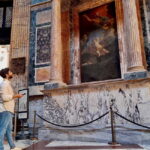
Stop 2: Piazza di Santa Maria and the Trastevere after-dark vibe
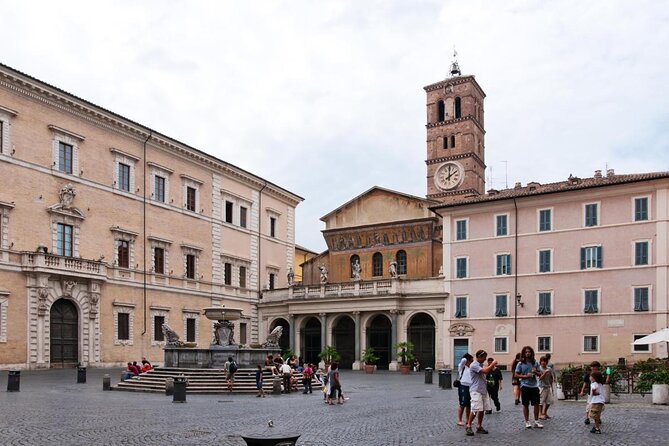
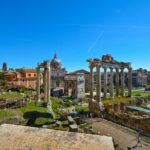
Next up is Piazza di Santa Maria, Trastevere’s main square. It’s described as a meeting place for the many young people who flock to the district after the sun goes down.
This stop is more than geography. It’s where the neighborhood energy makes sense. Trastevere isn’t just about pretty lanes; it’s also social space. When a tour places a “main square” in the middle, it’s often doing something smart: it gives you a place to pause, orient yourself, and absorb the local rhythm.
Even if you’re not there for nightlife, Piazza di Santa Maria is useful because it’s central to how the district works. I like using a square like this as a checkpoint. You can reassess your pace and decide whether you want to take your time before moving on.
If you’re walking during calmer daylight hours, you may not get the after-dark feel the audio highlights. But the square still functions as the neighborhood’s anchor, and it’s a natural place to look around before continuing.
Stop 3: Fontana della Botte and Pietro Lombardi’s rioni fountains
The finale stop is Fontana della Botte, connected to a fascinating 20th-century project rooted in Rome’s old neighborhood divisions.
In 1927, sculptor Pietro Lombardi was commissioned to create a set of nine fountains representing Rome’s rioni (districts). Each fountain is meant to capture a characteristic of its district. Fontana della Botte represents Trastevere, with the name pointing to the idea of a barrel—an image that fits the neighborhood’s food and social traditions.
Why this stop is a good closer: it bridges eras. You’re moving from Roman fortifications to medieval street life to an early 1900s artistic homage that still shapes how Rome thinks about its districts. This is the kind of detail that makes a short audio tour feel like you learned something you wouldn’t stumble onto by chance.
Potential consideration: if you want more architectural variety after this fountain, the walk length may leave you wanting one more “story stop.” That’s the tradeoff of a 50-minute format—great if you want a compact experience, less great if you’re aiming for a long wandering session.
The “it feels like a guide” factor
A theme that comes through strongly is how the narration makes the streets feel animated. The audio doesn’t just list dates. It recreates the atmosphere of both the recent and distant past, which is exactly what you want in Trastevere. The neighborhood is already visually dramatic. The best guide content helps you connect what you see to why it matters.
Another standout is the practical side. The narration includes good guidance for lunch, coffee, and gelato. That might sound minor, but in a city like Rome, food timing can make or break the day. A walking tour that helps you pick what to eat and when you’ll likely enjoy it is worth real attention.
Just remember: the tour ends, and you still need your own judgment for meal choices. Use the audio suggestions as a starting point, not a blind checklist.
Staying on the GPS route without ruining the vibe
This is where you can make the difference between smooth and annoying.
I suggest you treat the map as your safety net, not something to fight. Keep walking within the general route line. If you stop to photograph a doorway, do it quickly and then resume. If you completely change course to take a scenic detour, the GPS-triggered audio might not catch up.
If the app does get stuck, the fix is straightforward: restart the guide and try to get back near the route. It’s not a sign the tour is broken. It’s just how location-triggered content works—Rome streets can be confusing even when you’re paying attention.
If you’re the type who hates following any route at all, you might find yourself constantly fighting the app. In that case, this is still usable, but you’ll get more value when you walk with some structure.
What this tour is really best for
This self-guided audio walk fits best when you want:
- a short, low-effort way to explore Trastevere
- a neighborhood introduction with context at the right moments
- an experience that works even if you don’t want to join a group
It’s especially good if you’ve already done big sights and your energy is better spent on atmosphere and stories. It’s also ideal when you prefer to roam on your schedule. You’re not waiting for anyone. You’re not listening over a guide’s microphone. You press play, walk, and pause when you want.
It also suits people who like offline options. Being able to use maps and audio without Wi-Fi is a comfort, and it reduces the “tech stress” that can creep into walking tours.
Who might find it less satisfying
No tour is perfect, and this one has a clear ceiling.
If your goal is heavy, stop-by-stop history and architecture, you may feel the route is a bit short or that it covers too little of the less popular side of the neighborhood. The content is focused on key points, and some people want more time spread across quieter corners.
That doesn’t make it bad. It just means you should match expectations to format. This is a 50-minute audio walk, not an all-day architecture seminar.
Should you book this Trastevere audio tour?
I’d book it if you want a guided-feeling walk without the logistics of a group tour, and you like learning while you move. The combination of offline access, GPS-triggered narration, and lifetime access gives it strong value for the price. You can also reuse it later, which is a quiet win—one purchase, multiple chances to revisit the neighborhood.
Skip it (or pair it with more exploration) if you need lots more stops, lots more buildings, or you hate following a route even loosely. In that case, you’ll finish quickly and may feel like you want one or two extra story anchors.
If you’re planning a Rome trip where Trastevere is on your list but you don’t want crowds to run the day, this is a smart way to do it.
FAQ
How long is the Trastevere audio tour?
It’s approximately 50 minutes.
What does the tour cost?
The price is $9.99 per person.
Do I need Wi-Fi or data during the walk?
No. The tour includes offline access to audio, maps, and geodata, so you do not need Wi-Fi or data.
What app do I use for the audio tour?
You use the VoiceMap application.
Where does the tour start and end?
It starts at Piazza Trilussa and ends at casadante, Piazza Dante 8.
Do I need to bring a smartphone?
Yes. A smartphone is not included.
Is this tour private?
Yes. Only your group will participate.
Is the booking refundable or changeable?
No. It is non-refundable and cannot be changed for any reason.
If you tell me your travel month and whether you’re aiming for daytime or evening Trastevere, I can suggest the best time window to catch the Piazza di Santa Maria mood the audio points you toward.