REVIEW · ROME
Rome Tour “the center of the world” with high quality electric bicycle!
Book on Viator →Operated by Noleggio Ebike & Monopattini elettrici Roma · Bookable on Viator
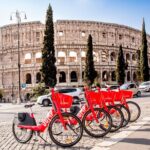
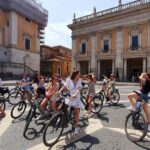
Rome can feel like a giant open-air museum. This 3-hour electric bike tour helps you see the main sights without burning your whole day on slow walking. I like the mix of ancient ruins and everyday Rome street life, all tied together with quick, clear context from a strong guide.
Two things I really value: the small group size (up to 12) makes it easier to move and pause on the spot, and the e-bikes (Kalkhoff models, in my experience with this kind of setup) help you cover ground while staying comfortable. The one drawback to plan for is time: with just a few short stops, you get highlights, not full museum-depth visits, and admission tickets are not included where noted.
You also ride through some busy central streets, so it helps if you’re okay with basic bike handling and following instructions. If you want to linger for hours at one place, you may feel slightly rushed on this kind of intro route.
In This Review
- Key highlights to know before you ride
- Why an E-Bike Works So Well for a 3-Hour Rome Intro
- Meeting at Via Labicana and Getting Rolling Fast
- Roman Forum: The Power Core You Can Actually Picture
- Circus Maximus: Where Romans Watched Horse Racing for Real
- Antico Quartiere Ebraico: One of the Oldest Ghettos in the World
- Campo de’ Fiori: From Flower Meadow to a Central Street Square
- Trevi Fountain: Big Baroque Drama Without Paying Extra at the Stop
- The Included Gear: Helmet, Padlock, City Map, and Rainproof Comfort
- Price and Value: What $68.65 Buys You in Real Time
- Who Should Book This E-Bike Tour (and Who Might Skip It)
- Should You Book Rome the Center of the World?
- FAQ
- How long is the Rome the center of the world electric bike tour?
- Where does the tour start and where do you end?
- What’s included with the tour price?
- Are admission tickets included for the stops?
- Is lunch included?
- How large is the group?
- When will I get confirmation and how do I receive my ticket?
- Is the tour rainproof?
- Can I cancel for a refund?
Key highlights to know before you ride
- Up to 12 people keeps the pace human and the stops more flexible
- Kalkhoff e-bikes make the “Rome hills” problem much smaller
- Roman Forum + Colosseum orbit gives you a fast sense of Rome’s political center
- Ancient and modern side by side from Circus Maximus to Campo de’ Fiori
- Trevi Fountain is free at the stop (admission isn’t part of the Trevi moment)
- Rainproof gear included helps you keep moving even when weather turns
Why an E-Bike Works So Well for a 3-Hour Rome Intro
Rome rewards curiosity, but your legs pay the bill. An electric bike is the smart fix here because it keeps you moving between major zones while still letting you stop, look, and listen.
This tour is built around a short 3-hour window, so the e-bike isn’t a gimmick. It’s how you can realistically hit the Roman Forum area, Circus Maximus, the Jewish ghetto district, Campo de’ Fiori, and then finish at Trevi without feeling like you’re just rushing from one ticket line to the next.
You’ll also get a helmet and a padlock, which matters more than you’d think in a city with lots of sudden stops. And the whole setup is designed to be rainproof, so light showers won’t automatically cancel the day plan.
You can also read our reviews of more tours and experiences in Rome.

Meeting at Via Labicana and Getting Rolling Fast
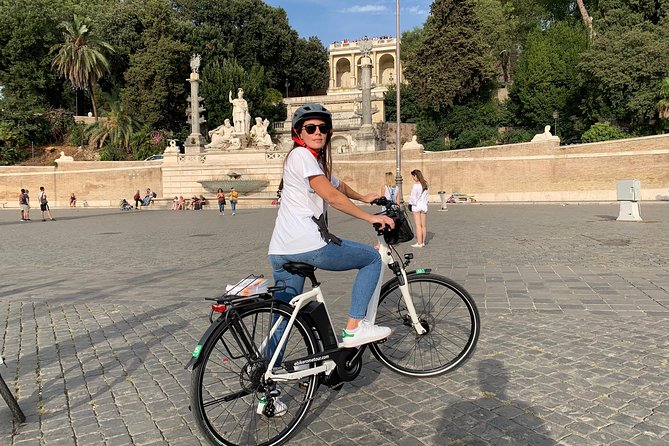
The meeting point is at Via Labicana, 46 (00184 Roma). The tour ends back at the same place, which is a big convenience in Rome where “getting back” can turn into a mini quest.
You’ll receive a confirmation within 48 hours of booking (if spots are available). The ticket itself is a mobile ticket, so you can keep everything on your phone and avoid juggling paper.
Because it’s near public transportation, you’re not stuck if you arrive early or need to swap plans. You can also use the city map that’s included to get your bearings after the ride.
Roman Forum: The Power Core You Can Actually Picture
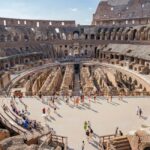
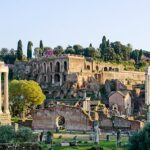
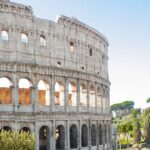
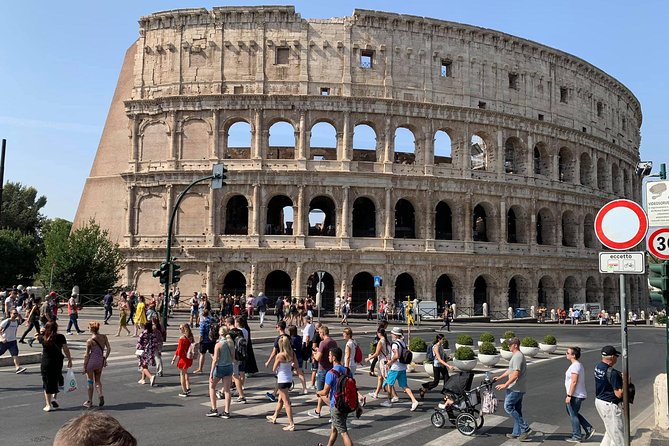
The Roman Forum isn’t just ruins. It’s the political, legal, religious, and economic center of ancient Rome, described as an archaeological area enclosed by major hills and the Colosseum region.
During the stop, you’re essentially getting a map in your head: the Forum sat between the Palatine Hill and Capitoline Hill, with routes like Via dei Fori Imperiali nearby, and it sits in the wider area associated with the Colosseum. Even if you’ve read about Rome before, this is where the scale and layout start to click.
This is also a place where short pauses pay off. You can look around, notice how layered the remains are from different eras, and then let the guide connect the dots—what this space meant and why it shaped the whole Roman civilization.
One practical note: this stop is listed as part of the “main attractions,” but admission details aren’t included in the information you have here. If you plan to enter specific areas, check what’s included versus what you may need separately.
Circus Maximus: Where Romans Watched Horse Racing for Real
Circus Maximus is famous for horse racing, and the setting helps you understand why it mattered so much. It lies in a valley between the Palatine and Aventine Hills, and it’s remembered as a venue for games since the earliest days of the city.
The tour time here is short, but the context makes it sharper. The information you’ll hear includes the story-link to the myth of the rape of the Sabine women, plus the idea that the site’s big flat space and access to the Tiber landing helped it become a natural hub for activity and exchange.
If you only walk in Rome, Circus Maximus can feel like “more ruins.” With the ride, you get the sweep of the space and the logic of where everything sat relative to other landmarks.
Admission isn’t included for this stop, so don’t assume you can enter paid sections as part of the base price. Still, even without extra entry, it’s a strong way to add variety beyond the Forum and fountains.
Antico Quartiere Ebraico: One of the Oldest Ghettos in the World
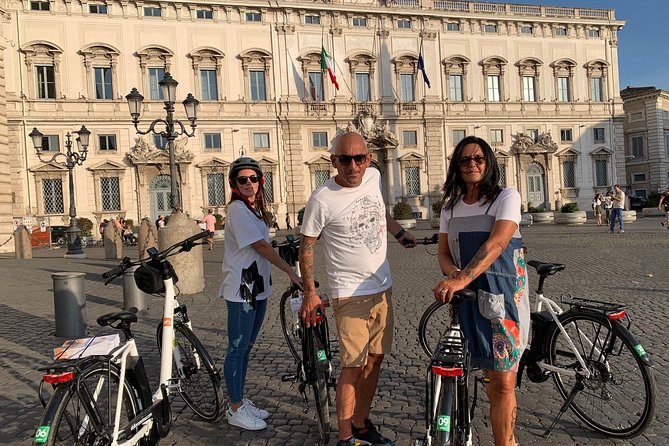
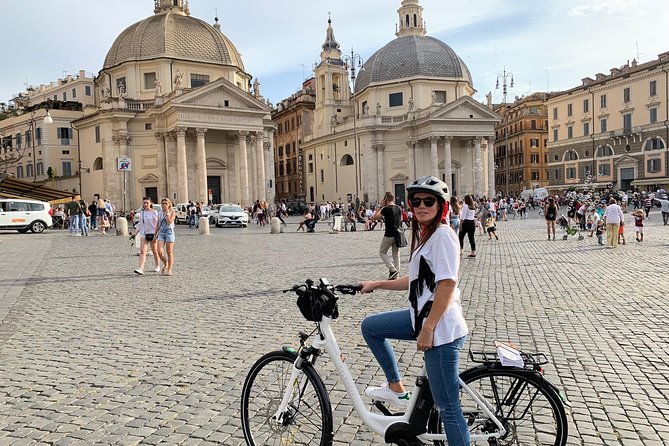
Next comes the Antico Quartiere Ebraico, the historic Jewish ghetto area of Rome. The key fact to hold onto is age: it’s among the oldest ghettos worldwide, created about 40 years after the one in Venice.
The meaning of the word itself is part of what makes this stop interesting. The term is tied to the Venetian district name (gheto), related to a foundry where Jews were forced to reside, and there’s also a Hebrew-language etymology connected to separation.
You won’t get a long lecture in one place here. Instead, you get a guided snapshot of how a community’s history shaped a neighborhood, and you move on quickly—exactly what you want in a 3-hour tour format.
Also note that admission isn’t listed as included for this stop. You’re getting the orientation and historical framing, not a ticketed experience built in.
Campo de’ Fiori: From Flower Meadow to a Central Street Square
Campo de’ Fiori is one of those Rome squares that feels like it’s always been there. The tour gives you the opposite lesson: until the fifteenth century, there wasn’t a square in the form you see now, but a flowery meadow with cultivated gardens.
The name also comes with a tradition—one story says the square should have been named after Flora, tied to a woman loved by Pompey, with a theater nearby. Even if you treat the story as uncertain, it adds flavor to why Rome’s place names often carry layered myths.
This stop also links to how streets evolved over time. The information provided connects the square to a road axis called Via Florea and mentions the route shifts through roads like Via Portico di Ottavia, Via dei Giubbonari, Via del Pellegrino, and Via dei Banchi Vecchi. In plain terms: the square sat on important connections, not just a pretty spot.
This is where you’ll enjoy looking at daily life in central Rome while still keeping the ancient timeline in your head. If you love photos, this is also a natural pause.
Admission tickets aren’t included for Campo de’ Fiori as listed, but that’s fine—this part of Rome works best as an open-air “watch and learn” stop.
Trevi Fountain: Big Baroque Drama Without Paying Extra at the Stop
Then you hit Fontana di Trevi, one of the most famous fountains in the world. It’s described as the largest, and it’s a late Baroque masterpiece tied to major names and decisions.
Here’s what I’d focus on during your stop: Nicola Salvi built it, after a 1731 papal competition won by Lambert-Sigisbert Adam. The work shifted back to Salvi, and completion is listed as 1762 by Giuseppe Pannini. The fountain’s materials are also given in detail—travertine, marble, plaster, stucco, and metals—so you know what you’re looking at when the details pop.
The good part for value is that admission is listed as free at Trevi. You’re paying for the tour, not a separate entry fee for this stop.
This is also the kind of place where a short visit can still feel satisfying. It’s not about “learning everything.” It’s about seeing a true Rome icon in person and using the tour to reach it without getting lost.
The Included Gear: Helmet, Padlock, City Map, and Rainproof Comfort
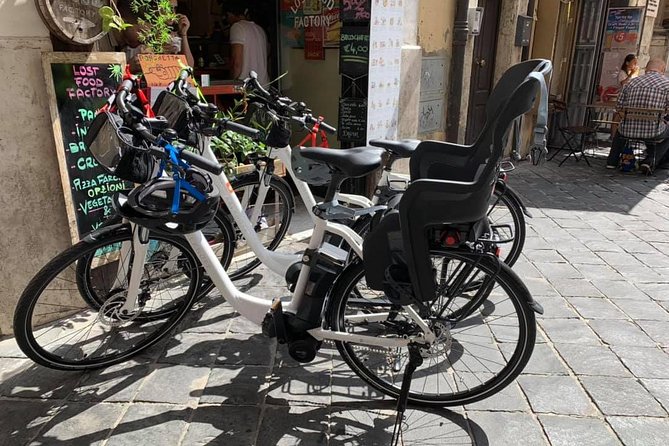
This is not just a rental bike. You get helmet and a padlock, plus a city map, which helps a lot when you want to keep exploring right after the tour.
You’re also getting rainproof coverage. That matters because Rome weather loves surprise turns, and nothing kills a good day faster than “the tour canceled” or “we’ll reschedule later.”
There’s also mention of a seat for children up to 4 years. If you’re traveling with a tiny kid who still needs a seat, that’s a real advantage. It can be the difference between doing Rome as a family and having to choose between sights and logistics.
Price and Value: What $68.65 Buys You in Real Time
The price is $68.65 per person for about 3 hours. That may sound straightforward, but the value comes from how efficiently the tour strings together major areas of Rome without you needing to plan a route or manage transfers.
You’re also getting a small-group experience with a maximum of 12 travelers. In a city like Rome, that tends to mean fewer bottlenecks and more time spent actually looking instead of waiting.
One value check: some stops list admission tickets as not included. Trevi is listed as free, but you should treat other areas as “see first, decide later” unless your plan includes specific paid entries.
Lunch isn’t included either. That’s normal for a short city-orientation tour, but it does mean you should plan to eat afterward. If you’re hungry, grab something quick before the ride so you don’t feel rushed when the tour ends.
A final practical planning detail: this tour is often booked about 22 days in advance on average. If you have fixed dates, it’s smart to reserve earlier rather than assuming it will be easy to find a spot last minute.
Who Should Book This E-Bike Tour (and Who Might Skip It)
This tour fits you best if you want a fast, well-paced introduction to Rome’s big-name sights with less leg strain. You’ll get a clear “what to notice” framework at each stop, which helps you return later and explore more deeply at your own speed.
It’s also a good option if you like variety. You’ll shift from ancient civic space (Forum) to spectacle (Circus Maximus), then to neighborhoods and city life (Jewish ghetto area and Campo de’ Fiori), then finish with an iconic landmark (Trevi).
You might want a different kind of tour if you’re aiming for long stays, heavy entry-ticket experiences, or deep museum hours. With only about 3 hours, this tour is built for highlights and orientation, not prolonged study.
Should You Book Rome the Center of the World?
Yes—if your priority is an efficient first look at Rome’s center with a high-quality e-bike setup and a guide who connects the dots. The small-group size and included helmet/map/rainproof gear make it feel practical, not touristy in a bad way.
I’d book this when you want to build momentum early in your trip. Finish the ride, then choose your next steps: linger in Campo de’ Fiori, do a deeper exploration on your own around the Forum area, or come back for a second look at Trevi.
If you’re traveling at a time when you strongly prefer long, ticket-based indoor stops, consider a different format. This one is about moving, seeing, and understanding enough to guide your later choices.
FAQ
How long is the Rome the center of the world electric bike tour?
It’s approximately 3 hours.
Where does the tour start and where do you end?
It starts at Via Labicana, 46, 00184 Roma RM, Italy, and ends back at the same meeting point.
What’s included with the tour price?
Included are the bicycle, helmet, padlock, city map, rainproof gear, and a seat for children up to 4 years.
Are admission tickets included for the stops?
Admission tickets are not included where noted for certain stops (like Circus Maximus and the Jewish ghetto area, and Campo de’ Fiori). Trevi Fountain is listed as free.
Is lunch included?
No, lunch is not included.
How large is the group?
The tour has a maximum of 12 travelers.
When will I get confirmation and how do I receive my ticket?
You’ll receive confirmation within 48 hours of booking (subject to availability), and the tour uses a mobile ticket.
Is the tour rainproof?
The experience includes rainproof gear, so it’s designed to keep going in bad weather.
Can I cancel for a refund?
Yes. You can cancel for free, up to 24 hours in advance for a full refund. If you cancel less than 24 hours before the start time, you won’t receive a refund.