REVIEW · ROME
Private Baroque Tour: Discover Bernini & Caravaggio’s Best Works
Book on Viator →Operated by VIVICOS INTERNATIONAL TRAVEL SRL · Bookable on Viator
Baroque Rome gets wonderfully specific on this walk. A private guide leads you through 3 hours of Bernini and Caravaggio-era masterworks in working churches, plus famous optical illusions and big-splash squares. I love the personalized pace, where you can ask questions and actually look at details, and I love the Baroque “wow” factor—especially the perspective trick at Chiesa di Sant’Ignazio di Loyola. The one catch: expect some walking and a strict dress code for churches (no shorts, no sleeveless tops; knees and shoulders covered).
This tour also helps you connect dots between major Italian names—Caravaggio, Bernini, Michelangelo, and Raphael—without turning it into a rushed art lecture. You’ll start near the Spanish Steps, then work your way through classic stops that mix sculpture, painting, and dramatic architecture. If you want a Baroque-focused Rome day instead of another ancient-Rome sprint, this format makes it easy to choose.
One more practical note: church opening hours can change, and if a site is closed, it’s swapped for similar highlights. That’s normal in Rome, but it’s worth knowing so you don’t show up expecting one exact door to always be open.
In This Review
- Key points at a glance
- Baroque Rome in 3 Hours: Why this private format works
- Start near the Spanish Steps: how the tour sets the tone
- Piazza di Spagna to Trevi Fountain: classic Rome, used the right way
- Chiesa di Sant’Ignazio di Loyola: the fake dome trick you can’t unsee
- Bernini and sculpture moments: angels at Sant’Andrea and the elephant at Minerva
- Santa Maria sopra Minerva to St. Louis of the French: art viewing in smaller pauses
- Piazza Navona: ending with Bernini’s Four Rivers fountain
- Price and value: does $332 per person make sense?
- Quick practical tips: dress code, weather, walking, and church closures
- Who should book this private Baroque tour?
- Should you book this private Baroque tour?
- FAQ
- What time do the two tour departures run?
- Where do we meet, and where does the tour end?
- How long is the private baroque walk?
- Is this truly private?
- Are entrance fees included?
- What should I wear, and what happens if a church is closed?
Key points at a glance
Private guide, 3 hours, and a Baroque route built around churches.
The fake dome illusion at St. Ignatius is the kind of thing you have to see in person.
You’ll pair major artists (Caravaggio, Bernini, Raphael, Michelangelo) with specific locations.
You end in central Rome near Piazza Navona, so it’s easy to keep exploring after.
Dress code matters: cover knees and shoulders or you may be turned away.
Baroque Rome in 3 Hours: Why this private format works
Rome can feel like two cities at once: ancient ruins on one side, and 17th-century Catholic art on the other. This tour leans into the second Rome—the Baroque era—where drama, light, sculpture, and perspective do the storytelling. You’re not just “seeing stuff.” You’re being guided to notice how the art was designed to hit you emotionally.
I like that the tour is private. That matters in churches, where light, quiet, and crowds can change from day to day. With your own guide, you can spend longer where your interests land—painting, sculpture, or architectural tricks—without fighting a group’s momentum.
And you’re getting real Baroque “signature moves.” The route includes Bernini-linked sculpture, Caravaggio-relevant stops, and one of Rome’s most famous illusion effects. If you’re curious why Baroque art looks so theatrical, this structure makes the answer visible.
You can also read our reviews of more private tours in Rome
Start near the Spanish Steps: how the tour sets the tone
Your meeting point is Piazza di Spagna, right by the Spanish Embassy near the Spanish Steps. Start times are 9:00am or 2:30pm, so you can fit this around the rest of your Rome plans (morning sightseeing, then a slower afternoon; or the reverse).
From there, you get your bearings fast. You move from one high-impact visual stage to another, with a guiding thread: how major artists connect to specific churches and public spaces. Even if you’re not an “art expert,” your guide’s job is to translate the symbols, style choices, and building decisions into plain language.
A small detail that still matters: the tour is about 3 hours, with short pauses at each stop. That keeps it manageable, but it also means you’ll want comfortable shoes. Rome surfaces are not gentle.
Piazza di Spagna to Trevi Fountain: classic Rome, used the right way
At Piazza di Spagna, you’re not just starting in a photo spot. You’re beginning a Baroque itinerary with a sense of where people flow in Rome. The tour uses that first location to set up the rest of the walk, so you’re not suddenly thrown into churches without context.
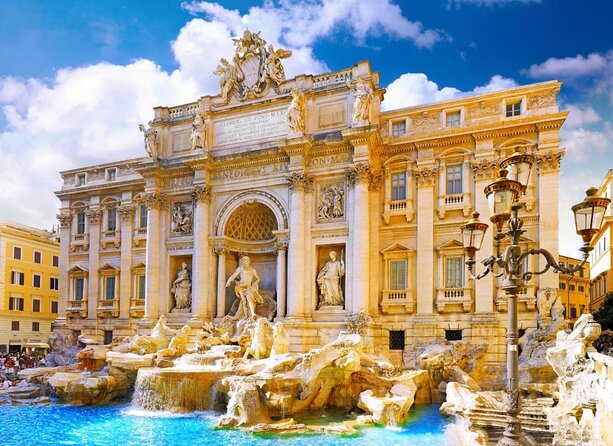
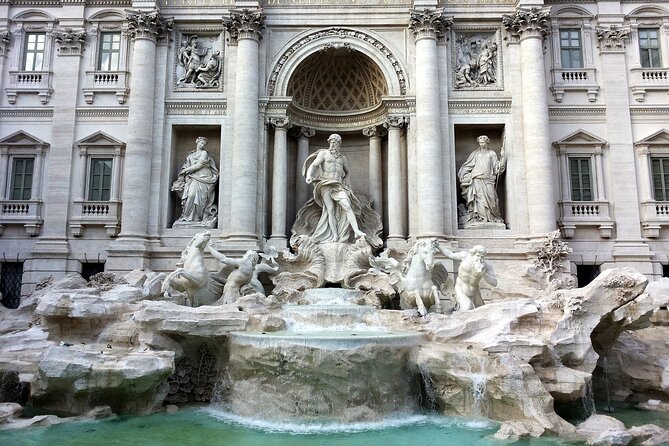
Then the route includes Fontana di Trevi. You’ll have time to see the fountain up close and remember the ritual—throw three coins into the water if you want that lucky tradition. This stop is short by design. It keeps the day moving toward the quieter (and more concentrated) art viewing inside churches.
Why that balance is smart: Trevi is big and attention-grabbing, but the Baroque story becomes clearer once you slow down. You’ll have time later for interiors, where the art and architecture do their real work.
Chiesa di Sant’Ignazio di Loyola: the fake dome trick you can’t unsee
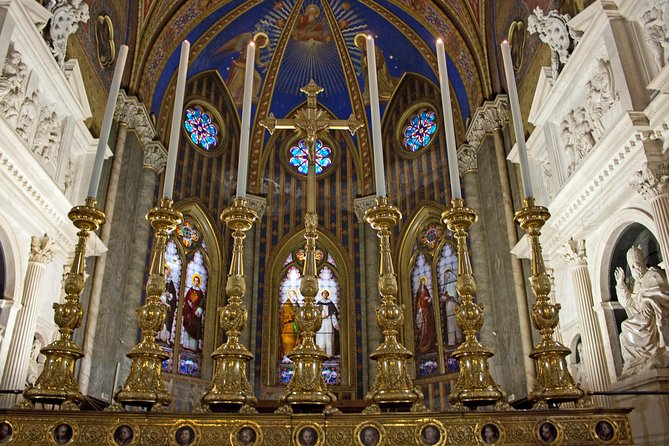
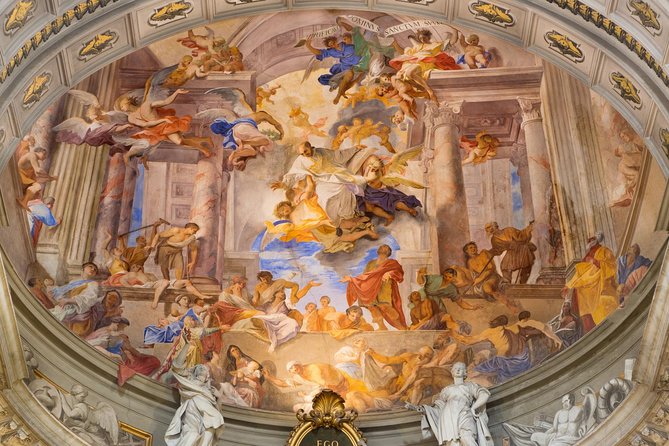
This is the stop that most people remember. At Chiesa di Sant’Ignazio di Loyola, you’ll see a fake perspective dome—a visual trick that makes the ceiling feel like it opens upward. Baroque artists and architects were obsessed with the idea that you could manipulate space, light, and perception, and this church is a prime example.
Here’s what to pay attention to: don’t just glance upward. Look at the lines and the way the illusion creates depth. Your guide will help connect what you see to why Baroque art wanted to feel immersive and persuasive—religion wasn’t presented quietly in the 1600s and 1700s. It was presented like theater.
Time at this stop is about 20 minutes, which is enough to see the illusion and still ask questions. If you’re the type who likes to linger, this is one place where you might wish the tour were longer, because it’s the most “only in Rome” moment on the route.
Bernini and sculpture moments: angels at Sant’Andrea and the elephant at Minerva
The tour’s Baroque focus isn’t only about painted walls. It also includes sculpture and architectural drama, with Bernini as a key thread.
One stop you’ll make is Church of St. Andrew of the Fratte (Sant’Andrea delle Fratte). The highlight here is the presence of Bernini-sculpted angels—a reminder that Baroque religious art aimed for movement and emotion. Instead of static figures, these angels feel alive, posed to pull your attention through the space.
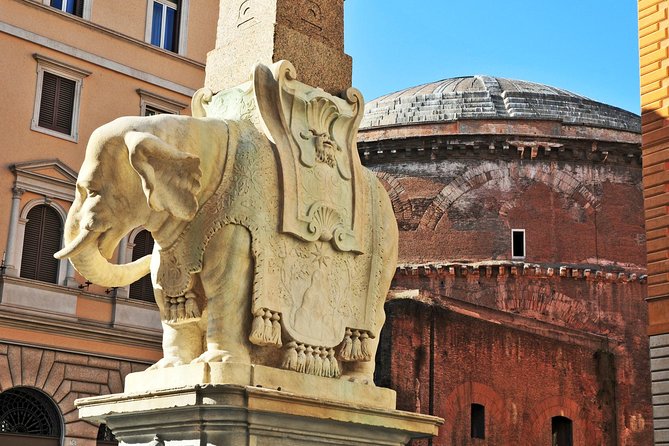
Later, you’ll head to Chiesa di Santa Maria sopra Minerva. This is where the tour leans into Bernini’s famous elephant sculpture. It’s such a Rome detail: a playful contrast that still sits inside a highly controlled church environment.
If you love moments where art refuses to be boring, this pairing works well. You get angels that feel like they’re reaching, then a sculptural surprise that’s smart and theatrical. Together they show Baroque as something engineered to make you look twice.
Practical note: church interiors often have dimmer lighting than outdoors, so take your time adjusting your eyes. And since this tour includes several churches, it helps to have your dress code sorted before you arrive.
Santa Maria sopra Minerva to St. Louis of the French: art viewing in smaller pauses
Between the big visual hits, you’ll spend time in places that feel more local and less like a single postcard scene. The tour stops in Santa Maria sopra Minerva and then moves toward the Church of St. Louis of the French in the square by the same name.
The goal here is to keep the art story continuous. You’re not just hopping between famous names. You’re seeing how different churches use Baroque style differently—sometimes more dramatic, sometimes more composed, but always designed to guide your eyes.
Also, this is a tour where your guide matters. With the right framing, you’ll notice how Baroque churches arrange attention: where paintings sit, how sculpture is staged, and how architecture channels movement. That’s what makes these stops more than simple checkboxes.
Piazza Navona: ending with Bernini’s Four Rivers fountain
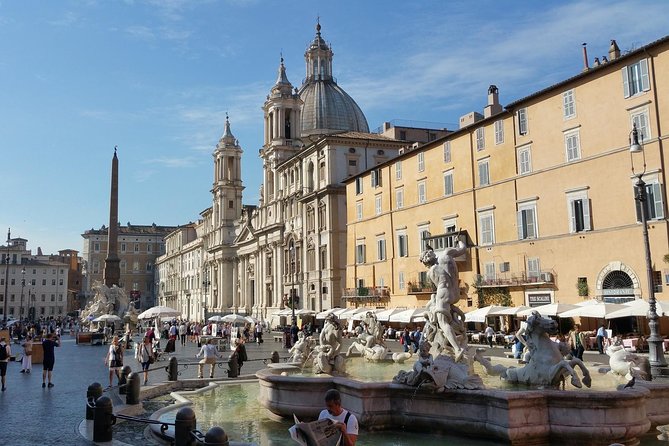
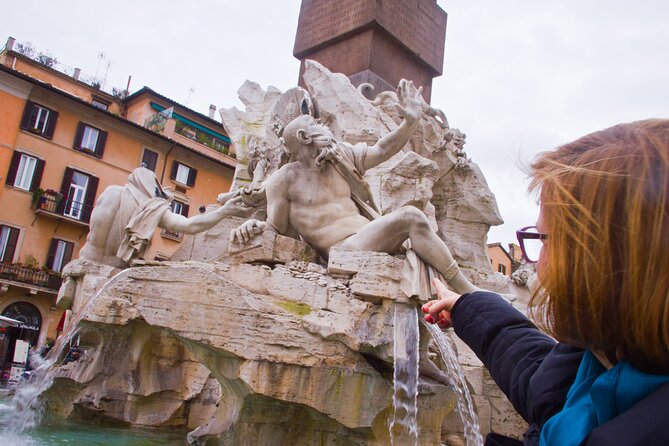
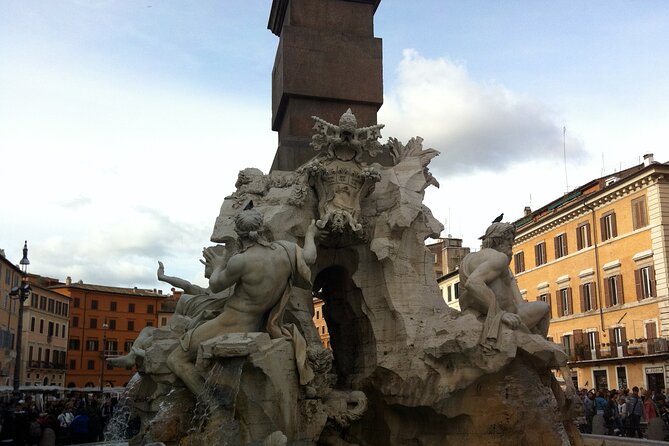
Your tour ends near Piazza Navona, one of Rome’s best places to decompress after a focused art-and-church walk. You’ll spend time there to see Bernini’s fountain of the Four Rivers. This is Baroque in public space—grand, expressive, and built to be seen from multiple angles.
It’s also a smart finishing point. Since Piazza Navona sits in a central area, you can easily continue your day on your own: more wandering, a meal nearby, or just another loop through the piazza’s street scenes. You don’t have to plan a complicated exit.
And if you’re the type who needs one last “anchor image” to remember a themed tour, this is it. The Four Rivers fountain ties together the day’s theme: Baroque art is meant to be felt, not just looked at.
Price and value: does $332 per person make sense?
This tour is priced at $332.14 per person for about 3 hours with a professional private guide. That’s not a “budget group bus” price, so you’re paying for two things: personalization and a tight route with curated stops in churches.
So where’s the value?
- Private guidance in churches is where the extra cost pays off. Baroque art is full of symbolism, perspective tricks, and artistic choices that are hard to decode quickly on your own.
- The route targets iconic Baroque experiences in a compressed time window: the St. Ignatius illusion, Bernini-linked sculpture moments, and an ending at Piazza Navona.
- You’re also getting a structure that reduces decision fatigue. In Rome, it’s easy to spend hours planning or wandering randomly. This route keeps you moving with a point.
When it might not be the best fit: if you prefer to roam freely without a guide, or if you only want ancient ruins, the Baroque focus could feel like a detour. But if you want a high-impact art-and-architecture day with less guesswork, the pricing can feel fair.
A booking tip: it’s commonly reserved about 28 days in advance, so if your dates are fixed, don’t wait until the last moment.
Quick practical tips: dress code, weather, walking, and church closures
This tour runs in all weather conditions, so dress for rain or heat. You don’t want to spend your best Baroque moments thinking about being uncomfortable.
Dress code is strict. For churches and selected places of worship, no shorts and no sleeveless tops. Knees and shoulders must be covered for both men and women. If you ignore this, you might be refused entry. It’s better to over-dress slightly than to gamble.
There’s also moderate walking. It’s not an all-day hike, but with multiple church stops, cobblestones, and short transitions, it helps if you have a decent walking tolerance.
Finally, remember that churches are holy places and may close without notice. If a site is shut, it’s replaced with similar highlights. That’s Rome reality. The good news is that the tour is built to keep the theme intact even when a door is unexpectedly closed.
One optional add-on worth knowing: a driver can pick you up in a central Rome hotel for an extra price. If you’d rather avoid coordinating transport and walking to the meeting point, ask about this when you book.
Who should book this private Baroque tour?
This fits you best if:
- You’re interested in Baroque art and architecture, not just ancient ruins.
- You like learning through specific places, not broad museum-style overviews.
- You want a pace that’s flexible enough for real questions, thanks to a private guide.
It’s also a good match for art lovers who want to understand the connections between big names—Caravaggio, Bernini, Michelangelo, Raphael—while still seeing physical evidence of their influence in Rome’s churches and public squares.
If you’re traveling with someone who likes architecture but doesn’t want nonstop paintings, this tour has enough variety to keep both interests fed.
Should you book this private Baroque tour?
I’d book it if your Rome trip includes at least one “thinking day” and you want it to be Baroque. The combination of St. Ignatius’ fake dome, Bernini-sculpture moments, and a finish at Piazza Navona makes the 3 hours feel focused, not thin.
Skip it only if your schedule is tight enough that walking and multiple church interiors would feel stressful, or if you know you’ll struggle with the church dress code. If that’s you, look for a different style of Rome tour.
If you can manage the basics—comfortable shoes, shoulders-and-knees coverage, and a willingness to look closely—this is a smart way to see the Rome most people rush past: the Baroque one that turns perception into a show.
FAQ
What time do the two tour departures run?
The tour offers a start time at 9:00am or at 2:30pm.
Where do we meet, and where does the tour end?
You meet your private guide at Piazza di Spagna, near the Spanish Steps and the Spanish Embassy area. The tour ends in central Rome, conveniently near Piazza Navona.
How long is the private baroque walk?
It lasts about 3 hours.
Is this truly private?
Yes. It’s a private tour/activity, and only your group participates.
Are entrance fees included?
Entrance fees are not included if requested.
What should I wear, and what happens if a church is closed?
For churches, you must cover your knees and shoulders. Shorts and sleeveless tops are not allowed for both men and women. Churches can close without notice, and if that happens, the tour will replace the closed site with similar highlights.