REVIEW · ROME
The Heart of Rome and its Treasures: Full-Day Tour with Lunch
Book on Viator →Operated by Welcome Italy · Bookable on Viator
A day like this turns Rome into a story you can walk. You’ll move through the Roman Ghetto, Campo de’ Fiori, Trastevere corners, and then hit the big-name landmarks like the Pantheon, Trevi Fountain, and Piazza di Spagna with an expert guide—often people like Barbara, who got praise for handling different interests in a family group. I especially like that the tour pairs landmark seeing with real food time: lunch and wine at Cantina del Duca.
What I like most is the combo of skip-the-line museum access and a sit-down tasting/lunch that keeps the day from feeling like nonstop sightseeing. The only real catch: the route is packed into about 6 hours and you’ll be on your feet most of the time, so comfortable shoes and a moderate pace mindset matter.
In This Review
- Key things that make this tour worth your time
- How the route covers Rome’s core in just 6 hours
- Teatro di Marcello to the Portico d’Ottavia: Roman structures with real scale
- Ghetto Ebraico di Roma: learning the forced history behind the streets
- Campo de’ Fiori and Giordano Bruno: a beautiful square with a darker edge
- Tiber Island views and Trastevere’s Piazza Trilussa stop the day from feeling only monumental
- Cantina del Duca lunch: wine tasting that actually breaks up the day
- Piazza Navona: the stadium outline under the Baroque grandeur
- The Pantheon: the dome feels like engineering you can touch
- Trevi Fountain: Oceanus, coin rituals, and practical photo advice
- Piazza di Spagna: finishing with Bernini’s Barcaccia fountain
- Price and value: what $380 buys you in real time
- Should you book this Heart of Rome treasures tour?
- FAQ
- How long is the tour?
- What time does the tour start, and where is the meeting point?
- What’s included in the price?
- Is lunch included, and can you handle vegetarian needs?
- Is there a child rate?
- How many people are in the group?
- What if I need to cancel?
Key things that make this tour worth your time
- Skip-the-line museum entrance to reduce waiting
- Wine tasting + Roman cuisine at Cantina del Duca
- A route built around Ghetto + Trastevere + Baroque Rome
- Expert guidance that can work well for families and mixed interests (Barbara is specifically noted)
- Small-group feel with a maximum of 24 travelers
- Mobile ticket plus an emergency WhatsApp number if plans go sideways
How the route covers Rome’s core in just 6 hours
This is a classic Rome best-of day, but it’s not just a checklist. The order matters. You start by the Theater of Marcellus area, step into the historic Ghetto zone, wander through Campo de’ Fiori and nearby Trastevere viewpoints, and only then shift into the big museum-and-monument stretch that includes the Pantheon, Trevi Fountain, and Piazza di Spagna.
The tour is also built for momentum. It’s about 6 hours long and capped at 24 people, so you don’t feel stuck behind a huge crowd all day. You’ll still need patience for Rome’s street life, but the pacing is designed to keep you moving rather than waiting around.
One more practical plus: you get a guide who explains what you’re seeing, not just where to stand for a photo. When that guide can handle different interests (Barbara has been mentioned for exactly that), it helps the day feel more personal instead of like a fast lecture.
You can also read our reviews of more tours and experiences in Rome
Teatro di Marcello to the Portico d’Ottavia: Roman structures with real scale
The day begins at Antico caffè del teatro di Marcello, near Via del Teatro di Marcello 42. It’s a smart starting point because this whole area is packed with layers—ancient Rome close to everyday street life.
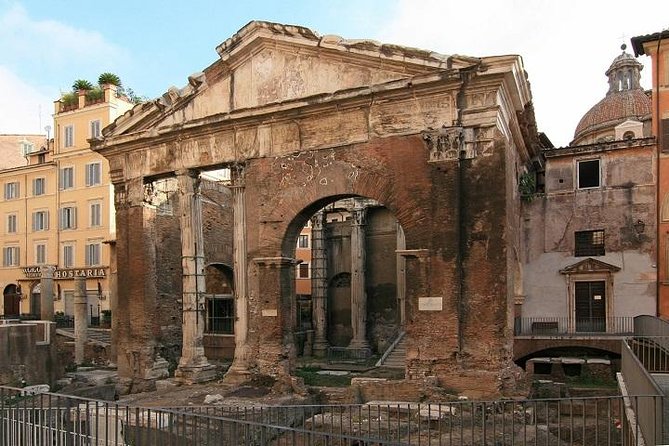
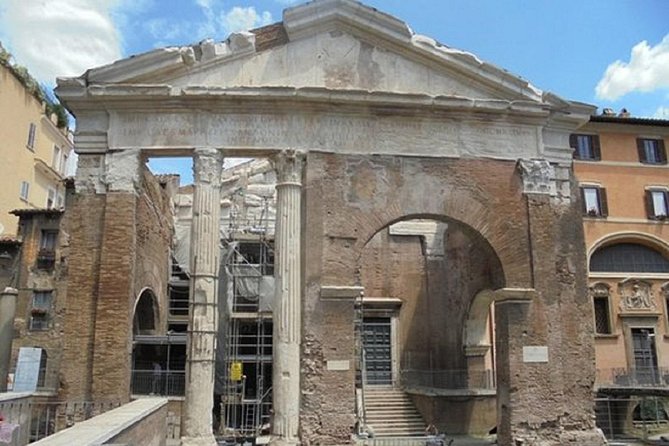
From there you head to Il Portico d’Ottavia. This site is special because it’s the only preserved part of a much larger portico system that once helped define the northern edge of the Circo Flaminio area—an area that lines up with the ancient Ghetto zone you’ll visit later. The portico complex was rebuilt by Augustus between 27 and 23 BC, then restored and partially rebuilt in 203 after a fire.
Here’s what you should pay attention to: the fact that this place is a physical “timeline.” Even if you only see remains and not the full original structure, the changes in building eras are part of the story you’re being taught. The stop is short, about 15 minutes, so you’ll want your questions ready before the group moves on.
Ghetto Ebraico di Roma: learning the forced history behind the streets
Next comes Ghetto Ebraico di Roma, the Jewish quarter of Rome. This is one of the oldest Jewish ghettos in the world, emerging about 40 years after Venice’s first ghetto. The tour frames it in a specific, human timeline: in 1555, Pope Paul IV issued a bull that revoked rights for Roman Jews, creating the ghetto.
This stop also connects well with the geography. The ghetto sits in the Sant’Angelo district near the Tiber Island area (which you’ll see later from bridges). That proximity to the river helps explain why this neighborhood developed a strong, distinct food culture that people still associate with the area today.
The good news for most visitors: you don’t need to be an architecture fan to appreciate this stop. The point is the contrast—how a neighborhood built under restriction became known for culture and cuisine, and how that story lives on in street-level Rome.
The potential drawback is also straightforward: the stop is about 30 minutes, so you’ll get the key context, but you won’t have hours to wander off on your own. If you’re deeply interested in Jewish-Roman history, consider saving extra time after the tour.
Campo de’ Fiori and Giordano Bruno: a beautiful square with a darker edge
From the ghetto zone, you move to Campo de’ Fiori, at the Statua di Giordano Bruno. Campo de’ Fiori is one of the only monumental squares in the historic center that does not host a church or basilica. That’s one reason it feels so open and “square-like,” compared with the more church-dense parts of central Rome.
But the tour also points you to the square’s darker side. Campo de’ Fiori was the stage for spectacular capital executions in past centuries. It also began as a site associated with flowers and then became a paved square ordered by Pope Calixtus III. Later, the market moved here and traditionally runs mornings from Monday to Saturday, and in 1869 the market was placed here from Piazza Navona.
So yes, it’s scenic. It’s also historically heavy. That balance is what makes this stop more than a photo stop.
Because you only have about 15 minutes here, I’d focus on two things: the square’s structure (why it feels so different from nearby streets) and the interpretation your guide gives about what happened here. Then you can enjoy the atmosphere without losing the context.
Tiber Island views and Trastevere’s Piazza Trilussa stop the day from feeling only monumental
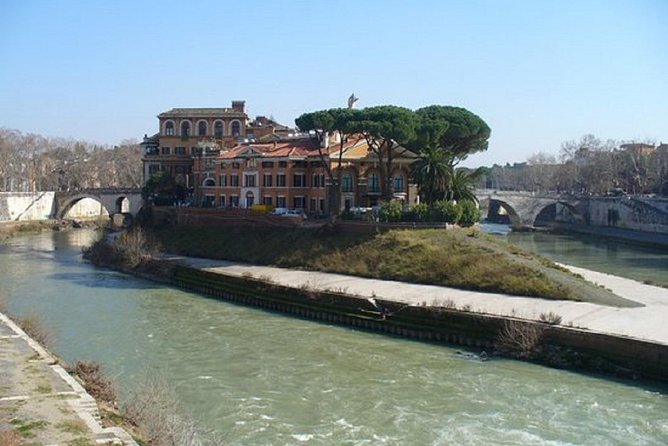
After Campo de’ Fiori, you cross toward the Isola Tiberina (Tiber Island). You’ll see it while crossing bridges (Ponte Sisto is mentioned as a viewpoint) and learn about it as the only urban island on the Tiber. The island is about 300 meters long and 90 meters wide.
This stop is brief, about 15 minutes, but it’s valuable because it explains the “why” behind Rome’s layout. The island connects to both sides of the river via two bridges: toward Trastevere by Cestio bridge, and toward the ghetto by Fabricio bridge, also called Quattro Capi bridge. The tour notes that you can spot Roman herms decorating the parapets, giving the whole area a sculptural feel even from a distance.
Then you reach Piazza Trilussa in Trastevere. This small square is dedicated to the Roman satirical poet Carlo Alberto Salustri, known as Trilussa. It’s a people-place: the tour describes it as a meeting place for younger Romans and tourists because of its easy atmosphere.
One practical highlight here is the Acqua Paola fountain, designed by Van Santen (also known as Vasanzio) and Giovanni Fontana, commissioned by Pope Paul V in 1613 to supply water to districts including Trastevere. If you’ve been to Rome before, you’ll recognize how much the city’s fountain system shapes its street life. If you haven’t, this is a great moment to notice that Rome’s engineering is part of its beauty.
You can also read our reviews of more tours and experiences in Rome


Cantina del Duca lunch: wine tasting that actually breaks up the day
The tour’s mid-day anchor is Cantina del Duca. This is where you switch from “look and learn” to “taste and reset.” The included time is about 45 minutes and includes wine tasting plus Roman cuisine and local products.
In terms of value, this matters. Guided tours can be hard to budget when you have to keep buying meals on the fly. Here, your lunch time is built into the plan, and you also get a tasting component—so you’re not just eating, you’re sampling.
The tour also notes that a vegetarian option is available, but you need to advise at booking. If you eat vegetarian or have other limits, don’t wait until the day-of. Fix it before you go.
A quick expectation check: this is a tasting and lunch stop, not a long multi-course feast. You’ll still want to pace yourself so you don’t feel sluggish before the Pantheon and Trevi stretch, where you’ll likely want full attention.
Piazza Navona: the stadium outline under the Baroque grandeur
Next up is Piazza Navona, about 30 minutes. This square is famous because it sits on the remains of the Stadium of Domitian. What you’re seeing today follows the ancient stadium’s shape and dimensions, and that’s the kind of detail your guide will help you notice.
The square is also dominated by Sant’Agnese in Agone, begun by Carlo and Girolamo Rainaldi and completed with major modifications by Borromini. If you like architecture, this is where you’ll start to see Baroque Rome’s confidence in full form. The tour also mentions Palazzo Pamphili next to the church, which adds to the sense that this is one coordinated stage set.
The tradeoff: it’s a popular area, and the stop is timed. You can enjoy the view, but you won’t have hours to stand in every direction. If you want a calm photo moment, you’ll have better luck listening first, then taking pictures during the walkways your guide points out.
The Pantheon: the dome feels like engineering you can touch
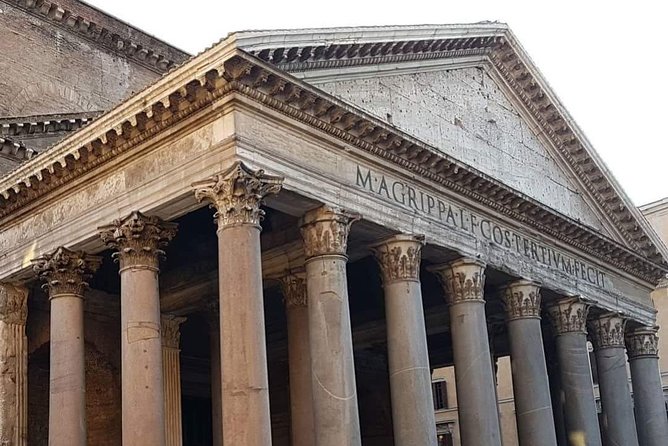
Your next big landmark is the Pantheon, with about 15 minutes on the site. The tour explains why this building still grabs people: it’s one of the best preserved examples of Roman monumental architecture, and the dome is huge—its hemispherical concrete dome is larger than the one you’d see on St. Peter’s Basilica.
The story you’ll hear is also clear and useful. The Pantheon traces back to 27 BC when Marco Vipsanio Agrippa built the first temple for all the gods. The current form is tied to Hadrian, who rebuilt it between 118 and 125 AD. The guide also notes that Hadrian enlarged it, reversed its orientation, and created a large porticoed square in front.
What to do with your time at the Pantheon: focus on the big structural ideas. The thick masonry walls holding up the dome, the eight large pillars, and the sense of perfect geometry. If you try to read everything at once, you’ll miss the building’s main message, which is simple—Rome could build something that still works and still amazes.
The stop is short, but that’s where skip-the-line value typically helps. Even if you don’t see every museum moment that’s included elsewhere, having less waiting time around major sites keeps your energy for what matters.
Trevi Fountain: Oceanus, coin rituals, and practical photo advice
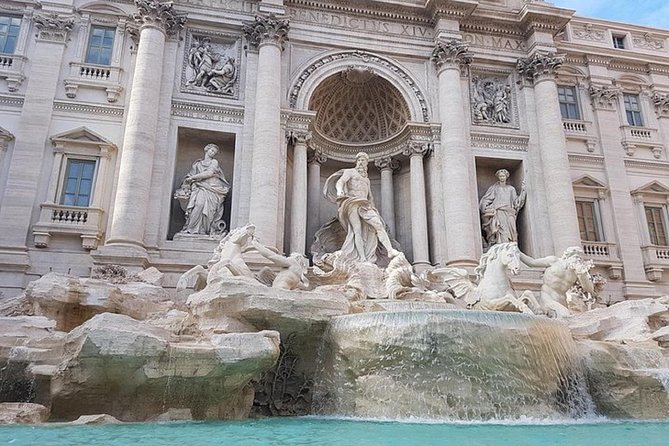
Then it’s Fontana di Trevi for about 30 minutes. The tour connects the name to the three streets meeting in the square and references the triple outlet of water from the original fountain.
The centerpiece is the statue of Oceanus in a shell-shaped chariot, pulled by an angry horse and a placid one, braked by two tritons. You’ll also hear the construction timeline: Pope Clement XII selected Nicola Salvi’s project in 1732.
The fun part is the tradition. Before leaving, you’re told to throw a coin into the fountain, tied to the idea that you’ll return to Rome. The tour also notes that if you’re feeling extra romantic, people flip a second and third coin to connect the ritual to wedding bells later on.
As for photos, plan like this: if you want a clear shot, try to angle slightly rather than fighting straight-on crowds. Rome’s monuments look best when you can frame the details—Oceanus and the shell—without compressing everything into one blurry mass.
Piazza di Spagna: finishing with Bernini’s Barcaccia fountain
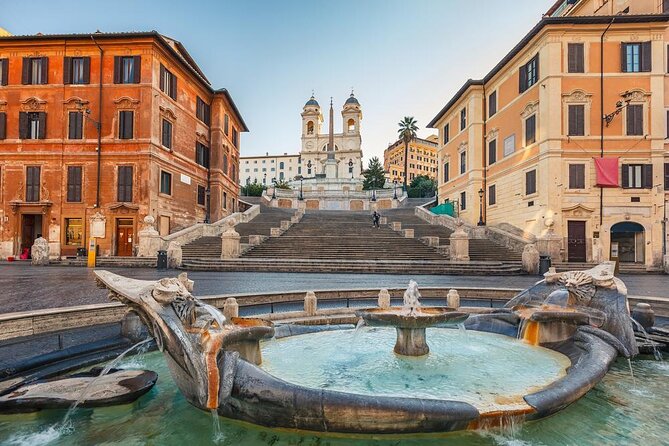
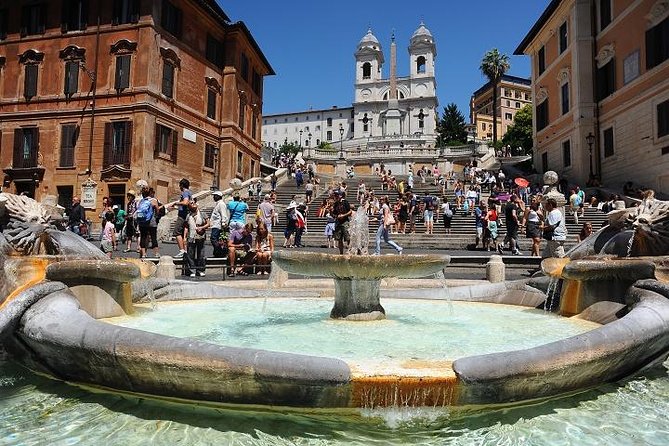
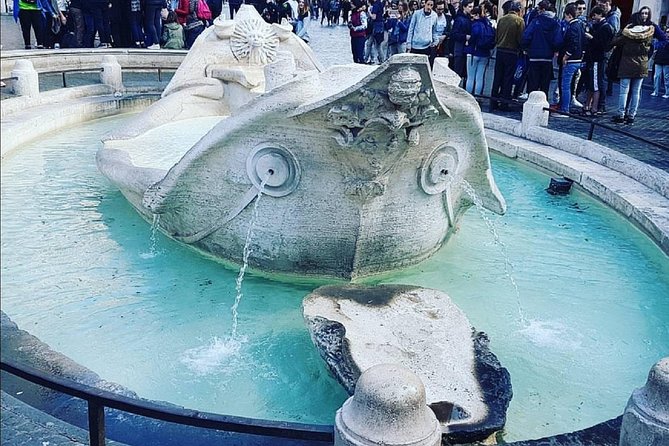
The tour ends at Piazza di Spagna, also about 30 minutes. This is one of Rome’s most visited squares, and the reason is easy: it’s built around the iconic Trinità dei Monti staircase and the Barcaccia fountain at the foot of the steps.
The fountain is designed and sculpted by Pietro and Gian Lorenzo Bernini in Baroque style, with the tour describing Piazza di Spagna’s shape as butterfly-like (two triangles intersecting at their vertices). The guide also frames the square as an internationally known meeting point and mentions the Baroque tone of the area.
This finish works for a simple reason: it’s a natural place to regroup. After walking all day, you’re at a central reference point where you can decide what to do next—walk toward shopping streets, relax at a café, or connect to other parts of the city on your own schedule.
Price and value: what $380 buys you in real time
At $380.02 per person, this isn’t a budget tour. But it can be good value if you treat it like a time-saver plus an included meal.
Here’s what you get that usually costs extra if you plan alone:
- a 6-hour professional guide
- a wine tasting and lunch at Cantina del Duca
- skip-the-line entrance to museums
- a tight route of major landmarks, so you’re not spending your day figuring out logistics between stops
The small group size (max 24) also matters. In a city like Rome, that can mean fewer delays when you’re moving from one site to another.
The main “value risk” is the same as the main “fitness risk”: the day is packed. If you want slow, deep museum time on your own schedule, you might find the pace pushes you along. If you’re happy with a guided highlight run—Ghetto to Pantheon to Trevi to Spanish Steps—then the price starts to make sense.
One last practical angle: you get a mobile ticket and an emergency number operational via WhatsApp. For a day with several transit points and a dense center, having that safety net is worth something.
Should you book this Heart of Rome treasures tour?
Book it if you want a structured route through Rome’s most famous sights with meaningful context at the start (the Ghetto and Campo de’ Fiori), then classic monuments without spending hours on logistics. I’d also book it if you like when a guide can keep a group moving while still answering different interests—Barbara’s strong family-friendly feedback is a good sign.
Skip it if you’re the type who wants long, quiet time at just one or two places. This tour is about covering ground in one day, and stops can be as short as 15 minutes. Also, if you’re sensitive to walking and the pace of a 6-hour itinerary, plan to take breaks and keep your energy up.
FAQ
How long is the tour?
The tour is about 6 hours.
What time does the tour start, and where is the meeting point?
It starts at 10:00 am. The meeting point is Antico caffè del teatro di Marcello, Via del Teatro di Marcello 42, 00186 Roma RM, Italy.
What’s included in the price?
A 6-hour professional guide, a tasting of local products with wine and Roman cuisine at a typical Italian restaurant (Cantina del Duca), and skip-the-line entrance to museums. There is also an emergency number operational via WhatsApp.
Is lunch included, and can you handle vegetarian needs?
Yes, lunch with wine tasting is included at Cantina del Duca. A vegetarian option is available if you advise at booking.
Is there a child rate?
A child rate applies only when sharing with 2 paying adults.
How many people are in the group?
The tour has a maximum of 24 travelers.
What if I need to cancel?
Free cancellation is offered. You can cancel up to 24 hours in advance for a full refund.