REVIEW · ROME
Ancient Ostia Private Tour Led By An Archaeologist
Book on Viator →Operated by Archaeology in Rome - Archeoguidaroma · Bookable on Viator
Roman streets without the crush of Rome.
This private Ostia Antica tour swaps Rome’s busy sights for one of the best-preserved Roman towns near the city. Ostia Antica sits about a 35-minute train ride away, and the archaeological site gives you that Pompeii-like feeling—only calmer and easier to explore at a walking pace.
I particularly like two things. First, having an archaeologist-turned-guide like Francesca makes the ruins feel readable instead of random stones. Second, the tour keeps moving through the key zones you actually want to see, from the main street to the baths and forum areas, all within about 4 hours.
One drawback to consider: you’ll be on your feet for the whole visit. It’s a lot of walking among uneven ancient surfaces, so plan comfortable shoes and be ready for sun and shade limits inside an open-air site.
In This Review
- Key highlights worth your attention
- Ostia Antica: the 35-minute Roman break you’ll be glad you took
- The archaeologist guide makes the ruins make sense fast
- Your 4-hour route: the main street, the public buildings, and the everyday corners
- Walking the Decumanus Maximus at Ostia Antica
- Baths of Neptune: why this ruin still feels like a “center”
- The theater: where a town gathered, watched, and talked
- The Square of the guilds and the Forum: civic power and organized work
- Baths of the Forum and the Thermopolium: the everyday Rome people didn’t talk about
- Meeting point at Porta S. Paolo: keep your day simple
- What the $297.93 price buys you (and when it feels worth it)
- Who should book this Ostia Antica archaeologist tour?
- FAQ
- FAQ
- How long is the Ostia Antica private tour?
- Is this tour private or shared?
- What’s the meeting point in Rome?
- Is the admission ticket included?
- What is the price per person?
- When do I find out if the booking is confirmed?
- Is free cancellation available?
- Should you book this Ostia Antica archaeologist tour?
Key highlights worth your attention
- Archaeologist-led explanations that connect structures to daily life and building purpose
- A walk-focused route hitting big-name areas like the theater, baths, forum, and thermopolium zone
- Admission ticket included, so you don’t waste time sorting entry details
- Private group format (only your group), which usually means more time for questions
- Stop-by-stop pacing that works well if you want a meaningful visit without rushing
Ostia Antica: the 35-minute Roman break you’ll be glad you took
Ostia Antica is Rome’s “why didn’t I do this sooner?” kind of outing. You leave the city and you’re quickly in a preserved Roman town where you can walk the ancient streets with a real sense of scale. The site is often called the Pompeii of Rome, and that comparison makes sense: you’re seeing a whole urban layout, not just a single monument.
What I like about going here is the feel. You’re not stuck staring through the bars at a few famous ruins. Instead, you’re moving along the main thoroughfare and getting glimpses of what public spaces looked like when the buildings were still in use. A private guide also helps you make sense of what you’re looking at—especially in areas that can look similar at first glance.
And since the tour is designed around a compact loop (about 4 hours), you can fit it into a Rome trip without turning your day into a marathon.
You can also read our reviews of more private tours in Rome



The archaeologist guide makes the ruins make sense fast
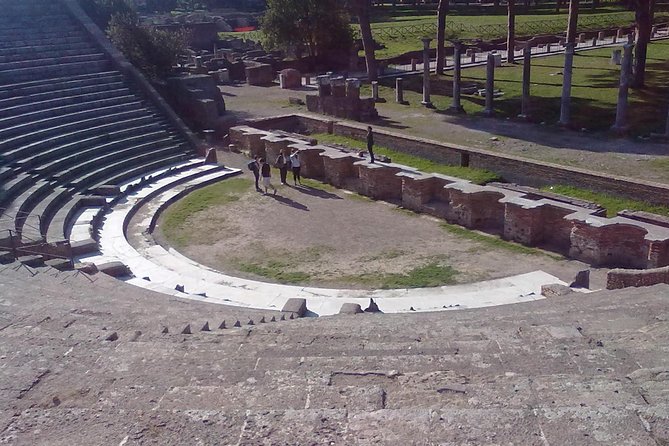
This is a private tour led by an archaeologist, which matters more than most people expect. You’ll get explanations tied to what’s in front of you: architectural layout, what different buildings were for, and why certain spots mattered in town life.
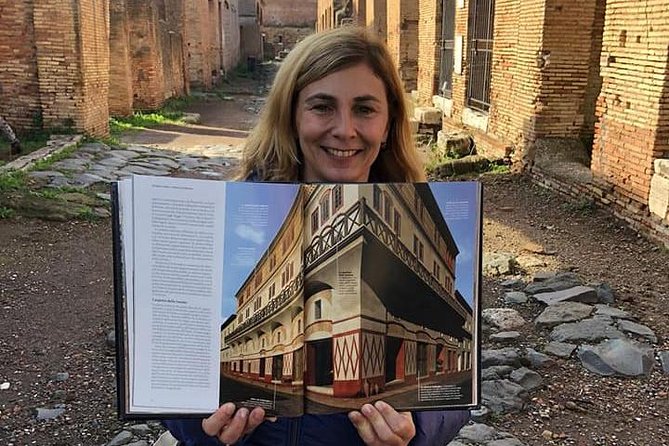
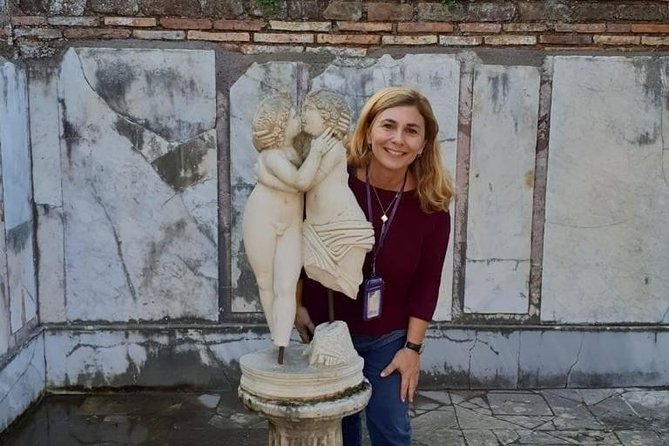
The guide named in the experiences I reviewed—Francesca—is praised for passion and for sounding genuinely excited about the site. That enthusiasm shows up in how she highlights details throughout the walk, and there’s mention of bringing extra informational books to help you visualize what you’re seeing. If you’ve ever done a ruins tour where you get one big speech and then free time, you’ll probably appreciate the steadier, structure-by-structure approach here.
A private format also gives you room to ask practical questions. Want to know why the street hits certain landmarks? Wonder what that outdoor area is compared with a nearby indoor space? With a smaller group, you can steer the discussion a bit instead of sticking to a strict script.
Your 4-hour route: the main street, the public buildings, and the everyday corners
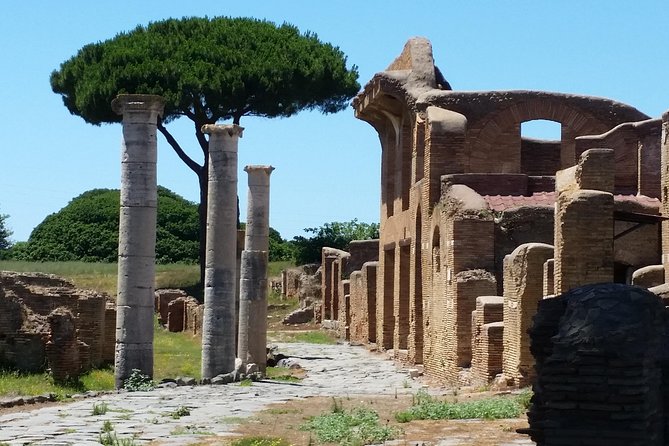
The tour is built around a core set of sights inside Parco Archeologico di Ostia Antica. You’ll cover the Decumanus Maximus (the main axis of the town) and move into major public zones like the Baths of Neptune and the theater, then into civic spaces such as the forum and Capitolium. The route also includes smaller, more “lived-in” stops like the Square of the guilds and a Thermopolium.
That sequence is smart. The main street gives you orientation. Then the tour lets you branch into bigger community spaces (theater and baths), then civic authority (forum and Capitolium), then commerce and daily routine spaces (guilds square and thermopolium area). By the time you reach the later stops, the town plan usually clicks.
You should expect a steady pace and lots of looking up and around. Ancient towns were built in layers—walkways, thresholds, room entrances. A guide helps you spot those transitions quickly.
Walking the Decumanus Maximus at Ostia Antica
Your visit starts where you should: the Decumanus Maximus, Ostia Antica’s main thoroughfare. This kind of street is more than a road. It’s the spine of the town, the line that connects major buildings and helps you understand how people moved from one part of the city to another.
The practical advantage of this stop is orientation. Once you see the street layout, you’ll recognize the positions of nearby structures better as you keep walking. It also sets the tone for the rest of the tour because it shows you how the town was organized for movement and gatherings.
If you like architecture and urban planning (even a little), you’ll probably enjoy this part the most. It’s where the site stops feeling like isolated points and starts feeling like a real place.
Baths of Neptune: why this ruin still feels like a “center”
The Baths of Neptune are a highlight for a reason. Roman bath complexes weren’t quiet backrooms; they were major social and public spaces in the day’s rhythm. Even if you can’t read every inscription or wall detail, the building layout gives you clues about how people used the space.
What’s valuable during a guided visit is knowing what to look for. The tour format here emphasizes explanation at each major stop, and the overall experience is described as passionate and detailed. That makes the baths more than “big rooms with columns”—you can connect the structure to how the town functioned.
One consideration: baths areas can mean lots of sun exposure depending on the day and how the route passes through shade. Bring sun protection and don’t underestimate the need for water breaks.



The theater: where a town gathered, watched, and talked
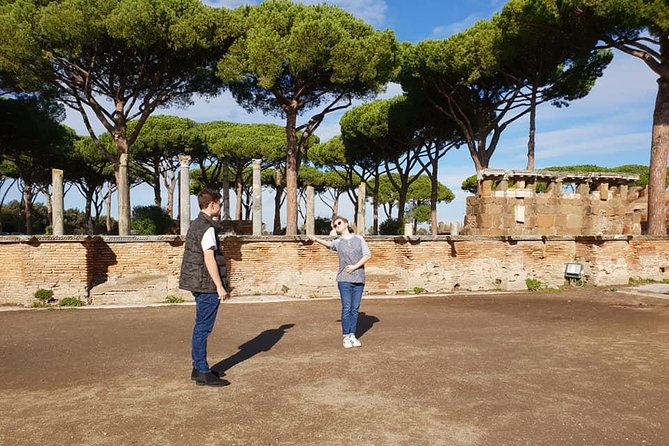
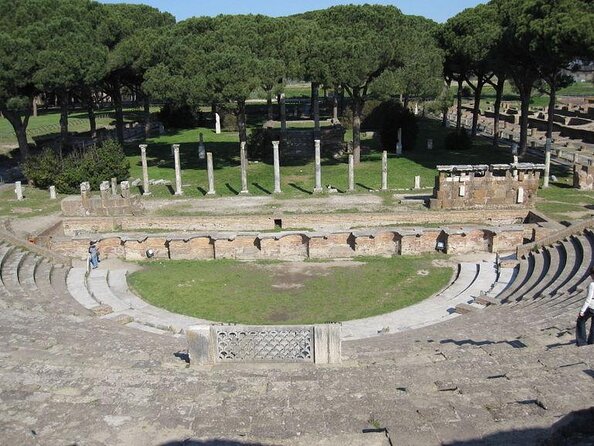
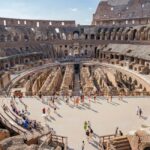
The itinerary includes the theater, and it’s a perfect stop for understanding community life. A theater is a built-in meeting point, and it also helps you see how public culture worked in Roman towns. Sitting in or near the right viewpoint changes what you feel you’re seeing—more like a place designed for crowds than a ruin lying flat on the ground.
A guided stop also helps with perspective. When a guide points out why the theater is positioned the way it is, it’s easier to imagine the flow of people entering and finding seats, or how the sound and sightlines would have been set up.
If you’ve done big-city attractions in Rome already, this theater moment often feels refreshing: you’re not fighting crowds, and you can take your time.
The Square of the guilds and the Forum: civic power and organized work
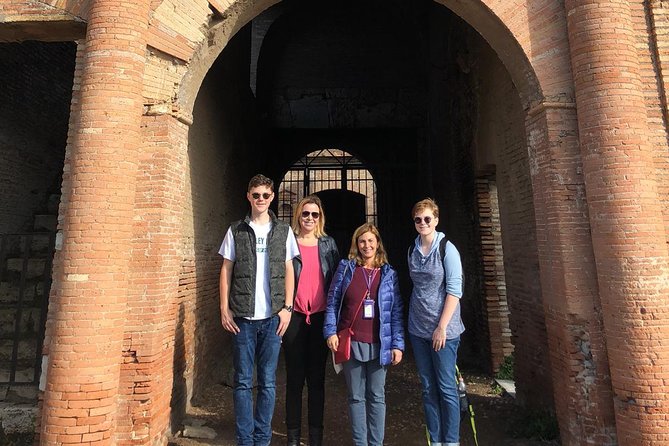
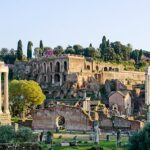
Next you head into the Square of the guilds and the forum area, plus the Capitolium. This cluster matters because it reflects the town’s social structure. You’re shifting from entertainment and public leisure into areas that relate to civic life, organized activity, and local identity.
The forum is often the kind of place where ruins can look confusing if you don’t know what each building’s role was. That’s exactly where an archaeologist guide helps. The best value here is in the “read the space” ability: you can understand why the forum area feels like the town’s administrative center, and how nearby buildings supported that role.
The Capitolium adds another layer. When you see it within the same guided flow as the forum and the square, it becomes part of a bigger system rather than a standalone attraction.
A practical tip: this part of the route is where you’ll probably slow down more because there’s more to take in—room entrances, platforms, and the way space opens up. If your goal is photos, this is the zone to plan your pacing so you don’t feel rushed.
Baths of the Forum and the Thermopolium: the everyday Rome people didn’t talk about
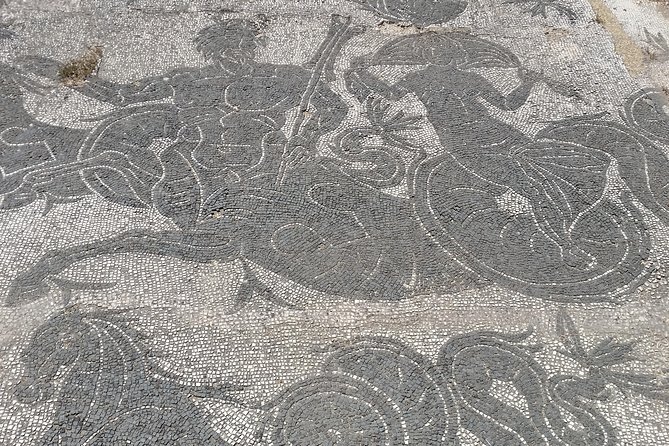
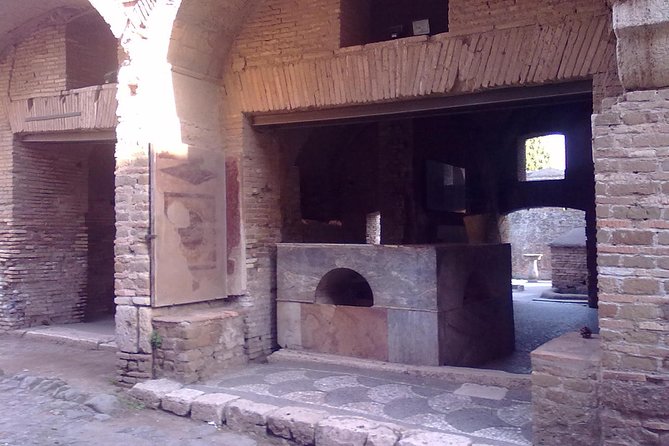
Toward the later part of the tour, you’ll move into the Baths of the Forum and a Thermopolium stop. These sound like “secondary” sights, but they can be some of the most human moments on a ruins itinerary.
Why? Because bath areas and commercial areas suggest routine. They hint at the day-to-day behavior of people who lived there, not just the ceremonial or entertainment zones. Even when you’re not learning every detail, the overall layout usually makes you feel how ordinary activities fit into the city plan.
I also like that the itinerary doesn’t just stick to the most dramatic structures. The inclusion of places like the thermopolium zone nudges your visit beyond the obvious highlights and into the kinds of spaces that made Roman town life run on a practical level.
This is also where your feet will start to feel it. Plan to take short breaks at the spots where the guide pauses and points things out—those stops make the walking feel less exhausting and more purposeful.
Meeting point at Porta S. Paolo: keep your day simple
The tour starts at Porta S. Paolo (00153 Rome), and it ends back at the meeting point. That “back to start” format is useful: it reduces planning stress and helps you fold Ostia Antica into your Rome schedule.
Because you’re taking a short train ride out to the site (about 35 minutes), this tour works well if you like the idea of escaping the center without losing a full day. You can usually pair it with a lighter evening back in Rome—especially if you’ve already seen major landmarks earlier.
Also, the meeting point being near public transportation is a real quality-of-life detail. It makes it easier to arrive without a big transit puzzle.
What the $297.93 price buys you (and when it feels worth it)
At $297.93 per person for a private 4-hour tour, you’re not paying for mass group vibes. You’re paying for (1) an archaeologist-led guide, (2) a structured route through multiple major areas, and (3) admission ticket included.
That last point can matter more than it seems. When admission is bundled into the experience, you avoid time spent on logistics and paperwork while you’re trying to enjoy the site.
You also get group discounts, which can help if your party is large enough to reduce the per-person cost. If you’re traveling as a couple or small family, the private format often feels worth it because you can ask questions and move at a pace that fits your interest level.
Is it the cheapest way to see Ostia Antica? No. But if you care about understanding what you’re looking at—especially in a well-preserved Roman town—this price is aiming at clarity and time efficiency.
Who should book this Ostia Antica archaeologist tour?
This tour fits best if you:
- Want a guided walk through the main parts of Ostia Antica, not just a quick stop-and-snap visit
- Like archaeology explanations while you’re standing in front of the ruins
- Prefer a private group where questions aren’t squeezed out by a schedule
- Are comfortable walking on an outdoor archaeological site for about 4 hours
It may be less ideal if you want a totally relaxed, minimal-walking outing. The route includes multiple stops across the site, and the experience is designed as an active circuit.
Also, if you like structured pacing but still want time to linger, this tour’s stop-by-stop flow tends to work well. The ruins are spread enough that it helps to have a guide handling the connections.
FAQ
FAQ
How long is the Ostia Antica private tour?
The tour is approximately 4 hours.
Is this tour private or shared?
It’s a private tour/activity. Only your group participates.
What’s the meeting point in Rome?
The tour starts at Porta S. Paolo, 00153 Rome, and ends back at the same meeting point.
Is the admission ticket included?
Yes. Admission ticket is included.
What is the price per person?
The price is listed as $297.93 per person.
When do I find out if the booking is confirmed?
You should receive confirmation within 48 hours of booking, subject to availability.
Is free cancellation available?
Yes. You can cancel up to 24 hours in advance for a full refund.
Should you book this Ostia Antica archaeologist tour?
If your goal is to understand Ostia Antica while you’re walking the streets—especially with stops like the Decumanus Maximus, Baths of Neptune, theater, forum, Capitolium, and the thermopolium zone—this is the kind of tour that usually pays off. The big reason to book is the archaeologist-led approach, highlighted by Francesca’s passion and her extra materials that help you visualize the site. If you’re willing to do a solid amount of walking, you’ll likely come away feeling you actually learned the place, not just saw it.