REVIEW · ROME
The Best Churches in Rome Private Tour with Guide
Book on GetYourGuide →Operated by Roso Travel · Bookable on GetYourGuide
Four churches, centuries of faith, one careful walk. I love the private, expert guide who connects art and architecture to real early-Christian life, and I love the chance to step inside St. Clement and San Pietro in Vincoli. One heads-up: church access can be limited during Masses and scheduled events, and in at least one case a quieter guide voice made details harder to catch.
Pick 2, 3, or 4 hours based on how much sacred art you want to see. The tour starts at the DoubleTree by Hilton Rome Monti (you meet in front of the hotel) and then moves through Old Town on foot, with visits timed to the churches’ opening hours.
In This Review
- Key highlights that make this tour worth your time
- A sensible way to do Rome’s biggest churches on foot
- Starting at DoubleTree by Hilton Rome Monti: get your bearings fast
- The 2-hour plan: St. Pietro in Vincoli and the underground story at St. Clement
- San Pietro in Vincoli: Moses, chains, and why it’s more than a quick look
- St. Clement: a church built on top of earlier worship
- A quick reality check on timing and access
- The 3-hour option: Santa Maria Maggiore adds Marian art you can’t really ignore
- Salus Populi Romani and 5th-century mosaics
- The practical sound detail: whispers if your group is bigger
- The 4-hour plan: Lateran explains why it outranks St. Peter’s in papal rank
- What you’ll see inside St. John Lateran
- Group size limits matter more here
- The street-level connections: Nero’s villa and the Colosseum corridor
- How the guide turns church art into a timeline you can remember
- Price and value: what you’re paying for and what costs extra
- Practical tips for making church visits work with your day
- Match your time slot to opening hours
- Expect limited access during Masses
- Plan for what free entry actually means
- Use the language you’ll enjoy listening to
- Should you book this private church tour?
- FAQ
- How long is the church tour?
- Where do I meet the guide?
- Which churches are included in the 2-hour tour?
- What does the 3-hour option add?
- What’s included in the 4-hour option?
- Is admission free to all churches?
- Are Masses or events likely to affect what I can see?
- What are the opening hours for St. Clement and San Pietro in Vincoli?
- Can I cancel, and do I pay immediately?
Key highlights that make this tour worth your time
- St. Clement’s layered site: you see medieval mosaics with Byzantine-style motifs and learn how a 1st-century home fit into underground Christian worship
- Michelangelo’s Moses at San Pietro in Vincoli plus the legend of the chains connected to Saint Peter
- Santa Maria Maggiore’s Marian art (included on 3- and 4-hour options), including Salus Populi Romani
- Lateran’s importance explained: why St. John Lateran ranks above even St. Peter’s in the papal basilica lineup
- Good pacing for a walking tour: the itinerary changes by duration so you don’t feel rushed at the wrong stops
A sensible way to do Rome’s biggest churches on foot
Rome has more than 900 churches, so doing it “the big sights” way can turn into a checklist sprint. This private walking tour is built to slow you down. You get an expert guide who can connect what you’re seeing to why it mattered for early Christians, then show how that story continues in Rome’s top papal basilicas.
I also like that the structure is honest and flexible. A 2-hour option covers two major sites up close, while the 3- and 4-hour versions add the major names that many people save for a separate day. You’ll be walking in the center of Rome, so bring the right mindset: this is not a bus tour where you glance and go.
You can also read our reviews of more guided tours in Rome



Starting at DoubleTree by Hilton Rome Monti: get your bearings fast

Your meeting point is specific: stand in front of the DoubleTree by Hilton Rome Monti, Piazza dell’Esquilino 1 (please do not enter the hotel). The tour ends back at the meeting point, so you’re not left wondering where your return plan is.
This matters because the church clusters you’ll visit are spread across Rome’s historic core. Starting at Monti puts you in a practical pocket for a route that can link the old streets to the major basilicas without giant detours.
The tour is private, and you can pick your guide language: English, French, Italian, Russian, Spanish, or Polish. That’s a real quality-of-life detail if you want the art and theology explained clearly, not skimmed.
The 2-hour plan: St. Pietro in Vincoli and the underground story at St. Clement

If you’re short on time, the 2-hour option is the smartest way to sample the tour’s best two experiences.
San Pietro in Vincoli: Moses, chains, and why it’s more than a quick look
San Pietro in Vincoli is a minor basilica built in the 5th century, and it’s open daily in two windows: 8:00 AM to 12:30 PM, then 3:00 PM to 7:00 PM. This is a key planning point—if you book a time that hits the closing gap, you’ll be forced to shift your day.
Inside, you’ll see the famous sculpture of Moses by Michelangelo, and you’ll hear the legend about the chains that bound Saint Peter when he was imprisoned in Jerusalem. What I like about this stop is how it blends art that you can actually see with a story that’s part of Christian memory-making. Even if you’re not coming as a religious pilgrim, the combination of sculpture and legend is exactly how Rome often teaches through symbolism.
St. Clement: a church built on top of earlier worship
Next comes St. Clement, one of Rome’s most richly decorated churches. It opens daily from 9:45 AM to 12:30 PM and from 3:00 PM to 5:30 PM. Free entry applies to the main church, but other parts come with extra fees—so you’ll want to accept that you may not see every room or archaeological angle unless you pay separately.
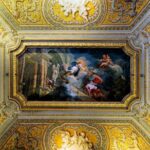
St. Clement is special because the guide points out the layers: medieval mosaics with Byzantine-style motifs, a wooden ceiling, frescoes, and antique columns. You’ll also learn about the site itself—an earlier private home on the spot was used for clandestine Christian worship in the 1st century. That single detail turns the whole visit from pretty interiors into a “how this happened” lesson: early Christians had to find ways to exist before they could worship freely.
You can also read our reviews of more private tours in Rome




A quick reality check on timing and access
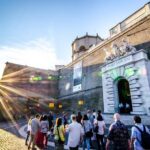
Masses and scheduled events can limit what you’re able to enter. When that happens, the guide may provide key information outside the church rather than inside. This isn’t a deal-breaker, but it’s worth knowing so you don’t plan your whole day around a perfect entry into every space.
The 3-hour option: Santa Maria Maggiore adds Marian art you can’t really ignore
If you choose the 3-hour tour, you’ll keep the two stops above and add the Pontifical Basilica of Santa Maria Maggiore. This is included only on 3- and 4-hour options; the 2-hour version does not include free admission to Santa Maria Maggiore.
Santa Maria Maggiore is one of the Seven Pilgrim Churches of Rome, so it’s a big name for a reason. When you walk in, the guide focuses you on specific art instead of letting you wander aimlessly.
Salus Populi Romani and 5th-century mosaics
Inside, you’ll see Salus Populi Romani, described here as the oldest Marian image in Rome. You’ll also view 5th-century mosaics depicting Old Testament events. That pairing matters because it’s not random decoration—it’s a visual bridge between older scriptures and later devotional practice.
You’ll also hear about the church’s status and why it belongs on a “best churches” list. People often think of Rome’s major churches as monuments to one era. Santa Maria Maggiore is a reminder that Rome’s sacred art keeps building meaning across centuries.
The practical sound detail: whispers if your group is bigger
One smart logistics touch: if your group is larger than 8, you’ll be provided with whispers inside Santa Maria Maggiore. That’s the kind of thing that can make or break a church visit, especially when voices carry poorly in large spaces.
The 4-hour plan: Lateran explains why it outranks St. Peter’s in papal rank
The 4-hour tour is the half-day version for people who want the “headquarters” feeling. In addition to St. Clement and San Pietro in Vincoli, you’ll visit the Archbasilica of St. John in Lateran.
This stop is the tour’s big authority play. The Archbasilica of St. John in Lateran is described as the oldest and highest-ranking of the four major papal basilicas, ranking above St. Peter’s Basilica. If you want Rome’s Catholic hierarchy explained in person—without reading three books first—this is the moment.
What you’ll see inside St. John Lateran
Inside the archbasilica, you’ll encounter rare paintings tied to the Paleo-Christian tradition mentioned here, plus 12 statues of the Apostles. The visit also includes 6 papal tombs and a wood fragment said to belong to the table where Jesus had the Last Supper.
The guide also tells two legends connected to Lateran: the Holy Stairs and the Lateranense Palace, which served as the papal home from the 4th to the 14th centuries. Even if you treat legends as tradition rather than literal history, the stories explain why Lateran became a pilgrimage center.
Group size limits matter more here
Lateran has regulations inside, so group size is handled tightly: for this 4-hour tour, 1 can lead 1–9 people. If the group is larger, additional guides can be arranged. If you prefer lots of back-and-forth questions and close attention, this setup is a good sign.
The street-level connections: Nero’s villa and the Colosseum corridor
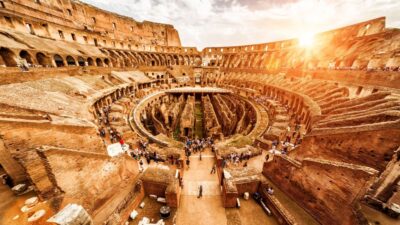
Between churches, the route isn’t only about doorways and interiors. The tour passes by the remains of Emperor Nero’s grand villa and the monumental Colosseum. It also references the Great Persecution, saying about 3,000 Christian martyrs were killed there.
That makes a difference for how the early-church story lands. St. Clement’s underground worship details feel more grounded when you’re reminded that Rome could be dangerous before it was safe. The guide uses the walk to connect art and stones to conflict and survival.
How the guide turns church art into a timeline you can remember
One reason people come back from Rome church tours feeling confused is simple: they see beauty but not relationships. A good guide changes that.
For example, guides like Dennis are praised for details and passion for the churches visited. Fulvia is also singled out for explaining architecture, art, and history in a way that helps each church add something new to your understanding of Rome. That’s what you should look for: a guide who points out what you’re supposed to notice, then ties it to a broader story.
This tour’s storyline works like this:
- Start with early Christianity through spaces associated with clandestine worship and prison-linked legends
- Move into major basilicas where art becomes a teaching tool for the faith community
- Finish at Lateran where Rome’s religious authority and pilgrimage traditions are made concrete
You’ll leave with more than photos. You’ll remember why each place was selected and what the key themes were.
Price and value: what you’re paying for and what costs extra
The price listed is $174.01 per person, for a private tour that lasts 2–4 hours depending on option. For Rome, that’s the type of cost where value is mostly about coverage and what’s included.
Here’s the value math that actually matters:
- Free entry to St. Clement and San Pietro in Vincoli on all options
- Free entry to Santa Maria Maggiore on 3- and 4-hour options only
- Free entry to St. John in Lateran on the 4-hour option only
- The tour includes a top-ranked private walking tour and a licensed 5-star guide fluent in your chosen language
What might cost extra:
- Tickets to the archaeological site of St. Clement are not included
- Santa Maria Maggiore entry is not included in the 2-hour option
- St. John Lateran entry is not included in the 2- and 3-hour options
- Free admission at St. Clement is for the main church only; entrance fee to other parts is not included
So when is the tour worth it? If you care about context and want a guided route through multiple major churches in one outing, a private guide plus included admissions can be a strong deal. If you only want one church in depth, the 2-hour option may be the most efficient use of time and money.
Practical tips for making church visits work with your day
A few “know this first” points can save you frustration.
Match your time slot to opening hours
St. Pietro in Vincoli: 8:00 AM–12:30 PM and 3:00 PM–7:00 PM.
St. Clement: 9:45 AM–12:30 PM and 3:00 PM–5:30 PM.
If you’re planning around a tight Rome schedule, treat these as your anchors.
Expect limited access during Masses
Church access during Masses and scheduled events can be restricted, so the guide may deliver information outside instead of inside. If your goal is maximum interior time, picking a start time that fits likely opening conditions is smart.
Plan for what free entry actually means
At St. Clement, free entry is for the main church. Other parts may require additional tickets. This helps you set expectations so you can still enjoy the main mosaics, ceiling, frescoes, and columns without feeling like you missed something essential.
Use the language you’ll enjoy listening to
You can choose English, French, Italian, Russian, Spanish, or Polish. If you’re sensitive to nuance, pick the language you’re most comfortable hearing history and art explained in.
Should you book this private church tour?
Book it if you want your Rome church day to feel guided and connected, not random. The best reasons to choose it are the inside access to St. Clement and San Pietro in Vincoli, plus the option to add Santa Maria Maggiore and then the authority center of St. John in Lateran if you have the time.
Skip or rethink if you’re only interested in one site, or if your schedule can’t flex around the stated opening hours. Also, if you’re particular about hearing every spoken detail, consider that voice clarity can vary, and church acoustics are unpredictable—so a tour that provides support like whispers at Santa Maria Maggiore is a helpful sign.
If you’re building a “best of Rome’s churches” plan and you want a guide who can connect art to the early-Christian story, this is a very solid way to do it in a half-day chunk.
FAQ
How long is the church tour?
The tour options range from 2 to 4 hours, depending on which option you select.
Where do I meet the guide?
Meet your guide in front of the DoubleTree by Hilton Rome Monti, Piazza dell’Esquilino, 1, 00185 Roma RM, Italy. Do not enter the hotel; it’s only a meeting point.
Which churches are included in the 2-hour tour?
The 2-hour tour focuses on Old Town and includes visits to two ancient Roman churches: San Pietro in Vincoli and the Basilica of St. Clement. Your guide meets in front of Santa Maria Maggiore.
What does the 3-hour option add?
The 3-hour option includes St. Clement and San Pietro in Vincoli, plus Santa Maria Maggiore (free entry is included on this option).
What’s included in the 4-hour option?
The 4-hour option visits four churches: Archbasilica of St. John in Lateran, Santa Maria Maggiore, San Pietro in Vincoli, and St. Clement.
Is admission free to all churches?
Free entry is included for St. Clement and San Pietro in Vincoli on all options. Free entry for Santa Maria Maggiore is included only on the 3- and 4-hour options, and free entry for the Archbasilica of St. John in Lateran is included only on the 4-hour option.
Are Masses or events likely to affect what I can see?
Yes. Admission during Masses and scheduled events is limited, so the guide may provide information outside the church if interior access is restricted.
What are the opening hours for St. Clement and San Pietro in Vincoli?
San Pietro in Vincoli is open daily 8:00 AM to 12:30 PM and 3:00 PM to 7:00 PM. St. Clement is open daily 9:45 AM to 12:30 PM and 3:00 PM to 5:30 PM.
Can I cancel, and do I pay immediately?
You can cancel up to 24 hours in advance for a full refund. You can also reserve now & pay later.