Underground Rome feels like backstage history. This guided tour gets you into the Colosseum Hypogeum and onto the arena floor, then continues into the Roman Forum and Palatine Hill. I especially like the small group size and the way the tour stitches together what happened up top with what happened behind the curtain.
The trade-off: it costs more than the basic Colosseum ticket, and it’s best if you’re comfortable with a moderate amount of walking during a tight 2.5-hour schedule. Also, since it’s limited-capacity, you’ll want to plan your timing and stick to your chosen date.
In This Review
- Key Highlights You Should Care About
- Why This Colosseum Underground Tour Feels Different
- Entering the Hypogeum: the Colosseum’s backstage maze
- Arena Floor Time: the sand platform and the Gate of Death
- Panoramic Terraces and the Upper Tiers (First and Second)
- Roman Forum: the political heart in real space
- Palatine Hill: where founding legends and emperors’ lives overlap
- Guide Quality, Headsets, and a Group of 7
- Timing and what the 2.5 hours are really buying you
- Price: is $98.90 worth it?
- Where It Starts and How the Tour Ends
- Who Should Book This Tour
- Quick reality checks before you go
- Should You Book It?
- FAQ
- What’s included in the Colosseum Underground and Arena Floor guided tour?
- How long is the tour?
- What sites will I visit during the tour?
- How many people are in the group?
- Do I need to bring a printed ticket?
- Where do I meet the tour guide?
- Where does the tour end?
- Is the tour physically demanding?
- Is there an admission fee covered by the tour price?
- What if I cancel my booking?
Key Highlights You Should Care About
- Maximum 7 travelers means less crowd jostling and more time for questions.
- Hypogeum access (Colosseum Underground) gives you the narrow corridors and old staging areas most visitors never see.
- Arena floor entry includes time on the central sand-covered wooden platform where fights took place.
- Gate of Death photos: you’ll access the arena through the special Gate of Death area with camera-ready moments.
- Roman Forum + Palatine Hill in one run saves you the hassle of coordinating separate tickets and tours.
Why This Colosseum Underground Tour Feels Different
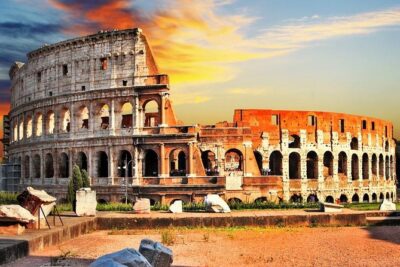
Most Colosseum visits are about the view from the outside or the top tiers. This one flips the story and shows you the staging spaces where gladiators, animals, and staff waited for signals.
You also get a guide with headsets, which matters here. The Hypogeum sections can feel dim and loud in the wrong ways, so clear audio helps you actually follow the narrative instead of just taking pictures.
You can also read our reviews of more guided tours in Rome



Entering the Hypogeum: the Colosseum’s backstage maze
The tour starts at Largo della Salara Vecchia and immediately shifts you away from the usual visitor path. You’re going into the Hypogeum, the underground level that served as the behind-the-scenes infrastructure of the Flavian Amphitheatre’s spectacles.
Inside, expect narrow corridors and large travertine blocks, plus the feeling of being in a space designed for movement, timing, and control. You’ll see fragments of the original floor area and the ancient drainage system, which is a big clue to how these events were managed day to day—water, access, and operations were part of the show, not just background details.
One practical note: this part is visually striking, but it’s not a slow museum stroll. Plan for close-up viewing in tight areas, and keep your camera ready but not taking constant stops that slow the group down.
Arena Floor Time: the sand platform and the Gate of Death
After the underground, you step into the arena itself. The experience centers on the central platform: sand-covered and wooden in its original concept, with the Latin idea of arena tied to sand.
This is the part you’ll feel in your bones. Standing where fighters appeared in front of roughly 80,000 people is a fast way to understand why the entire system—underground staging included—was built to deliver instant impact.
You’ll also have dedicated photo time with access through the special Gate of Death. That’s a meaningful detail because it affects both the lighting and the angle of your photos. You’ll be positioned to frame the Colosseum in a way most standard tickets don’t allow.
Panoramic Terraces and the Upper Tiers (First and Second)
The tour doesn’t end once you leave the arena. It continues into the first and second tiers and includes panoramic terrace moments for photos.
This is a smart pacing choice. The Hypogeum teaches you the backstage logic, then the arena gives you the main-stage perspective, and the upper tiers help you connect everything back to the full shape of the building. If you’ve only ever seen the Colosseum from one side, this helps you build a more complete mental map.
If you enjoy photographing Roman monuments, the terraces are where you’ll probably get the sharpest wide views without constantly fighting for position. Keep in mind that timing matters in busy seasons, and your guided schedule helps you move efficiently.
Roman Forum: the political heart in real space
From the Colosseum, the tour moves to the Roman Forum area and continues toward Palatine Hill. The Forum is presented as the administrative, political, and social center of Rome—today it’s archaeological ruins, but you still feel the function of the space.
You’ll walk through areas connected with public life: sacred temple zones, market areas, and the routes that supported religious processions. The guide also focuses on basilicas—places tied to legal and administrative activity—and you’ll hear how orators made famous speeches from these kinds of public settings.
This section helps you understand the Colosseum in context. It’s not just gladiators and spectacle; it’s Rome’s power systems showing up in different forms. Even if your main interest is the Colosseum, the Forum gives you the why behind the city’s culture.






Palatine Hill: where founding legends and emperors’ lives overlap
The tour wraps on Palatine Hill, tied to Rome’s founding legend around Romulus and later closely linked to imperial power. You’ll move through areas associated with famous historical figures and with the idea of luxury living in Roman times.
The focus here is human scale: the daily life of emperors, and the contrast between legend and administration. This stop is less about one single “wow object” and more about the feeling of being on the high ground where Rome’s story collected.
If you’re visiting for the first time, this is one of the best ways to leave with a balanced picture. You don’t just see the Forum as ruins; you see it alongside the lived-in hill that shaped elite life.
Guide Quality, Headsets, and a Group of 7
One of the biggest value drivers in this tour is the group size cap: 7 travelers. That’s small enough for a guide to manage pacing and still keep you from feeling trapped behind a wave of other people.
Also, headsets are included. This matters because the places you visit can be crowded, and underground sound doesn’t behave like an open courtyard. Clear audio makes it easier to follow the story about the gladiators and the infrastructure that supported events above and below.
In the past, guides such as Claudia, Ginny, and Silvia have been specifically praised for bringing the stories to life and navigating the group smoothly through long lines. Even when you’re not with those exact names, the fact that the operator works with a local official guide with a focused routine is a real quality signal.
Timing and what the 2.5 hours are really buying you
The tour runs about 2 hours 30 minutes, split across four main segments: Hypogeum access, arena floor time with tiers/terrace views, then Roman Forum, and finally Palatine Hill.
That tight structure is a feature, not a flaw. If you’ve got limited time in Rome (or you want to avoid spending your day jumping between separate ticket windows), this format keeps you moving and reduces decision fatigue.
The flip side is stamina. The tour notes a moderate physical fitness level, so plan for a steady pace and time spent standing in historic areas that aren’t designed as modern walkways.
Price: is $98.90 worth it?
At $98.90 per person, this isn’t the cheapest way to see the Colosseum. But you’re paying for two things that basic tickets don’t include: arena floor access and Hypogeum (Underground) entry, plus Forum and Palatine Hill entrance fees.
Here’s the value logic I use when deciding if a guided tour is worth it:
- If your priorities are the Colosseum’s less-accessible spaces, this tour packages permissions that can be hard to replicate on your own.
- You’re also saving time by combining multiple major sites into one guided route.
- Headsets and a local official guide help you get accurate context fast, instead of piecing together clues alone.
If your goal is only a quick Colosseum look from standard areas, you could do it cheaper. If your goal is to see what most visitors miss—underground staging and the arena floor—this price starts to make sense.
Where It Starts and How the Tour Ends
You’ll meet at Largo della Salara Vecchia and the tour ends at Piazza del Colosseo, 1. Being near public transportation helps, because Rome’s streets can be slower than maps suggest, especially around peak hours.
Since the tour uses a mobile ticket, have your phone charged and ready. You’ll also want to keep an eye on the time gap between Colosseum and Forum/Palatine segments so you don’t end up stressed.
Who Should Book This Tour
This is a great fit if:
- you want maximum access at the Colosseum (Hypogeum + arena floor + upper tiers),
- you enjoy guided storytelling and can use the context to connect ruins to how Roman society worked,
- you’re traveling with a group size that benefits from a calmer, controlled pace (max 7).
It’s also ideal for repeat visitors. If you’ve seen the Colosseum before, the Underground and arena floor can be the “you’re not seeing the same thing” upgrade.
Quick reality checks before you go
A few things to keep you comfortable:
- Expect a moderate-fitness route in historic spaces.
- This is a limited-capacity experience, so pick a date you can commit to.
- The schedule is tight. Give yourself time to arrive at the meeting point early, because Rome traffic and walking time are part of the game.
Should You Book It?
Yes, if you’re the type who wants more than the postcard view. The mix of Hypogeum, arena floor, and then the Roman Forum and Palatine Hill makes this a high-efficiency, story-driven route.
Don’t book if you mainly want the cheapest Colosseum option or you prefer a slow self-guided day. For that style, you’d be spending money for entrances and guide structure you might not fully use.
If your top goals are the places most visitors never see and you want a guided flow that connects Rome’s spectacle to its politics, this tour is a strong choice.
FAQ
What’s included in the Colosseum Underground and Arena Floor guided tour?
It includes headsets, guided tour with a local official guide, Colosseum Underground entrance fee, Arena floor entrance fee, and Roman Forum and Palatine Hill entrance fees.
How long is the tour?
The tour is about 2 hours 30 minutes.
What sites will I visit during the tour?
You’ll visit the Colosseum Underground (Hypogeum), the arena floor, and the first and second tiers/panoramic terraces, plus the Roman Forum and Palatine Hill.
How many people are in the group?
The group has a maximum of 7 travelers.
Do I need to bring a printed ticket?
No. The tour uses a mobile ticket.
Where do I meet the tour guide?
The meeting point is Largo della Salara Vecchia, 00186 Roma RM, Italy.
Where does the tour end?
The tour ends at Colosseum, Piazza del Colosseo, 1, 00184 Roma RM, Italy.
Is the tour physically demanding?
It requires a moderate physical fitness level.
Is there an admission fee covered by the tour price?
Yes. The Colosseum Underground, arena floor, Roman Forum, and Palatine Hill entrance fees are included.
What if I cancel my booking?
This experience is non-refundable and cannot be changed for any reason.