Rome’s hidden layers show up fast. This 3-hour German walking tour threads the big-name classics with genuinely off-the-beaten-path stops, including Vicus Caprarius underground remains and the 3D ceiling frescos at Saint Ignazio. You’ll meet at the Bernini fountain in Piazza Navona and get headsets so you can actually follow the story (not just nod politely while craning your neck).
What I like most is how the tour gives you clear, human explanations rather than a blur of dates. In particular, the reviews highlight guides like Gianluca for humor and Janina for great city insights, which makes the walking route feel like a guided conversation, not a checklist.
One thing to keep in mind: it’s rain or shine, and you’ll be outside for plenty of the route. There’s also a simple dress rule (no short skirts, no sleeveless shirts), so plan your outfit accordingly.
In This Review
- Key highlights worth clocking
- Starting at the Bernini Fountain in Piazza Navona
- Piazza Navona to the Pantheon: seeing the classics with context
- Domitian’s Stadium: the arena where thousands watched
- Saint Ignazio’s 3D ceiling frescos: when art becomes a puzzle
- Trevi Fountain on foot: the classic stop, done in sequence
- Vicus Caprarius museum: the underground aqueduct and Rome’s water city
- Headsets, rain-or-shine, and how to pace yourself
- What the finishing point at La Rinascente means for your day
- Who this tour is perfect for
- Value for your time, not just your ticket
- Should you book this German city-center tour?
- FAQ
- How long is the tour?
- Where do I meet the guide?
- Is the tour in German?
- What major sights are included?
- Are headsets provided?
- Does the tour run in bad weather?
- What should I bring?
- Is there a dress code?
- Is there free cancellation?
- Does it include skip-the-ticket-line access, and where does it end?
Key highlights worth clocking
- Meeting at Piazza Navona’s Bernini fountain makes it easy to start and get oriented fast
- Domitian’s Stadium is a real Roman sports arena, sized for 15,000–20,000 spectators
- Saint Ignazio’s 3D ceiling frescos are the kind of view that makes you forget to take photos
- Pantheon context: once a Roman temple, now a Catholic church
- Vicus Caprarius museum shows underground aqueduct remains and Rome’s water system
- Headsets on the move help you hear the guide clearly in busy streets
Starting at the Bernini Fountain in Piazza Navona
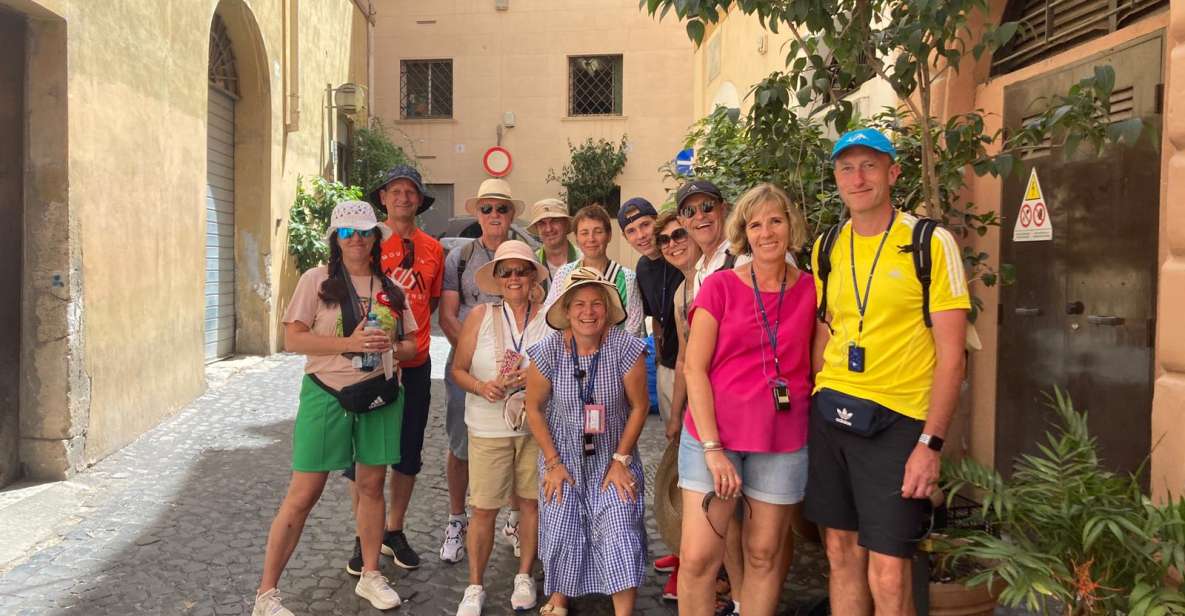
Your tour begins at the fountain of Bernini in Piazza Navona. Look for the sign that reads Deutsche Römerin, and you’ll get moving from there through the city center.
This start matters because Piazza Navona is a natural “map” for Rome’s layout. You get an introduction in the square, and the guide sets the tone for what you’ll see next—big monuments, then small secrets tucked into quieter corners.
One practical win: you’ll use provided headsets. Rome can be loud—tour groups, scooters, street noise—so this is the difference between missing half the story or actually understanding it.
You can also read our reviews of more walking tours in Rome


Piazza Navona to the Pantheon: seeing the classics with context
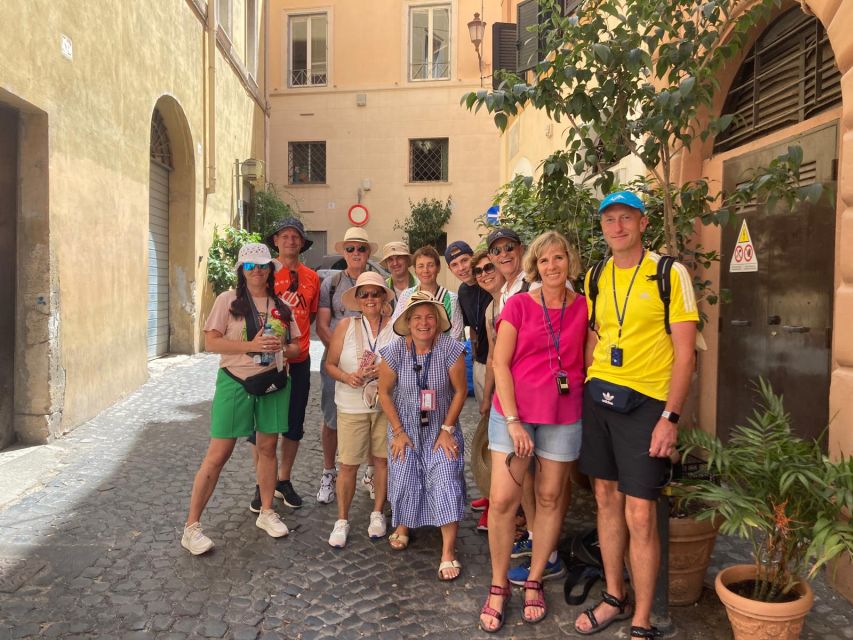
From Piazza Navona, the route keeps pulling you toward major sights like the Pantheon. The Pantheon stop is more than a photo moment. You’ll hear what it was in Roman times (a temple) and how it became a Catholic church—an easy way to understand why the building still feels so central to Rome.
I like how this tour treats the Pantheon as a turning point in the city’s long timeline. You’re not just looking at a famous structure; you’re learning how Roman design kept living on, just with a different purpose. That makes the visit stick.
Keep your expectations realistic, though. The Pantheon area can be busy, and the tour runs on foot with set timing. If you want long, slow wandering time, this isn’t that style. It’s structured—and that structure is what helps you fit several top sights into 3 hours.
Domitian’s Stadium: the arena where thousands watched
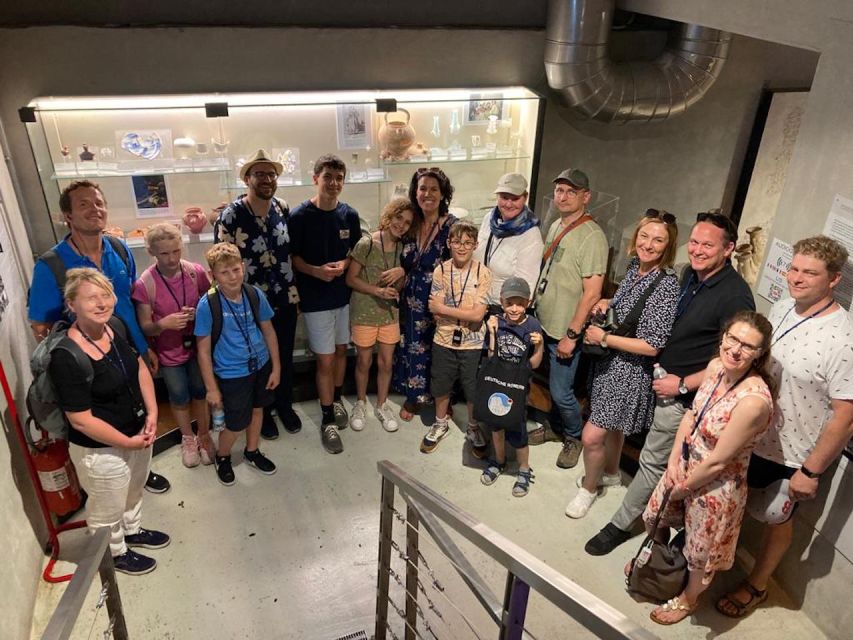
Next comes the Stadium of Domitian, an ancient athletic venue with seating estimated for 15,000–20,000 people. Seeing a place like this in real life does something different than reading about it. It gives you a sense of scale and public life that’s hard to grasp from a brochure.
The tour’s focus here feels smart: instead of treating the stadium like a random ruin, it frames it as a major event space in its day. Once you know what it was built for, you start noticing the way the site holds the idea of crowds and competition even now.
If you’re the type who likes Roman daily life—sports, crowds, public spectacle—this is likely to be a favorite stop. If you only care about the absolute most famous monuments, you might still enjoy it, but you may feel less emotionally “hooked” than you would at Trevi or the Pantheon.
Saint Ignazio’s 3D ceiling frescos: when art becomes a puzzle
Then you head to the church of Saint Ignazio. The big draw is the 3D ceiling frescos—the kind of view that can look flat until you get the right angle, and then suddenly it feels like the ceiling turns into depth.
This is one of those places where the guide’s pacing matters. You’ll have time to look closely, and the tour experience is about helping you actually see what you’re looking at, not just standing there for a quick glance and moving on. If you’ve ever felt museums are either too fast or too technical, this stop hits a nice middle ground.
Also, it’s a good contrast point. Earlier you’re outdoors and moving. Here you’re slowed down indoors with a visual payoff that’s very different from the street-level monuments.
Trevi Fountain on foot: the classic stop, done in sequence
After Saint Ignazio, you travel to the Baroque Trevi fountain. Trevi is famous for a reason, but the tour approach helps you avoid the trap of only seeing it as a background for selfies.
By placing Trevi after the art and church stop, the route gives you a wider view of Rome’s layers: classical structures, then later Baroque artistry, then back under-ground again at Vicus Caprarius. It turns the walk into a story arc instead of separate stand-alone attractions.
One note: Trevi is always a magnet for crowds, and the streets feeding into it can slow down your group pace. That’s another reason the headsets help—you need to keep listening and moving without getting lost in the middle of everyone else.
You can also read our reviews of more guided tours in Rome






Vicus Caprarius museum: the underground aqueduct and Rome’s water city
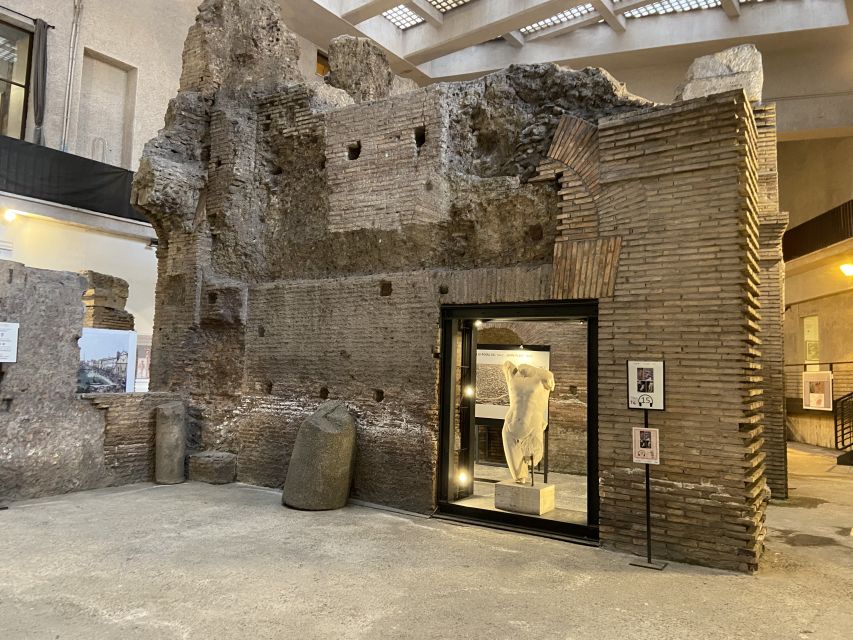
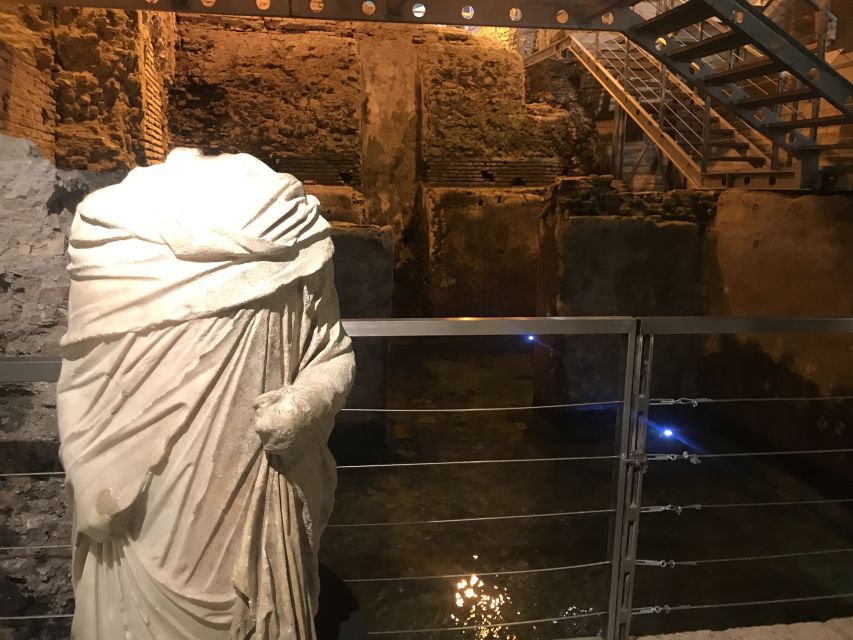
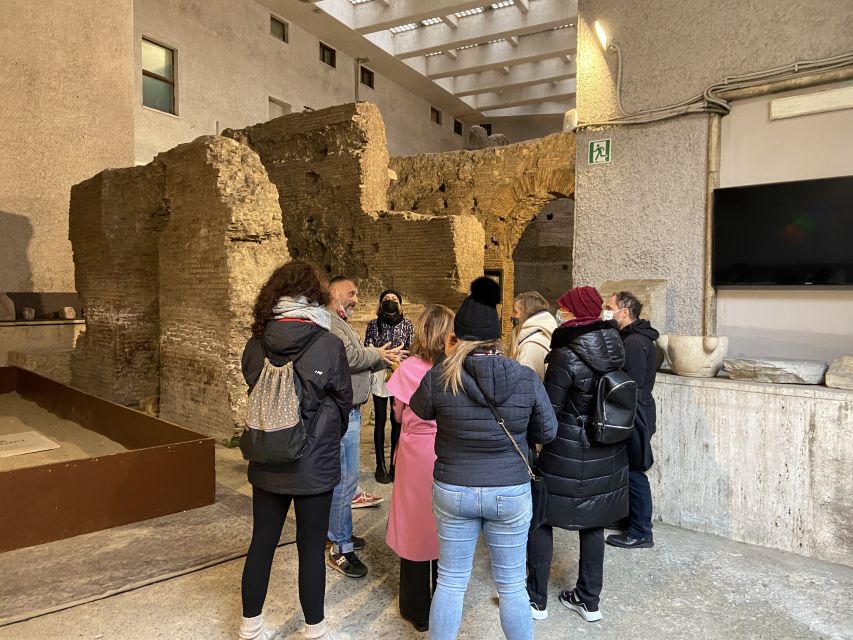
If you want a stop that feels truly different, this is it. At the Vicus Caprarius museum, you see the remains of an underground aqueduct and learn about Rome’s water system and how the city worked below street level.
This is the kind of attraction that changes how you see the surface. You realize that what you’re walking on has a hidden network underneath—water moving through the city, long before modern plumbing existed. The tour frames this as the water city of Rome, and it connects the idea of engineering to everyday life.
I also appreciate that this tour doesn’t just throw you underground and call it a day. The underground excavations are presented as part of the same city you’ve been walking through, so the underground stop doesn’t feel like a detour. It feels like the missing chapter.
The museum visit also balances the day’s mix. You get major landmarks above ground, then an infrastructure story below. That mix is a big reason the tour has such strong satisfaction scores.
Headsets, rain-or-shine, and how to pace yourself
This is a walking tour, and it runs for 3 hours through Rome’s center. The good news is the route is built to keep you learning at each stop, so you’re not just walking from one random attraction to another.
Because it’s rain or shine, wear shoes you’re comfortable in if the sidewalks get slick. Rome in bad weather isn’t just wet—it’s also crowded and slippery in the same narrow streets where you’ll be trying to keep up with a group. An umbrella is useful, but consider how it affects your movement in close spaces.
The headsets help you stay connected even when you can’t see your guide clearly. If you’re traveling in German, you’ll also benefit from the fact that the tour is delivered in German with a live guide. Reviews praising guide humor and heart suggest the experience stays lively, not robotic.
What the finishing point at La Rinascente means for your day
At the end, the tour finishes at La Rinascente. That’s a handy kind of finish: you’re not stranded in an awkward transit gap, and you can easily pivot to shopping, a coffee, or grabbing a meal nearby.
It also gives your legs a clean landing. Three hours sounds manageable until you realize the route includes both outdoor walking and indoor moments where you’ll be standing and looking around. Having a clear end point helps you plan the rest of your evening without guesswork.
Who this tour is perfect for
This one is a great match if you:
- Speak or want German narration and prefer a clear, structured route
- Enjoy a mix of famous sights and lesser-known stops, especially under-the-surface Rome
- Like the idea of engineering and daily-life details, not only big-name monuments
- Want a guide who brings the stories with energy (reviews explicitly mention humor and strong city knowledge)
It’s less ideal if you:
- Hate walking in rain
- Want total freedom to linger at one site for a long time
- Need very flexible timing between stops (this tour runs as a sequence)
Value for your time, not just your ticket
Even without knowing the exact price, you can judge value based on what’s included and what it replaces. This tour packs several major stops—Piazza Navona, Trevi, Pantheon—plus two standout additions: Vicus Caprarius underground remains and the Stadium of Domitian. That’s a lot of ground for a single 3-hour guided experience.
You also get skip-the-ticket-line included, plus headsets. Those two perks are often the difference between spending time waiting and actually seeing more during your limited schedule. And because the guide leads the route, you’re less likely to waste effort trying to connect the hidden pieces on your own.
Should you book this German city-center tour?
I’d book it if you want Rome’s center with a guide who ties things together. The highlights aren’t only the obvious monuments; the underground aqueduct remains and the stadium stop give you Rome in a less common way. The Saint Ignazio 3D ceiling is also the kind of visual payoff that makes the time feel well spent.
Skip it if you’re mainly chasing the fastest “greatest hits” with plenty of personal wandering, or if you’re uncomfortable with rain-or-shine walking and a modest dress requirement.
If you’re visiting on a tight schedule and want a guided route that still feels personal and human, this one is a strong bet.
FAQ
How long is the tour?
The tour lasts 3 hours.
Where do I meet the guide?
Meet at the fountain of Bernini in Piazza Navona. Look for the sign Deutsche Römerin.
Is the tour in German?
Yes. The live tour guide speaks German.
What major sights are included?
You’ll see Piazza Navona, the Trevi Fountain, the Pantheon, the Stadium of Domitian, the church of Saint Ignazio (3D ceiling frescos), and the underground excavations at the Vicus Caprarius museum.
Are headsets provided?
Yes. Provided headsets help you hear the guide clearly.
Does the tour run in bad weather?
Yes. It runs rain or shine.
What should I bring?
Cash.
Is there a dress code?
Yes. Short skirts and sleeveless shirts aren’t allowed.
Is there free cancellation?
Yes. You can cancel up to 24 hours in advance for a full refund.
Does it include skip-the-ticket-line access, and where does it end?
It includes skip-the-ticket-line access, and the tour finishes at La Rinascente.